What to Do at Beijing Grand View Garden? 2026: Admission, Tour Routes, Must-See Attractions, and Photo Tips
Last Updated: Sep. 2026
If you’re fascinated by the classic Chinese novel Dream of the Red Chamber or wish to admire an exquisite Chinese garden, Beijing’sGrand View Garden is an excellent choice.
This park was specially constructed for filming the 1987 television adaptation of Dream of the Red Chamber, bringing the Jia family’s Grand View Garden, described in the novel, to life.
Constructed in 1984 on the site of imperial vegetable gardens from the Ming and Qing dynasties, Da Guan Yuan was meticulously built by scholars of Dream of the Red Chamber, ancient architecture experts, and landscape designers.
They employed traditional garden-building techniques based on the novel’s descriptions. Beyond Dream of the Red Chamber, the TV dramas My Fair Princess and Empresses in the Palace also filmed scenes here.
The garden blends the delicate elegance of southern Chinese gardens with the grand scale of northern architecture. It features over forty classic scenes from the novel, including the Yihong Courtyard and the Xiaoxiang Pavilion. This guide will help you explore the garden more effectively.
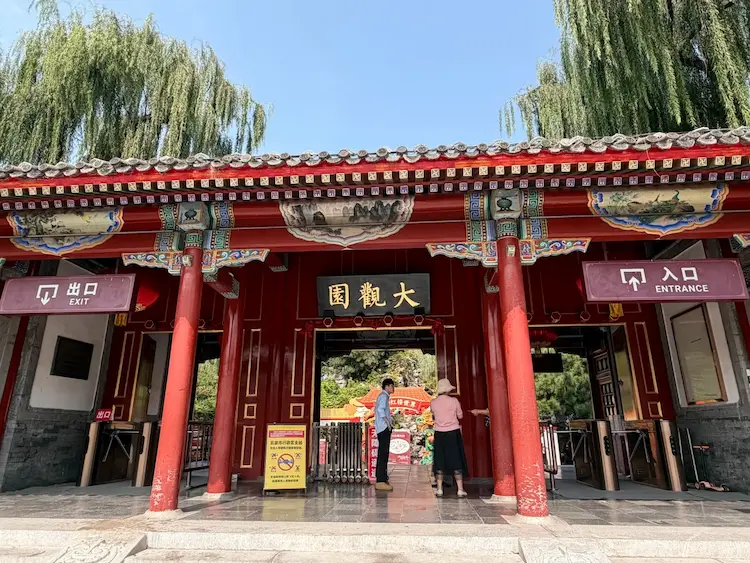
Table of Contents
Is the Grand View Garden worth visiting? What kind of tourists is it suitable for?
✅Highly recommended for:
- Readers of the original *Dream of the Red Chamber* and fans of the 1987 TV series
- Travelers who love classical Chinese gardens and ancient architecture
- Enthusiasts of Hanfu and portrait/landscape photography
- Tourists seeking out filming locations for movies and TV shows
⚠Also worth a visit:
- Those completely unfamiliar with the story of *Dream of the Red Chamber*: You can treat this as a themed Chinese garden, focusing on appreciating the architecture, water features, and flora, without needing to delve into all the characters and allusions.
❌Lower priority:
- Those with an extremely tight schedule in Beijing who only want to visit top must-see historic sites like the Forbidden City and the Summer Palace.
Quick Facts About Beijing Grand View Garden (Take a Screenshot to Save)
- Recommended visit duration: 2–3 hours
- Walking difficulty: Easy
- Terrain: The entire park is flat with few steep slopes; strollers and wheelchairs can navigate it easily
- Must-See Highlights: Yihong Courtyard, Xiaoxiang Pavilion, Qinfang Bridge Pavilion, and the Imperial Visit Villa
- Is it necessary to have read *Dream of the Red Chamber*? No
- Admission: 40 yuan for adults; check the official website for the latest policies before your visit
⏱How to Plan Your Visit Based on Your Time
- Less than 1 hour: Not recommended if you’re making a special trip just for this
- 1.5–2 hours: Stick to the main highlights and skip the secondary courtyards
- 2–3 hours: Explore all the main attractions and take photos—the choice of most visitors
- 3 hours or more: Take a complete tour of the entire park, plus visit the surrounding museums as part of a combined tour
First Visit to the Grand View Garden | Recommended Walking Route (Enter via the South Gate)
The main entrance to the park is the South Gate; this route avoids backtracking.
South Gate → “Winding Path to Secluded Beauty” Rockery → Qinfang Bridge Pavilion → Yihong Courtyard → Xiaoxiang Pavilion → Hengwu Garden → Parents’ Visit Villa → Daoxiang Village → Longcui Hermitage → Aojingxi Pavilion & Tubishan Villa → Other Small Courtyards → Return to the South Gate to Exit the Park
Tip: Since time is limited, there’s no need to explore every courtyard in detail; prioritize visiting the four main attractions.
Attraction Ranking Guide (To Help You Decide)
- ⭐ Must-see for first-time visitors: Yihong Courtyard, Xiaoxiang Pavilion, Qinfang Bridge Pavilion, and the Imperial Visit Villa
- See if you have extra time: Hengwu Garden, Daoxiang Village, Longcui Hermitage, Aojingxi Pavilion, and Tubishan Villa
- ⚪ Quick Glance While Passing By: Zuijin Tower, Nuanshang Valley, Ouxiang Pavilion, Luxue Pavilion, and other secondary courtyards
What Should Foreign Tourists Prepare Before Their First Visit to the Grand View Garden?
Before Departure
1. Check the opening hours for the day and be aware of any temporary construction notices (for example, Qiu Shuang Zhai may be temporarily cordoned off).
2. Decide on your ticket purchase plan in advance; if you don’t have WeChat, you can buy tickets in person at the passport window.
3. Save the Chinese address: No. 12, Nancaoyuan Street, Xicheng District, Beijing
4. For navigation, prioritize Apple Maps or Amap; we do not recommend relying solely on Google Maps, as location data in China can be inaccurate
5. Payment: Bring a small amount of cash; shops inside the park accept mobile payments, but international Visa/Mastercard cards cannot be used directly at the ticket windows
Opening Hours:
- High Season (April 1 – October 20): 7:30 AM – 6:00 PM
- Off-Season (October 21 – March 31): 7:30 AM – 5:00 PM
- Admission: 40 RMB for adults. Booking required via the “Beijing Grand View Garden” WeChat official account.
Upon Arrival and Entry
1. Locate the restrooms
2. Pick up a park map and plan your route
3. Then begin your tour
ℹTicket prices and reservation policies are subject to change; we recommend double-checking official announcements before your visit.
Directions: Metro + Walking Is the Easiest Option
- Best Route (Top Choice for International Visitors)
- Take Metro Line 4 to Taoranting Station.
- Exit the station and transfer to a bus or bike—you’ll arrive in under 10 minutes.
Direct Bus
- Take Bus No. 59, 474, or similar routes; get off at Daguan Garden Station, and you’re there.
Taxi / Ride-Hailing
- Destination Search: Beijing Daguan Garden. We recommend using the Didi International app, which features an English interface and supports payment with international credit cards.
When Is the Best Time to Visit the Grand View Garden? | Seasonal Travel Guide
- Spring: Flowers and trees are in full bloom, and the gardens and water features complement each other beautifully, making for an excellent stroll.
- Summer: The bamboo groves are lush and green, and the water features create a strong atmospheric vibe; however, temperatures are quite high at noon, so it’s best to avoid the midday heat.
- Fall: The colors of the autumn leaves set off the ancient architecture, making for great photo opportunities.
- Winter: Fewer visitors; the garden has a magical atmosphere after snowfall; the red plum blossoms in full bloom at Longcui Temple are a winter highlight
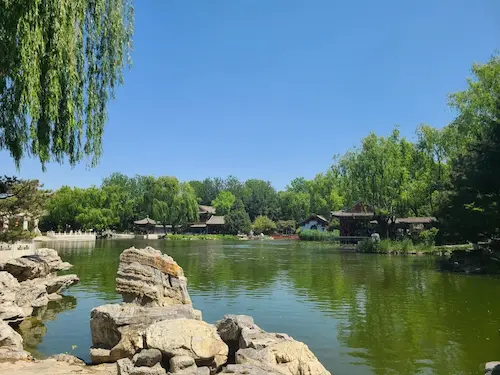
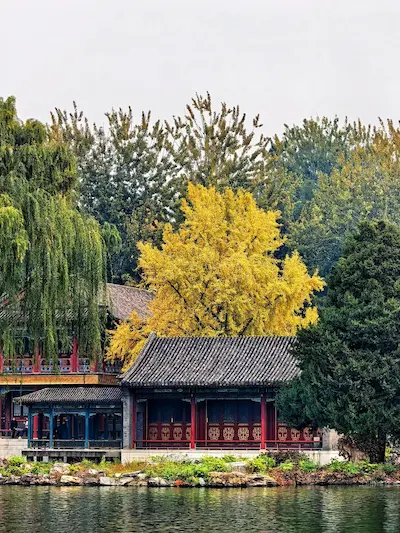
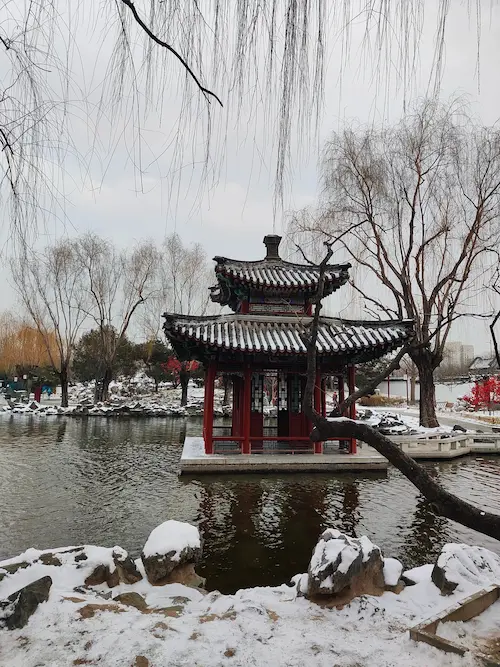
Tip: If you’re visiting solely to see the architecture and gardens, you can come any time of year; if photography is your main focus, plan your visit around flower seasons or snowy landscapes.
Main Attractions at Beijing Grand View Garden
This garden brings the architectural settings from Dream of the Red Chamber to life. The garden isn’t very large, and a full tour takes about 2-3 hours. You can focus on these areas:
A Winding Path Leads to a Secluded Spot
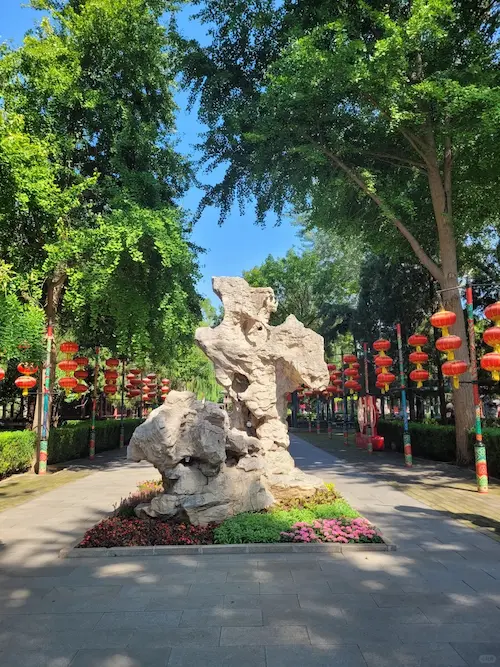
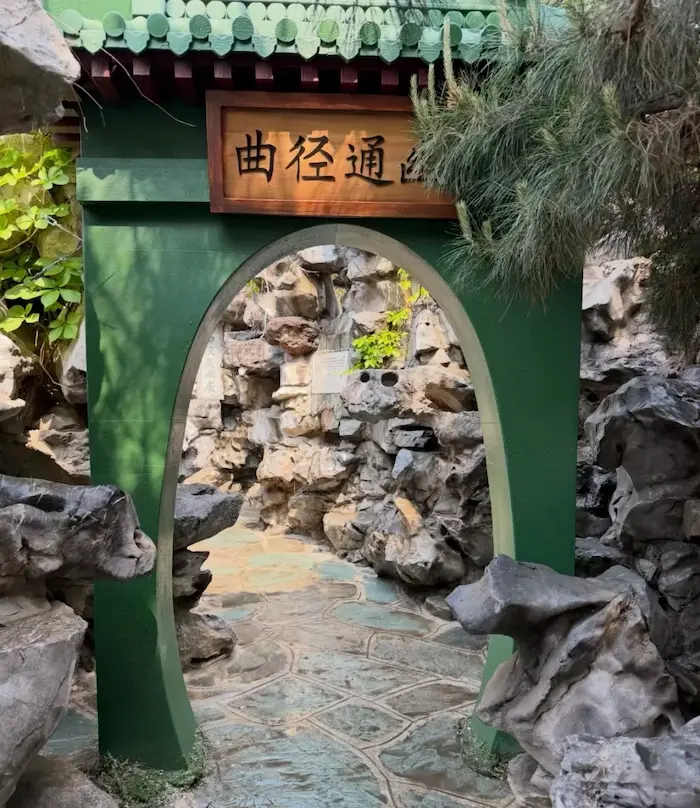
- Why it’s worth seeing: The first scenic spot upon entering through the South Gate, this rockery made of Taihu stones embodies the Chinese garden design principle of “seeing a mountain as soon as you enter.”
- Recommended visit duration: 5–8 minutes
Upon entering the South Gate, visitors are greeted by a rockery constructed from Taihu stones. A winding path winds through the rockery, embodying the Chinese garden principle of “seeing a mountain as soon as you enter, ”just as described in ancient poetry: “A winding path leads to a secluded spot.”
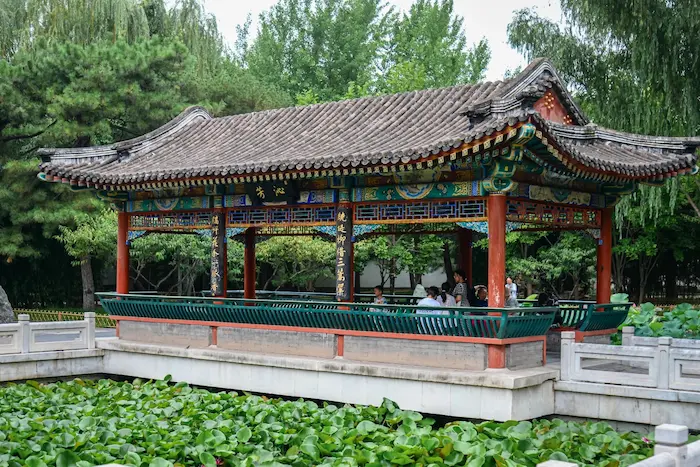
Qinfang Bridge Pavilion
- Why It’s Worth Seeing: The central hub of the garden’s water features and the location where Daiyu reestablished the poetry society in the novel, as well as a frequent meeting place for Baoyu and Daiyu. The composition of the bridge, pavilion, and water surface makes for excellent photo opportunities.
- Recommended Visit Time: 8–10 minutes
Once you pass the rockery, you’ll see the Qinfang Bridge built over the water—this is the heart of the garden. In the novel, Lin Daiyu reestablished the poetry society here, and it was also where Baoyu and Daiyu often met.
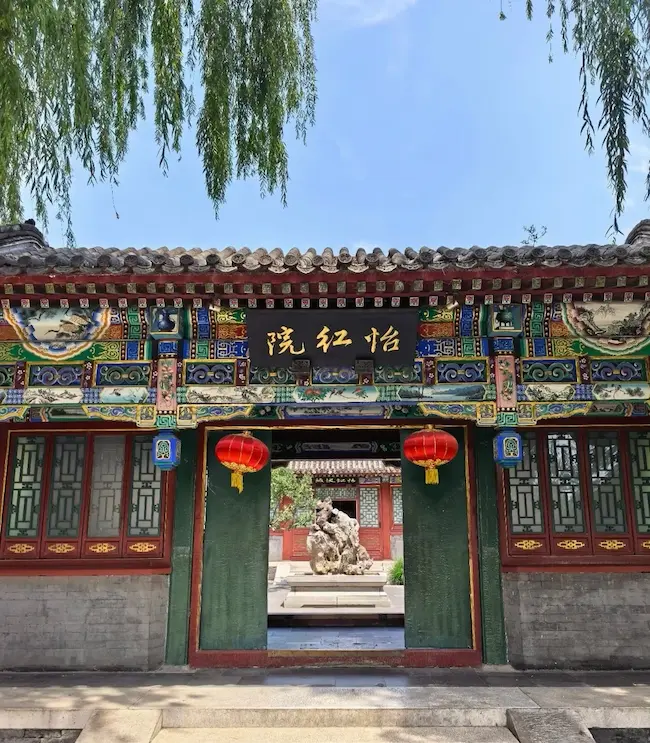
Yihong Courtyard: Jia Baoyu’s Residence
- Why it’s worth seeing: The most magnificent courtyard in the Grand View Garden; the primary filming location for the 1987 TV adaptation of *Dream of the Red Chamber*; the begonia and banana trees reflect the name “Yihong Kuai Lü” (Delight in Red, Rejoice in Green); the architecture features rich, vibrant colors.
- Recommended visit time: 10–15 minutes
This is the residence of the protagonist, Jia Baoyu, and is the most magnificent courtyard in the garden. The courtyard is planted with crabapples and banana trees, reflecting its name, “Yihong Kuai Lü.”
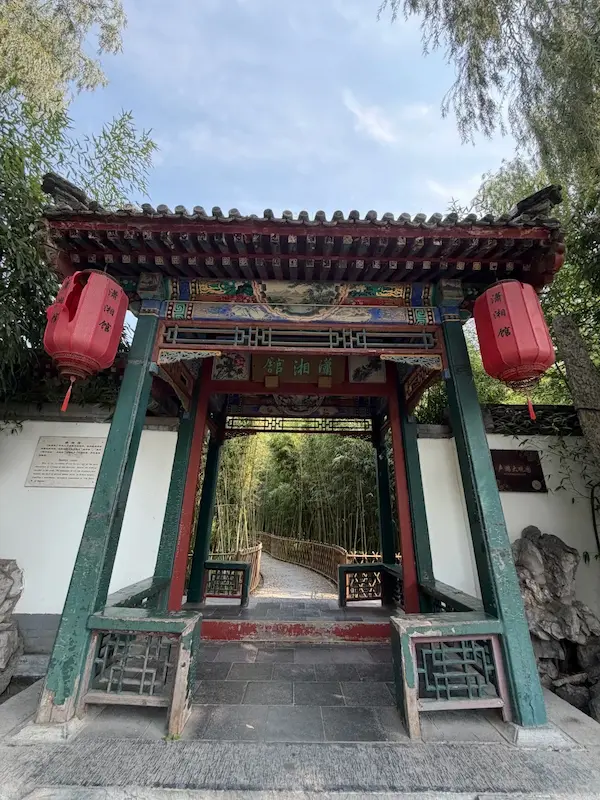
Xiaoxiang Pavilion: Lin Daiyu’s Residence
- Why it’s worth seeing: An iconic bamboo-lined courtyard, cool and serene, perfectly reflecting Daiyu’s character—it’s the most popular photo spot in the garden. The Flower Mound is located to the left of the South Gate.
- Recommended visit time: 10 minutes
This is where Lin Daiyu lived. The courtyard is filled with bamboo, and the walls and windows are adorned with bamboo patterns in cool tones, creating a crisp, serene atmosphere that matches her poetic and sentimental nature. The “Flower Mound,” where Daiyu buried her flowers, is located to the left of the park’s south gate.
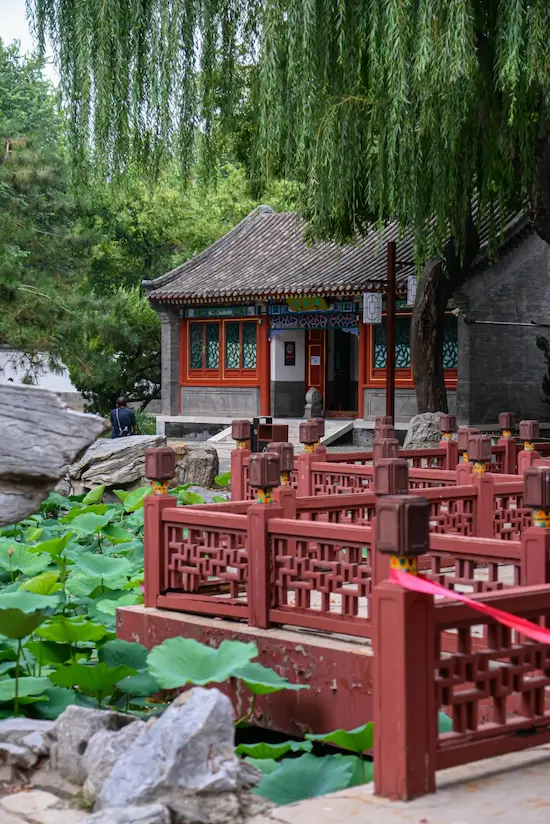
Hengwu Garden: Xue Baochai’s Residence
- Why It’s Worth Seeing: The rockery is entwined with vines, and the overall atmosphere is elegant and understated, reflecting Xue Baochai’s composed and reserved character.
- Recommended Visit Time: 8–10 minutes
This is Xue Baochai’s residence. Upon entering, you’ll find a vine-covered rockery. The entire courtyard exudes an elegant, serene atmosphere that aligns with Baochai’s steady, unpretentious personality.
Family Visit Villa
- Why it’s worth seeing: The largest imperial-style architectural complex in the entire garden; behind the Hall of Gratitude and Loyalty lies the Beijing Red Chamber Culture and Art Museum (Daguan Pavilion), where you can learn about artifacts and culture related to *Dream of the Red Chamber*.
- Recommended visit time: 12–15 minutes
This is the most spectacular and majestic imperial-style architectural complex in the park. In the novel, when Jia Yuanchun—who had become a concubine—returned home to visit her family, she received her family’s kneeling homage here.
Behind the “Hall of Gratitude and Righteousness” in the courtyard lies the Beijing *Dream of the Red Chamber* Culture and Art Museum, housed in a building called Daguan Pavilion, where visitors can learn about the culture of *Dream of the Red Chamber*.
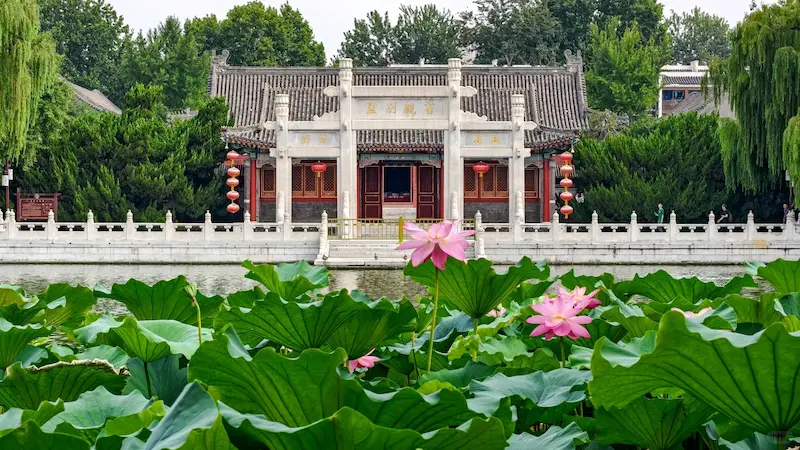
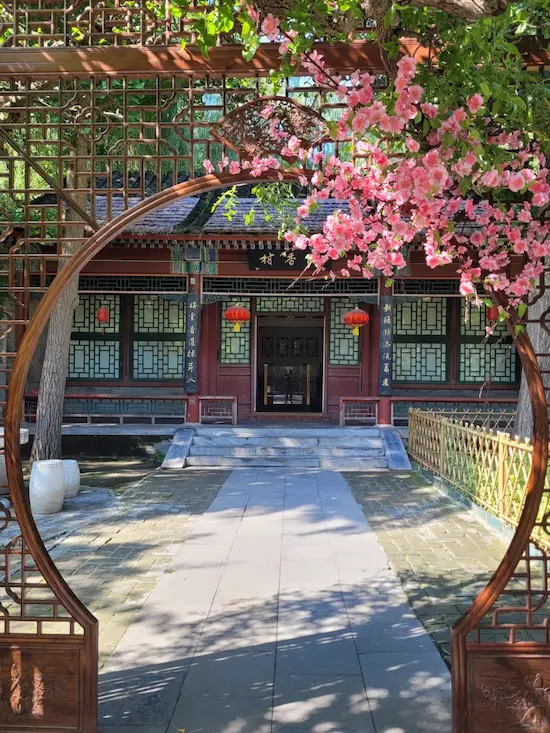
Daoxiangcun: Li Wan’s Residence
- Why it’s worth seeing: A rustic, rural-style courtyard with low yellow-mud walls and a thatched-roof pavilion, offering a stark contrast to the other ornate courtyards within the garden.
- Recommended visit time: 5–8 minutes
This is Li Wan’s residence, featuring a distinctly rustic style. The courtyard has low yellow-mud walls and a thatched-roof pavilion, and the interior is simply furnished.
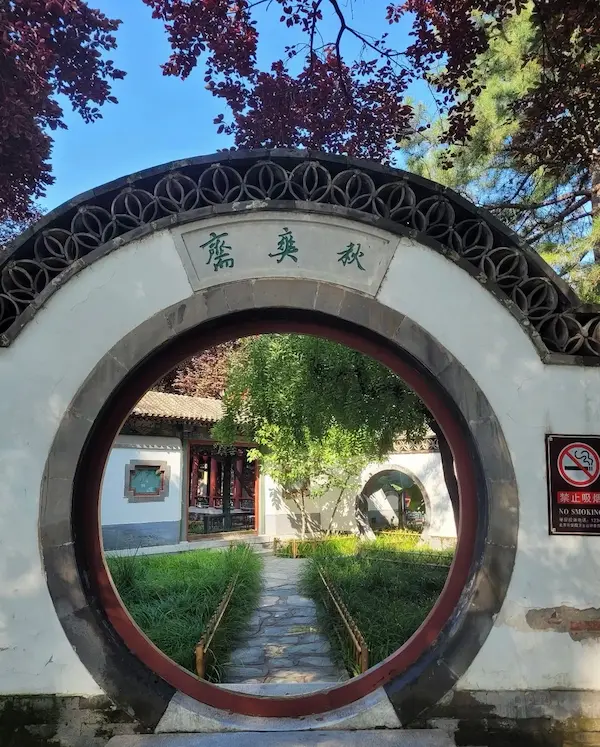
Qiushuang Zhai: Tan Chun’s Residence
- Why it’s worth seeing: The room is spacious and open, with no partitions; the Moon-Viewing Pavilion in the courtyard is one of the highest points in the park. Please note that temporary construction barriers may be in place; check on-site announcements before visiting.
- Recommended Visit Duration: 5 minutes (when open)
This is Tanchun’s residence. The room is spacious and has no partitions. In the courtyard stands a “Moon-Viewing Pavilion,” which is one of the highest points in the garden. (Note: Qiu Shuang Zhai may currently be under construction; please check before visiting.)
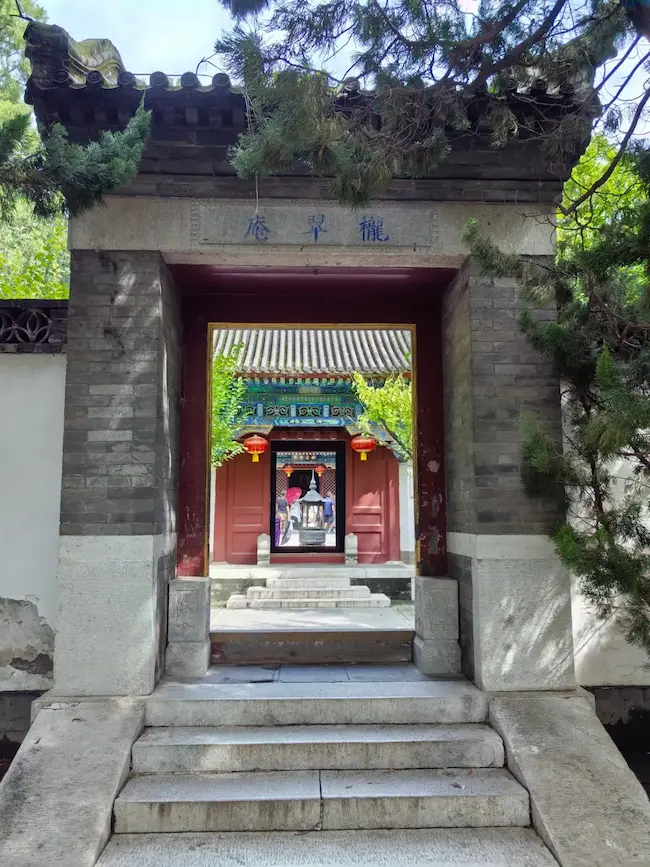
Longcui An: The Monastery Where Miaoyu Practiced
- Why it’s worth seeing: A serene nunnery where the red plum blossoms are a winter-only highlight.
- Recommended visit duration: 5–8 minutes
This is where the nun Miaoyu practiced. The courtyard is filled with red plum trees, creating a serene and peaceful atmosphere.
Concave Crystal Stream Pavilion and Convex Emerald Mountain Villa
- Why it’s worth seeing: A pair of buildings—one high, one low; one mountain, one body of water—arranged in pairs; the site where Daiyu and Xiangyun composed poetry together on the Mid-Autumn Festival, reciting the lines: “The shadow of a crane crosses the cold pond; the cold moon buries the soul of the flower.”
- Recommended visit duration: 5–8 minutes
These are two structures—one high, one low; one set against a mountain, the other by a stream. In the novel, on the night of the Mid-Autumn Festival, Daiyu and Xiangyun composed poetry here while gazing at the moon and the water, uttering the famous lines: “The shadow of a crane crosses the chilly pond; the cold moon buries the soul of the flower.”
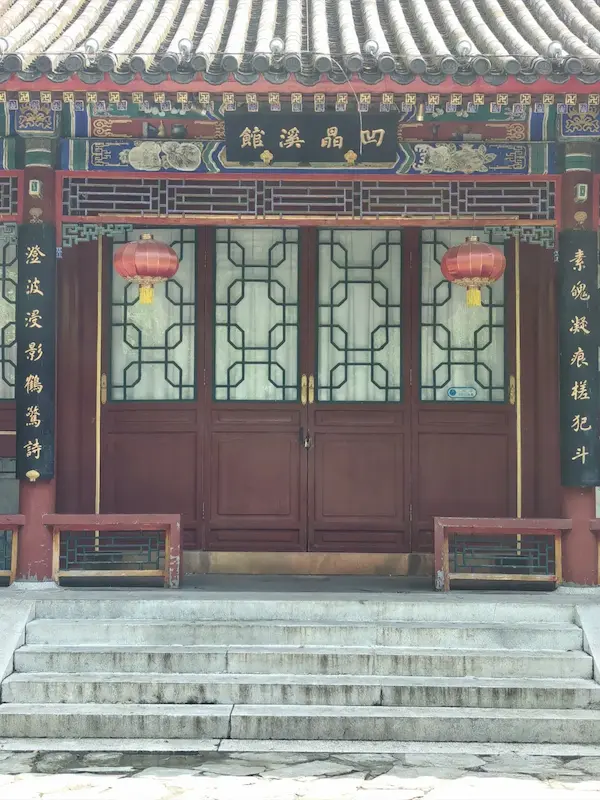
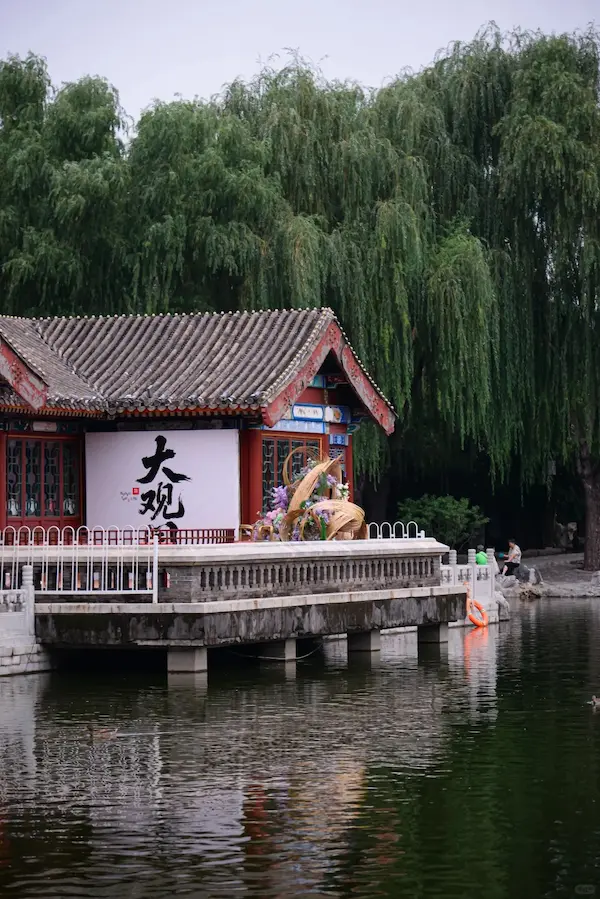
Other Sites: Numerous locations, such as the Embroidered Pavilion (Yingchun’s residence), Warm Fragrance Grove (Xichun’s residence), Lotus Fragrance Pavilion (a waterside pavilion), and Reed Snow Pavilion, also hold stories from Dream of the Red Chamber.
Best Photo Spots in the Grand View Garden: You Don’t Need to Wear Hanfu to Take Great Photos
1. Yihong Courtyard: Red walls and green tiles paired with crabapple trees and banana palms create a rich palette of colors, making it ideal for portrait photography in an ancient architectural courtyard.
2. Xiaoxiang Pavilion: A secluded path through a bamboo grove offers a cool, elegant atmosphere.
3. Qinfang Bridge Pavilion: The combination of water and pavilions makes for great panoramic shots.
4. Longcui An: White walls and red plum blossoms—a winter-exclusive sight.
5. Provincial Visit Villa: A grand, palace-style architectural complex that exudes grandeur and solemnity.
If you don’t plan on taking photos, you can skip this section and continue your tour.
Nearby Attractions Around the Grand View Garden
After exploring the Grand View Garden, if time permits, visit the nearby Beijing Archaeological Site Museum (Jinzhongdu Water Gate Ruins) and the Ancient Pottery Civilization Museum—both within walking distance.
Suggested Half-Day Itinerary (Worth Saving)
- Ideal for a 2–3-hour tour of the gardens and nearby museums
- 1:30–2:00 p.m. | Arrive at the Grand View Garden, purchase tickets, and enter
- 2:00–3:30 PM | Complete the main tour route and visit the must-see courtyards
- 3:30–4:00 PM | Take photos and explore other points of interest
- After 4:00 PM | Walk to the Jinzhongdu Water Gate Ruins / Ancient Pottery Civilization Museum for a visit
Visitor Tips
- Photography: The garden’s year-round blend of flowers, trees, and architecture creates picturesque backdrops, especially for photos in traditional Hanfu attire. In recent years, more visitors have embraced Hanfu for their garden portraits.
- Cultural Experience: The opera stage at the Imperial Family Villa hosts regular performances.
- Dining: On-site restaurants are available, while Beijing snack shops line the perimeter.
FAQ
✨Final Thoughts | First Visit to the Grand View Garden
If you love *Dream of the Red Chamber*, we recommend setting aside 2–3 hours for an in-depth tour.
If you’re not familiar with the original story, feel free to treat it as a classical literature-themed garden and simply appreciate the landscaping, architecture, and floral, arboreal, and water features—you’ll still have a wonderful experience.
If your Beijing itinerary is very tight, you might want to prioritize must-see attractions like the Forbidden City and the Summer Palace, and then decide whether to include the Grand View Garden.
What makes the Grand View Garden so special is not merely whether it perfectly recreates the world of the novel, but rather that it transforms the garden spaces described in the book into a real-life setting where ordinary people can actually stroll through.