Dong Meichang Hutong & Xi Meichang Hutong: A Hidden Corner Next to Yandai Xiejie (2026 Off-the-Beaten-Path Hutong Tour)
Within Beijing’s network of hutongs, Dongmeichang Hutong and Ximeichang Hutong are two streets steeped in history. Their names date back to the early Qing Dynasty, when a coal yard was located here.
According to historical records, the coal yard was located in the area south of Guangfu Temple, west of Xiangzha, north of Yueqiao, and east of Haichao Temple.
After the hutongs were established, the street east of the coal yard was called “Dong Meichang, ”while the one to the west was known as “Meichangxi Hutong. ”
Later, during the Xuantong era, it was renamed “Ximeichang.” In 1965, they were officially given their current names.
Table of Contents
Quick Guide
- Highlights: The former site of the Qing Dynasty imperial coal yard, authentic old hutongs, a tranquil residential area next to Guangfu Temple, the Old Courtyard of the Trumpet Vine, and a century-old locust tree
- Location: East of Shichahai, directly south of Yandai Xiejie, connecting Yinding Bridge and Liuyin Street
- Recommended Visit Duration: 15–20 minutes
- Keywords: Imperial Logistics, Industrial History, Tranquility Amidst the Hubbub, Authentic Residential Areas
- Best Itinerary: Yandai Xiejie → Dong Meichang → Xi Meichang → Yinding Bridge/Liuyin Street—a surefire way to avoid the crowds
The Smoothest Way to Get There | Off-Peak Walking Route (Just Follow These Steps)
- Subway: Exit A2 at Shichahai Station (Line 8), walk 5 minutes to Yandai Xiejie, then walk a few steps inward to enter Dong Meichang Hutong
- Recommended Route: Bell and Drum Towers → Yandai Xiejie → Dong Meichang → Xi Meichang → Liuyin Street → Yinding Bridge
- Benefits: The route transitions from bustling to quiet; no lines, no crowds, and no passersby in your photos
Quick Tips
- This is a purely residential area with almost no shops; bring water and plan for restroom breaks
- The alleys are narrow; walk slowly, keep noise to a minimum, and respect the residents’ daily lives
The Significance Behind the Name: This Was Once the Qing Dynasty’s“Imperial Fuel Depot”
Many people find the term “coal yard” rather old-fashioned—but during the Qing Dynasty, this was a crucial logistical hub right on the outskirts of the Imperial City.
- Back then, this was an official coal yard where coal was transported by water and stored, exclusively for use by the surrounding princely mansions and the Imperial City
- Coal was the “essential energy source” of the time; heating, cooking, and boiling water all depended on it
- Located south of Guangfu Temple and east of Haichao Temple, it formed two alleys—one to the east and one to the west—hence the names Dong Meichang (East Coal Yard) and Xi Meichang (West Coal Yard)
- The names were officially established in 1965 and have been in use ever since.
Today, the coal yard is long gone, but the width and layout of the alleys still bear traces of the coal-carrying convoys that once passed through.
Standing at the entrance and closing your eyes, you can imagine the scene from over two hundred years ago: a bustling imperial supply hub, with carts coming and going and coal dust wafting through the air.
Dong Meichang Hutong: Old Courtyards and Cherished Memories
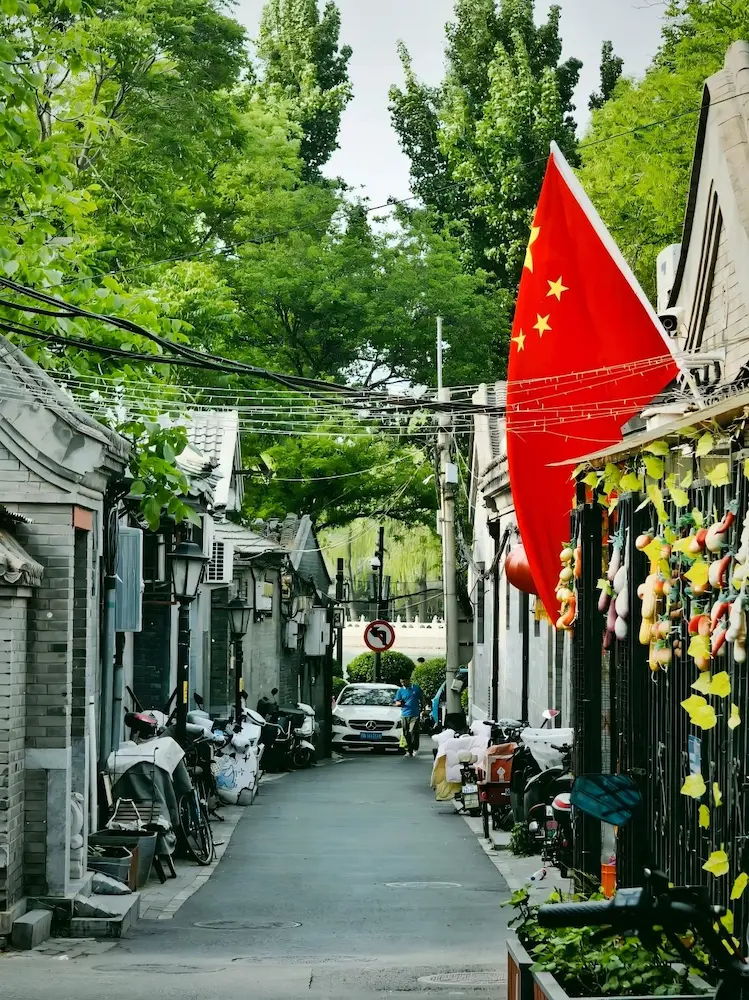
Dong Meichang Hutong runs mainly north to south, with its eastern entrance connecting to Qianjing Hutong and two western entrances opening onto Zhanzi Hutong. Winding and twisting, the hutong holds unexpected views for those who wander in.
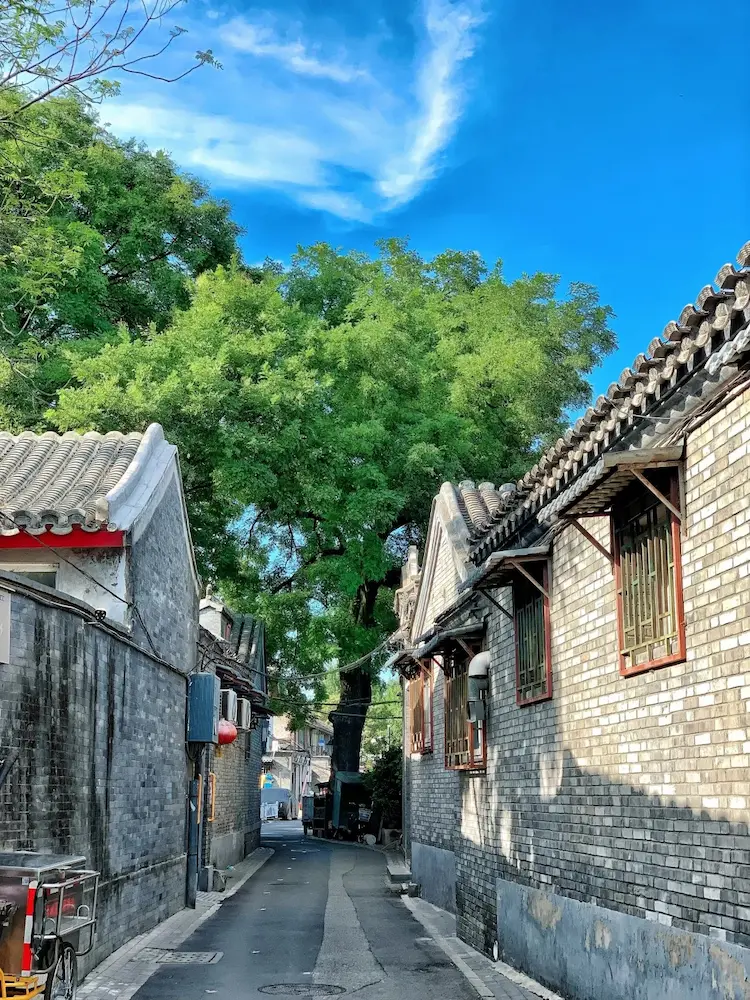
There is a T-junction in the hutong, and at its corner stands Courtyard No.7. The gate of this courtyard looks simple and weathered, with lush walnut tree branches stretching over the wall, heavy with round walnuts.
A native of Shandong Province later bought the courtyard, but it now lies unoccupied. Because the owner’s descendants insist on making only necessary repairs rather than renovating it, the courtyard’s architecture has retained its original form, making it a rare, well-preserved siheyuan in the hutong.
The most striking sight in the hutong is the Chinese trumpet creepers swaying gently in the wind. Beneath the sunlight, their orange-red blooms contrast against the gray bricks and tiles, creating an indescribable beauty.
I stopped in my tracks, drawn by the trumpet creepers climbing the outer wall of Courtyard No.35, and saw a stylish elderly lady telling the hutong’s stories to two young people. I walked over to listen.
She said she knew every plant and tree here like the back of her hand, and memories would come flooding back like scenes from a movie.
A TV station once invited her to appear on an intangible cultural heritage program, but she declined. Much like the trumpet creepers in her yard, she said she barely tends to them, letting them grow freely—and yet they always burst into beautiful blooms.
Xi Meichang Hutong: Simple Modern Life
Xi Meichang Hutong runs east to west, with its eastern entrance linking to Xiaoxiangfeng Hutong and its western entrance to Liuyin Street.
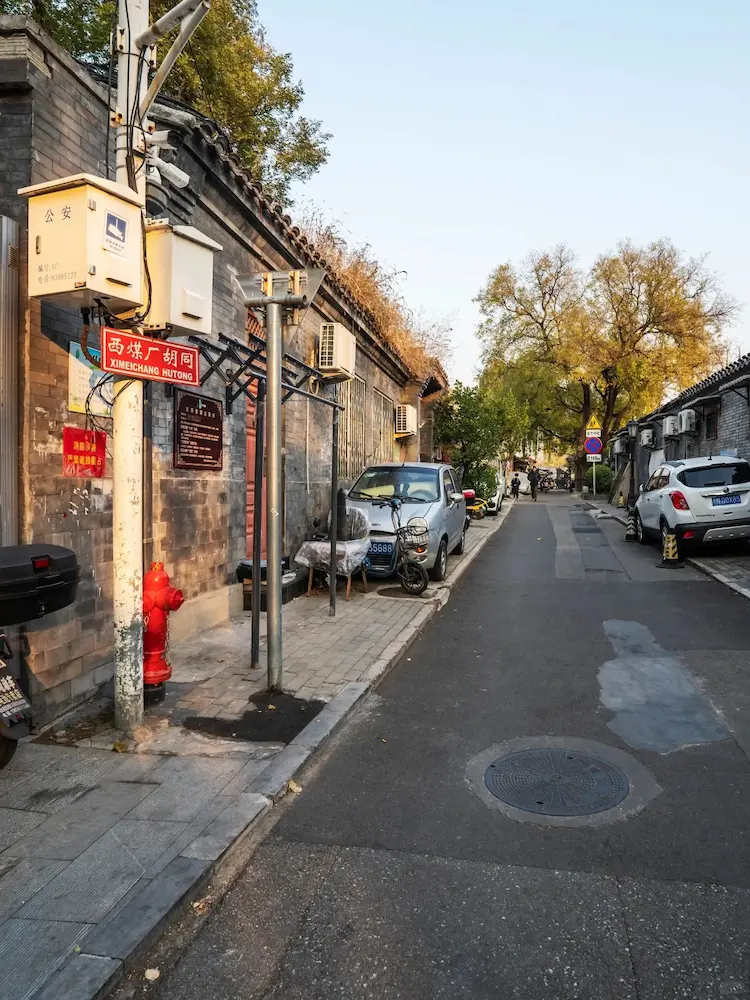
Courtyard No.10 of Xi Meichang Hutong is a simple apartment building with retaining walls and a green leisure area. The several ancient pagoda trees here must be over a hundred years old.
I stood there for a long time, yet a distinct sense of the old hutong charm eluded me. Perhaps it is because a primary school is located here, along with a long row of simple apartment buildings, leaving the lane feeling a little devoid of the original hutong spirit.
My Hidden Gems: The Side of Meichang Hutong That Others Miss
As a frequent visitor, I’m most drawn to these small yet beautiful moments:
- The deep and shallow marks etched into the gray walls by the passage of time, like history written on the wall
- Old house numbers nailed to the doors, their paint peeling but still perfectly aligned
- The grass growing at the base of the walls, the potted plants on the windowsills, and the small stools by the door—all evidence of the residents’ thoughtful way of life
- As you turn off Yandai Xiejie, the noise vanishes instantly, leaving only the sound of the wind and birdsong
This contrast—where “every step reveals a new world”—can only be truly understood by walking through it yourself.
Frequently Asked Questions
Hutongs in Beijing are more than just streets; they are living history. Dong and Xi Meichang Hutong are like an open book, where every old courtyard, every story, and every resident forms a unique chapter. Here, history and the present interweave, and memories and daily life coexist, shaping a cultural landscape that is uniquely Beijing.