Beijing Cuihua Hutong Guide: A Free Hutong Next to Wangfujing + Yuebin Restaurant (2026)
Last Updated: Jul. 2026
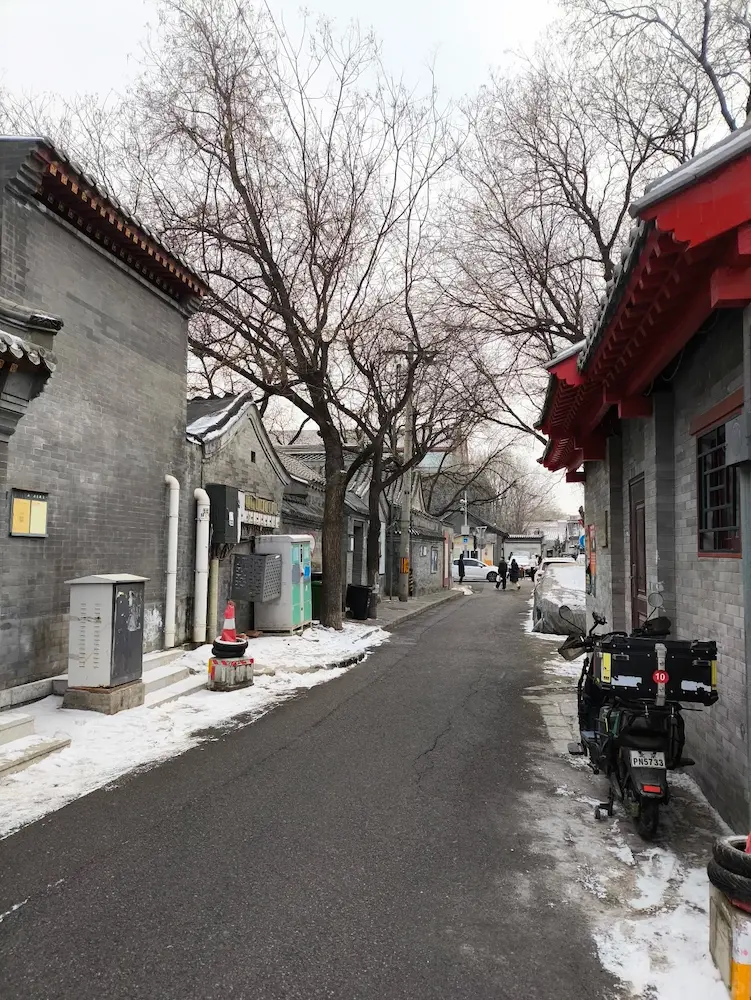
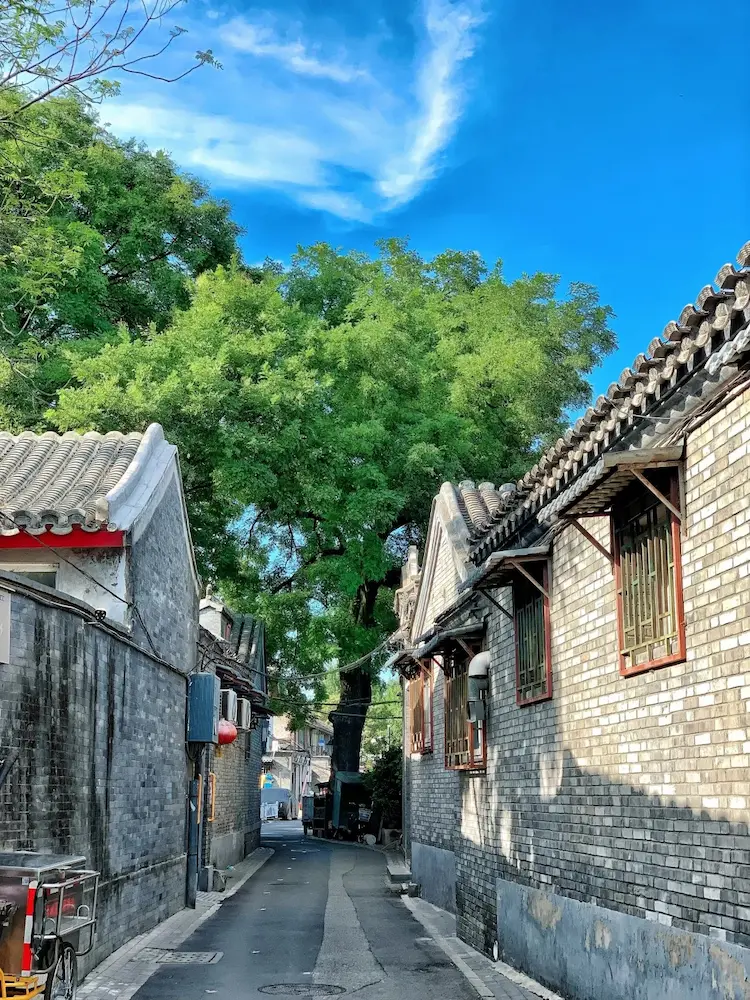
> On the west side of Wangfujing Street lies a 322-meter-long alley called Cuihua Hutong. Though its name has a Northeastern Chinese flavor, it is an authentic Beijing hutong.
600 years ago, this was a greenhouse where flowers were grown for the princely mansions; 100 years ago, Zhang Xun attempted a restoration of the monarchy here, and Li Dazhao directed the revolution from this very spot; 44 years ago, China’s first privately owned restaurant opened here, and it remains in business to this day. Take Metro Line 8 directly to the area—it’s completely free.
Table of Contents
Practical Information (Must-Read Before You Go)
| Item | Details |
| Name | Cuihua Hutong (Pinyin: `Cuihua Hutong`) |
| Address | Dongcheng District, Beijing; east of Wangfujing Street to west of Donghuangchenggen South Street |
| Subway | Line 8, National Art Museum of China Station, Exit A. Upon exiting, you will be on Donghuangchenggen North Street. Walk directly south across the intersection (the street becomes Donghuangchenggen South Street after crossing), and continue south for about 2 minutes. The west entrance of Cuihua Hutong will be on your left (east side). The entire walk takes only 3–5 minutes. Alternatively, exit from Exit D at Dongsi Station on Line 6 and walk west for about 12 minutes to reach the east entrance of Cuihua Hutong (on the Wangfujing Street side). |
| Bus | Take Buses 104, 108, 111, etc., and get off at the “Art Museum” stop |
| Driving | Not recommended. The hutong is narrow, and there is no parking for visitors. When taking a taxi, use the destination “East Entrance of Cuihua Hutong” (Wangfujing Street side) or “West Entrance of Cuihua Hutong” (East Huangchenggen South Street side) |
| Admission | Free throughout. There are no paid attractions; you can explore at any time. |
| Opening Hours | The hutong is open 24 hours a day, 365 days a year. Yuebin Restaurant is open from approximately 11:00 AM to 9:00 PM, with no afternoon break. |
| Best Time to Visit | Weekdays from 10:00 AM to 11:30 AM or 3:00 PM to 5:00 PM. The line at Yuebin Restaurant is long at lunchtime, so it’s best to visit during off-peak hours. |
| Recommended Duration | 1–1.5 hours (about 30–40 minutes for a stroll through the hutong, plus about 1 hour for a meal at Yuebin Restaurant) |
| Dress Code | Wear comfortable flat shoes. The hutong paths are paved with asphalt and flagstones, making them easy to walk on. |
| Budget Guide | The hutong is free to explore. Yuebin Restaurant costs approximately 50–80 RMB per person (about $7–11). Nearby dining options range from 20 to 100 RMB. |
| Photography | Absolutely. You can take photos outdoors throughout the entire hutong. Photography is also allowed inside Yuebin Restaurant (but please do not disturb other guests). Please do not photograph the interiors of residential homes. |
| Language Support | No English-speaking guides or English-language signage. Yuebin Restaurant’s menu features Chinese-English translations, making it easy to order. |
| Payment Options | Yuebin Restaurant accepts WeChat Pay and Alipay (which can be linked to international credit cards), as well as cash and international credit cards (in some cases). Foreign visitors can easily order and pay. |
>Friendly Reminder: The eastern entrance of Cuihua Hutong is right next to Wangfujing Street, one of Beijing’s busiest tourist areas. However, as soon as you turn into the hutong, it becomes quiet. This is a living residential community with many residents, so please keep quiet and do not enter private homes.
The Origin of the Hutong: “Cuihua” Isn’t a Girl from Northeast China—It’s a Prince’s Mansion Greenhouse
When many people hear “Cuihua,” their first thought is the line “Cuihua, bring the pickled cabbage!” from that popular song—In Xue Cun’s People from Northeast China Are All Living Lei Fengs, there’s an incredibly catchy line: “Cuihua, bring the pickled cabbage,” which made everyone remember the Northeastern name “Cuihua.”
But Beijing’s Cuihua Hutong has nothing to do with a girl from Northeast China. This hutong has been called Cuihua Hutong since the Ming Dynasty, a name it has retained for nearly 600 years, more than 500 years before that song was written.
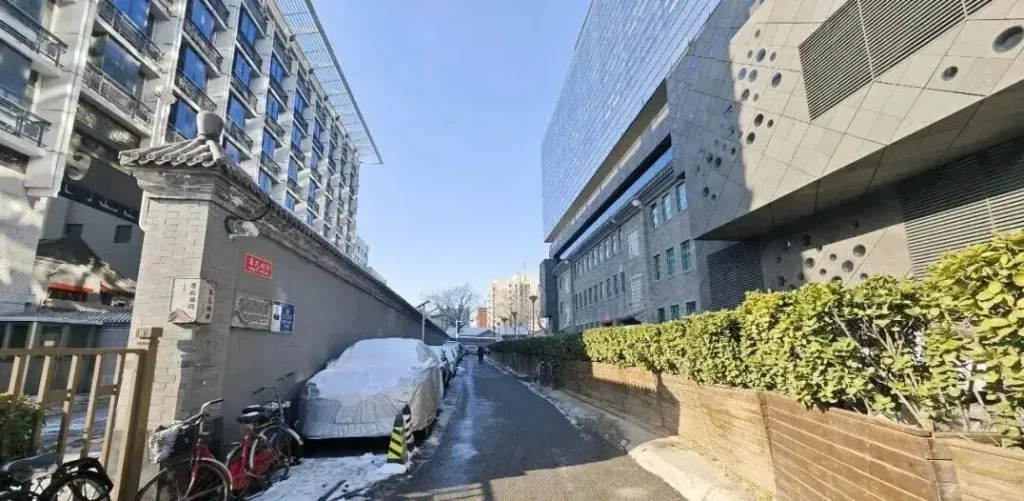
So why is it called “Cuihua”?
During the Ming Dynasty, this alley was located near the Prince’s Mansion (the name of today’s Wangfujing Street derives from “Prince’s Mansion”). Since the Prince’s Mansion required flowers, a greenhouse was established near this alley specifically to grow flowers for the mansion.
Many of the flowers grown in the greenhouse were “cui” (vibrant green and colorful), and when combined with the character for “flower” (hua), the name “Cuihua” was born.
It’s also possible that a young woman named “Cuihua” who worked in the greenhouse at the time was remembered by everyone, but folk accounts vary, and the most widely accepted explanation is the “greenhouse origin theory.”
Three key facts:
1. There are only about 30 hutongs in Beijing that have survived from the Ming Dynasty to the present with names that have remained largely unchanged, and Cuihua Hutong is one of them.
2. From the Baoda Fang of the Ming Dynasty, to the Xiangbai Banner of the Qing Dynasty, and up to the present day, its name has remained virtually unchanged.
3. During the “Cultural Revolution,” it was briefly renamed “People’s Road No. 11,” but the original name was quickly restored.
>Fun fact about “Cuihua, bring the pickles!”Although Cuihua Hutong has no connection to this song lyric, it doesn’t stop it from being a little running joke. When many foreign tourists hear the word “Cuihua,” their first reaction is that song. You can treat it as a little Easter egg—after exploring the hutong, shout “Cuihua, bring the pickles!” to your companions, and it’ll lighten the mood.
Highlights: One Hutong, Four Stories Spanning Four Eras
Cuihua Hutong is only 322 meters long, but every section of it has a story to tell. In chronological order:
1. Cuiyuan (South Side of the West Entrance) — From the Ming Dynasty’s Dongchang to the Central Committee of the China Democratic League
Entering the west end of the alley, you’ll find a courtyard on the south side bearing a plaque inscribed with “Cuiyuan.” This is one of the deepest and most storied courtyards in the alley.
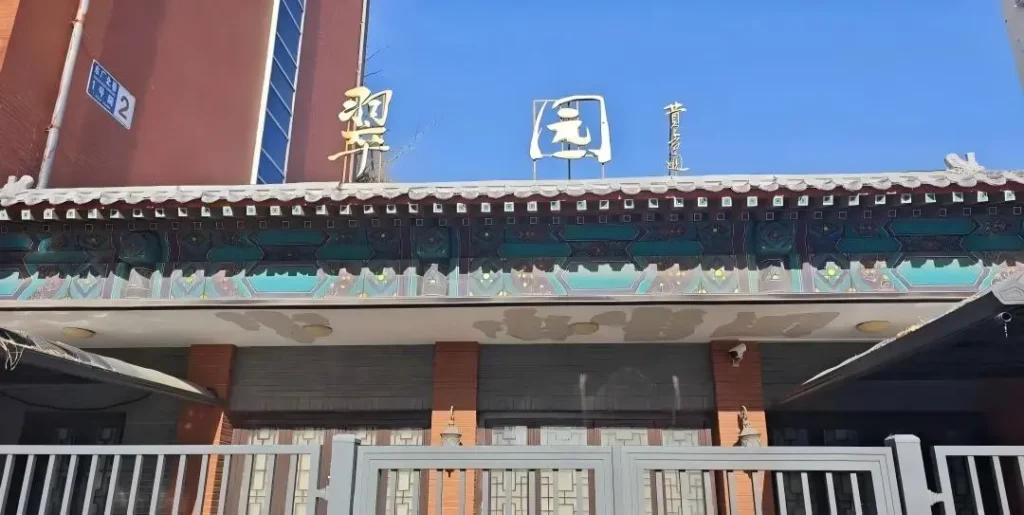
Its historical timeline is as follows:
- Ming Dynasty: This was the former residence of the Jin Yi Wei (Imperial Guard) of the Dongchang. The Dongchang was the Ming Dynasty’s notorious secret police agency, equivalent to the “Emperor’s secret police,” tasked with monitoring officials, making arrests, and conducting interrogations.
- Qing Dynasty: It became a princely mansion (a residence for imperial princes or princes of the blood). In the late Qing Dynasty, Grand Secretary Rui Lin (a high-ranking official equivalent to today’s prime minister) built a private garden here.
- Early Republic of China: President Li Yuanhong once lived here.
- After the victory in the War of Resistance, it was assigned to the Institute of Humanities at Peking University.
- After 1949, the Central Committee of the China Democratic League (one of China’s major democratic parties) relocated from Hong Kong to Beijing and established its offices there. Fei Xiaotong, Chairman of the China Democratic League (a renowned sociologist), inscribed the characters “Cuiyuan” (Emerald Garden).
Much of China’s literary history has converged here: the great scholar Ji Xianlin—one of the most renowned masters of Chinese classical studies and linguists of the 20th century—once lived in the eastern wing of this courtyard.
He later wrote in his essay “I Love Beijing’s Small Hutongs”: This courtyard spans two hutongs, with ‘multiple stories and towers, winding corridors, staggered courtyards, and layered gardens; a stranger walking in would surely feel as if entering a maze, unable to distinguish east from west.”
> An interesting detail: Ji Xianlin mentioned that because this courtyard was once the territory of the Dongchang (the secret police), “many people died unjustly here, and their ghosts are said to appear often.”
Although he himself “is not superstitious,” he described his living situation as “living ‘side by side with ghosts’ every day, yet I live quite peacefully”—this tongue-in-cheek remark has become a much-quoted gem among Ji Xianlin’s fans.
If you’re interested in the mysterious secret police politics of the Ming Dynasty, after exploring Cuiyuan, you can stroll down the side alley to the south and head straight to [Dongchang Hutong: A Beijing alley whose very name sends a chill down your spine] to explore the site of the Dongchang’s former headquarters.
Current Status: Cuiyuan is still used as the office of the Central Committee of the China Democratic League and is not open to the public. However, it’s perfectly fine to view the building from the outside and take photos.
2. Zhang Xun’s Former Residence (No. 33 Compound) — The Cradle of the “Braided Army” Restoration
Courtyard No. 33 was once the residence of Zhang Xun, a warlord of the Beiyang faction. Who was Zhang Xun?
He was one of the most dramatic warlords of the late Qing and early Republican eras. Both he and his troops wore long braids—even though the Qing Dynasty had long since fallen, Zhang Xun refused to cut his braid, earning him the nickname “Braided General,” while his army was known as the “Braided Army.”
In 1917, Zhang Xun led 5,000 “Braided Army” soldiers into Beijing and did something utterly reckless: he restored the already-abdicated last emperor, Puyi, to the throne. Known in history as the “Zhang Xun Restoration,” this farce lasted only 12 days before it ended in failure.
The cannons of the Anti-Rebellion Army were positioned on the rooftops of nearby Peking University, firing relentlessly at the courtyard on Cuihua Hutong. Zhang Xun fled in panic to seek refuge in Dongjiaomin Alley, and the courtyard was severely damaged in the crossfire.
Today, Courtyard No. 33 no longer resembles its former self. It was rebuilt after the shelling and later renovated; now, it stands unremarkably among the gray walls of the hutong. What you can sense is the atmosphere of tranquility that has settled over it and the entire alley.
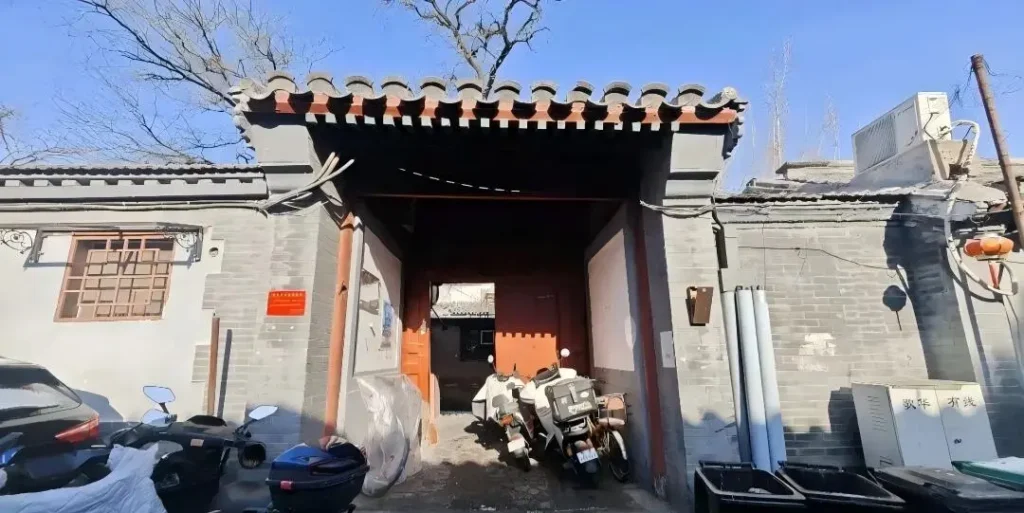
>A cultural heritage tidbit: Zhang Xun also did something that has troubled the cultural heritage community for many years—he dismantled and transported a batch of fountain components from the Western-style buildings of the Old Summer Palace to decorate his own residence.
The whereabouts of these stone components remained unknown until recent years, when some were finally returned to the Old Summer Palace. So as you walk down Cuihua Hutong, the ground beneath your feet once bore the weight of Western-style stone carvings once trodden by the last emperor of the Qing Dynasty.
3. Former Site of the Kuomintang Beijing Executive Department (Compound No. 27) — The Revolutionary Headquarters of Li Dazhao and Cai Heshen
This is one of the most important “revolutionary relics” in the entire alley.
In late 1924, Sun Yat-sen traveled north at the invitation of Feng Yuxiang. As the revolutionary movement in the north was developing rapidly, the Kuomintang Beijing Executive Department, originally located in Zhiyanju Hutong, moved to No. 8 Cuihua Hutong (today’s Courtyard 27) on February 20, 1925.
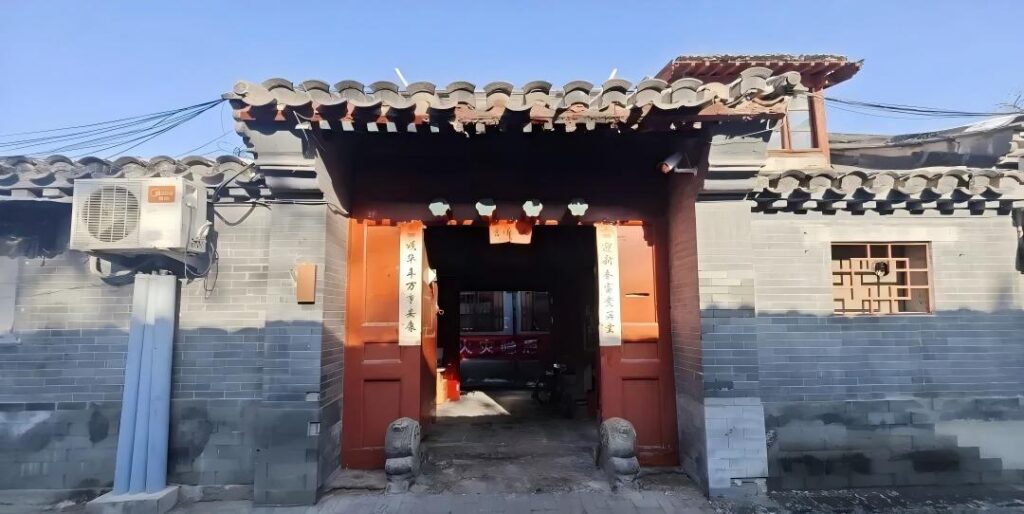
Which figures have passed through this courtyard?
Communist Party member Li Dazhao (one of the principal founders of the Chinese Communist Party, later executed by reactionary warlords) worked here; Cai Heshen (an important early leader of the CCP) held meetings here; Wang Jinmei (a delegate to the First National Congress of the CCP) devised strategies here; and Miao Boying (China’s first female Communist Party member) was also present. Kuomintang members Lu Youyu and Wang Faqin also shared office space here.
What major events that shaped Chinese history were initiated here during that era?
The National Assembly Movement, the Movement for Tariff Autonomy, the Capital Revolution, the “March 18” demonstrations… Virtually every major event that shook the nation was conceived, planned, and directed from No. 8 (now No. 27) Cuihua Hutong.
Today, the compound at No. 27 has been designated as a “Dongcheng District Cultural Heritage Site” and is among Beijing’s first batch of immovable revolutionary cultural relics.
If you look up, you’ll see a small gray stone plaque standing in the corner of the wall, inscribed with the words “Dongcheng District Cultural Heritage Site, Siheyuan.” It’s unassuming, yet authentic. These quiet stories are hidden behind ordinary gray walls and wooden doors.
4. Zhang Ximan’s Former Residence (No. 45 Courtyard) — The Place Where Lenin’s Program of the Communist Party of Russia Was Translated
In July 1919, Zhang Ximan, a refined scholar, returned from a research trip to Russia and began working at Peking University. He made his home at No. 45 Cuihua Hutong.
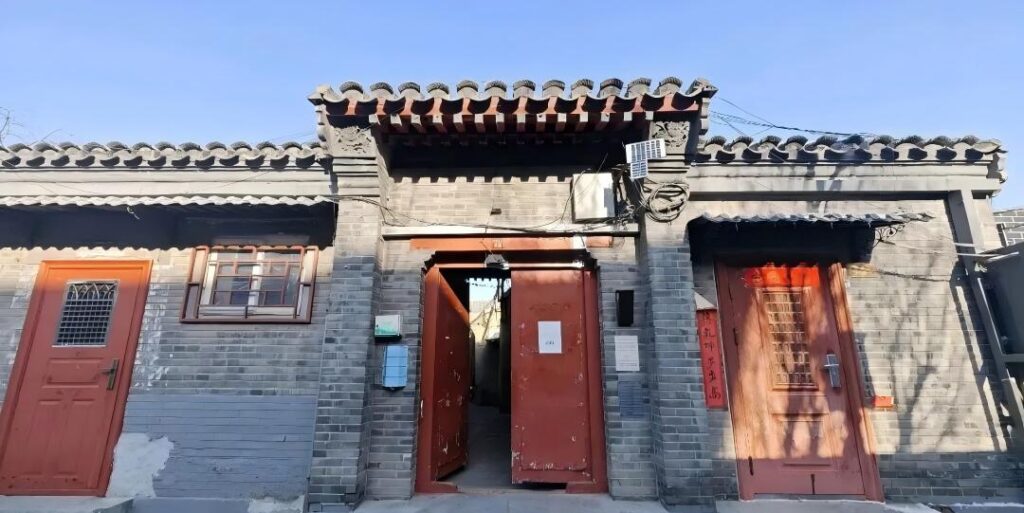
It was in this quiet courtyard that, under the pen name “Ximan,” he accomplished a task of far-reaching significance: translating Lenin’s “Manifesto of the Communist Party of Russia,” drafted in 1918.
In China at that time, there were very few scholars who could truly read Russian and were willing to translate Lenin’s legal texts into Chinese word for word; Zhang Ximan was one of them.
Zhang Ximan’s translation of this document became a direct gateway for many progressive thinkers to understand Marxism.
During that era, the Program of the Communist Party of Russia played a crucial role in the spread of Marxism in China.
Zhang Ximan was also a staunch anti-Japanese national hero and later became one of the founders of the Jiusan Society (one of China’s major democratic parties). On the eve of the founding of the People’s Republic of China in 1949, Zhang Ximan passed away in Beijing due to illness.
Current Status: Compound No. 45 is now a residential building and is not open to the public. However, it is just a short walk from the National Art Museum of China—turn into the alley from Wusi Avenue, and after a few minutes’ walk, you will see the address No. 45.
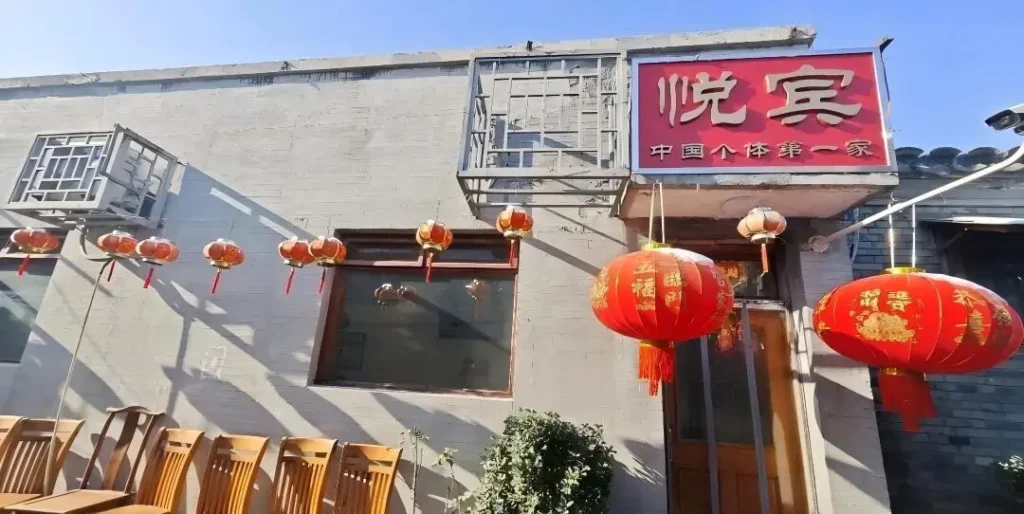
5. Yuebin Restaurant (No. 43) — China’s First Privately Owned Restaurant
The most vibrant, youthful, and touching story in this alley unfolds at No. 43—Yuebin Restaurant.
On September 30, 1980, the owner, Liu Guixian, opened a small restaurant in her own home. At the time, China was still under a planned economy, and all restaurants were state-owned; there had never been a privately owned one.
To put food on the table for her family of seven, Liu Guixian steeled herself and went to the Industry and Commerce Bureau to apply for a license. The bureau didn’t know what to do, as there was no precedent for this anywhere in the country.
In the end, the bureau specially “hand-drew” a license—since pre-printed individual business licenses didn’t exist at the time, they used pens to handwrite and sketch one on a blank sheet of paper.
On opening day, all four tables were filled with diners. Japanese journalists lined up for interviews, longtime neighbors from nearby came in with bowls to eat, and reporters from the U.S. United Press and Britain’s The Times all came to cover the story.
Foreign media commented: “In the heart of Communist China, delicious food and private commerce are regaining their vitality in narrow alleys.”
The Yuebin Restaurant is still in business today. As soon as you walk in, you can see a yellowed newspaper hanging on the wall, along with a replica of that handwritten “No. 001” business license.
Recommended Signature Dishes (The menu is available in both Chinese and English, making it easy to order):
| Chinese Name | English Reference (for international guests) | Features |
| Garlic Pork Shank | `Garlic Pork Shank` | Slow-braised pork shank until tender, served with a garlic-vinegar sauce that’s tangy and appetizing |
| Five-Shred Rolls | `Five-Shred Rolls` | Shredded chicken, pork, and three types of vegetables rolled in tofu skin and deep-fried until crispy |
| Pan-Fried Stuffed Tofu Pockets | `Guota Tofu Boxes` | Tofu pockets filled with meat, pan-fried until golden brown on both sides |
| Braised Gluten with Cabbage | `Braised Gluten with Cabbage` | Gluten and cabbage are braised together, then reduced over high heat |
| Dry-fried Yellow Croaker | `Dry-fried Yellow Croaker` | Slightly spicy, sweet, and sour, crispy on the outside and tender on the inside |
| Coriander Tripe | `Coriander Tripe` | Beef tripe stir-fried with cilantro is crisp and refreshing |
| Stir-fried Shrimp | `Stir-fried Shrimp` | Light and tender |
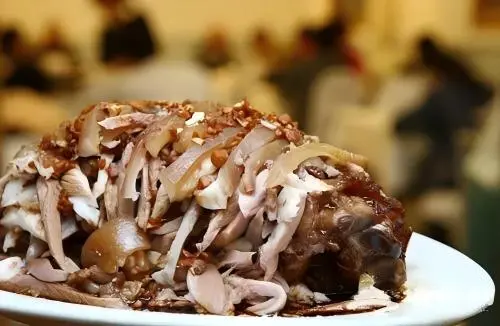
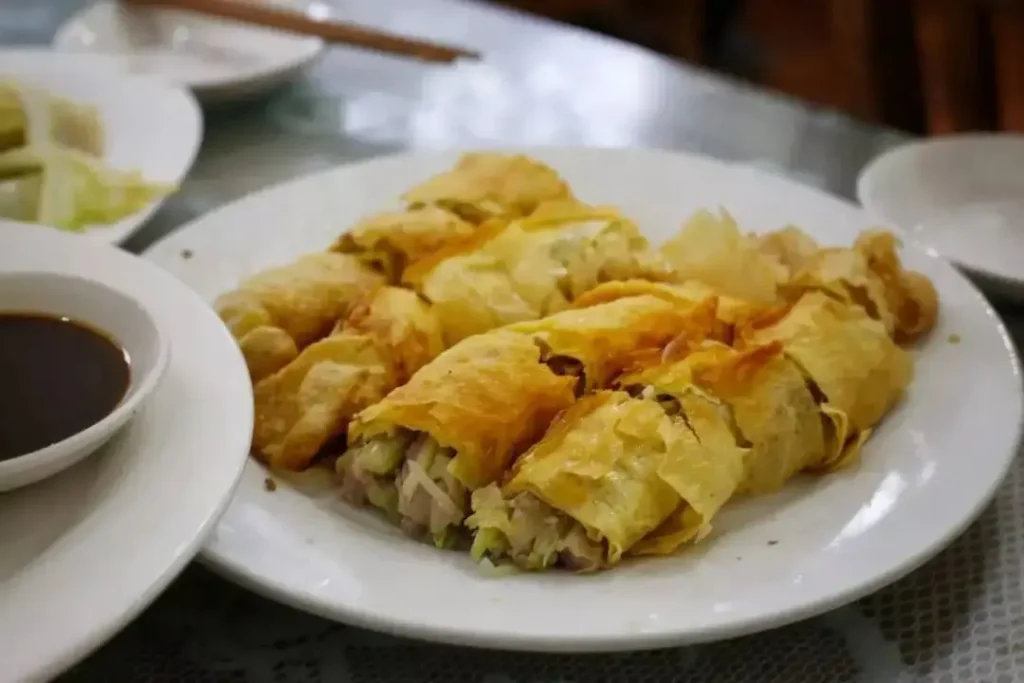
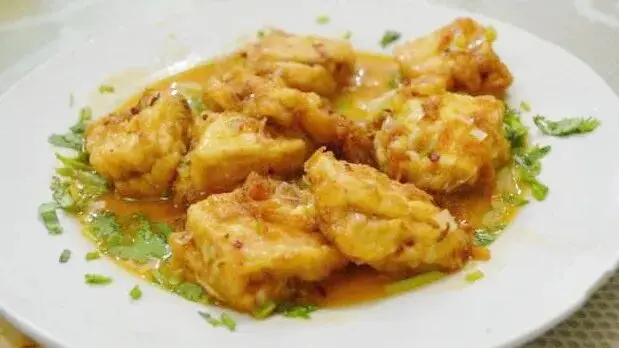
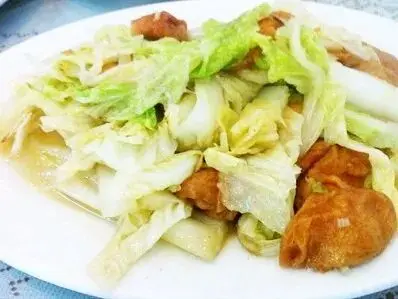
The average cost per person is approximately 50–80 yuan (about $7–11). The restaurant accepts WeChat Pay and Alipay (which can be linked to international credit cards), as well as cash and international credit cards, making it easy for foreign tourists to order and pay.
Three Generations of Heritage: Originally run by Liu Guixian and her husband Guo Peiji. Later passed down to their granddaughter, Guo Hua. By 2024, Yuebin Restaurant had reached its fourth generation (Guo Hua’s daughter). Opened in 1980, the restaurant has been in operation for over 40 years, becoming a “century-old establishment.”
> Practical Tip: The restaurant is small, seating fewer than 40 people. It gets crowded between 11:30 AM and 1:00 PM, so you may have to wait in line. We recommend visiting after 1:30 PM or after 6:30 PM, when it’s much less crowded. The restaurant does not close for an afternoon break.
The “Scar” and Rebirth at the East End of the Hutong
As it happens, the section of Cuihua Hutong with the lowest house numbers has a rather unpleasant history.
In the 1980s, a real estate development project was underway here. After the developer acquired the plot and demolished some of the old houses, they simply disappeared. What remained was a long-neglected wasteland, overgrown with weeds, where bulldozers had stopped halfway through their work.
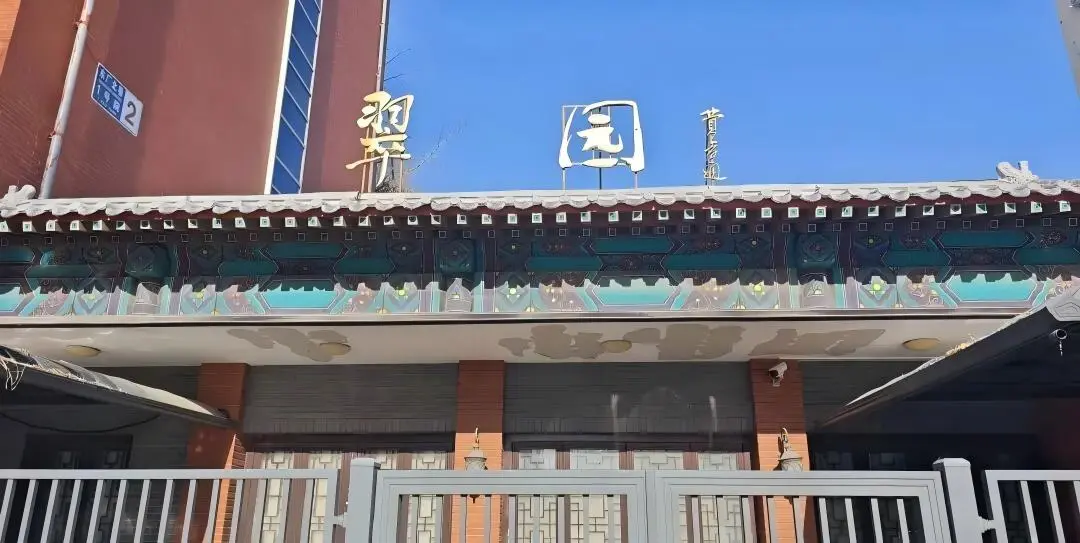
It wasn’t until around 2015 that the Guardian Art Center—an internationally renowned auction house and cultural arts space—was built on this barren land. Today, standing at the eastern entrance of Cuihua Hutong, you see a modern building with glass curtain walls.
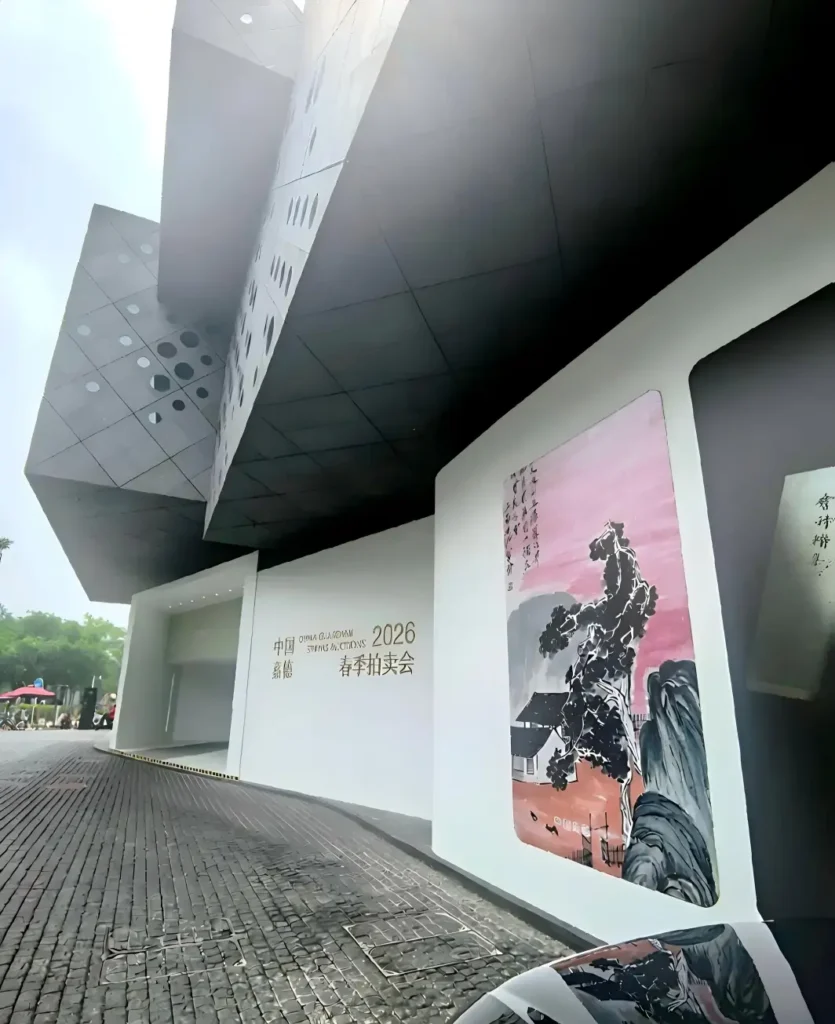
Ancient history, ruins, and modern landmarks have been passed down through three generations of Beijing. The “scar” at the eastern entrance has vanished, but the quiet charm of the old residential courtyards in the western section of the hutong remains.
Walking through Cuihua Hutong from east to west, one can witness three eras of Beijing simultaneously.
Photography Tips
| Shooting Spot | Location | Best Time to Shoot | Tips |
| East Entrance of the Hutong | Face west from the east entrance | Before 10:00 AM | Use the old brick walls and the newly built Guardian Art Center as foreground and background to capture the contrast between “old and new Beijing.” |
| Yuebin Hotel Facade | Courtyard 43 | After the lights come on in the evening | The old sign, large red lanterns, and blue-gray brick and tile roofs create the perfect backdrop for retro 1980s-style Chinese portraits. The lanterns act as natural filters, maximizing the atmospheric vibe |
| Zhang Xun’s Former Residence Section | Area around Courtyard 33 | 3–5 PM | The depth of the old hutong, combined with slanting sunlight, creates a quiet, historic atmosphere |
| Cuiyuan Main Gate | South side of the West Entrance | Morning | The gray walls and gate plaque at the entrance to Cuiyuan are perfect for photos |
| Courtyard 27 Cultural Heritage Monument | Corner of Courtyard 27 | All day | The small gray stone monument and the dark red brick wall are a perfect match |
| Power Pole in the Middle Section of the Hutong | Near residential courtyards in the middle section | Afternoon | Hanging bedding + old locust tree + old power lines = `Cinematic Beijing Hutong Life`—any casual snapshot becomes a masterpiece of humanistic documentary photography |
6. Nearby Attractions: Where to Go After Visiting Cuihua Hutong?
Cuihua Hutong is located in a prime central area, just a short walk from several of Beijing’s classic attractions.
| Location | Walking Time | Highlights | Admission |
| National Art Museum of China | Walk from the northern side street of the hutong to Wusi Avenue; 3 minutes | A national-level art museum in China that frequently hosts special exhibitions | Free (reservation required) |
| Wangfujing Street | Right at the eastern entrance of the hutong, 0 minutes | Beijing’s most famous commercial pedestrian street, offering a full range of shopping and dining options | Free |
| Shenwu Gate of the Forbidden City | About a 15-minute walk west | The northern gate of the Forbidden City | 60 yuan |
| Jingshan Park | 2 minutes north of Shenwu Gate | Climb to the top for a panoramic view of the Forbidden City | 2 yuan |
| Peking University Red Building | About a 5-minute walk west along Wusi Avenue | Birthplace of the May Fourth Movement; Memorial Hall of the New Culture Movement | Free |
| Dongchang Hutong | Connects to the southern end of the hutong, 0 minutes | Site of the Dongchang, the secret police agency of the Ming Dynasty | Free |
Recommended Walking Loop (approx. 3–4 hours, all accessible on foot):
Enter at the west end of Cuihua Hutong → Explore the exteriors of Cuiyuan, No. 27, No. 45, and No. 33 → Have a meal at Yuebin Restaurant → Exit at the east end and stroll along Wangfujing Street → Or in reverse: Wangfujing Street → Enter at the east end of Cuihua Hutong → Yuebin Restaurant → Explore the hutong → Exit at the west end and head north along Donghuangchenggen South Street → Peking University Red Building → National Art Museum of China
> “Red Beijing Drifters Loop” Connection: After visiting the revolutionary historic site in Cuihua Hutong (No. 27), you can continue walking behind Jingshan Hill to check out my previously curated guide: 【In-Depth Guide to Doufuchi Hutong: The Strategic Hub of Longwei and Yang Changji’s Former Residence】, where you’ll find the 8-square-meter courtyard where the young Mao Zedong and Yang Kaihui first fell in love.
A century ago, both of these hutongs served as cradles for the “spark of revolution among young Beijing drifters,” sharing a common heritage. You can easily explore both in a single day.
Dining Recommendations (Around Cuihua Hutong)
| Name | Location | Features | Price per person |
| Yuebin Restaurant | No. 43 Cuihua Hutong | China’s first privately owned restaurant; Beijing home-style cuisine; Chinese and English menus | 50–80 RMB |
| Quanjude Roast Duck (Wangfujing Branch) | Wangfujing Street | One of Beijing’s most famous roast duck restaurants | 200–400 RMB |
| Wangfujing Snack Street | Wangfujing Street | Various street snacks, tourist-friendly | 20–50 RMB |
| Heyan Meat Pies (Wangfujing Branch) | Xila Hutong | A time-honored Beijing meat pie shop | 30–50 RMB |
| Xiao Da Dong (Wangfujing Branch) | Wangfujing APM | Modern-style roast duck, pleasant atmosphere | 150–200 RMB |
Frequently Asked Questions (FAQ)
322 Meters, Six Centuries
Cuihua Hutong is only 322 meters long; it takes just a few minutes to walk from east to west. Yet this short alleyway, which can be traversed in just a few steps, connects different facets of Beijing’s six-century history.
It features a flower house from the Ming Dynasty (the origin of the hutong’s name), the Qing Dynasty’s “braided-hair army” and the farce of the restoration (Zhang Xun at No. 33), the intellectuals who translated Lenin’s Party Program during the Republic of China era (Zhang Ximan at No. 45), the secret command center that directed the revolution during the Kuomintang-Communist cooperation period (No. 27), the former site of a Ming Dynasty secret service agency and the dormitory where the great scholar Ji Xianlin “lived next door to ghosts” (Cuiyuan at the west end), and even China’s first privately owned restaurant after the Reform and Opening-Up (Yuebin Restaurant at No. 43)— —which still serves the same dish of pork hock with garlic paste to this day.
No admission fee, no reservations, and no lines (unless you’re there for lunch).
After strolling through Wangfujing and exiting the National Art Museum of China, why not turn into this unassuming little alley?
You’ll see diners entering under red lanterns, elderly men leisurely walking their birds, old electrical wires peeking out from gray brick walls, and that unassuming yet authentic heritage preservation plaque in the corner—Beijing’s deepest history and freshest daily life coexist quietly here, between a utility pole, a plate of pork hock, and an old house number.