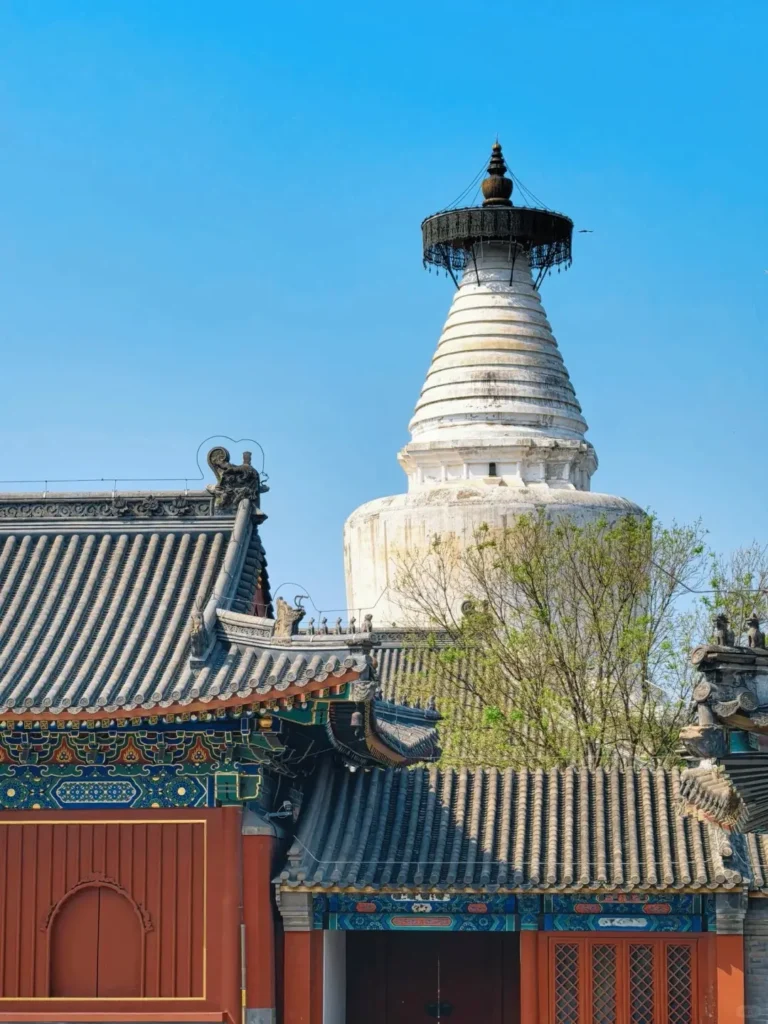
Xiannongtan (Beijing Museum of Ancient Architecture): The Most Beautiful Starry-Sky Coffered Ceiling and the Imperial Site for Agricultural Sacrifices (2026)
Across from the Temple of Heaven lies Xiannongtan, a secret imperial site overlooked by 99% of tourists. Here, emperors of the Ming and Qing dynasties offered sacrifices to the god of agriculture and personally tilled the fields—it was here that the folk saying “one mu and three fen of land” originated.
Even more breathtaking is the Ming-dynasty starry sky ceiling, hailed as “China’s most beautiful coffered ceiling”—look up, and you’ll see over 1,400 stars, the very same night sky that people of the Tang Dynasty gazed upon more than 1,000 years ago.
Admission is 15 yuan (about $2). Take Metro Line 8 directly to the site; it’s quiet and uncrowded, making it a great place to spend half a day exploring.
Table of Contents
Who Is It For? (3-Second Quick Guide)
- ✅ Ideal for: Discerning travelers interested in ancient architecture, the history of astronomy, and traditional Chinese culture
- ✅ Ideal for: Travelers looking to avoid the crowds at the Temple of Heaven and find a peaceful retreat
- ✅ Ideal for: Families with children (open spaces + starry ceiling + stories about farming—kids will love it)
- ❌ Not for: People who enjoy bustling commercial streets or want to shop
- ❌ Not for: People on a tight schedule with only 1 hour to spare (you’ll need at least 3 hours)
If any of the above apply to you, Xianongtan is definitely worth setting aside an entire afternoon for.
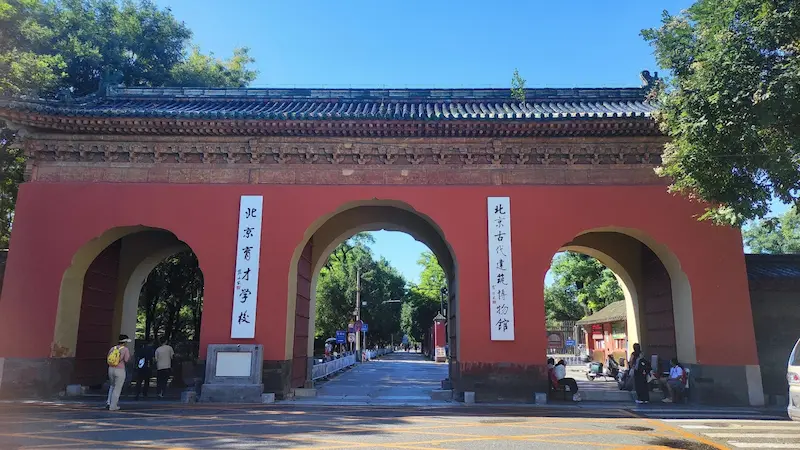
Practical Information (Must-Read Before You Go)
| Item | Details |
| Name | Xiannongtan / Beijing Ancient Architecture Museum (English: `Xiannongtan` / `Beijing Ancient Architecture Museum`) |
| Address | No. 21 Dongjing Road, Xicheng District, Beijing (west side of Yongdingmen Inner Street) |
| Visitor Information | Museum grounds; purchase a ticket for self-guided exploration |
| Subway (Recommended) | Line 8, Tianqiao Station (`Tianqiao Station`); take Exit D and walk south for about 5 minutes. For information on how to use transit cards, ride public transportation, and make electronic payments in Beijing, refer to my [2026 Comprehensive Guide to Beijing Subway and Transit Payments] |
| Bus | Take Buses 2, 7, 17, 20, 36, etc., and get off at the “Xiannongtan” stop |
| Driving and Taxis | Driving is not recommended due to limited parking in the area. When taking a taxi, set your destination to “Beijing Museum of Ancient Architecture ” or “Xiannongtan.” Map Tip: Google Maps may provide inaccurate directions in Beijing; we recommend using Apple Maps or Amap for navigation |
| Admission | 15 yuan (approx. $2); student tickets 8 yuan; free for minors. The first 200 visitors each Wednesday enter free of charge (on a first-come, first-served basis). Note for foreign visitors purchasing tickets on-site: If you are unable to make a reservation via the WeChat official account, you may go directly to the ticket office at the East Gate of Xiannongtan and present your passport to purchase a paper ticket on-site. Cash and international credit cards are accepted |
| Reservation Method | Book tickets in advance via the “Beijing Museum of Ancient Architecture” WeChat Official Account. Booking is recommended, as visitor numbers may be limited during peak season |
| Opening Hours | 9:00–17:00 (last admission at 16:30); closed on Mondays (except for national holidays) |
| Best Times to Visit | Weekdays from 9:30 AM to 11:30 AM or 1:30 PM to 3:30 PM. Weekends are slightly busier but nowhere near as crowded as the Temple of Heaven. The morning light is ideal for photographing ancient architecture; the afternoon is less crowded, making it perfect for a quiet visit to the exhibitions |
| Recommended Duration | 3–4 hours (it takes about 3 hours to tour all five major architectural complexes; add another hour if you want to examine the ceiling decorations and exhibitions in detail) |
| Dress Code | Wear comfortable flat shoes. The park is large, and you’ll be walking the entire time. Apply sunscreen in summer and dress warmly in winter |
| Budget Guide | Admission is 15 yuan (about $2). Dining nearby costs about 30–80 yuan per person (about $4–11). There are free drinking fountains inside the park; feel free to bring your own water bottle. For information on the safety of Beijing’s tap water and travel tips, please refer to my [2026 Comprehensive Guide to Beijing Tap Water Safety and Drinking] |
| Photography | Photography is allowed, but the use of flash is strictly prohibited! (Flash photography is strictly prohibited. Please turn off your camera flash before entering the Taisui Hall to protect the centuries-old wooden pigments and gold leaf.) |
| Language Support | Exhibition panels inside the museum are primarily in Chinese, with English descriptions provided for some key exhibits. We recommend using a translation app on your phone for assistance |
> Friendly Reminder: The Xiannong Altar faces the Temple of Heaven across Yongdingmen Inner Street, less than 1,000 meters away as the crow flies. While the Temple of Heaven is bustling with crowds, the Xiannong Altar is peaceful and quiet.
We strongly recommend visiting both sites on the same day: explore the Temple of Heaven in the morning (crowded but awe-inspiring), and visit the Xiannong Altar in the afternoon (less crowded and full of hidden gems).
This way, you can experience both imperial altars on Beijing’s Central Axis—one dedicated to the heavens and the other to agriculture—in a single visit.
What Is the Xiannongtan? Why Did the Emperor Personally Plow the Fields?
The Xiannongtan was first built in the 18th year of the Yongle reign of the Ming Dynasty (1420), the same year as the Forbidden City and the Temple of Heaven, and has weathered more than 600 years of history.
It was not originally called the Xiannongtan, but rather the “Altar of Mountains and Rivers” — a site where the deities of Agriculture, the Grand Duke of the Year, Wind and Clouds, Thunder and Rain, the Five Sacred Mountains, the Five Great Mountains, the Four Seas, the Four Major Rivers, and Mount Zhong were collectively worshipped.
It was not until the Jiajing era of the Ming Dynasty (1522–1566), following the revision of the ritual system for temples and altars, that it gradually took on the form we see today.
The Xiannongtan is situated on the western side of the Beijing Central Axis (UNESCO World Heritage Site), facing the Temple of Heaven to the east—the Temple of Heaven honors the Heavenly Emperor, while the Xiannongtan honors the God of Agriculture.
Together, representing Heaven and Earth, they have safeguarded Beijing’s six centuries of favorable weather and bountiful harvests.
It is the largest and best-preserved imperial altar dedicated to the God of Agriculture still in existence in China and was listed as a National Key Cultural Relic Protection Unit in the fifth batch in 2001.
Why Hold a Ritual to Honor Agriculture?
In ancient China, agriculture was the foundation of the nation. As the “Son of Heaven,” the emperor was not only responsible for governing the country but was also required to personally till the fields to demonstrate his commitment to agriculture and to pray for bountiful harvests and the prosperity and peace of the nation.
This ritual, known as the “Rite of Personal Plowing” (or “Gengji Rite”), was one of the most solemn state ceremonies in ancient China.
In the second year after Emperor Taizu of the Ming Dynasty, Zhu Yuanzhang, ascended the throne, he established the Xianong Altar in Nanjing and performed the Gengji Ritual.
After Emperor Chengzu of the Ming Dynasty, Zhu Di, moved the capital to Beijing, he brought this tradition with him.
From then on, emperors of the Ming and Qing dynasties would visit the Xianong Altar every year on the Day of the Pig in mid-spring to perform the Gengji Ritual in honor of agriculture.
How Did the Phrase “One Mu and Three Fen of Land” Come About?
Within the Xianong Altar was a dedicated plot of farmland reserved for the emperor to perform the Personal Plowing Ceremony.
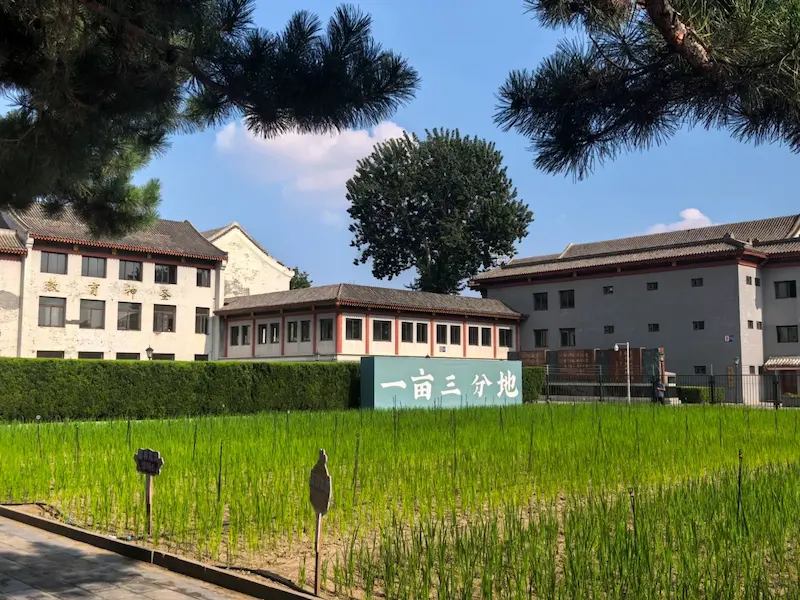
This plot was 11 zhang long and 4 zhang wide; according to the measurement standards of the Ming and Qing dynasties, its total area equaled exactly one mu and three fen.
This gave rise to the colloquial expression “one mu and three fen of land,” meaning “one’s own little patch of land.” This plot was called the “Jí Field,” and its annual harvest was used for ancestral temple sacrifices.
What Was the Emperor’s Plowing Ceremony Like?
According to the *Veritable Records of the Qing Dynasty*, the personal plowing ceremony was highly ceremonial:
1. Fasting and Abstinence: The emperor and the princes, nobles, and ministers participating in the ritual observed a period of fasting and abstinence two days in advance (refraining from meat, alcohol, and sexual relations).
2. Preparations: The sacrificial text and farming tools were delivered to the Forbidden City one day in advance for the emperor’s review, then returned to the Xiannongtan.
3. Departure: Early on the day of the ceremony, the Emperor’s imperial procession departed from the Forbidden City, while civil and military officials had already arrived at the Xiannongtan to await him.
4. Plowing: The Emperor walked to the “one mu and three fen” plot, accepted the farming tools and whip, and personally plowed three back-and-forth passes (“three forward strokes and three backward strokes”).
The Vice Minister of the Ministry of Household and the Prefect of Shuntian followed closely behind, scattering carefully selected grain seeds into the soil.
5. Observing the Plowing: After the emperor finished plowing, he ascended the adjacent viewing platform to watch the Three Princes and the Nine Ministers perform the “five forward strokes and five backward strokes” and “nine forward strokes and nine backward strokes” in turn.
6. Conclusion: Finally, 30 professional farmers completed the remaining work.
>Historical Data: Qing Dynasty emperors attached great importance to the personal plowing ceremony. During his 13-year reign, Emperor Yongzheng personally plowed 12 times; Emperor Qianlong personally plowed 28 times throughout his life, and even at the advanced age of 79, with a hunched back, he still insisted on holding the plow and plowing himself.
The emperor who participated the least during the Ming Dynasty was Emperor Jiajing, who personally plowed only twice during his 45-year reign.
Five Major Architectural Complexes: Explore the Imperial Site of the Agricultural Sacrifice in One Visit
The Xiannongtan is divided into two main areas: the Inner Altar and the Outer Altar, comprising a total of five core ancient architectural complexes: Qingcheng Palace, Jufu Hall, Taosui Hall, the Divine Kitchen, and the Divine Granary.
Currently, all courtyards within the Inner and Outer Altars are interconnected, allowing visitors to explore the entire site in a single visit.
The park has two main entrances:
- East Gate (main entrance to the Inner Altar, leading directly to Taosui Hall)
- East Outer Gate of Qingcheng Palace (directly facing Yongdingmen Inner Street)
The following introduces the five major architectural complexes in order from south to north—which is also the most logical route for visitors.
1. Qingcheng Palace Complex—The Highest-Ranking Structure at Xiannongtan
Upon entering through the East Gate or the southern entrance, the first grand architectural complex you’ll see is Qingcheng Palace.
Originally built in the second year of the Tianshun era of the Ming Dynasty (1458), Qingcheng Palace was initially called “Zhaigong” and served as the place where the emperor observed fasting and abstinence before performing the ritual of plowing the imperial field.
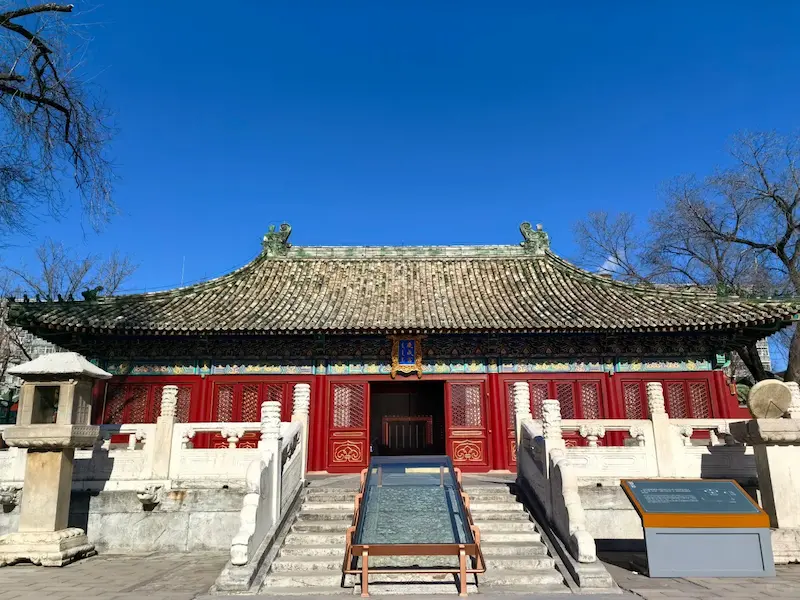
In the 20th year of the Qianlong era of the Qing Dynasty (1755), it was renamed Qingcheng Palace and became the venue where the emperor rested after performing the ritual of plowing the imperial field and rewarded his officials.
On December 21, 2024, after nearly 30 years of relocation and restoration, Qingcheng Palace opened to the public for the first time.
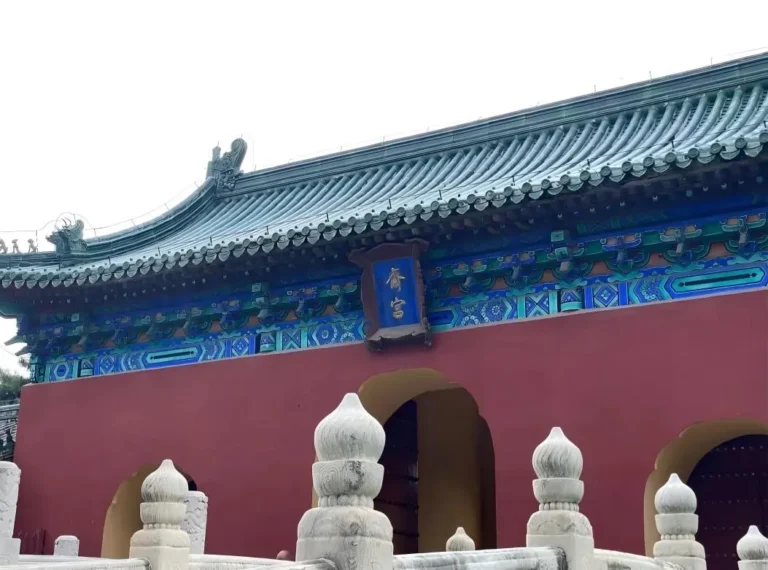
It is the highest-grade imperial architectural complex within the Xiannongtan, comprising three courtyards. Both the main hall and the rear hall feature wudian-style roofs covered with green glazed tiles.
The beams and crossbeams are adorned with “Golden Dragon and Imperial Seal” polychrome paintings (the highest-grade imperial decorative style), while the doors and windows feature the “three-intersecting, six-cuped rhombus” pattern identical to that of the Hall of Supreme Harmony in the Forbidden City. The interior of the hall is decorated with a ceiling painting depicting a coiled dragon.
> Photography Tip: The wudian-style roof, green glazed tiles, and “Golden Dragon and Imperial Seal” polychrome paintings of Qingcheng Palace’s main hall exude a truly imperial grandeur. The morning light is ideal for capturing panoramic shots.
2. The Jufu Hall Complex— “One Mu and Three Fen of Land” and the Farming Observation Platform
After visiting Qingcheng Palace, walk north along the central axis to reach the core area where the Imperial Plowing Ceremony was held—the Jufu Hall complex.
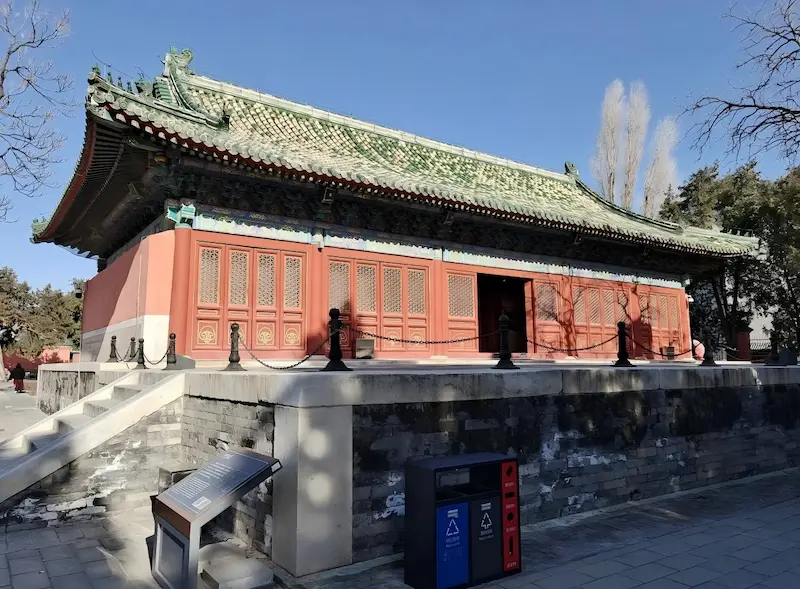
- Jufu Hall: Built on a 1.65-meter-high platform, it spans five bays in width and features a front porch. This was where the emperor changed into his ceremonial farming attire and rested before personally plowing the ritual field.
- Farming Viewing Platform: A high platform constructed of white marble, measuring five zhang in width and five chi in height. After the emperor had finished plowing with a plow, he would sit here to watch the princes and ministers plow.
- One Mu and Three Fen Plot: Directly south of the Plowing Viewing Platform lies the ritual field where Ming and Qing emperors personally sowed seeds, covering an area of nearly 800 square meters. In 2019, as a key component of Beijing’s Central Axis World Heritage nomination, the Xiannongtan restored this ritual field to its original historical appearance. Today, it has become the core area for regular farming experiences.
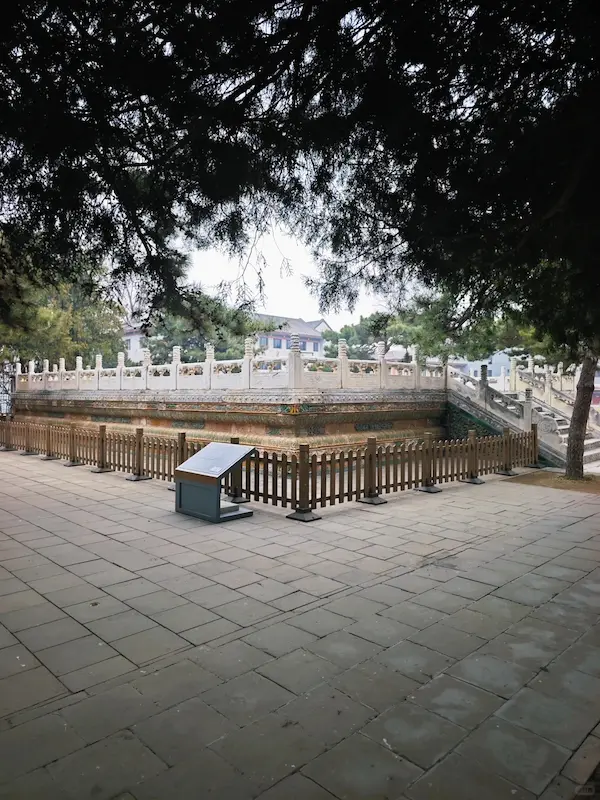
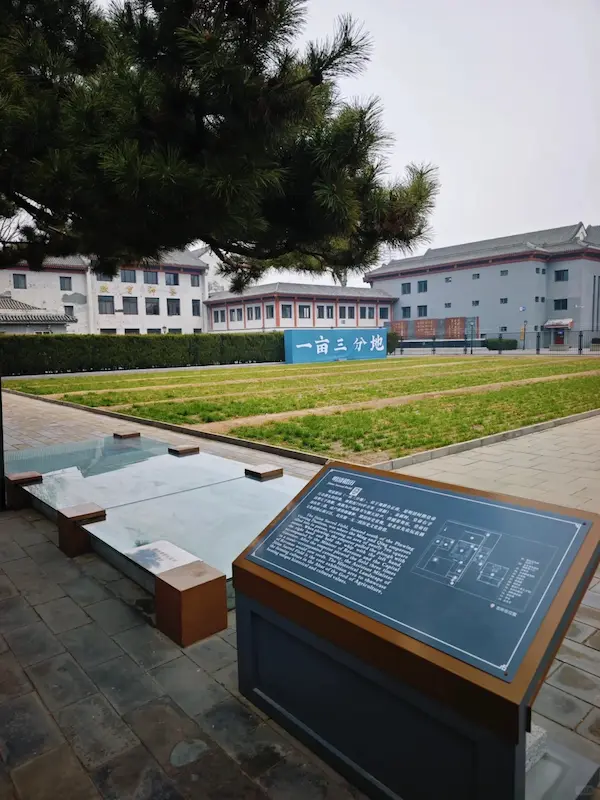
> Cultural Insight: Standing on the Plowing Viewing Platform, you can imagine the scene from 600 years ago: an emperor clad in a dragon robe, having just finished plowing the field with his own hands, sitting here watching his court officials toiling in the fields, drenched in sweat. This was no performance—it was the nation’s highest-level ceremonial rite.
> Photo Tip: Stand on the Farming Viewing Platform and shoot southward to capture the one mu and three fen plot along with the ancient buildings in the distance. The lighting is excellent both in the morning and afternoon.
3. Taisui Hall Complex—Home to the Museum’s Crown Jewel, the “Celestial Palace Ceiling”
Next, we enter the heart of the Xiannongtan complex—the Taisui Hall complex.
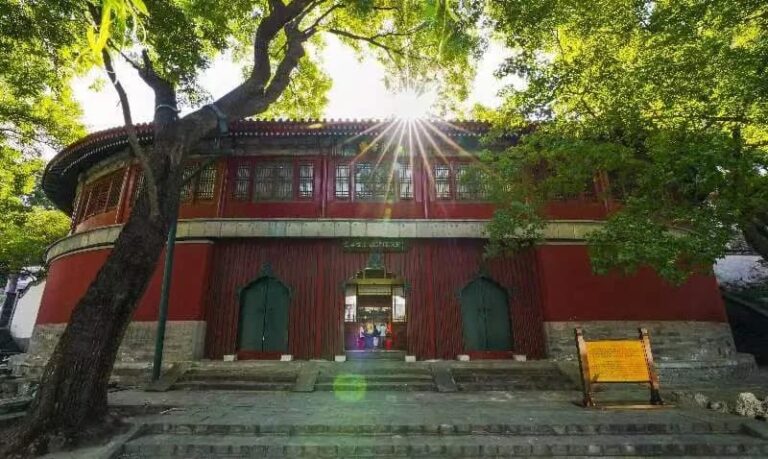
Taisui Hall is the largest courtyard within Xiannongtan’s ancient architectural complex and served as the site of sacrifices to the Taisui deity (the deity who governs the annual cycle) during the Ming and Qing dynasties.
The main hall, the Taisui Hall, is the largest single structure within the Xiannongtan, with a total height of nearly 20 meters and a floor area of 1,118.2 square meters. It features a single-eave hipped-and-gabled roof with black glazed tiles edged in green, and its timber framework is crafted from precious golden-thread nanmu wood.
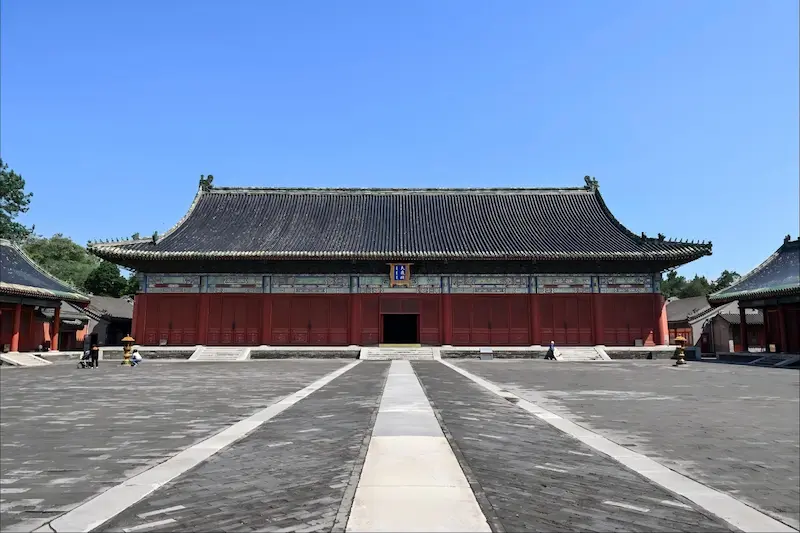
Inside the Hall of the Grand Duke of the Year lies Xiannongtan’s crown jewel—the Heavenly Palace Caisson Ceiling (Tiangong Caisson Ceiling).
> Blogger’s Personal Experience:
The first time I stepped into the Hall of the Grand Duke of the Year and looked up directly beneath the ceiling, I was so awestruck by the dense array of wooden carvings, mortise-and-tenon joints, and gold-leaf details that I was left speechless.
Unlike the Hall of Prayer for Good Harvests at the Temple of Heaven, which can only be viewed from a distance at the entrance, the most wonderful thing about the Temple of Agriculture is that you can stand directly beneath the caisson ceiling and gaze up at it up close!
That breathtaking beauty of over 1,400 stars pressing down from above can only be truly experienced by looking up in person.
First Marvel: The Heavenly Palace Caisson Ceiling (Hall of the Grand Duke of the Year)— “Look Up and See the Starry Sky of a Thousand Years Ago”
The Celestial Palace Ceiling originates from the Wanshan Zhengjue Hall at Longfu Temple (Longfusi), built during the Jingtai era of the Ming Dynasty (1450–1457). It is not a “native” feature of the Xiannongtan—after the 1976 Tangshan Earthquake, Longfu Temple sustained severe damage, and this ceiling was relocated to the Xiannongtan for preservation.
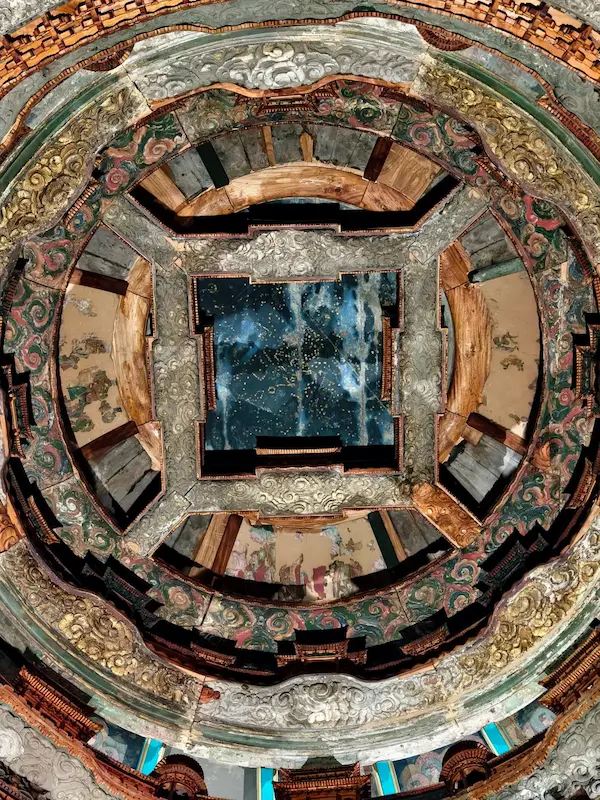
The entire coffered ceiling is divided into six layers, assembled using a mortise-and-tenon joint system from pure golden thread cypress wood, without a single iron nail. It features carvings of 68 miniature celestial palaces and pavilions, supported at the four corners by the Four Heavenly Kings, with the interlayers painted with images of the deities of the Twenty-Eight Lunar Mansions.
Most precious of all is the celestial map at the center of the top layer—it recreates the night sky of the Tang Dynasty, drawn based on the *Song of the Sky Pacing* (*Bu Tian Ge* Star Chart) by the Tang astronomer Wang Ximing, and fully restores the configuration of the Twenty-Eight Lunar Mansions.
This star chart features more than 1,400 gilded stars arranged with precision; analysis indicates that the source material for this chart was a star map dating no later than the Tang Dynasty.
> Cross-Cultural Interpretation:
Imagine that the starry sky you see when you look up is the very same night sky that people in the Tang Dynasty gazed upon more than 1,000 years ago.
This is akin to walking into a European cathedral and looking up to see the sky as it appeared before Galileo—but 600 years even earlier than that.
This is not a coffered ceiling; it is an observatory carved from wood.
Look up, and you’ll see the Milky Way stretching across the sky, jade palaces and towers, and divine generals standing solemnly—and you’ll instantly understand the lines Su Shi wrote: “Palaces in the heavens, jade palaces and towers.”
> Photography Tip: No flash! Use your phone’s night mode or pro mode, lower the exposure, and increase the ISO. Stand directly beneath the coffered ceiling and shoot upward to capture all six layers of celestial palaces and pavilions, along with over 1,400 stars, within the frame.
Second Masterpiece: Coiled Dragon Ceiling (Prayer Hall)—A Giant Dragon Carved from a Single Piece of Wood
The coiled dragon ceiling in the Prayer Hall also originates from Longfu Temple. Crafted entirely from golden-threaded nanmu wood, it features a structure built entirely with mortise-and-tenon joints, without a single nail.
At the center of the ceiling is a coiling dragon carved from a single block of golden nanmu wood, with no joints or repairs whatsoever.
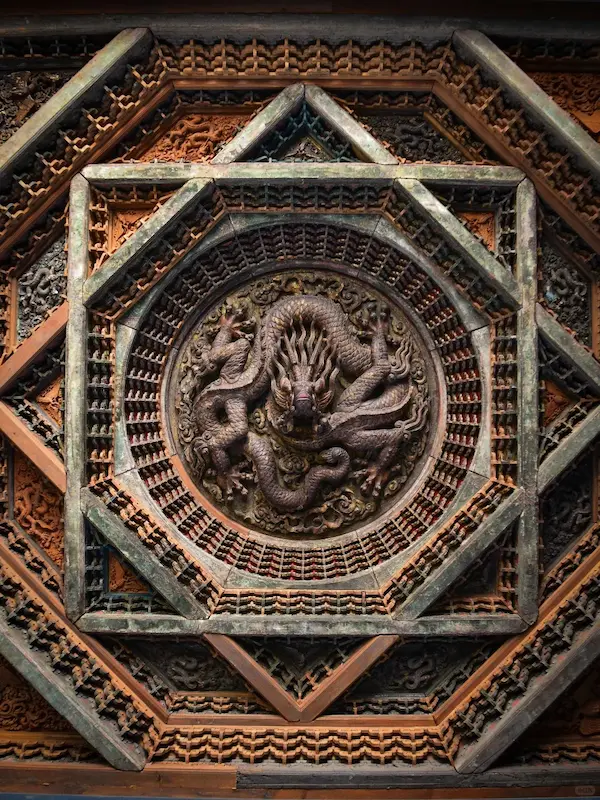
The giant dragon hangs upside down in a diving posture, its scales densely arranged and its presence majestic and powerful, as if it might burst through the ceiling at any moment. The four corners are adorned with gilded patterns of soaring phoenixes.
> Cultural Interpretation:
Why did the ancients spend such vast sums on constructing caisson ceilings in the halls?
Because ancient Chinese architecture was entirely wooden, making it highly vulnerable to fire. “Zao” (藻) refers to aquatic plants, and “jing” (井) means a well that stores water; the ancients used the caisson ceiling to symbolize their wish to quell fire, avert disaster, and protect the halls.
At the same time, the nested square-and-circle structure of the caisson ceiling also embodies the ancient Chinese cosmological view of “the sky is round, and the earth is square.”
4. The Shenchu Complex—A Rare Example of Ming Dynasty Official Architecture
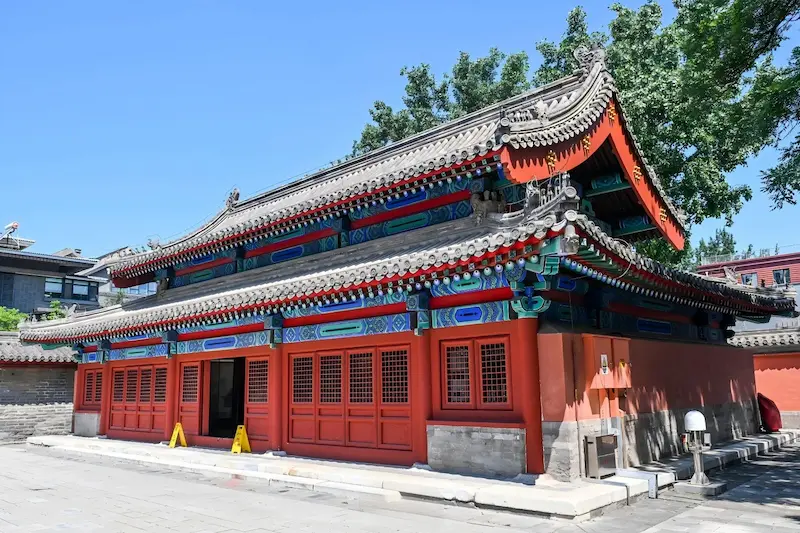
Walking east from the Taosui Hall brings you to the Shenchu Complex, which includes the Sacrificial Pavilion and the Hexagonal Well Pavilion. This was the site where sacrificial animals and offerings were prepared.
The Sacrificial Pavilion is a rare example of Ming Dynasty official architecture; its architectural style is highly distinctive and well worth seeing.
5. The Divine Granary Complex— “The Number One Granary Under Heaven”
Located at the northern end of the Inner Altar of the Xiannongtan, the Divine Granary Complex served as a granary exclusively for imperial sacrifices during the Ming and Qing dynasties.
The grains stored here were the imperial five grains—sown and harvested personally by the emperor each year—which were neither to be consumed nor bestowed as gifts, but reserved solely for the national-level Grand Ceremony of Sacrifice to Agriculture.
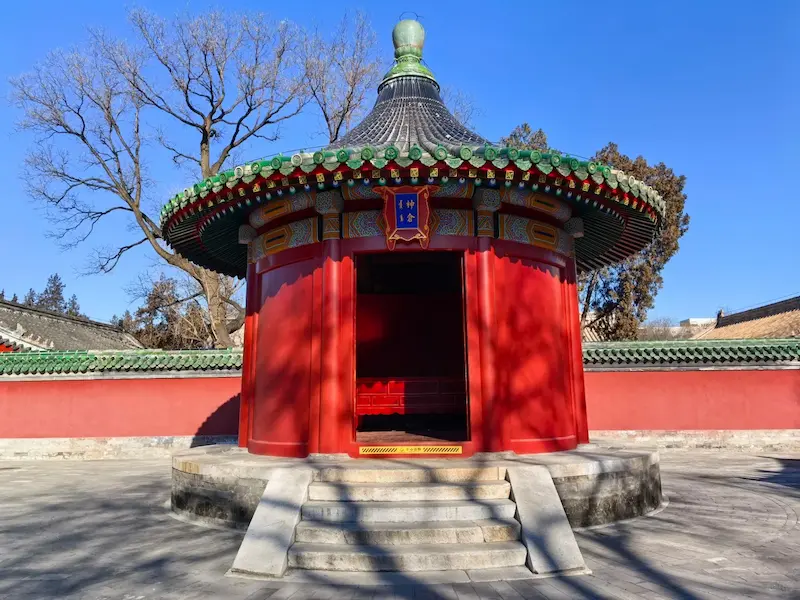
The Divine Granary has two distinctive features:
- Black glazed tile roofs: In the Five Elements theory, black represents water, which subdues fire; this architectural design was intended to prevent fire hazards.
- Realgar-infused decorative paintings: Natural realgar was mixed into the pigments used for the painted beams and brackets, imparting insect-repellent properties that kept insects and ants at bay while also protecting against moisture and decay.
Recommended Tour Itinerary (approx. 3–4 hours)
> Starting Point: Exit D of Tianqiao Station on Metro Line 8; walk south for about 5 minutes to reach the East Gate of Xiannongtan.
> First Stop: Qingcheng Palace Complex (approx. 30 minutes). See the site where the emperor observed fasting rituals and rewarded his officials—a three-courtyard complex featuring colorful paintings of golden dragons and imperial seals.
> Second Stop: Jufu Hall Complex (approx. 30 minutes). Explore the “One Mu and Three Fen Plot,” the Plowing Viewing Platform, and Jufu Hall. Stand on the Plowing Viewing Platform and imagine the emperor seated here, watching his officials plow the fields.
> Third Stop: Taosui Hall Complex (approx. 1 hour). This is the highlight of the tour! Step inside Taosui Hall and look up at the celestial ceiling—featuring over 1,400 stars, 68 celestial pavilions, and the Four Heavenly Kings. Take your time; plan to spend at least 30 minutes here.
> Fourth Stop: Worship Hall (approx. 20 minutes). Admire the Coiling Dragon Ceiling—a giant dragon in a diving posture carved from a single block of golden-threaded nanmu wood.
> Fifth Stop: Divine Kitchen Complex (approx. 20 minutes). View the rare examples of Ming Dynasty official architecture—the Sacrificial Pavilion and the Hexagonal Well Pavilion.
> Sixth Stop: The Divine Granary Complex (about 20 minutes). Admire the “Number One Granary Under Heaven,” the black glazed tile roof, and the realgar-and-jade-colored murals.
> Afterward: Exit the Xiannongtan and cross the street to reach the Temple of Heaven. If you have time, you can continue exploring the Temple of Heaven (combined ticket: 34 yuan, about $5).
Nearby Attractions: A One-Day Tour Along the Central Axis
Xiannongtan is located at the heart of Beijing’s Central Axis, and several World Heritage Sites can be easily reached on foot from there:
| Attraction | Direction | Walking Time | Highlights | Admission |
| Temple of Heaven | Across the street (east side) | 2 minutes | Site where Ming and Qing emperors performed sacrifices to Heaven; World Heritage Site | Combined ticket: 34 yuan |
| Yongdingmen Gate | North side | 5 minutes | Southern starting point of Beijing’s Central Axis | Free (exterior view) |
| Tianqiao | North side | 10 minutes | Birthplace of Old Beijing’s folk arts | Free |
| Natural History Museum | North side | 10 minutes | One of China’s most famous natural history museums | Free (reservation required) |
Recommended One-Day Itinerary (approx. 6–7 hours)
> Morning: Temple of Heaven (3–4 hours; visit the Hall of Prayer for Good Harvests, the Echo Wall, and the Circular Mound Altar) → Lunch near Tianqiao → Afternoon: Xianongtan / Beijing Museum of Ancient Architecture (3–4 hours; see the “One Mu and Three Fen” Plot, the Heavenly Palace Ceiling, and the Coiled Dragon Ceiling) → Evening: Capture the sunset over the Central Axis at Yongdingmen
If you’d like to explore more in-depth cultural itineraries related to Beijing’s Central Axis, feel free to check out my [2026 Beijing Off-the-Beaten-Path Hutong Citywalk In-Depth Exploration Guide].
Photography Guide
| Shooting Spot | Location | Best Time to Shoot | Tips |
| Celestial Palace Ceiling | Inside the Hall of the Grand Duke of the Year | All day (indoors) | No flash! Use your phone’s night mode or pro mode, lower the exposure, and increase the ISO. Stand directly beneath the ceiling and shoot upward to capture all six levels of the Celestial Palace and over 1,400 stars within the frame |
| Coiling Dragon Ceiling | Inside the Hall of Worship | All day (indoors) | No flash! To capture the majesty of the diving dragon, shoot upward from directly below; be sure to focus on the dragon’s head |
| Farming Observation Platform and the “One Mu and Three Fen” Plot | South Side of the Hall of Ceremonial Attire | Morning or Afternoon | Stand on the Farming Observation Platform and shoot southward to capture the “One Mu and Three Fen” plot and the ancient buildings in the distance within the frame |
| Main Hall of Qingcheng Palace | Qingcheng Palace Complex | Morning | The hall’s gabled roof, green glazed tiles, and the painted golden dragons and imperial seals exude a truly imperial grandeur |
| Xiannongtan and the Temple of Heaven in the Same Frame | Yongdingmen Inner Street | Around Sunset | Standing on Yongdingmen Inner Street, shoot the silhouette of the Hall of Prayer for Good Harvests at the Temple of Heaven to the east and the roof of the Xiannongtan to the west—a single photo capturing the two imperial altars and temples on the Central Axis dedicated to “worshiping Heaven”and “worshiping Agriculture” |
FAQ
The Xiannongtan is the same age as the Temple of Heaven and has stood here for more than 600 years. While the Temple of Heaven honors the heavens, the Xiannongtan honors agriculture—one governs the winds and rains in the sky, the other governs the harvests on the earth.
For 600 years, standing side by side—one to the east, one to the west—they have safeguarded six centuries of favorable weather and bountiful harvests for the city of Beijing.
As you step into the Hall of the Grand Duke of the Year and look up, you’ll see more than 1,400 stars—the very same night sky that people of the Tang Dynasty gazed upon over 1,000 years ago.
When you approach the Plowing Observation Platform, you’ll see that “one mu and three fen” plot of land—the very spot where Emperors Yongzheng and Qianlong personally guided the plow.
Step into the Granary Hall, and you’ll see black glazed tiles and paintings in realgar and jade hues—a testament to the ancient wisdom of the Five Elements and the ingenious use of natural minerals to safeguard the granary.
The Temple of Heaven is bustling; the Temple of Agriculture is serene. The Temple of Heaven is for tourists; the Temple of Agriculture is for those who truly understand it.
When you come to Beijing, don’t just visit the Temple of Heaven. Cross the street and take a look at the Temple of Agriculture.
Here you’ll find one mu and three fen of land, 1,400 stars, and China’s most beautiful coffered ceiling. It won’t disappoint you.