Temple of Heaven Visitor Guide: Tickets, Hours, Itinerary Planning, and Insider Tips (Updated 2026)
Last Updated: July 2026
Recently, news of the U.S. President’s visit to the Temple of Heaven made headlines around the world. The image of the two leaders shaking hands in front of the Hall of Prayer for Good Harvests has once again brought this 600-year-old ancient structure into the global spotlight.
Seeing those images in the news, you might be awed by the grandeur of the Hall of Prayer for Good Harvests. But as a local blogger who has lived in Beijing for ten years, I’d like to show you a more authentic side of the Temple of Heaven—beyond the aerial shots.
It’s not just an imperial altar—it’s also the best place to experience the everyday vibrancy of Beijing. This magical blend of history and daily life is precisely what sets the Temple of Heaven apart from the Forbidden City and the Summer Palace.
This Temple of Heaven visitor’s guide will provide you with practical and in-depth advice to help you explore the site like a local.
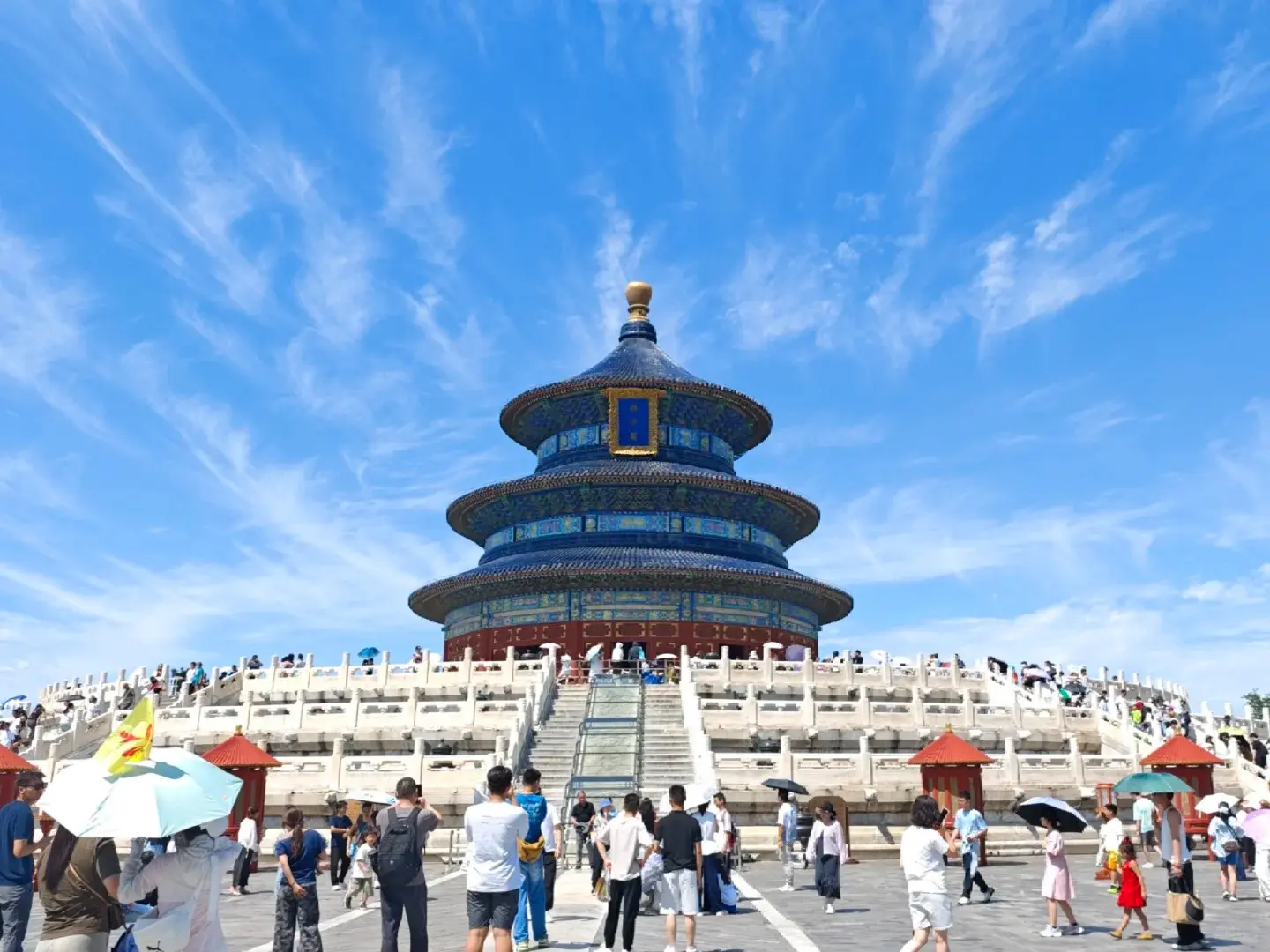
Table of Contents
Part One: Understanding the Temple of Heaven for a More Enriching Visit
Before stepping into the Temple of Heaven, taking 10 minutes to understand its“soul” will make your visit ten times more meaningful. If you focus solely on the architecture, you’ll miss half of what makes it special.
What Exactly Is the Temple of Heaven?
Simply put, this is where emperors of the Ming and Qing dynasties communicated with “Heaven.” Every year on the Winter Solstice, the emperor would offer sacrifices to Heaven at the Circular Mound Altar, praying for favorable weather and bountiful harvests; in early spring, he would pray for a bountiful harvest of the five grains at the Hall of Prayer for Good Harvests.
Its entire layout strictly follows the ancient Chinese cosmological view of “Heaven is round, Earth is square”: the northern half centers on the circular Hall of Prayer for Good Harvests, symbolizing “Heaven”; the southern half centers on the square Circular Mound Altar, symbolizing “Earth.” Connecting these “Heaven” and “Earth” is a 360-meter-long “Sacred Way”—the Danbi Bridge.
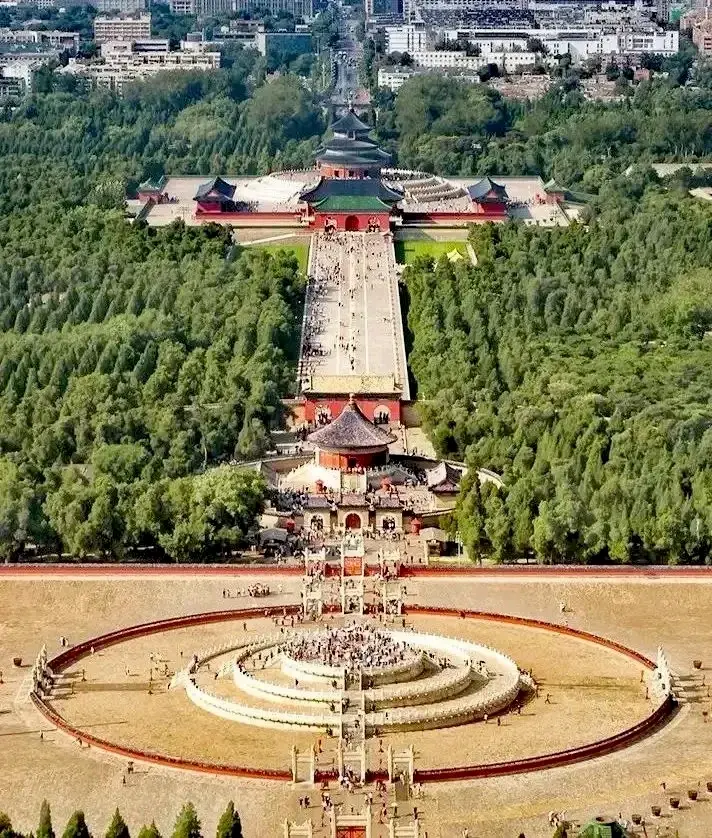
Here’s a little-known fact that even tour guides may not be aware of: The Temple of Heaven covers an area of 2.73 million square meters, equivalent to four times the size of the Forbidden City.
Moreover, it is the only imperial structure on Beijing’s central axis that is not centered—the entire complex is intentionally shifted to the east, as ancient people believed the west should be reserved for the “spirits” to pass through.
The layout of the Temple of Heaven also subtly reflects the ritualistic “Heaven on the left, Earth on the right” arrangement of Beijing’s central axis: the Temple of Heaven is to the east, and the Temple of Agriculture is to the west, with the two structures mirroring each other in symmetry.
How does the Temple of Heaven differ from the Forbidden City?
The Forbidden City is a majestic imperial palace, grand and imposing; the Temple of Heaven, on the other hand, is more like a giant public park, where historical landmarks blend seamlessly with the hustle and bustle of daily life.
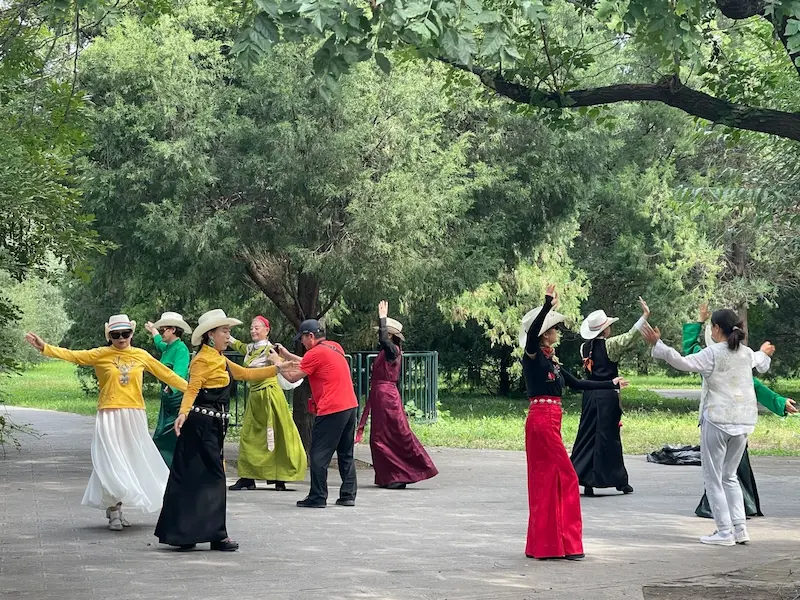
Not only can you admire magnificent ancient architecture, but you can also witness the most authentic Beijing lifestyle: early-morning choir and tai chi groups, and elderly people walking their birds or playing chess in the ancient cypress groves… This place is not just about “Heaven-worship culture”; it’s also brimming with the vibrant energy of everyday life.
The “Codes” of Architecture
The architecture of the Temple of Heaven is imbued with numerical mysteries, many of which are related to the number“nine,” which represents“Heaven.”Deciphering these codes is the key to unlocking the Temple of Heaven’s mysteries.
For example, the number of steps and stone slabs on the Circular Mound Altar are all multiples of nine; the number of columns inside the Hall of Prayer for Good Harvests symbolizes the four seasons, the twelve months, and the twelve hours of the day, respectively. We’ll discuss these details as we walk through the site.
Part 2: What to Know Before You Go (Tickets, Hours, Entrances)
Now that you understand the background, let’s look at how to plan your itinerary and choose the best way to explore the site.
How to Choose a Ticket?
- Combined Ticket (34 yuan): Includes all core structures such as the Hall of Prayer for Good Harvests, the Echo Wall, and the Circular Mound Altar. This is the top choice for the vast majority of visitors. You may enter each core attraction only once. You can secure your Temple of Heaven Combined Admission Pass here in advance.
- General Admission Ticket (15 yuan): Grants access only to the park grounds; it does not allow entry to the core structures mentioned above. If you purchase only the general admission ticket, you will not be able to enter the Hall of Prayer for Good Harvests, and you cannot pay the difference for admission at the site.
How to Buy Tickets?
The Temple of Heaven operates on a real-name, time-slot reservation system. We recommend that all visitors purchase tickets online in advance—this is the most reliable method.
Online Booking Channels (Recommended):
- WeChat Mini Program “Tiantan”: The official direct channel, with a simple booking process.
- “Jingtong” App or WeChat Mini Program: The official platform of the Beijing Municipal Government, supporting an English version and verification of foreign passports; enter your information once for access to multiple attractions.
After making an online reservation, foreign visitors simply need to present their reservation QR code and original passport upon entry.
On-Site Ticket Purchase (Alternative Option):
On-site ticket windows are available at all entrances to the Temple of Heaven, and foreign visitors can purchase tickets on-site with their passports.
However, same-day tickets are limited and available only while supplies last. During peak season, wait times may exceed half an hour; we recommend using this only as a backup option and not relying solely on on-site ticket purchases.
When Is the Best Time to Visit? (2026 Official Opening Hours for the Temple of Heaven)
The Temple of Heaven’s opening hours are divided into peak and off-peak seasons; please be sure to distinguish between them:
Opening Hours for Core Attractions (Hall of Prayer for Good Harvests, Echo Wall, Circular Mound Altar):
- Peak Season (April 1 – October 31): 08:00 – 18:00 (last admission at 17:30)
- Off-season (November 1 – March 31 of the following year): 08:00 – 17:00 (last admission at 16:30)
Park Gate Opening Hours:
- Peak Season (April 1 – October 31): 06:00 – 22:00 (last admission at 21:00)
- Off-season (November 1 – March 31 of the following year): 6:30 AM – 10:00 PM (last admission at 9:00 PM)
⚠Hard-Learned Lesson: Core attractions within the park, such as the Hall of Prayer for Good Harvests and the Echo Wall, are closed every Monday (except on national holidays). If you go on a Monday, you’ll only be able to walk around the park and won’t be able to enter the main buildings—don’t ask me how I know.
The Temple of Heaven has three distinctly different atmospheres throughout the day:
Early morning (6:30–8:30): An “open-air club” for Beijing’s older residents. Choral groups, Tai Chi fans… It’s the most vibrant time, with the fewest tourists and the softest light. This is the best time to experience local culture.
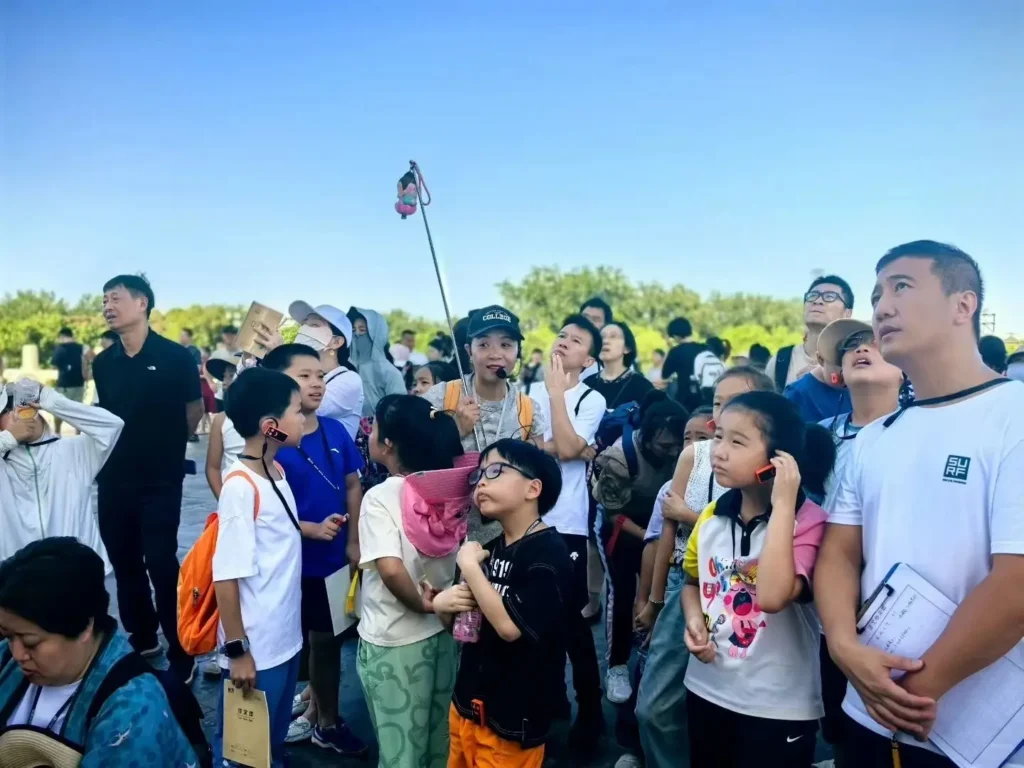
Morning to Afternoon (10:00–15:00): The domain of tour groups. The area in front of the Hall of Prayer for Good Harvests is packed with people. This is a good time to slip into the colonnades to watch people play chess or head to the Bureau of Divine Music to listen to ancient music.
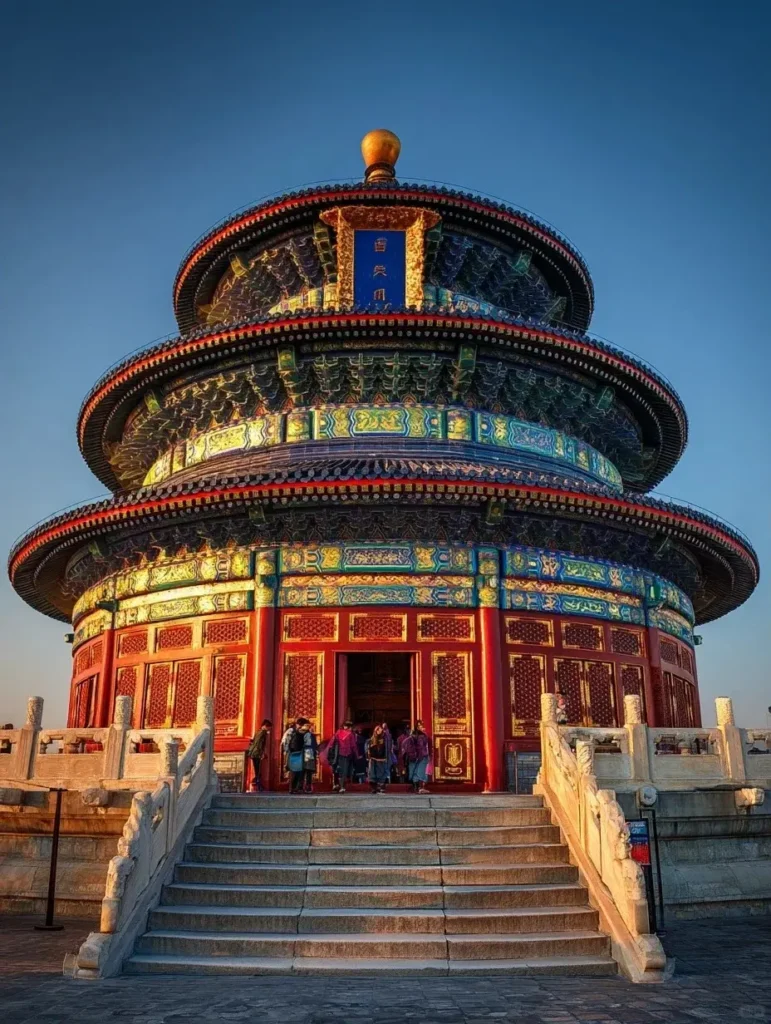
One hour before closing: The setting sun bathes the blue tiles in gold, and the crowds thin out. Standing on Danbi Bridge and looking north, you can capture a photo of “the Temple of Heaven all to yourself.”
Which Gate Should You Use?
- East Gate (Recommended): Located near the “Tiantan East Gate” station on Metro Line 5. Take Exit A (or A2) and walk just 3–5 minutes to reach the East Gate ticket office/entrance. It offers the most convenient transportation and quick security checks, making it ideal for most visitors.
- West Gate: Take Metro Line 8 to “Tianqiao” Station and exit via Exit C. It’s about a 10-minute walk. If you want to visit the Hall of Abstinence first, you can enter through the West Gate.
- North Gate: Take Metro Line 7 to “Qiaowan” Station and exit via Exit C. It takes just 5 minutes from the gate to reach the Hall of Prayer for Good Harvests.
- South Gate: Take Metro Line 14 to “Jingtai” Station, Exit B, but it’s quite a distance away. If you enter through the South Gate, you can start your tour in reverse, beginning at the Circular Mound Altar.
What shoes should you wear? The Temple of Heaven covers an area four times the size of the Forbidden City and features many stone-paved paths, so be sure to wear comfortable flat shoes. Walking the stone-paved path of the Danbi Bridge in high heels will leave you “crying your way out.”
Part 3: In-Depth Classic Tour Route (No Backtracking)
This route follows the path of ancient Heaven-worship ceremonies, entering through the East Gate and exiting through the South Gate, offering the most complete experience. Please allow 4–5 hours.
Enter through the East Gate → North Sacrificial Pavilion → Seven-Star Stone → Hall of Prayer for Good Harvests → Long Corridor → Danbi Bridge → Imperial Vault of Heaven/Echo Wall → Circular Mound Altar → Exit through the South Gate
Part Four: Exploring as You Go—An In-Depth Look at the Core Attractions
Now, let’s follow this route and begin our official exploration.
First Stop: Ritual Preparation Area (East Gate→North Slaughter Pavilion→Seven-Star Stones)
After entering through the East Gate, we recommend first visiting the North Slaughter Pavilion and the North Sacred Kitchen. This is where livestock were processed and offerings prepared before the rituals, offering a glimpse behind the scenes of the ceremonies.
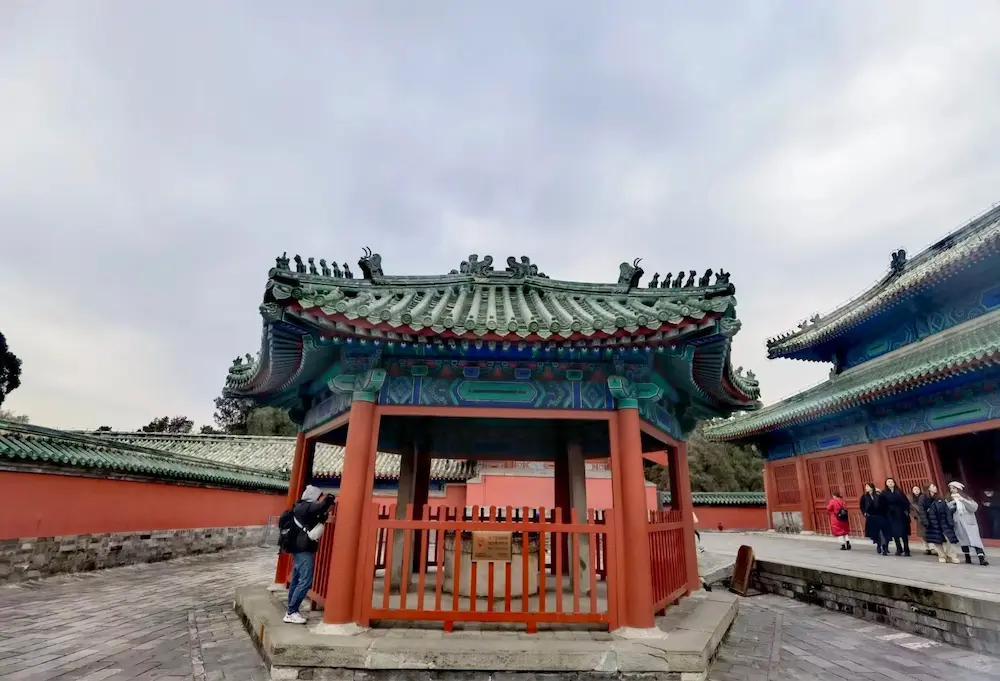
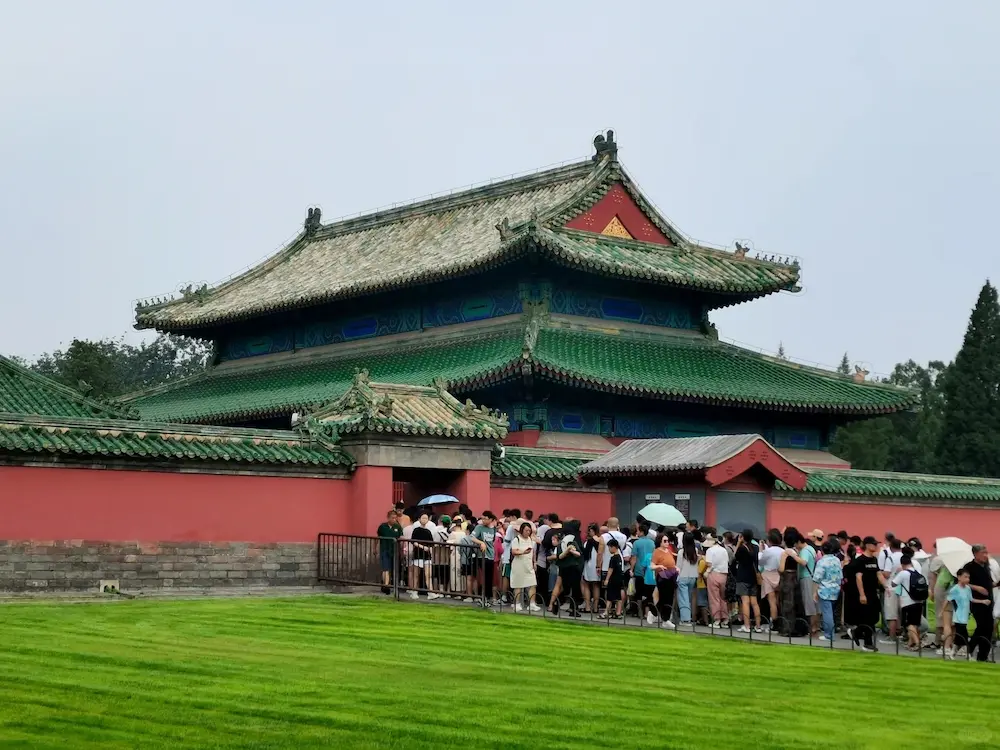
As you continue, you’ll come to the Seven-Star Stones. Take a closer look: although the site is called “Seven Stars,” there are actually eight stones—an extra one was added by Emperor Qianlong to symbolize the unity of the Manchu and Han peoples.
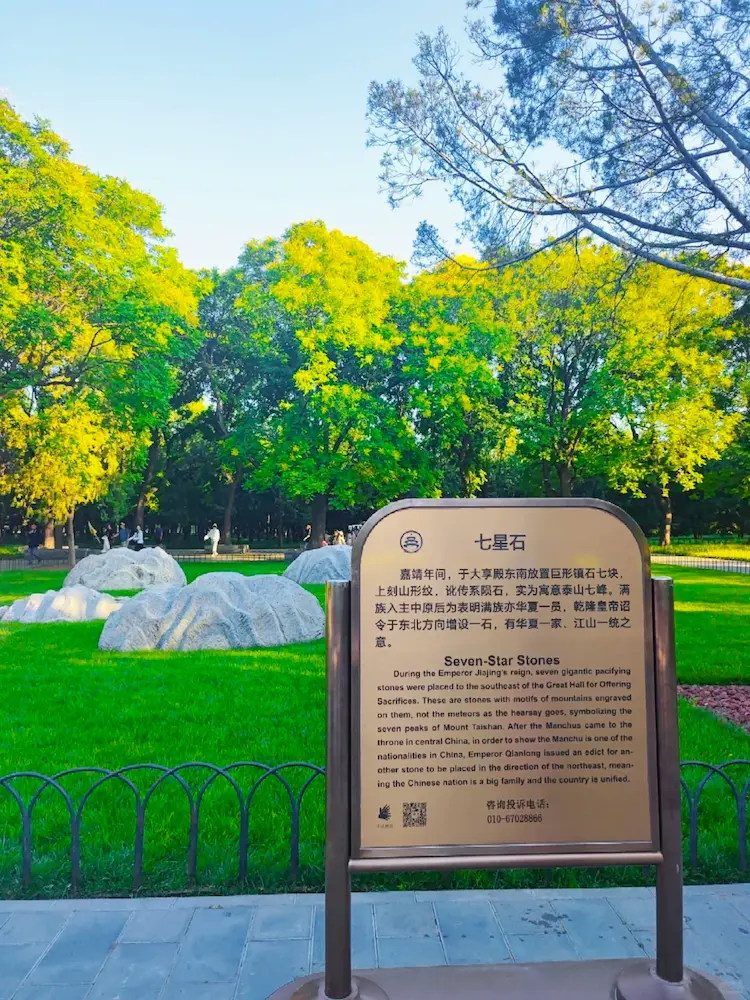
Seven of the stones represent the Seven Stars of the Big Dipper, while the eighth represents Mount Tai, symbolizing “the unity of the Chinese nation and the eternal stability of the realm.”
Second Stop: The Qigu Altar Complex (Hall of Prayer for Good Harvests, Long Corridor)
This is the most magnificent part of the Temple of Heaven. Please take your time and don’t just take photos.
Hall of Prayer for Good Harvests:
On the western wall of the Hall of Prayer for Good Harvests, you can also look for the
“Hua Jia Gate” (60 years old) and “Gu Xi Gate” (70 years old), which are associated with interesting stories about respecting the elderly.
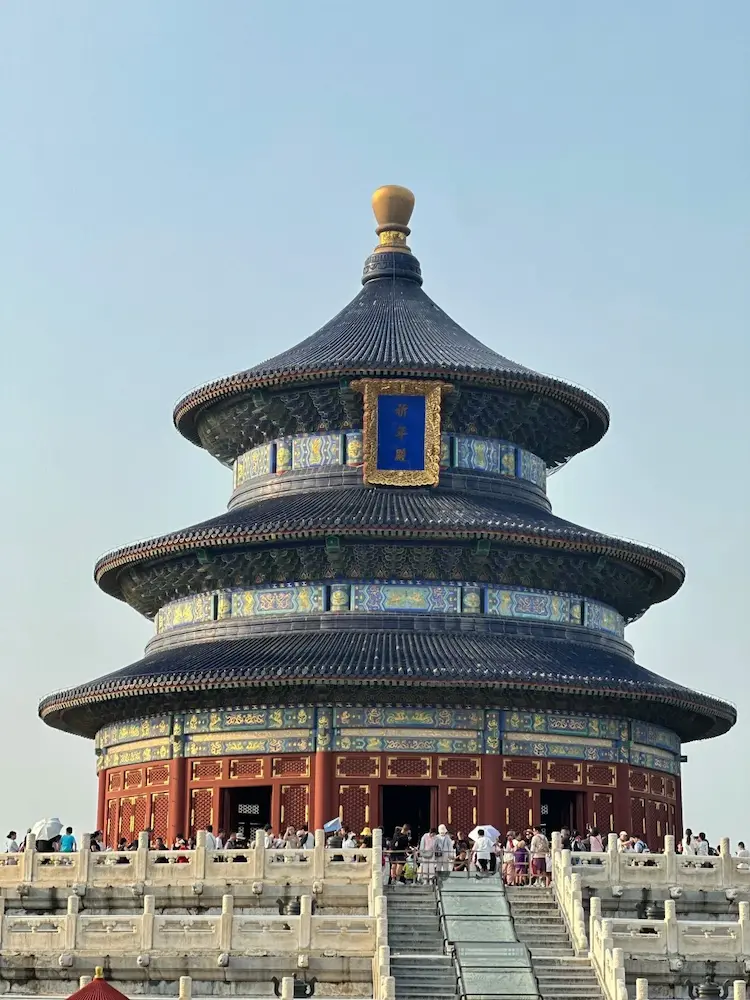
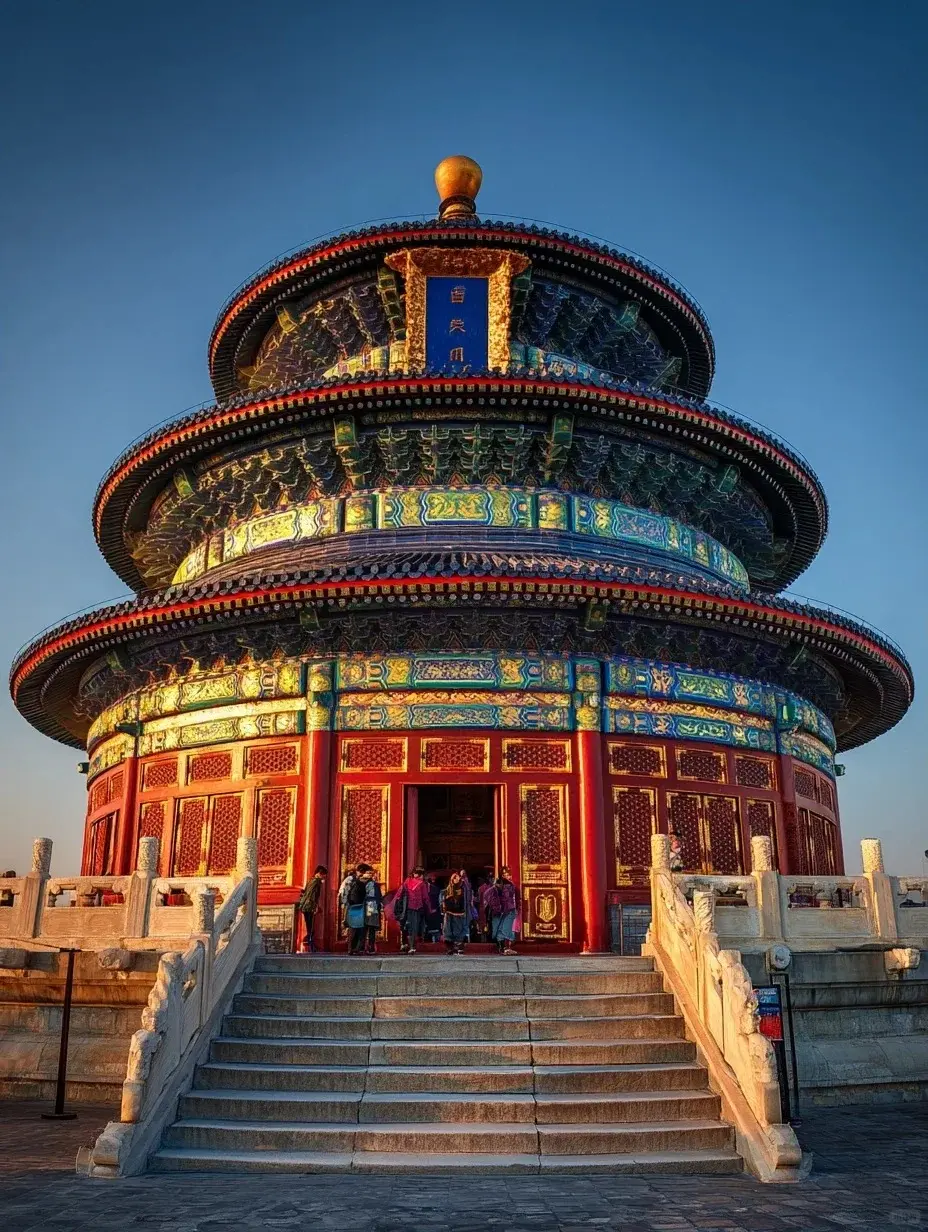
Take a close look at this circular hall. The four dragon-well pillars inside symbolize the four seasons; the 12 golden pillars in the middle layer symbolize the twelve months; and the 12 eave pillars on the outer layer symbolize the twelve hours of the day. The entire space perfectly embodies the ancient Chinese concept of time.
The Long Corridor (commonly known as the“Seventy-Two Connected Corridors”)
This structure connects the Sacrificial Pavilion, the Imperial Kitchen, and the Hall of Prayer for Good Harvests. It once served as a “sterile passage” for transporting sacrificial offerings; today, it is a semi-open space.
This is an excellent vantage point for observing daily life in Beijing: elderly men playing chess or walking their birds, while elderly women play shuttlecock or practice tai chi…This is where you’ll find Beijing’s most authentic, vibrant atmosphere.
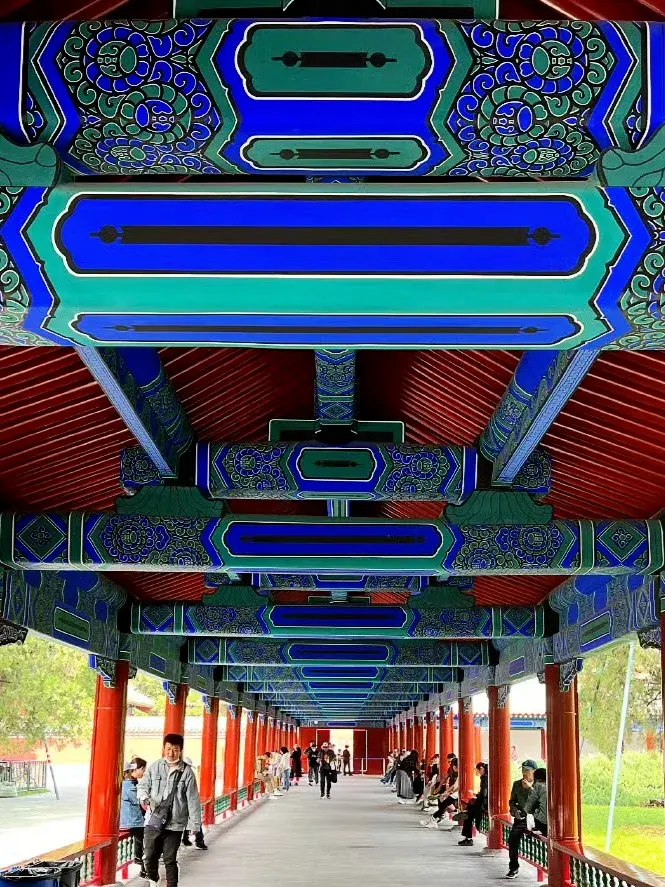
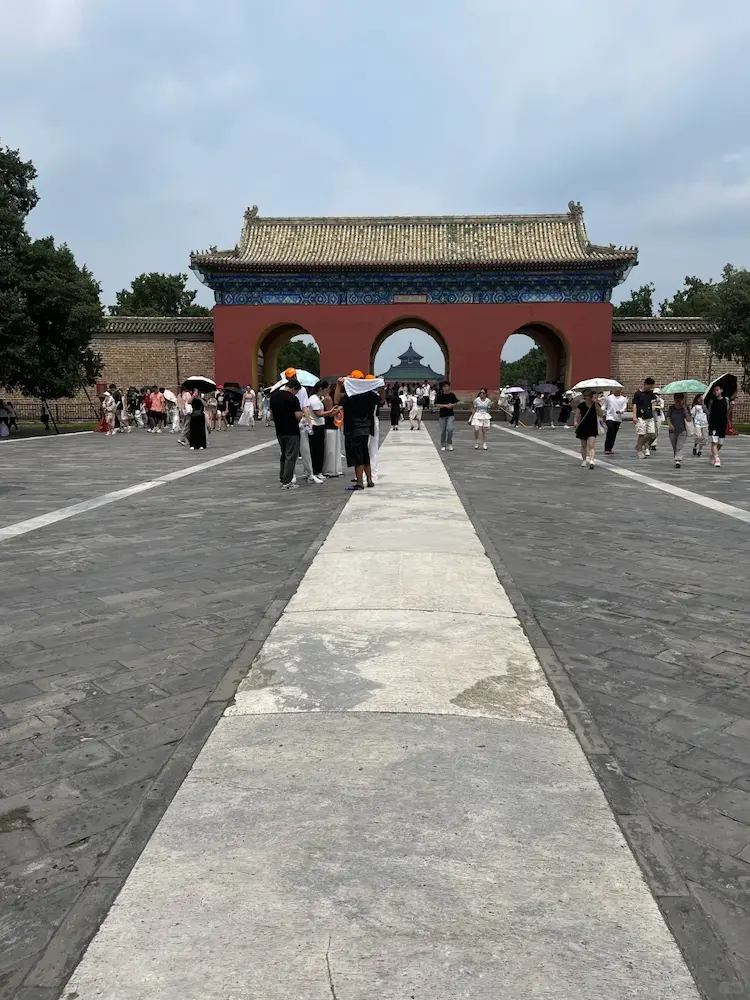
Third Stop: Danbi Bridge (The Sacred Path to the“Heavenly Realm”)
Exit through the south gate of the Hall of Prayer for Good Harvests and step onto this 360-meter-long pathway, which slopes upward from south to north.
Walking along it feels as though you’re ascending step by step toward the heavenly court—the architectural design creates a powerful psychological effect. This is an excellent spot to overlook the ancient cypress groves on both sides and capture stunning photos with a sense of depth.
Fourth Stop: the Hall of Imperial Vault of Heaven and the Circular Mound Altar (The Heart of the Heavenly Sacrifice Ceremony)
The Hall of Imperial Vault of Heaven and the Echo Wall:
The Hall of Imperial Vault of Heaven is where the spirit tablets used in sacrifices are housed; the circular wall surrounding it is the Echo Wall. Standing approximately 3.72 meters tall and constructed of polished blue-gray bricks, the wall forms a natural channel for sound waves.
Tip to Avoid Disappointment: Due to cultural heritage preservation efforts, guardrails have now been installed along the Echo Wall, so visitors can no longer speak directly against the wall. As a result, the traditional experience of “two people standing at opposite ends—east and west—and whispering to each other across the wall” is no longer possible.
Alternative Activity: Don’t be disappointed! You can find the Three-Echo Stones on the pathway directly in front of the Hall of Imperial Dome. If you clap your hands or speak while standing on the first stone slab, you’ll hear one echo; on the second, you’ll hear two; and on the third (also known as the “Stone Where Heaven Hears Like Thunder”), you’ll hear three echoes—the effect is truly magical!
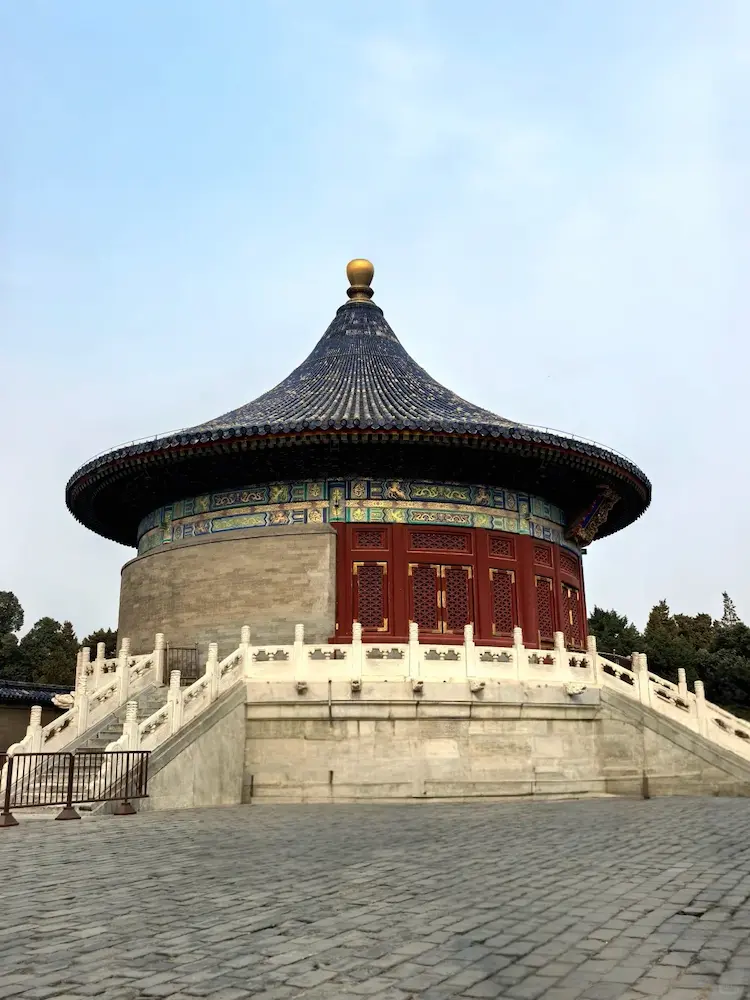
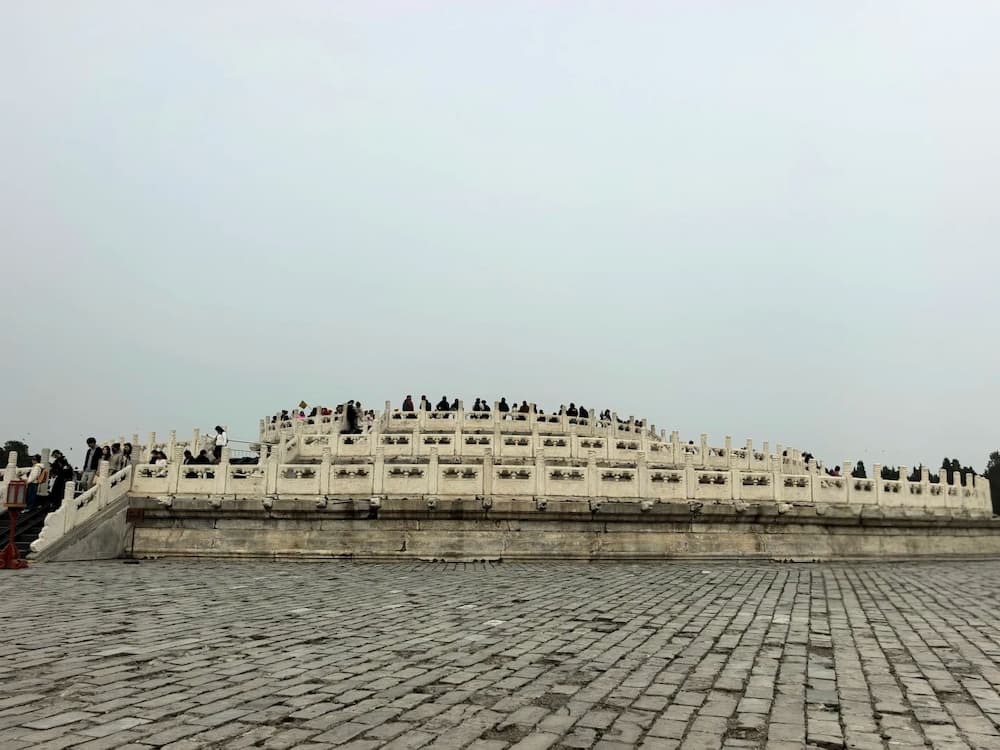
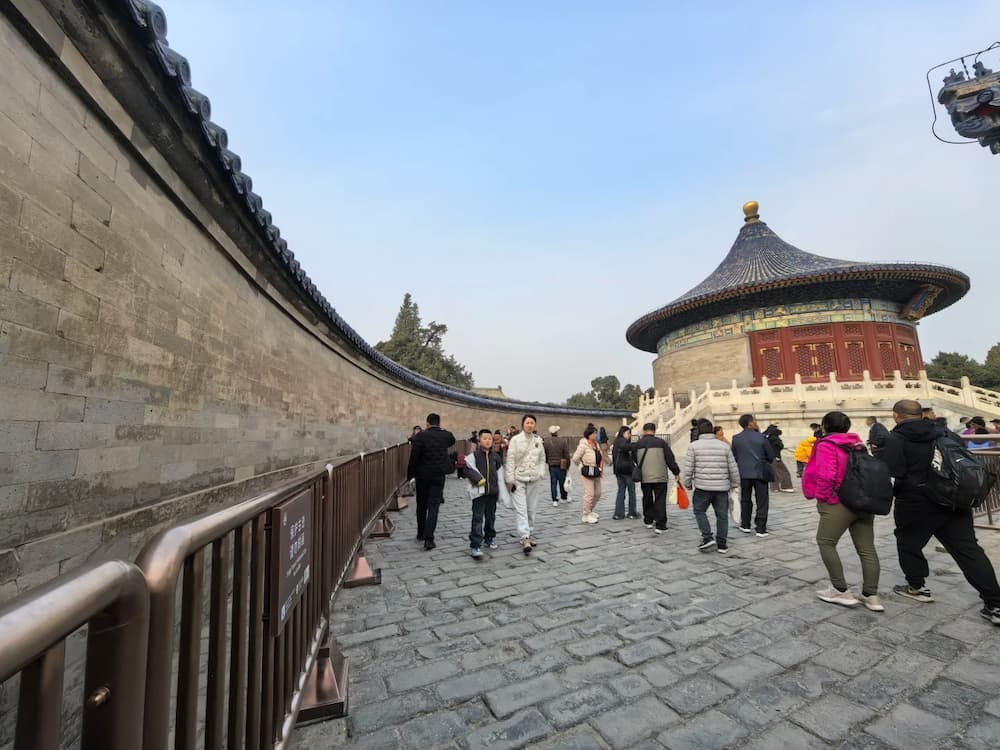
Circular Mound Altar:
This is the most sacred and mystical place in the entire Temple of Heaven. The emperor performed sacrifices to Heaven here. Its design is entirely centered around the number “nine,” a number representing the ultimate yang.
The altar is divided into three tiers, each with nine steps. At the center of the topmost tier lies the Heavenly Heart Stone. The first ring of stone slabs surrounding it consists of 9 stones, the second ring 18 (twice 9), and so on, up to the ninth ring with 81 stones (nine times 9).
When speaking while standing on the Heavenly Heart Stone, the voice resonates and becomes exceptionally loud, as if embodying the “communion between Heaven and Man.”
Part 5: Practical Details Only Locals Know (What Sets This Guide Apart)
Here are some details you definitely won’t find in other guides—all real, hands-on tips learned the hard way.
About Restrooms and Toilet Paper—The Most Important Tip!
Restrooms are very plentiful within the Temple of Heaven grounds; you’ll find them everywhere along the main paths, and they’re clean and odor-free. However—they don’t provide toilet paper! Be sure to bring your own toilet paper or wet wipes. If you’re traveling with seniors or children, pack a few extra packs in your bag.
About Backpacks—If You Need One, Bring It
Many guides say “Don’t bring a backpack to the Temple of Heaven,” but based on my experience, there’s almost no difference in wait times whether you bring one or not.
Especially if you’re traveling with seniors or children, going without a backpack can actually be more of a hassle—you’ll end up carrying water, toilet paper, snacks, and jackets all in your hands.
If you need to carry one, go ahead—a lightweight, small backpack is what gives you peace of mind.
Practical Information for Families with Children or Elderly Visitors
- The visitor center west of the Hall of Prayer for Good Harvests has a rest area and restrooms, where you can take a break, change diapers, or give your child a snack if they get tired.
- Most staircases have accessible ramps, making it easy to push a stroller.
- Inside the East Gate, electric carts (10 yuan per person) are available to take you right to the foot of the Hall of Prayer for Good Harvests.
- Dress your children in soft-soled sneakers; sandals and leather shoes will rub their feet raw.
Sun Protection and Hydration
- There is virtually no shade along the Temple of Heaven’s central axis. If visiting in summer, be sure to protect yourself from the sun—a hat, sunglasses, and sunscreen are all essential.
- The cultural and creative shops inside the park accept international credit cards, but street vendors only accept cash or WeChat Pay. It’s recommended to bring about 50 yuan in cash to buy water and popsicles.
Audio Guides
You can rent audio guides (about 10 yuan) near the entrance to the Hall of Prayer for Good Harvests to listen to as you walk. Alternatively, follow the“Tiantan” WeChat official account to access the audio tour.
Best Times for Photography
- For uncrowded, dramatic shots: Rush in as soon as the gates open at 8:00 a.m., or just before closing time in the evening
- Best soft lighting: After 3:00 p.m.
- Aerial photography is prohibited; there are clear signs within the park
The“Age Code” of Ancient Cypress Trees
The Temple of Heaven is home to thousands of ancient cypress trees. Keep an eye out for the colored tags hanging from the trunks—red tags indicate trees over 300 years old. The oldest cypress is over 800 years old. These trees were already standing there before the Hall of Prayer for Good Harvests was built.
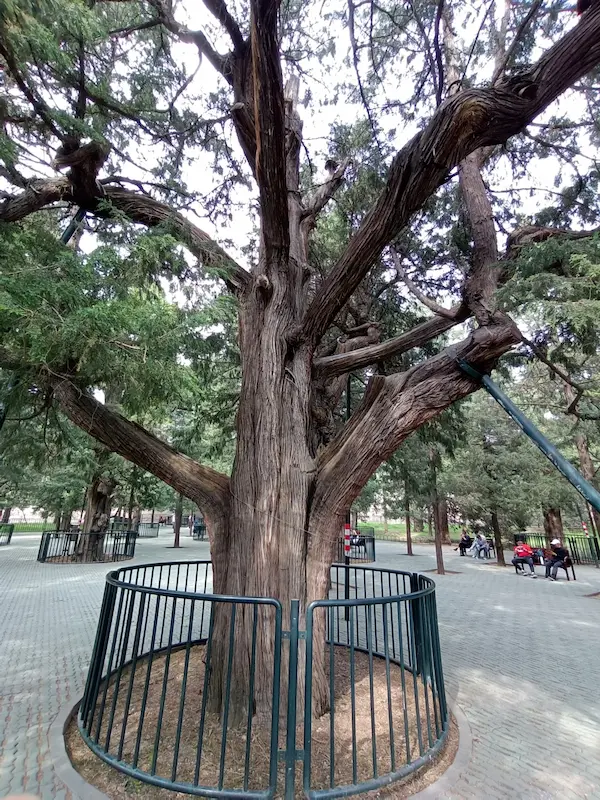
Hidden Gem: Feeding the Squirrels
If you visit the Temple of Heaven early in the morning, you’ll often spot little squirrels scampering through the ancient cypress grove. Bring some nuts (peanuts, walnuts) and place them near the tree roots—you might be in for a pleasant surprise. This is a little-known local treat.
Part 6: Sightseeing Tips and Suggestions for an Immersive Experience
What to Choose If You’re Short on Time?
- 2-Hour Express Tour: Enter through the East Gate → Hall of Prayer for Good Harvests (take photos) → Danbi Bridge → Circular Mound Altar (stand on the Tianxin Stone) → Exit through the South Gate.
- If you’re traveling with seniors or children: Be sure to enter and exit through the East Gate, as the electric carts inside the East Gate can take you right to the foot of the Hall of Prayer for Good Harvests, saving you most of the walking.
Photography Tips: How to Capture Stunning Shots Without Passersby?
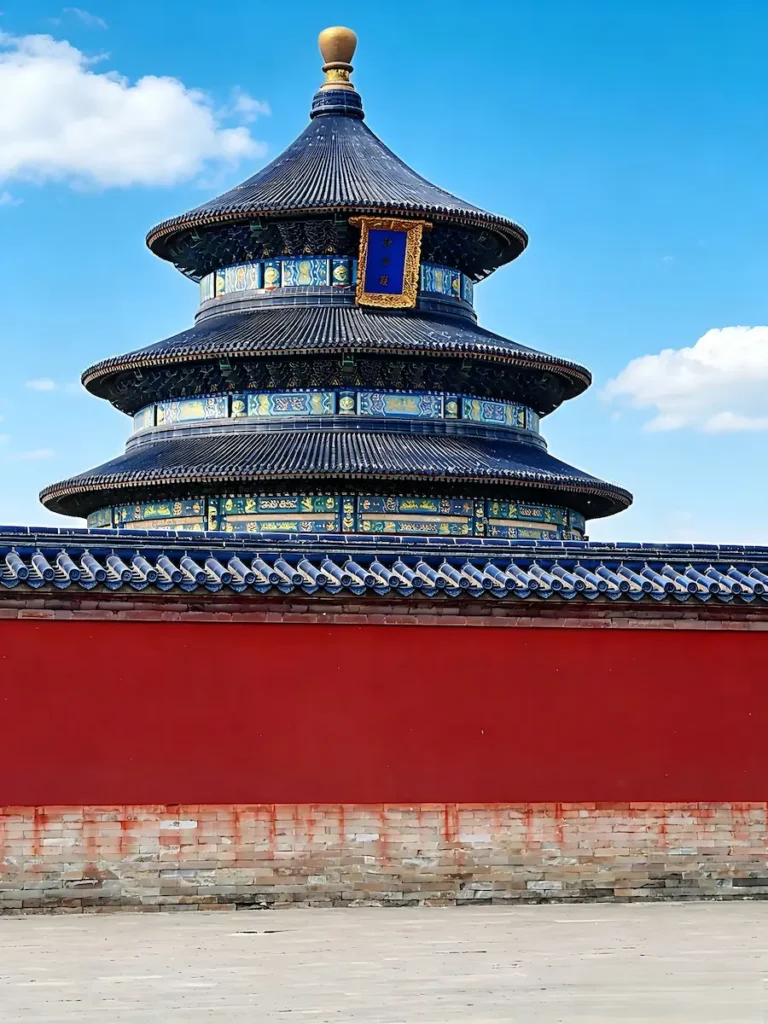
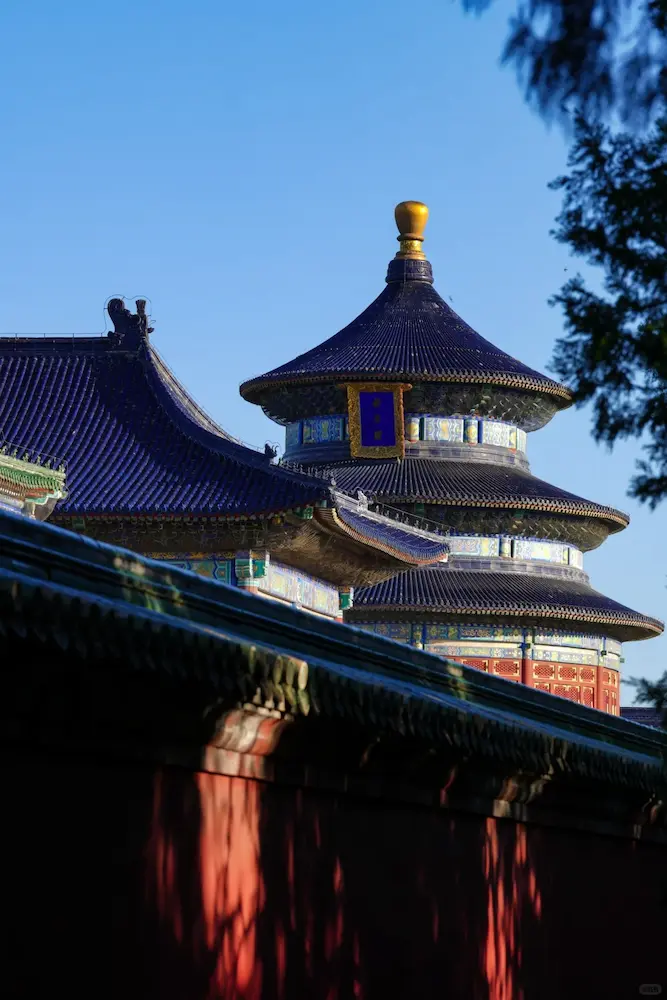
– Spot 1 (Red Wall on the Side of the Hall of Prayer for Good Harvests): Don’t get stuck on the front! Go around to the east or west sides—there’s half the crowd there. Use the red wall as a backdrop and shoot from a low angle looking up to capture the contrast of the red wall, blue sky, and blue roof tiles.
– Spot 2 (Angled View of the Hall of Prayer for Good Harvests Gate): Don’t stand at the main entrance. Shoot from an angle on the southeast or southwest side, using the gate frame as the foreground.
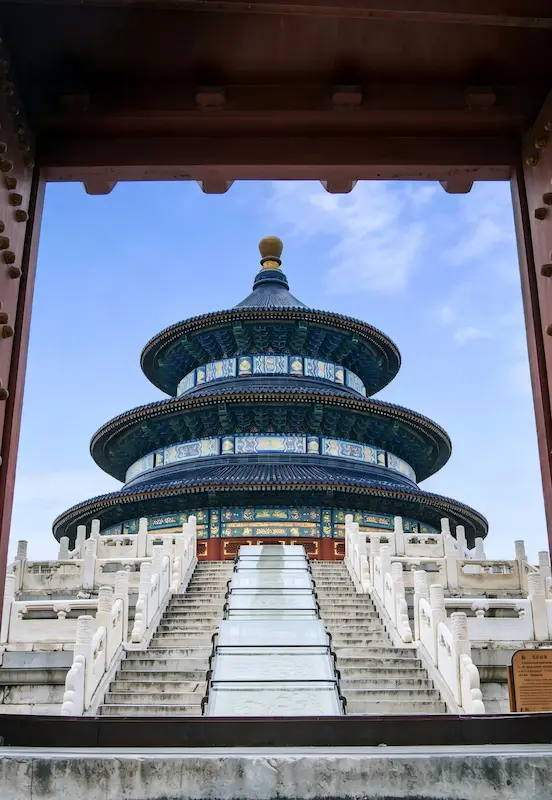
– Spot 3 (Shooting Northward from Danbi Bridge): In the early morning or late afternoon, stand in the middle of the bridge and shoot northward to capture a sense of depth, as if “walking toward the heavenly court.”
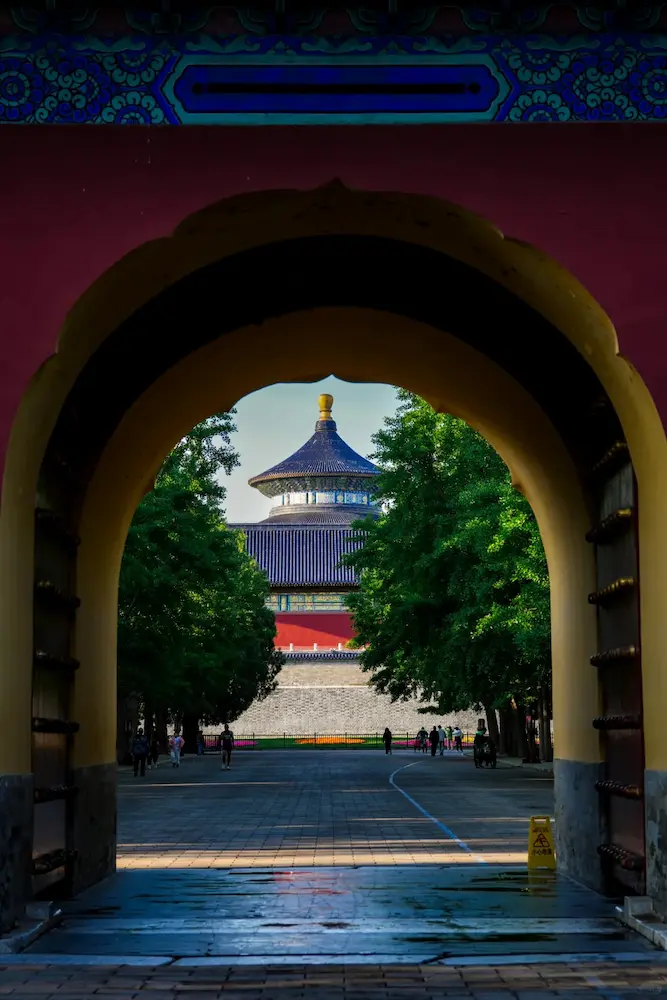
– Spot 4 (Framing Through Guxi Gate/North Heavenly Gate): Shoot the Hall of Prayer for Good Harvests through the gate arch—it’s a natural picture frame!
Two Hidden Gems
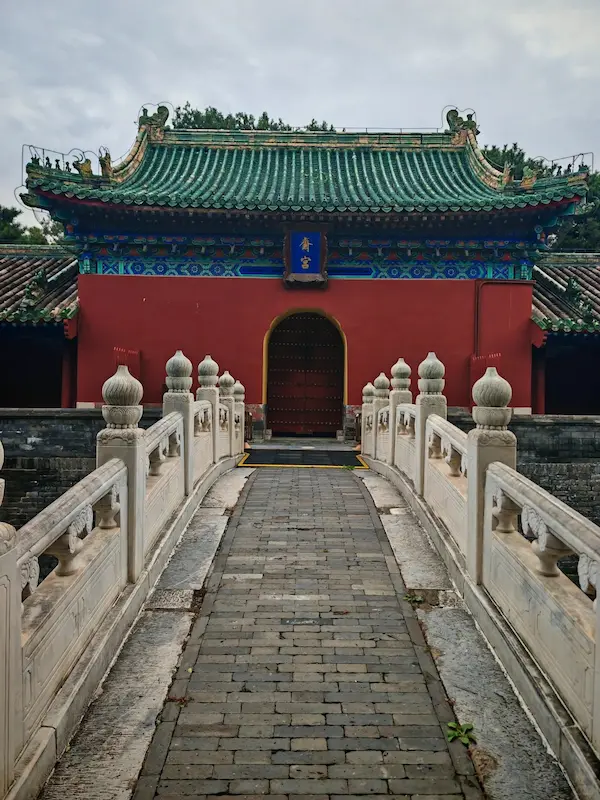
Zhaigong: Located on the west side of the Temple of Heaven, it’s quiet and less crowded, with red walls and ancient cypress trees that make for stunning photos.
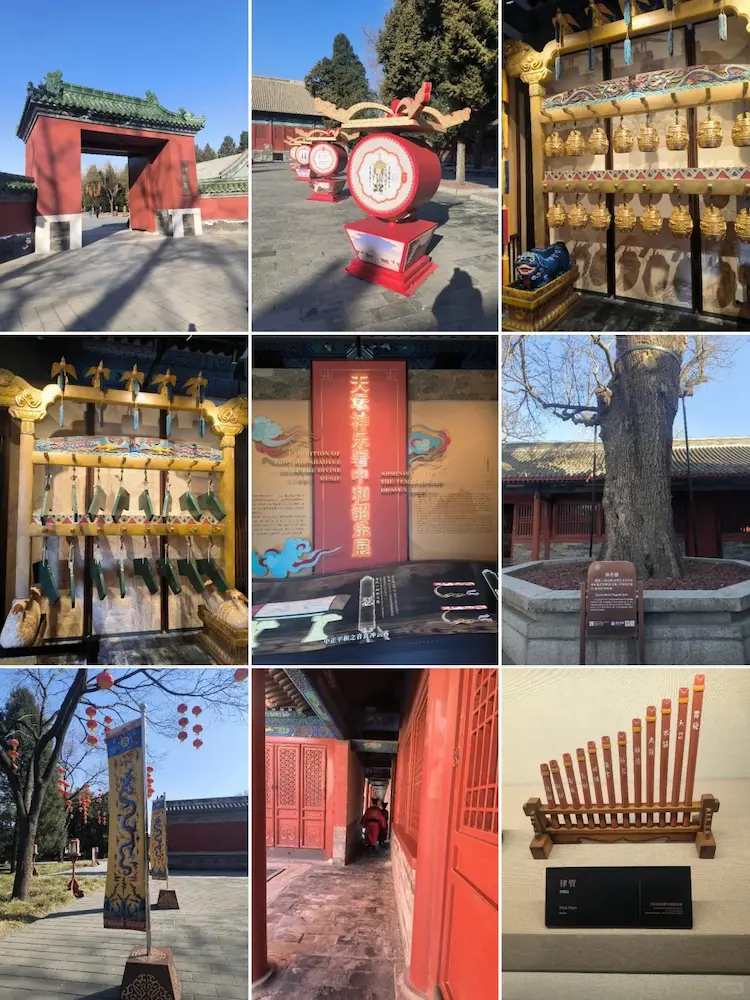
Shenle Shu: Located in the southwest corner of the Temple of Heaven, this was the administrative office for ritual music and dance during the Ming and Qing dynasties. It’s quiet, less crowded, and hosts regular ancient music performances—making it an excellent choice for avoiding tour groups.
Part 7: A Perfect Finale—The “Vibrant Local Atmosphere” Extends Beyond the Temple of Heaven
After exploring the Temple of Heaven, don’t rush to hail a cab and leave. The local cuisine in the surrounding area is the perfect way to wrap up your visit:
Toward the South Gate:
Temple of Heaven South Gate Shuanrou: A time-honored establishment serving clear broth in a copper pot and freshly sliced lamb that’s tender and free of gaminess, averaging 100 yuan per person.
Toward the North Gate (5-minute walk):
- Yin San Douzhi (Tiantan North Gate Branch): Featured on *A Bite of China*, this spot draws long lines of locals. Douzhi, fried dough rings, and shredded pickles are the standard pairing.
- Lao Ciqukou Douzhi Shop: Another long-established spot; slightly farther from the North Gate but more spacious.
- Mending Meat Pies: A long-standing shop in a North Gate alleyway; crispy on the outside, tender on the inside, and bursting with juice when you bite into them.
Frequently Asked Questions (FAQ)
I’ve accompanied friends and children to the Temple of Heaven at least ten times. The first few times, I, too, just stared at the Hall of Prayer for Good Harvests and snapped photo after photo.
That was until one morning when we arrived at 6:30 a.m. and saw an elderly man quietly feeding sparrows under the long corridor, with a radio playing Peking Opera nearby—at that moment, I suddenly understood: the most beautiful thing about the Temple of Heaven isn’t its blue tiles and golden roofs, but rather its 600-year-old, majestic architecture, which gently embraces the daily lives of Beijingers every single day.
The Temple of Heaven is more than just a tourist attraction; it’s an open-air living room for the people of Beijing. Here, you’ll find philosophical texts carved in stone, wood, and glazed tiles, as well as the lively buzz of people playing chess, singing, and kicking shuttlecocks.
Slow down, approach it with a curious heart, and “read” the place—you’ll find the moment that’s uniquely yours.