A Travel Guide to Beijing’s Qianjing Hutong: The Last Emperor Puyi’s Household Registration Address and Its History
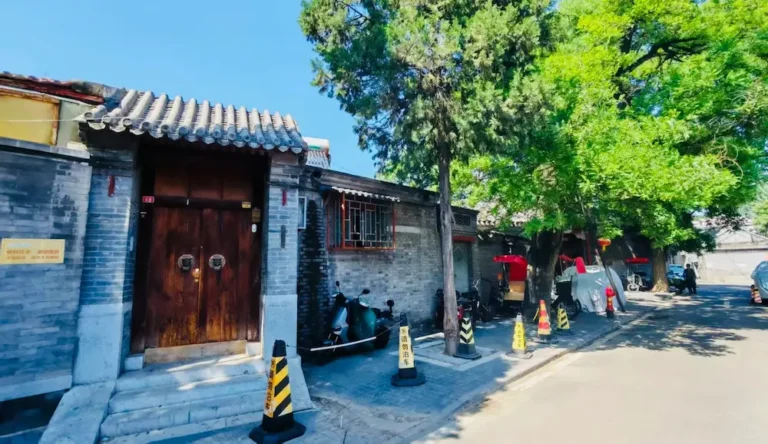
Tucked away in the intricate network of hutongs near Beijing’s Shichahai Lake lies Qianjing Hutong, an unassuming little lane. Stretching a mere 311 meters in a north-south direction, it connects Nanguanfang Hutong and Beiguanfang Hutong.
This seemingly ordinary hutong, however, holds a one-of-a-kind distinction: it is the only hutong in Beijing where an emperor once resided—that emperor being Puyi, the last emperor of China.
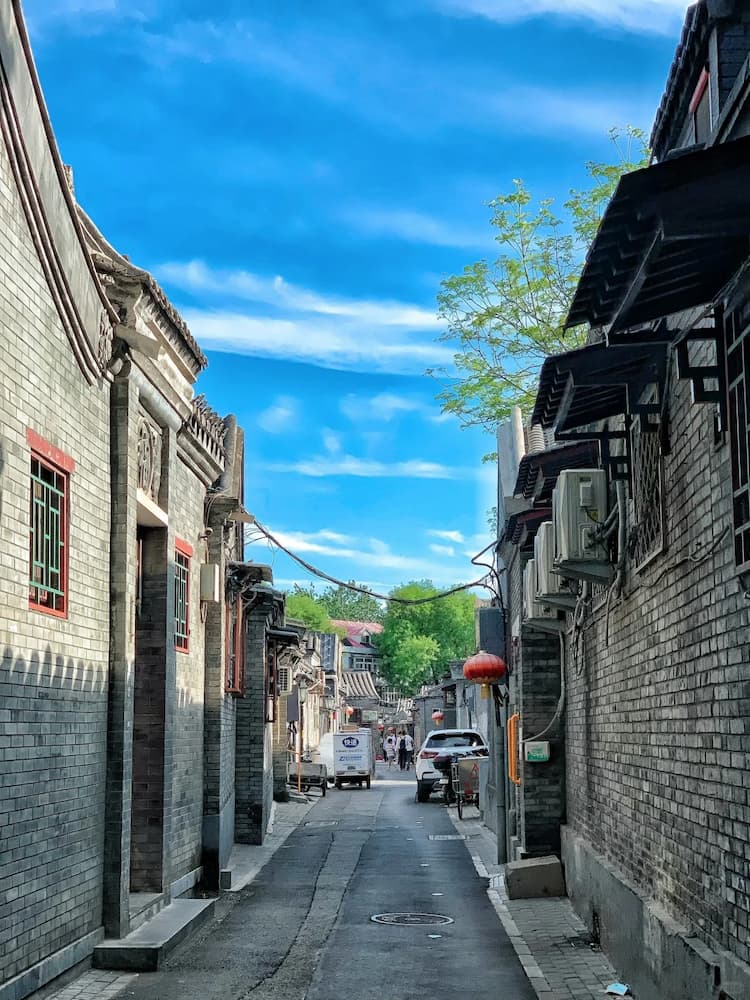
Table of Contents
Quick Guide
- Highlights: Old Beijing’s “Shallow Well” culture, Puyi’s former residence, ruins of a Qing dynasty duke’s mansion (the Ninth Princess’s Mansion), and an authentic, uncommercialized hutong
- Location: West of Shichahai, near the Prince Gong’s Mansion, serving as a quiet shortcut connecting Liuyin Street and Qianhai West Street
- Recommended Visit Duration: 10–15 minutes
- Keywords: Hidden in plain sight, alleyway nostalgia, imperial life among the common folk, authentic Old Beijing
- Best Route: Prince Gong’s Mansion → Qianjing Hutong → Liuyin Street—escape the crowds in an instant
Easiest Way to Get There | Off-Peak Shortcut (Just Follow This)
- Subway: Exit B at Beihai North Station (Line 6) / Exit A2 at Shichahai Station (Line 8), 5-minute walk
- Recommended Route: Guo Moruo’s Former Residence → Qianjing Hutong → Liuyin Street → Yindin Bridge
- Advantages: Quiet and peaceful throughout, no tour groups—perfect for capturing local life, daydreaming, and strolls
Quick Tips
- This is a purely residential area with almost no shops; bring water and plan for breaks in advance
- Most courtyards are private residences and not open to the public; simply stroll through the alleys to soak up the atmosphere
Old Beijing in a Name: Qianjing—the“Source of Life” for Hutong Residents
Qianjing Hutong has a name that is both straightforward and heartwarming—derived from the word “shallow well.”
In the days before running water, a well was the heart of every hutong.
- Old Beijingers lived around the well, relying on it for washing clothes, cooking, and drinking tea
- The wellside was the liveliest spot in the hutong: a place for chatting, passing messages, meeting up, and taking a break
- In 1965, it was officially named “Qianjing Hutong,” preserving this memory of water for all time
Today, the well is gone, but the layout of the hutong remains.
Walking through the alley, one can still sense that old-fashioned charm of living by the water and neighbors relying on one another.
Puyi: From Emperor to a Hutong Resident
In 1959, after nearly a decade of reform through labor, Puyi was granted a special amnesty and became an ordinary citizen of the People’s Republic of China. As a common person, the first practical question he faced was: where to live, and where to register his household?
His younger sister Jin Yunxin was living at No.15 Qianjing Hutong at the time. Freshly free, Puyi thus took temporary residence there, and his household registration (hukou) was registered at what was then No.6 Qianjing Hutong (now the courtyard at No.15).
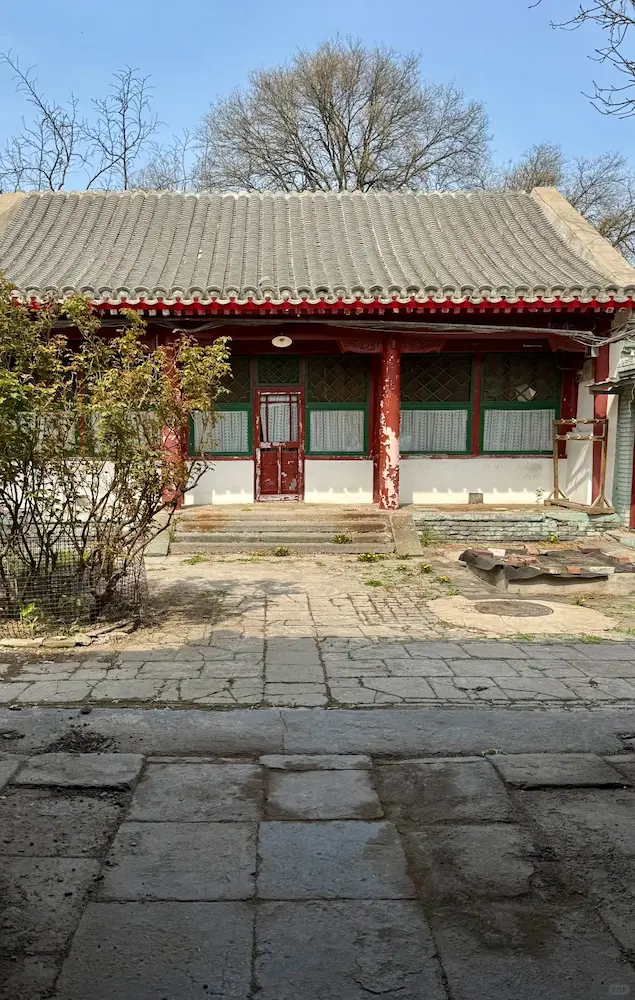
This marked a highly symbolic historical moment: a former emperor had his household registered on an ordinary Beijing hutong.
Naturally, Puyi did not live here for long, as the government soon arranged another residence for him. Today, the courtyard is a regular private residential compound, with a notice reading Private Residence, No Admittance pasted on its gate.
Set back in a relatively secluded spot rather than opening directly onto the hutong, the gate looks a little shabby, and the condition of its interior remains unknown—quietly guarding this extraordinary chapter of history.
Traces of the Duke’s Mansion in the Hutong
Qianjing Hutong’s history dates far earlier than Puyi’s era. During the Qing Dynasty, this area was home to the mansions of princes and nobles.
According to Records of Yandu, a key historical text on Beijing, the Mansion of the First-Class Duke of Martial Valor and Strategic Bravery once stood here.
This ducal mansion was tied to Zhao Hui, a renowned military general of the Qianlong reign. Honored for his outstanding military exploits, he was enfeoffed as the First-Class Duke of Martial Valor and Strategic Bravery in the 24th year of Qianlong’s reign, with the title passed down through his family for generations.
His son Zhalantai even married the Ninth Princess of the Qianlong Emperor, Princess He Ke, which is why the mansion was also known as the Ninth Princess’s Mansion or Princess Ke’s Mansion.
As time passed, this prominent mansion suffered severe damage during the Cultural Revolution. Most of its buildings were demolished and replaced with several simple residential blocks.
Today, the courtyards at No.3 and No.5 Qianjing Hutong stand on the original site of the ducal mansion, but no trace of its former grandeur remains—instead, the area is filled with cramped makeshift structures and simple apartment buildings.
The Houhai Courtyard Hotel, now at No.7 nearby, is also believed to be part of the former ducal mansion’s grounds.
Hues and Quiet Moments of the Hutong
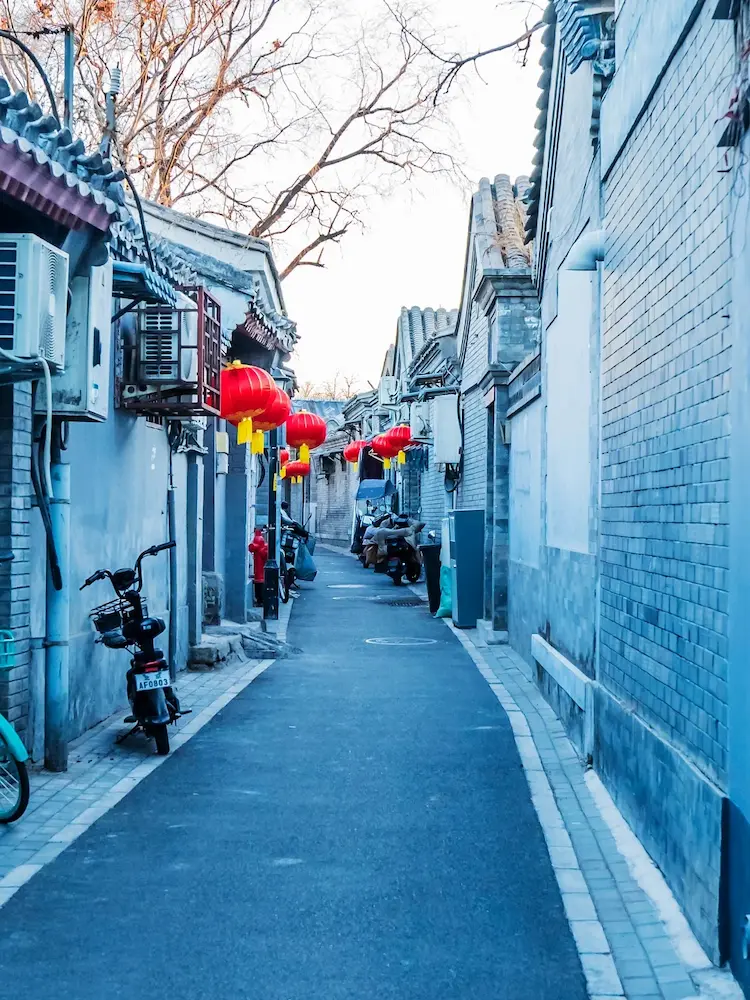
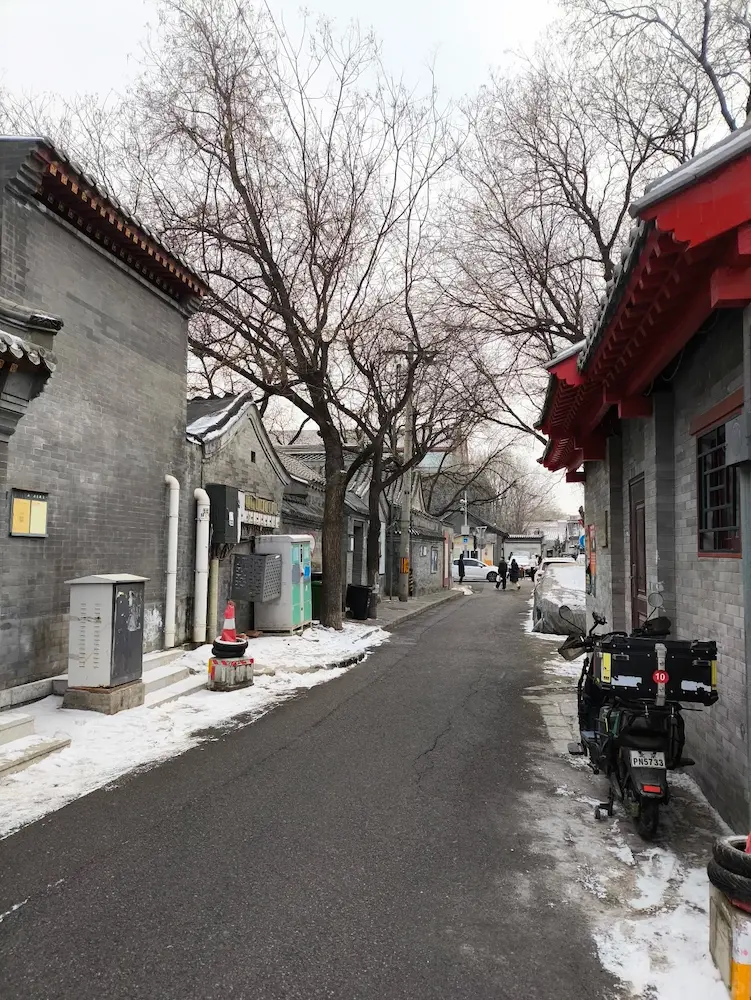
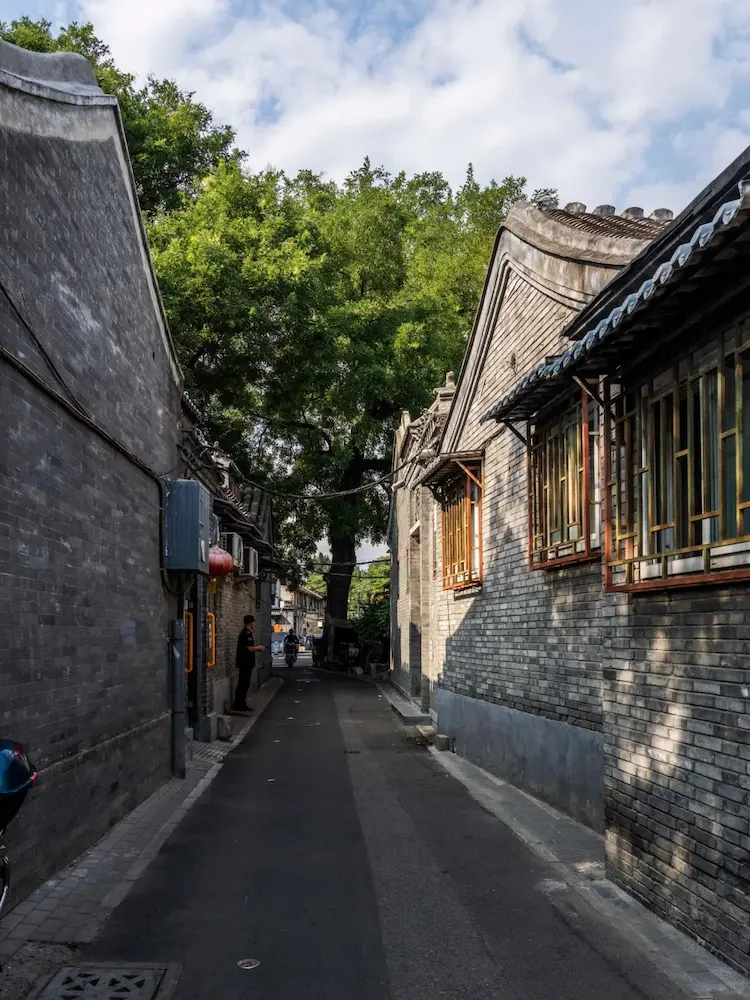
Wandering through Qianjing Hutong, you will be immersed in a classic shade of Beijing: gray. The gray bricks and tiles stand calm and solid in the sunlight, and take on a moist, serene air on rainy days.
It is said that the renowned architect I.M. Pei, during his visits to Beijing, loved to climb Jingshan Hill and gaze out at the endless expanse of gray fish-scale tile roofs—a defining feature of old Beijing’s architecture.
Houxiaojing Hutong, which connects to Qianjing Hutong, is even narrower and more tranquil. A raw wood gate, half-hidden by bamboo groves and without a house number, stands quietly at a corner. The rustle of wind through the bamboo fronds slows down time itself.
The story of Qianjing Hutong is a tiny intersection of grand history and individual fate. It has witnessed the rise and fall of the Mansion of the First-Class Duke of Martial Valor and Strategic Bravery, and bears the unique footprints of Puyi, the last emperor, as he stepped from the imperial palace into ordinary civilian life.
Today, this hutong has turned those dramatic and thrilling past events into the calm backdrop of daily life, much like that vast stretch of steady gray tile roofs, quietly telling tales of the past through the years.
My Hidden Gems: Qianjing Hutong as Others Don’t See It
I never come to Qianjing Hutong just to check it off a list; I come for these quiet moments that make my heart flutter:
- The entire alley is bathed in that classic Old Beijing gray; the tiled eaves exude a sense of calm, and the sunlight filtering through is especially gentle
- The walls are weathered, the doorposts worn, yet potted plants, bamboo shadows, and bicycles add a vibrant, everyday charm
- Just a few steps away, you can hear the bustle of the Prince Gong’s Mansion, but the moment you step into the alley, it’s instantly quiet—this is what it means to live in seclusion amidst the city
- The adjacent Hou Xiaojing Hutong is even narrower, with bamboo shadows screening the doors; it’s so quiet you can hear the wind rustling through the leaves
No commercialism, no performances—this is the truest face of Beijing’s hutongs.