Guide to Visiting the Tiananmen Gate Tower: Reservations, Tickets, and Key Tips (2026)
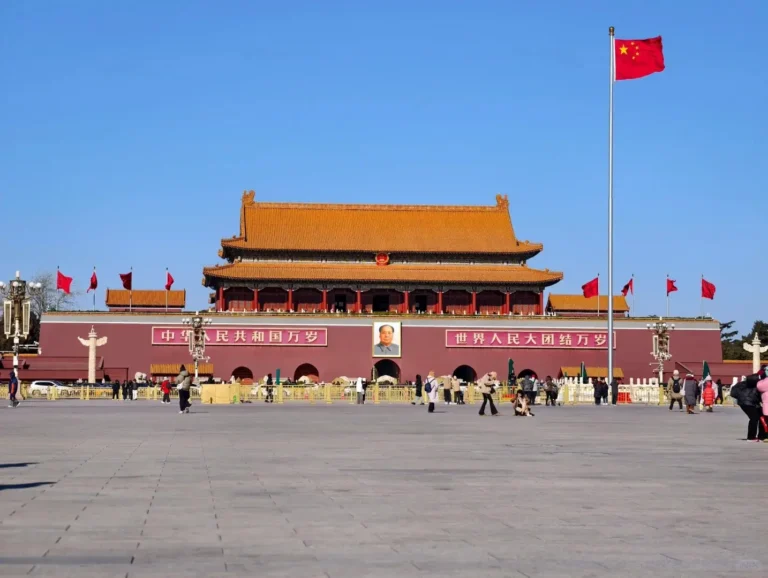
If you’re visiting Beijing for the first time, standing on the vast Tiananmen Square, you’ll immediately spot the Tiananmen Gate Tower with its red walls and yellow tiles to the north.
Many first-time visitors to China tend to confuse three locations: Tiananmen Square is a massive public square; the Tiananmen Gate Tower is the historic gate tower on the north side of the square; and the Forbidden City lies behind the gate tower, accessible only after passing through the Meridian Gate.
The vast majority of tourists photograph the gate tower from a distance while standing on the square itself. Few realize that, as long as you make a reservation in advance, you can actually climb the gate tower yourself and stand on its high platform to overlook the entire Tiananmen Square and Chang’an Avenue—a truly unique experience on any tour of Beijing’s Central Axis.
I will present this guide in the actual order of the tour: Reservation Preparation → Transportation → Step-by-Step On-Site Tour → On-Site Highlights → Architectural History → Itinerary Suggestions → Decision-Making Guide and Frequently Asked Questions.
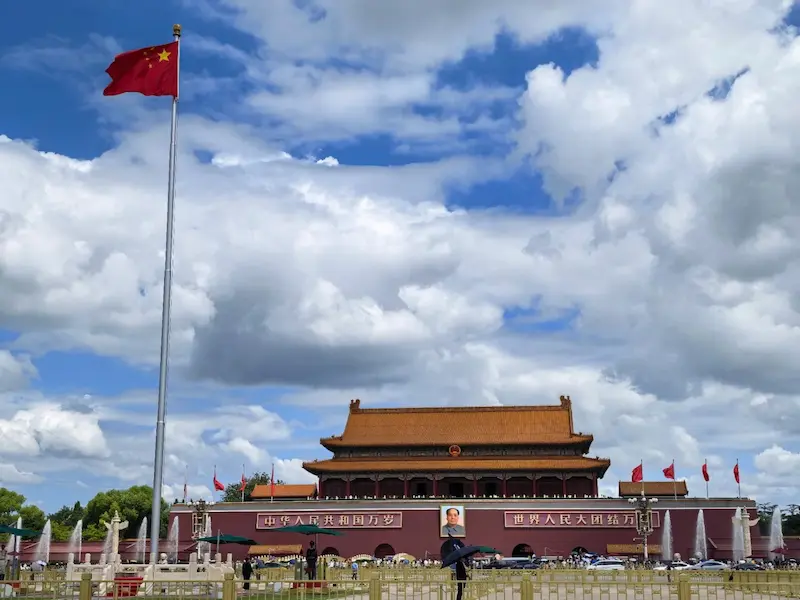
Table of Contents
Practical Travel Information (Preparations Before Your Visit)
⚠️Important: Two Different Reservations
Tiananmen Square reservation ≠ Tiananmen Gate reservation; the two are separate, and booking one does not automatically grant access to the other.
- Tiananmen Square reservation: Required to enter the square area
- Tiananmen Gate reservation: Required to access the gate’s viewing platform
Ticket Prices and Budget Guide
- Adult Ticket: 15 RMB (approx. $2.1 / €1.9)
- Student Discount Ticket: 5 RMB (approx. $0.7 / €0.6), limited to full-time undergraduate students and below aged 18 and older; original student ID must be presented
- Free Admission: Minors under 18, seniors aged 60 and older (foreign visitors must present an original passport); active-duty, retired, and former military personnel; fire and rescue personnel; and people with disabilities.
Important Reminder: Those eligible for free admission must still make an online reservation and cannot enter directly; children under 14 and visitors with limited mobility must be accompanied by an adult who has successfully made a reservation.
Note: Final ticket prices and eligibility for discounts are subject to the information published on the official reservation system; please double-check the official website before your visit.
Official Reservation Channels
1. Official Website: `www.tiananmenchenglou.com` (The website includes an English interface; click “English” in the top-right corner to switch)
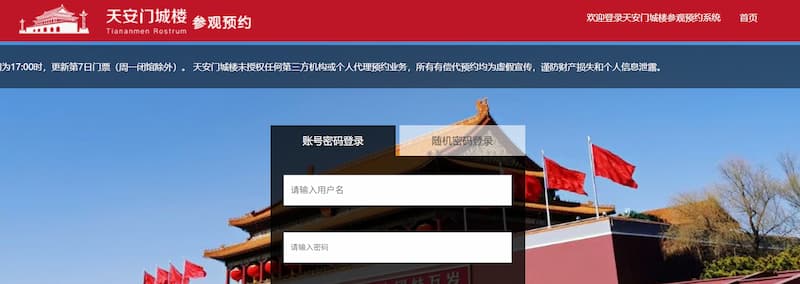
2. WeChat Official Account: Tiananmen Gate Tower Visit Reservation
3. JingTong Mini Program: Jingtong Code → Tiananmen Gate Tower Reservation
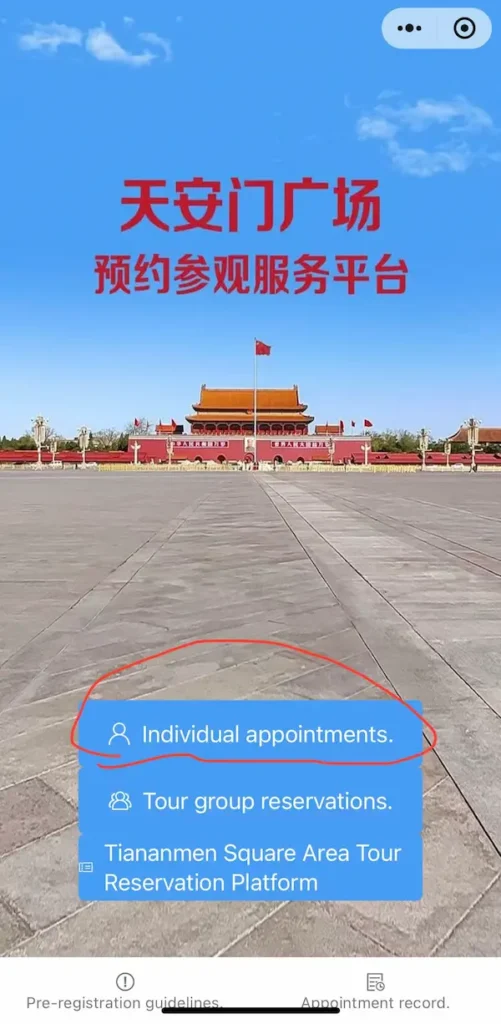
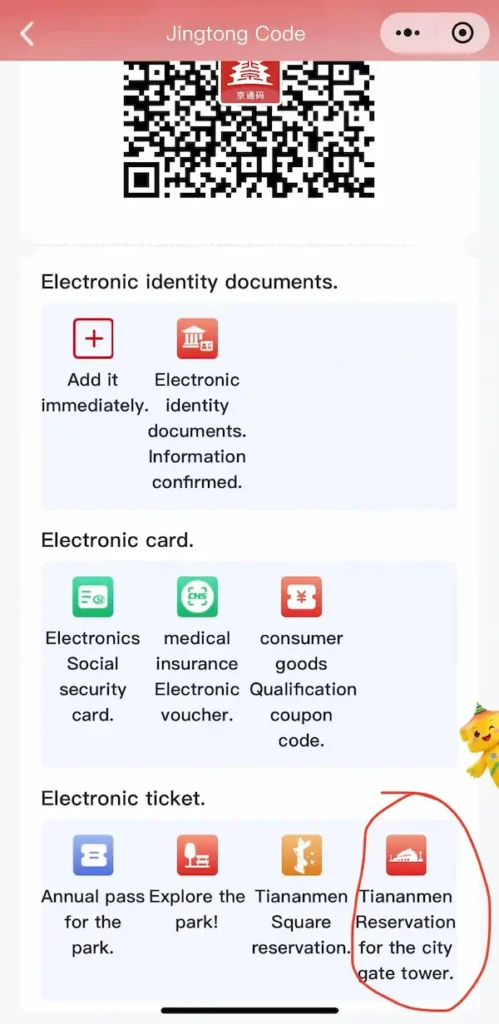
Current Ticket Release Policy: At 5:00 PM daily, slots for visits up to 7 days in the future are released. Same-day tickets and on-site ticket sales are not available. Tickets are in high demand during holidays and summer vacation; you can refresh the page on the hour in the evening to secure any remaining tickets released due to cancellations.
Note: Booking policies are subject to change; please refer to the latest instructions on official platforms before booking.
- System maintenance hours: 11:00 PM daily to 1:00 AM the following day; reservations cannot be submitted during this time.
- Inquiry hotline: 010‑63095718
Tiananmen Square Reservation Reminder: Before your visit, check the official Tiananmen Square reservation platform to confirm available time slots; reservation windows are subject to dynamic adjustments based on policy changes.
Foreign visitors must carry their original passport at all times; photos or screenshots cannot be used for security checks or entry.
Transportation
- Subway (Highly Recommended): Take Subway Line 1 and get off at Tiananmen East Station or Tiananmen West Station. After exiting the station, go through the security checkpoint at the square and walk for a few minutes to arrive. For information on how to use public transportation in Beijing, see [The Best Ways to Get Around Beijing (Practical Guide for Foreign Visitors 2026)]
- Tip: Based on our experience, the security checkpoint at Tiananmen West Station usually has fewer people.
- Bus: Take Buses No. 1, 2, 5, or 52 and get off at Tiananmen East or Tiananmen West.
- ❌ Driving or taking a taxi is not recommended: The surrounding area is subject to long-term traffic restrictions, and there are virtually no nearby parking spots.
⏰ Opening Hours & Best Time to Visit
Note: The Tiananmen Gate Tower operates on different opening hours during peak and off-peak seasons; be sure to check the latest official announcements before your visit. General reference: 8:30–17:00, with ticket sales ending at 16:30; closed on Mondays (except for national holidays).
Recommended visiting times based on your preferences:
1. To avoid tour groups: Choose late morning or the afternoon (after 10:30 a.m. or between 2:00 p.m. and 3:30 p.m.), when the number of tour groups decreases;
2. To photograph the play of light and shadow on the architecture: Choose the late afternoon; however, due to seasonal variations and sunset times, you may not be able to capture the golden sunset every day;
3. If you plan to watch the flag-raising ceremony: You’ll need to arrange a separate early-morning itinerary, distinct from your plans to visit the city wall towers.
Recommended visit duration: 30–60 minutes.
⚠️Important Reminders Regarding Security Checks, Luggage Storage, and One-Way Traffic (Many Visitors Have Run Into Problems)
Current visitor route rules are subject to change due to major events or temporary restrictions; please follow staff instructions on-site.
1. List of Prohibited Items: Backpacks, handbags, water bottles, beverages, selfie sticks, and lighters; please refer to the official on-site security guidelines regarding whether power banks are permitted. Large luggage can be stored for free at the luggage storage area west of Duanmen; keep valuables with you at all times.
2. According to the current visitor route: Once you cross Jinshui Bridge and enter the City Gate Tower viewing area, you cannot return to Tiananmen Square via the same path. After finishing your tour, you must proceed north toward Duanmen and the Meridian Gate of the Forbidden City.
✅ Correct sequence: First, take all your photos and check-in spots at Tiananmen Square, then climb the Tiananmen Gate tower last. Once you cross Jinshui Bridge, you cannot return to the square.
3. You may be asked to present your passport or ID multiple times during the tour; it is recommended to keep your passport within easy reach. Security check lines may exceed one hour during holidays, so it is recommended to arrive at least 30 minutes early.
Step-by-Step On-Site Tour Itinerary (Follow these steps one by one, and you won’t get lost)
Step 1: Finish exploring and taking photos at Tiananmen Square, and complete the security check and verification
↓
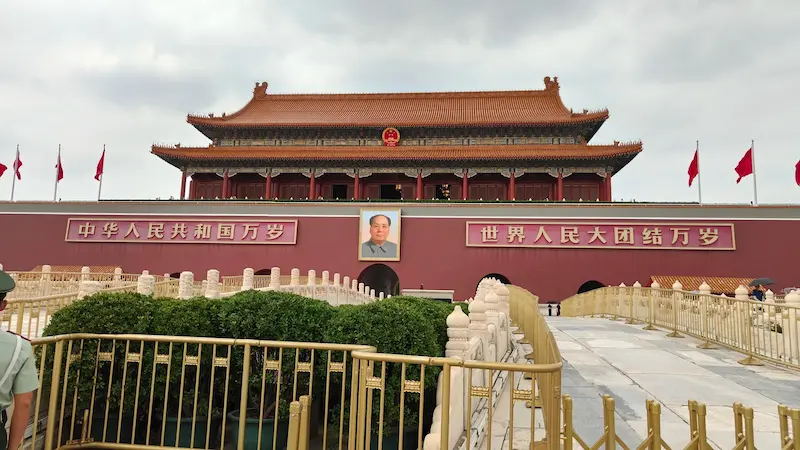
Step 2: Walk to the Jinshui Bridge area to take photos
↓
Step 3: Go to the luggage storage area on the north side of the Gate Tower to store restricted items
↓
Step 4: Undergo a second security check
↓
Step 5: Scan your passport or ID to validate your ticket
↓
Step 6: Take the west ramp to ascend to the City Gate platform
↓
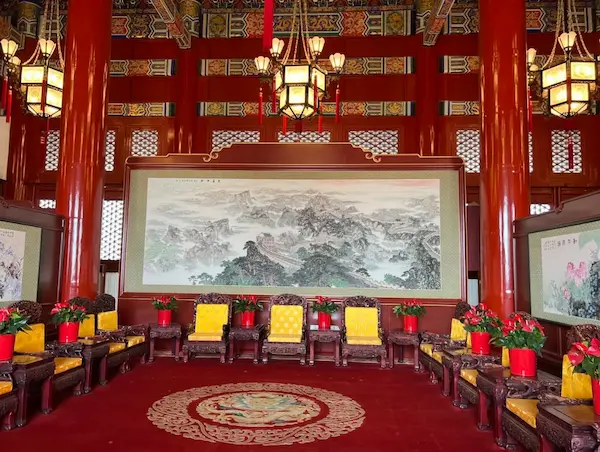
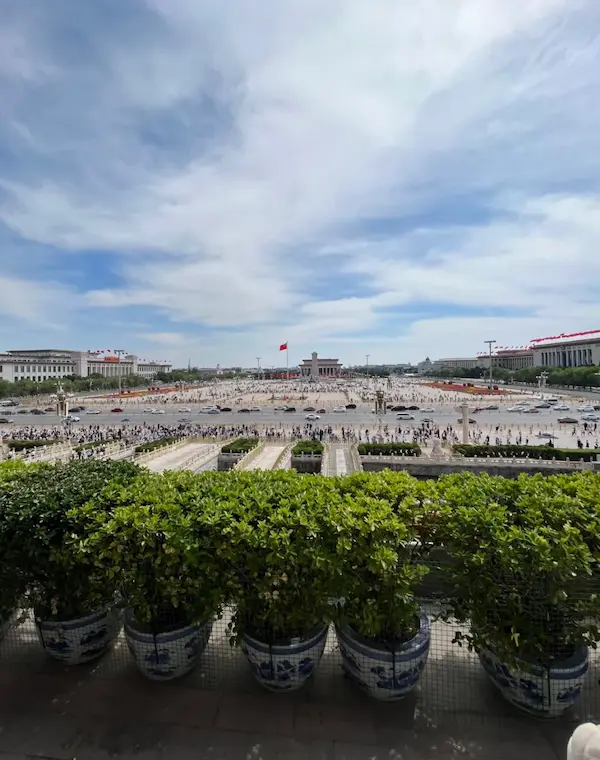
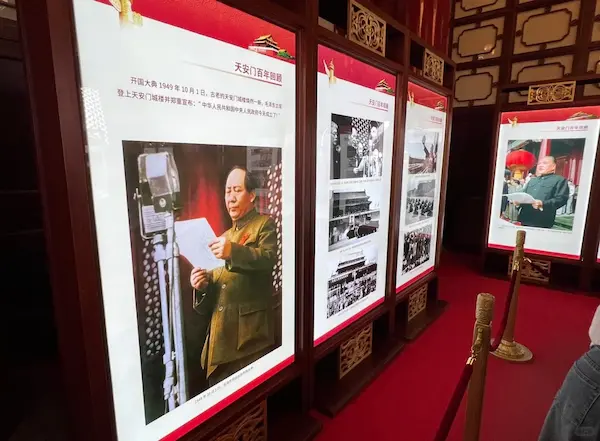
Step 7: Enjoy the view and take photos on the City Gate platform; explore the indoor photo and text exhibition
↓
Step 8: Take the east ramp down to exit the City Gate
↓
Step 9: Retrieve your stored items, pass through the Duanmen Gate, and proceed directly to the Meridian Gate entrance of the Forbidden City
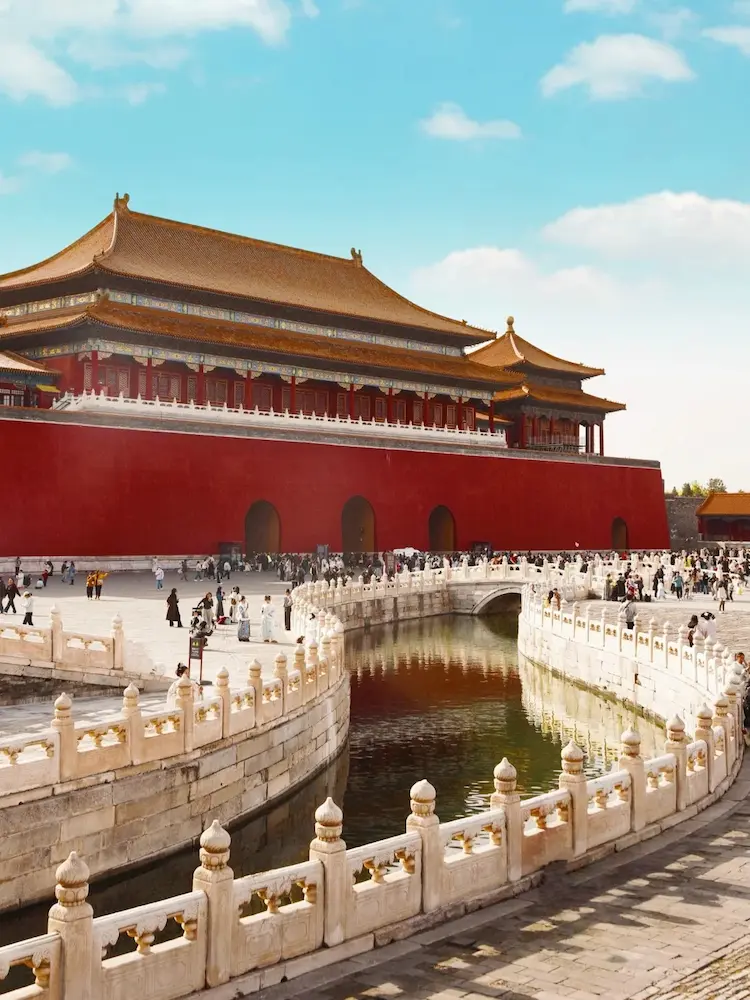
As you walk up to the Jinshui Bridge, look up at the 34.7-meter-high Tiananmen Gate Tower. The imposing vermilion walls stretch out before you, and the yellow glazed tiles glisten in the sunlight.
Red flags flutter in the breeze across the square, and you can hear the sound of traffic flowing along Chang’an Avenue—this is the unique visual and auditory experience of Beijing’s Central Axis.
Highlight 1: Outer Jinshui Bridge, Huabiao Pillars, and Stone Lions (Jinshui Bridge Area, before ascending the city gate tower)
Before ascending the city gate tower, you’ll first pass the Outer Jinshui River and the Outer Jinshui Bridge spanning it. The river’s water is drawn from Yuquan Mountain in northwest Beijing, and a total of seven white marble bridges span it.
What you’re looking at: The largest bridge in the center is called the Imperial Path Bridge; in ancient times, only the emperor was permitted to cross it. On either side are the Princes’ Bridge and the Rank Bridge, designated for nobles and officials of different ranks, respectively. The two outermost bridges are the Commoners’ Bridges. The layout of this bridge complex provides a clear illustration of the strict hierarchical system of the ancient imperial court.
There are a total of four sets of white marble huabiao in front of and behind Tiananmen Gate. Each stands nearly 10 meters tall, with the entire column carved with coiling dragons and a mythical beast called a “hou” crouching at the top.
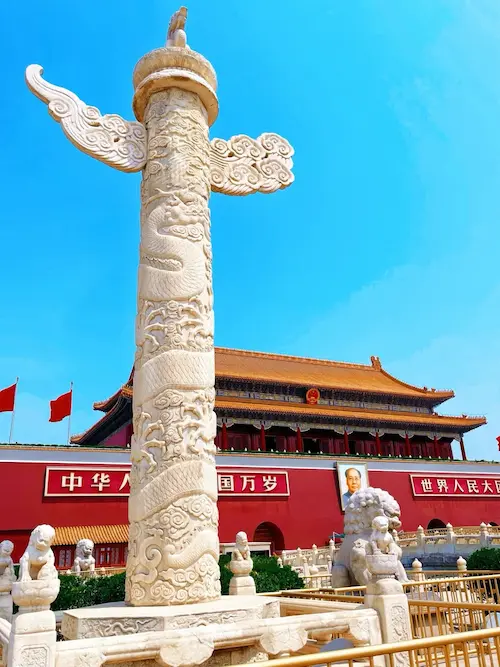
Huabiao are traditional architectural elements of symbolic significance, embodying imperial ritual systems and spatial symbolism.
A common folk interpretation holds that the mythical beast facing outward toward the square is called “Waiting for the Emperor’s Return,” expressing the hope that the emperor would not linger on his tours but return to the palace early to attend to state affairs.
The mythical beast facing inward toward the city gate is called “Waiting for the Emperor’s Departure,” expressing the hope that the emperor would not remain confined to the palace but would venture out more often to understand the lives of the common people. These interpretations were passed down through later generations and are not recorded in original official historical sources.
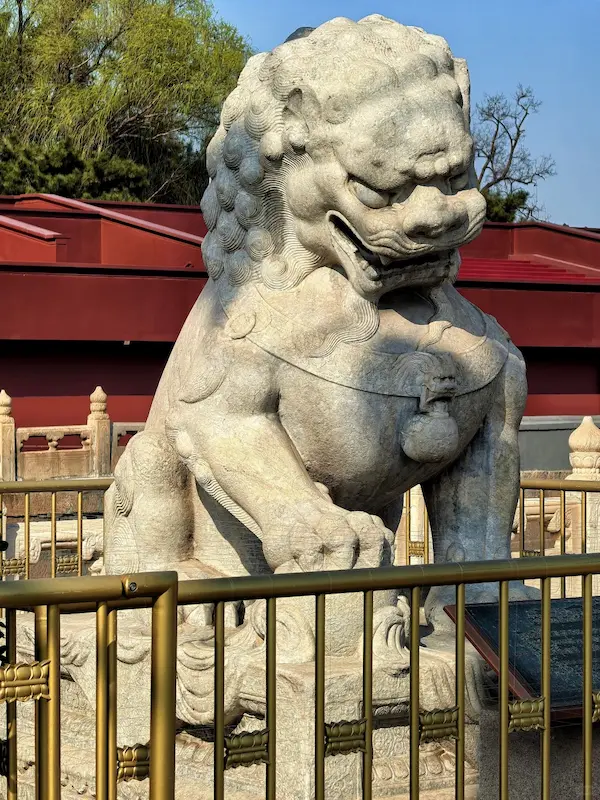
Two pairs of Ming Dynasty stone lions are placed on either side of Jinshui Bridge: the male lion on the left has its right paw resting on an embroidered ball, traditionally interpreted as symbolizing the unification of the empire; the female lion on the right has her paw resting on a cub, traditionally interpreted as representing the continuity of descendants through the generations.
Highlight 2: The Horse Path (the ascent route to the city tower)
After passing through security and having your ticket scanned, you’ll walk up the west side of the horse path to reach the city tower platform. The horse path was an ancient sloped passageway used to transport soldiers and supplies up to the city walls.
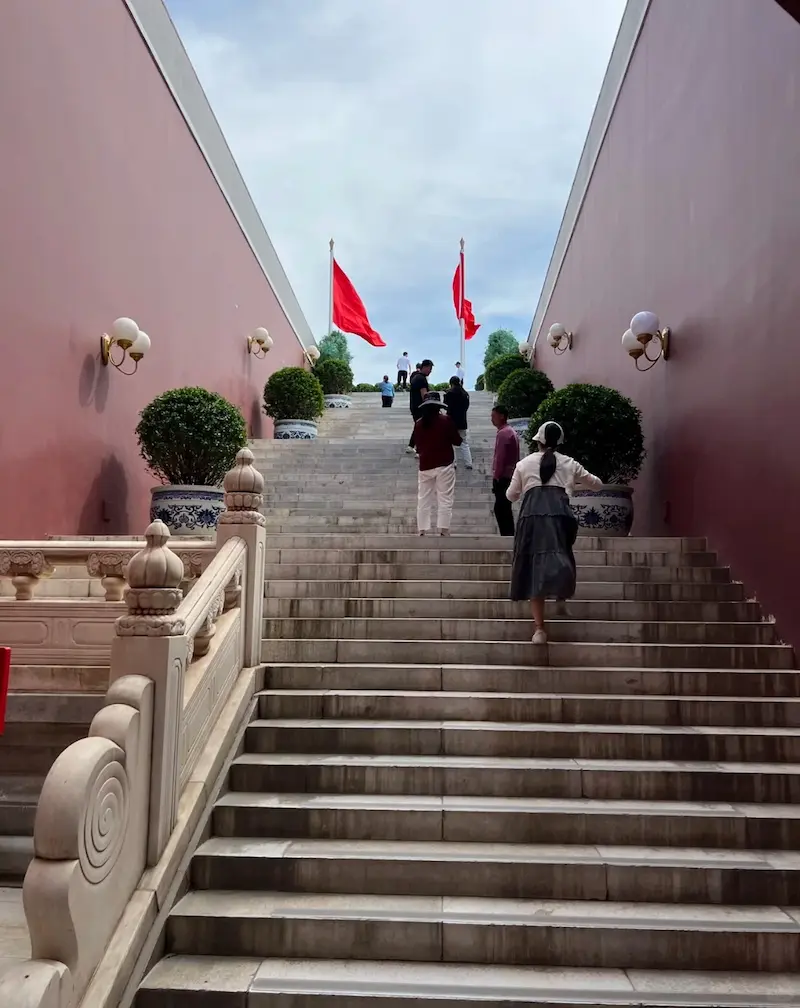
As you climb the tower along this historic path, you can imagine how people moved around the ancient imperial palace complex.
Highlight 3: The City Gate Platform and View (From the Top of the City Gate)
Reaching the city gate platform is the highlight of the entire tour.
What can you actually see from the rostrum?
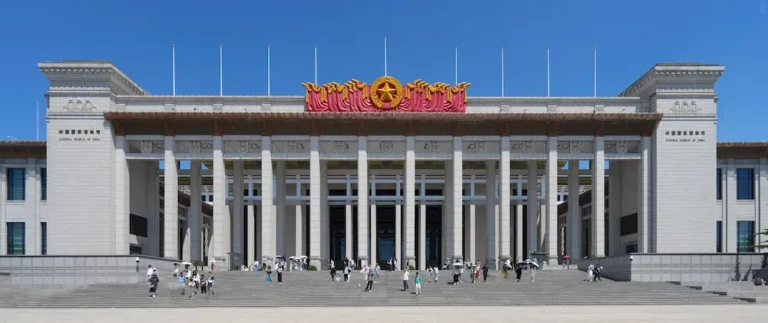
Looking south from the platform, the following sights come into full view: Tiananmen Square, the Monument to the People’s Heroes, the Great Hall of the People, the National Museum, and the broad Chang’an Avenue; further south, you can also see in the direction of Zhengyang Gate.
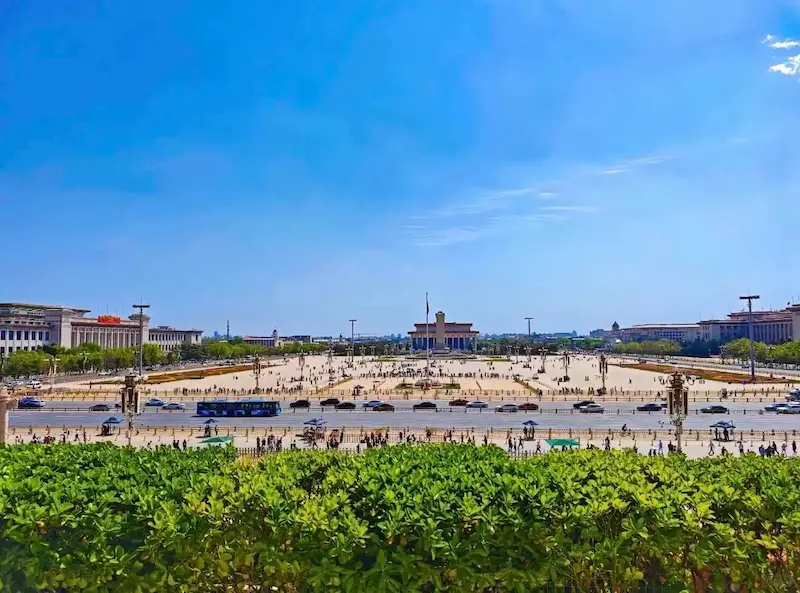
On October 1, 1949, the founding ceremony of the People’s Republic of China was held at this city gate.
Standing here, you can see the flowing crowds in the square and flocks of pigeons flapping their wings as they glide across the sky in the distance. The sound of their wings mingles with the city’s clamor, and history and reality intertwine right before your eyes.
Inside the gate tower, there is a small exhibition featuring text and images that chronicle the numerous restorations and reconstructions of Tiananmen from ancient times to the present.
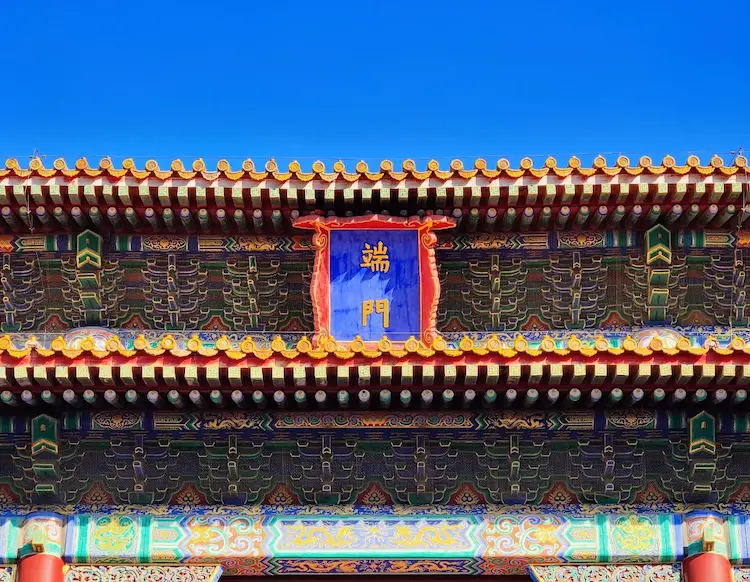
You can also examine the structure of the gate tower up close: Tiananmen Gate Tower is a double-eaved hipped-and-gabled roof structure, nine bays wide and five bays deep. In ancient times, the numbers 9 and 5 symbolized the “supreme authority of the Nine-Five,” representing the emperor’s highest status.
Glazed ridge animals are arranged along the eaves and ridges, serving as auspicious protective decorations in traditional ancient architecture.
Highlight 4: Descend the East Ramps and Exit the City Gate
Once your tour is complete, take the east ramps down to retrieve the personal items you left in storage earlier. From there, proceed northward through the End Gate to reach the Meridian Gate of the Forbidden City.
Should You Visit the Rostrum or Just See Tiananmen from the Square?
✅ We recommend visiting the Tiananmen Gate if:
- This is your first visit to Beijing;
- You’re interested in modern and contemporary Chinese history;
- You’d like to enjoy a unique bird’s-eye view of Tiananmen Square;
- You want to see the Tiananmen Gate building up close.
You may choose not to visit the Tiananmen Gate if:
- Your schedule in Beijing is very tight;
- The focus of your trip is visiting the Forbidden City;
- You don’t want to spend time making reservations or waiting in multiple security lines;
- Your goal is simply to take photos of the exterior of the Tiananmen Gate.
Tiananmen Gate Tower vs. Tiananmen Square: A Comparison Guide
| Tiananmen Square | Tiananmen Gate Tower | |
| What is it? | Large public urban square | Historic gate tower |
| Reservations | Separate reservation required | Separate reservation required |
| Main Attractions | Square scenery, flag-raising ceremony | Tour of historic architecture, panoramic views from above |
| Recommended Duration | 1–2 hours | 30–60 minutes |
| Can Be Combined with Other Attractions | Yes | Yes, ideal for visiting after the Forbidden City |
The Historical Story Behind the Architecture
After completing the entire tour, looking back to learn about the building’s history makes it easier to understand why it has become a national symbol.
The Tiananmen Gate we see today was first built in the 15th year of the Yongle reign of the Ming Dynasty (1417). Originally named Chengtiangmen, it served as the main gate of the imperial city during the Ming and Qing dynasties.
The chief architect overseeing its construction was Kuai Xiang, a master craftsman of the Ming Dynasty. Contemporaries praised his exceptional skill, dubbing him “Kuai Luban.”
The main structure relied primarily on mortise-and-tenon joints for its wooden framework, though some metal components were also used.
Chengtian Gate was destroyed by war during the late Ming Dynasty. Reconstruction was completed in the eighth year of the Shunzhi reign of the Qing Dynasty, and it was officially renamed Tiananmen, a name symbolizing the legitimacy of imperial authority and national prosperity, and the well-being of the people.
After the founding of the People’s Republic of China, to eliminate structural safety hazards, a major renovation of the Tiananmen Gate Tower was carried out from late 1969 to early 1970. The project preserved the traditional architectural form while meeting modern building safety standards.
During the Ming and Qing dynasties, this was the venue where the imperial court held major ceremonies and issued imperial edicts; ordinary citizens were not permitted to approach it freely. Numerous significant historical events of the modern and contemporary eras have taken place here.
On October 1, 1949, the Founding Ceremony was held on the Tiananmen Gate Tower.
On January 1, 1988, the Tiananmen Gate Tower was officially opened to the public, and ordinary visitors were finally able to ascend this former imperial restricted area.
Details Worth Noting at the Site
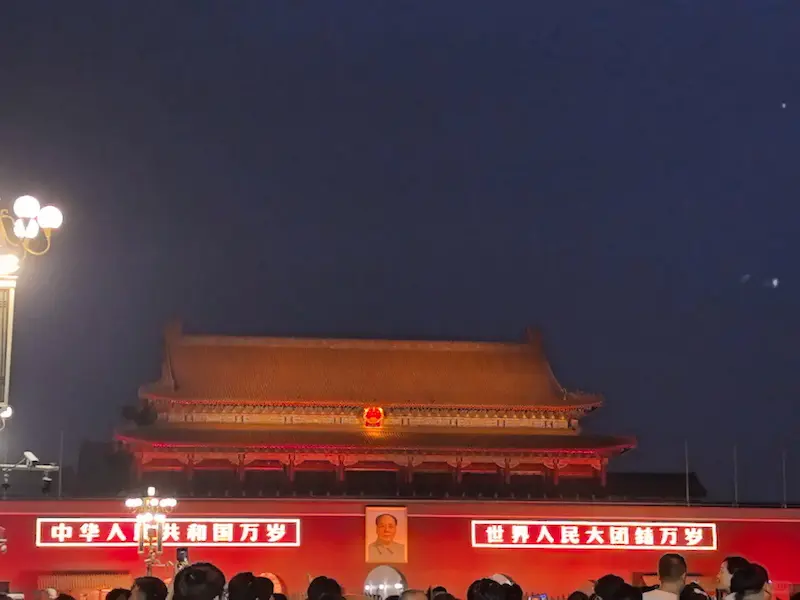
1. Two giant banners hang on the front of the gate tower: “Long Live the People’s Republic of China” and “Long Live the Great Unity of the Peoples of the World”;
2. A metal national emblem hangs in the center of the gate tower; it is an important national symbol.
Suggested Itineraries for Nearby Attractions (Planning Your Itinerary After the Tour)
This is a half-day to full-day combined itinerary for Tiananmen Square and the Forbidden City—not a standalone tour of the Tiananmen Gate Tower.
Recommended full-day itinerary: Take Metro Line 1 to Tiananmen East Station → Visit the Monument to the People’s Heroes at Tiananmen Square → Climb the Tiananmen Gate Tower (one-way traffic) → Pass through the Meridian Gate → The Palace Museum
It’s a 5-minute walk from the Tiananmen Gate Tower to the Meridian Gate entrance of the Forbidden City. If you’ve booked a ticket for the Forbidden City, simply present your original passport to enter.
Optional Add-On: The National Museum is located on the east side of the square. It requires a separate reservation, and a full tour takes a long time, so it’s not recommended to squeeze it into the same day’s itinerary.
Tip: If this is your first time in Beijing, I recommend visiting the Tiananmen Gate Tower before the Forbidden City. Given the current visitor flow, after ascending the tower, you can proceed directly to the Forbidden City via the Meridian Gate, making for a very seamless transition between the two attractions.
FAQ
When you step into this ancient structure that has weathered the storms of centuries and stand on the high platform of the city gate tower to look out over the entire square, you’ll truly feel that this building is more than just brick walls and glazed tiles—it’s a living history that you can see and walk through.