Huanghua Water Great Wall Guide: The Great Wall Submerged in Water, the Ancient Chestnut Grove, and Route Options of Various Durations (2026)
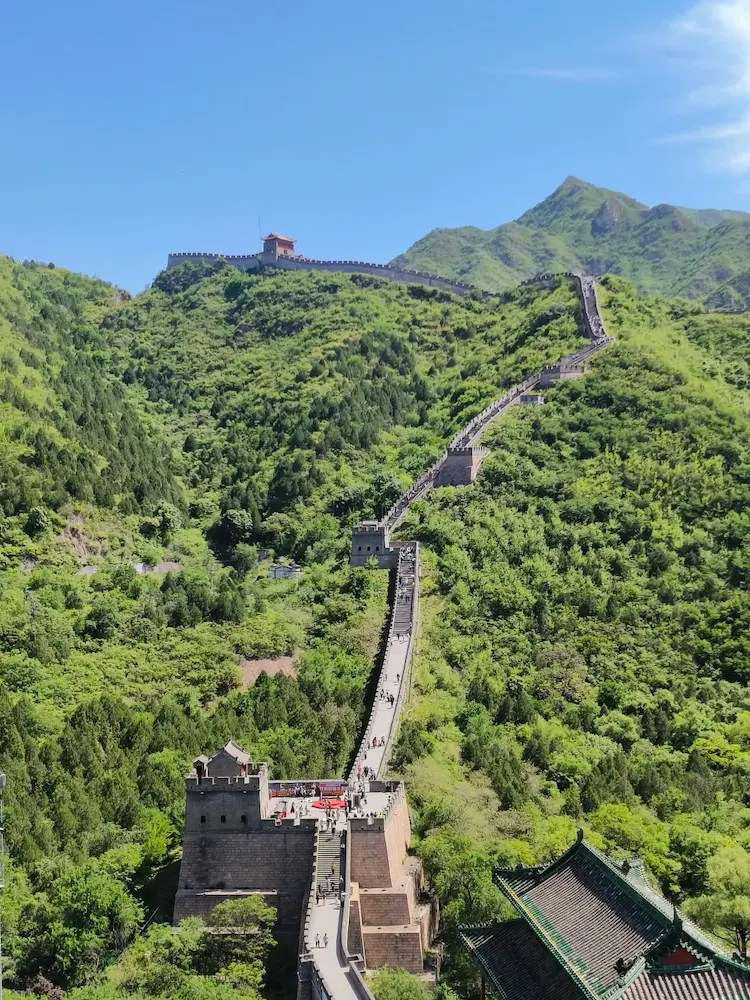
When people think of the Great Wall, the image that comes to mind for most is that of a gray dragon coiled along a barren, dry, and desolate mountain ridge—exposed to the wind and sun, lonely and rugged.
But if you visit the Huanghua Water Great Wall in Jiuduhe Town, Huairou, that impression will be completely shattered.
Here, the Great Wall winds down from the mountain ridge, with some sections submerged in the waters of Haoming Lake, creating a unique landscape where the Great Wall and the lake coexist. The magazine *Ancient Architecture* once described this place: “The scenery of Jiangnan and the spirit of the frontier—all are found in the Water Great Wall.”
Here, the Great Wall no longer carries only the solemn weight of military defense; instead, it blends seamlessly with the emerald waters of Haoming Lake, centuries-old chestnut trees, and the mountain streams flowing through the valley. You can take a boat to view the submerged ruins of the Great Wall from the water’s surface, or enjoy a picnic and rest in the shade of the chestnut grove.
Table of Contents
Visiting the Huanghua Water Great Wall for the First Time: 6 Things You Should Know
| What You Need to Know Most on Your First Visit | Content |
| What Makes It Unique | The Great Wall blends with the lake, setting it apart from typical mountain-ridge Great Walls |
| Top Attractions | The Great Wall submerged in water, Haoming Lake, the ancient chestnut grove, and Black Dragon Pool Canyon |
| Should You Climb the Great Wall? | Climbing the wall isn’t mandatory; you can opt for a leisurely lakeside route instead |
| How Much Stamina Is Required? | Stamina requirements vary greatly by route—but that doesn’t mean the entire trip is easy |
| Recommended Stay | 2–3 hours to see the highlights; half a day is ideal for a leisurely, in-depth exploration |
| Best for | Visitors who enjoy natural scenery, photography, light hiking, and family outings |
Unraveling the History and Geography: Why Are They Called the “Water Great Wall” and “Huanghuacheng”?
How Did the“Water Great Wall” Form?
When many people first hear the name “Water Great Wall,” they assume the Great Wall was intentionally built in the water. That’s not the case.
Here’s the truth: This section of the Great Wall was originally built on a mountain ridge during the Ming Dynasty. In the 1970s, to address water supply issues in Beijing and the surrounding areas, the Xishuiyu Reservoir was constructed. After the dam began holding water, the water level rose, submerging three lower sections of the Great Wall.
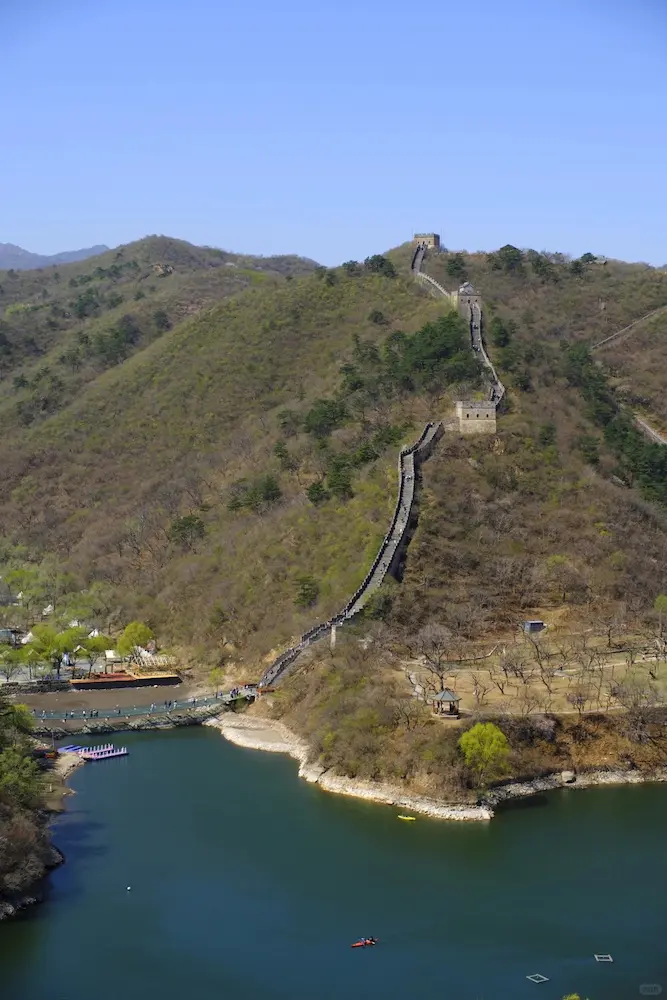
Thus, a section of the Great Wall that had once stood on land became a Great Wall “submerged” beneath the water. With its base submerged and the upper half protruding above the surface, it looks from a distance like a giant dragon wading across a river.
This was not the design of ancient craftsmen, but rather an unexpected encounter between modern hydraulic engineering and ancient military engineering. Yet this serendipity has created a unique and spectacular sight along the Great Wall of Beijing.
The Origin of “Huanghuacheng”: Romantic Wild Chrysanthemums
The area where the Huanghua Water Great Wall is located was historically known as “Huanghuacheng.” Why is it called “Huanghua”?
Every year during midsummer (mid-to-late July through August), the hillsides and valleys surrounding the Great Wall are blanketed with yellow wild chrysanthemums. The golden sea of flowers contrasts beautifully with the bluish-gray ancient Great Wall and the emerald-green lake, creating a strikingly vibrant scene.
Imagine this scene: standing on the Great Wall and looking down, you see the blue lake below, a ribbon of yellow flowers along the shore, and dark green mountains in the distance. This is not the “desolate” Great Wall we typically imagine, but rather a vivid, warm, and vibrant oil painting.
This is how the name “Huanghuacheng” came to be.
A Hidden Military Stronghold: The“Northern Gateway” to the Ming Thirteen Tombs
During the Ming Dynasty, this area was known as “Huanghua Road” and served as a key frontier defense post responsible for safeguarding the northern flank of the Ming Thirteen Tombs. Should enemy forces from the north bypass Juyong Pass and Badaling, this location would serve as a crucial barrier; consequently, the stone materials and construction standards used for the city walls were of a high caliber.
Three Key Observations When Viewing the Great Wall from This Spot
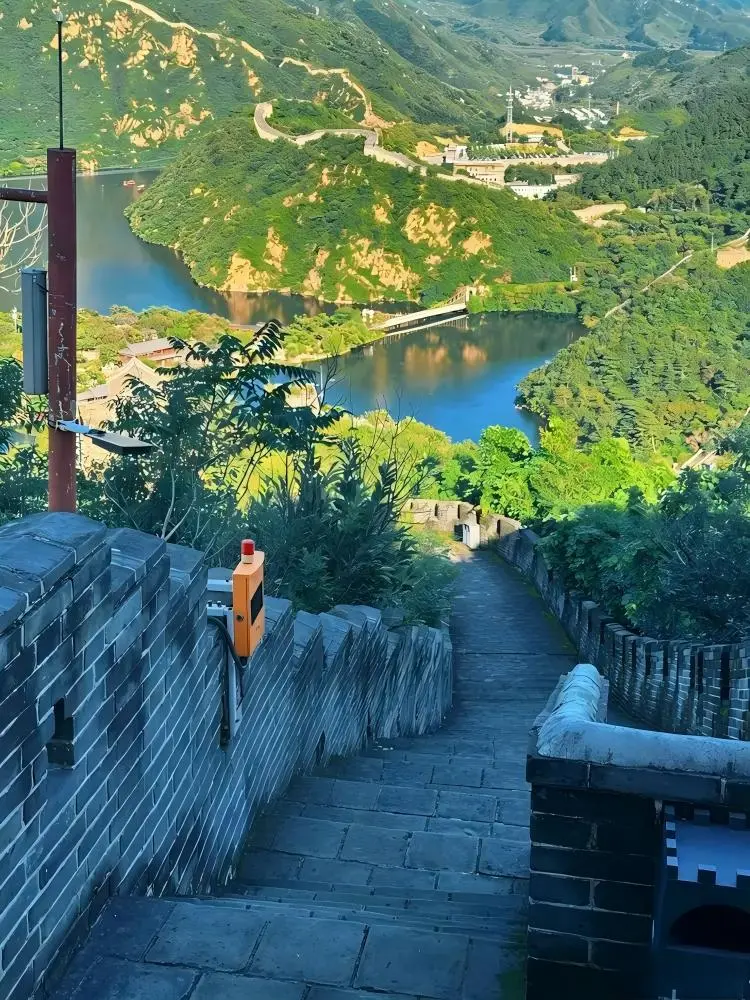
1. Observe how the wall follows the contours of the mountain, extending downward all the way to the lakeshore;
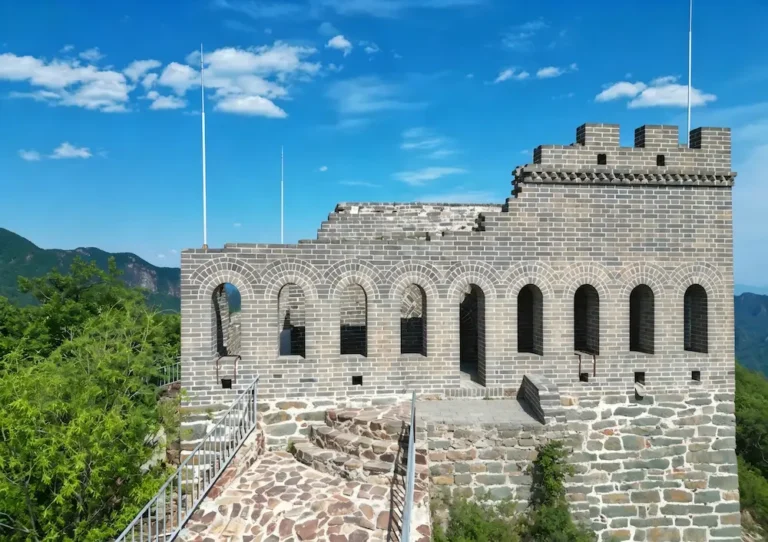
2. Distinguish between the damaged original sections of the wall and the later-repaired sections;
3. Appreciate the spatial composition created by the interplay of the mountains, the lake, and the Great Wall.
A local folk legend circulates about Cai Kai’s role in building the Great Wall: Cai Kai, the general overseeing the construction, was falsely accused and convicted because the project took too long. Later, after the imperial court verified that the wall was solidly built, his name was cleared.
⚠Note: This story is merely a local oral tradition; its historical accuracy cannot be fully verified. It should be understood as a folk tale rather than an established historical record.
The 4 Must-See Spots at Huanghua Water Great Wall
| Highlight | Why It’s Worth Seeing | Recommended Stay | Ideal For |
| Great Wall in the Water | The scenic area’s iconic centerpiece, featuring remnants of the Great Wall extending into the lake | 20–30 minutes | First-time visitors, photography enthusiasts |
| Ancient Ming Dynasty Chestnut Grove | Ancient trees dating back to the Ming Dynasty, offering ample shade—perfect for picnics and relaxation | 20–30 minutes | Families with children, leisure travelers |
| Black Dragon Pool Canyon | Natural scenery of valleys and streams; feels cool in summer | 30–60 minutes | Visitors who enjoy light hikes in the mountains and forests |
| Boat Ride on the Lake | View the Great Wall ruins submerged in the lake from the water’s surface | 20–40 minutes | Photography, leisure travelers |
Visiting the Huanghua Water Great Wall for the First Time: How to Choose a Route
Quick Route Selection Guide
| Your Travel Situation | Recommended Itinerary | Estimated Time |
| First-time visitor who just wants to check out the iconic “Great Wall in the Water” | Lakeside boardwalk + observation deck (no need to climb the wall) | 1.5–2 hours |
| Want to actually hike a section of the ancient Great Wall | Enter at the East Gate and hike along the wall | 2–3 hours |
| Traveling with elderly family members | Lakeside boardwalk + stroll through the historic chestnut grove | About 2 hours |
| Traveling with children | Lakeside, chestnut grove, and shallow areas; hike at your own pace | 2–3 hours |
| Prefer nature hikes in the mountains and forests | Great Wall + Black Dragon Pool Gorge | About 3 hours |
| Plenty of time for an in-depth visit | Great Wall + chestnut grove + boat ride + gorge | Half a day |
Option A | 1.5–2-Hour Quick Tour (For Those Short on Time)
Enter through the main gate→Lakefront boardwalk→Haoming Lake Viewing Platform to see the Great Wall reflecting in the water→Brief stop at the Ancient Chestnut Orchard→Return.
Note: No need to climb the Great Wall; this itinerary covers the core iconic sights.
Option B | 2–3-Hour Great Wall Hiking Route
Enter through the East Gate and climb the section of the Great Wall that hasn’t been submerged; this section retains its original appearance, with uneven steps and missing guardrails in some areas, so it requires a certain level of physical fitness. Hike to overlook Haoming Lake and the Great Wall submerged in the lake. Return via the same route after the tour.
⚠Note: Due to the uneven steps and incomplete guardrails, this route is not recommended for the elderly or young children.
Option C | Family Leisure Route (2–3 hours)
Enter through the Main Gate and stroll along the gentle lakeside boardwalk to the ancient chestnut grove for a picnic and rest; children can splash around briefly in the shallow waters by the lake, but please supervise them closely; boat rides are available upon request. This route does not involve strenuous climbing along the Great Wall.
The route consists mainly of flat boardwalks and is relatively low-impact, but it still depends on your individual physical condition.
Option D | Half-Day In-Depth Full Tour
Climb the Great Wall (optional) + lakeside boardwalk + picnic at the ancient chestnut grove + boat tour on the lake + hike through Black Dragon Pool Gorge.
On-Site Descriptions of Individual Attractions
The Great Wall Reflected in the Water
Walk along the lakeside boardwalk from the main gate to the shore of Haoming Lake, and you’ll see the Great Wall winding down from the mountain ridge, with three sections of the wall extending into the lake.
Best Viewing Spots: The observation deck on the opposite shore of the lake, or take a boat to view the ruins up close from the water’s surface, where you can observe the moss and aquatic plants growing in the brick joints.
Ancient Chestnut Grove
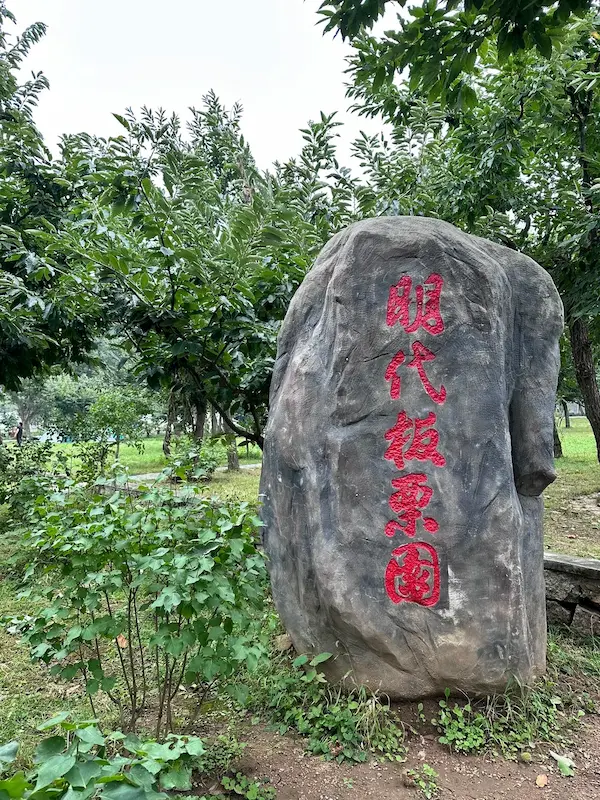
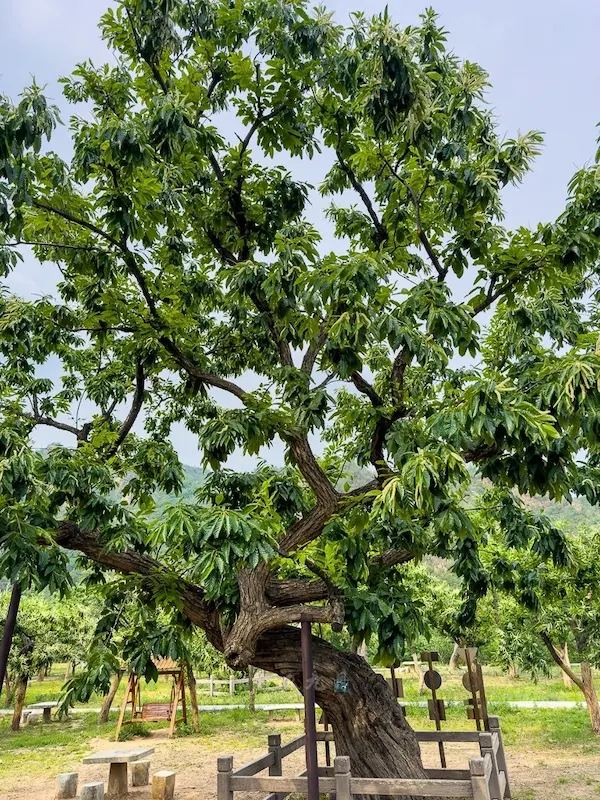
A large grove of ancient Ming Dynasty chestnut trees remains in the valley below the Great Wall. These trees are hundreds of years old; some have trunks so thick that it takes several people to encircle them, while others, though hollow inside, still bear fruit.
In the fall, the trees bear chestnuts, and the dense shade makes it an ideal spot for families to stop and rest.
Black Dragon Pool Canyon
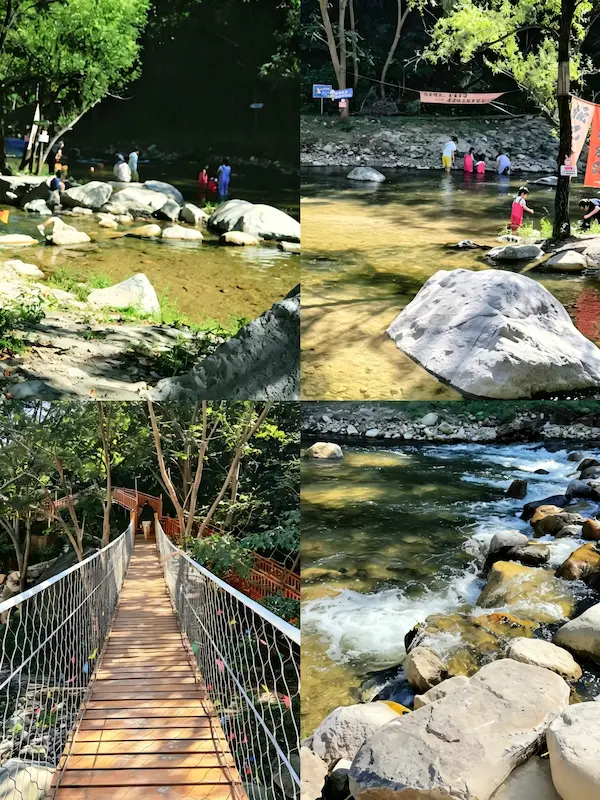
Continue walking inland from the chestnut grove to reach the canyon, where the mountains rise on either side, and a stream flows through the valley; temperatures here are cooler than outside during the summer. At its narrowest point, the canyon forms a “sky-and-earth in a single line” landscape; at the end of the canyon lies the deep Black Dragon Pool.⚠Swimming is strictly prohibited; visitors may only view it from a distance.
Lake Boat Activities
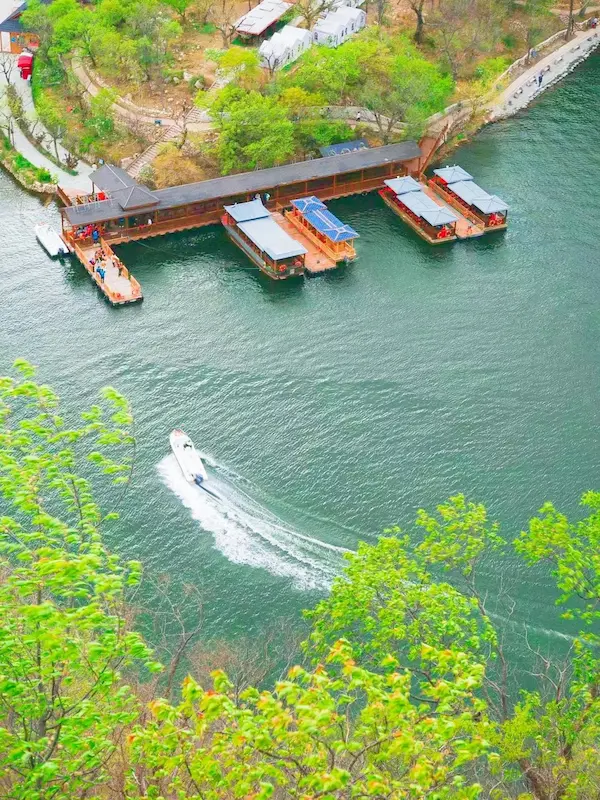
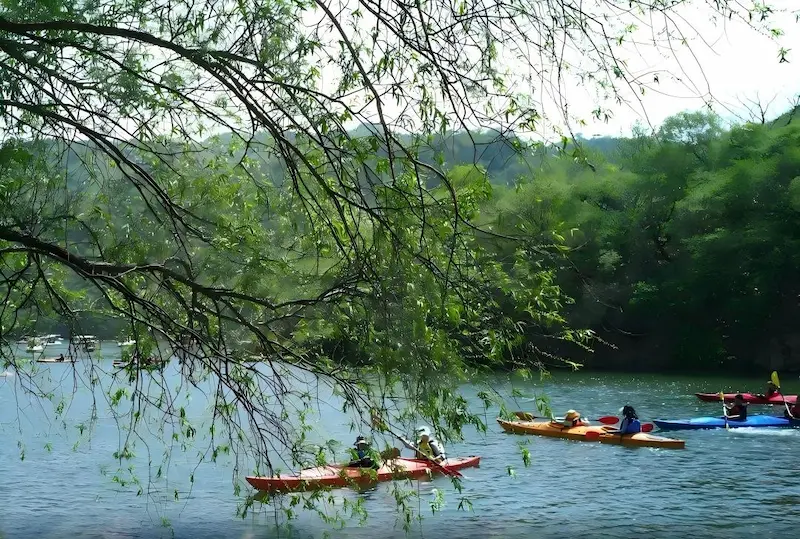
Haoming Lake within the scenic area offers a variety of boats, each providing a unique experience:
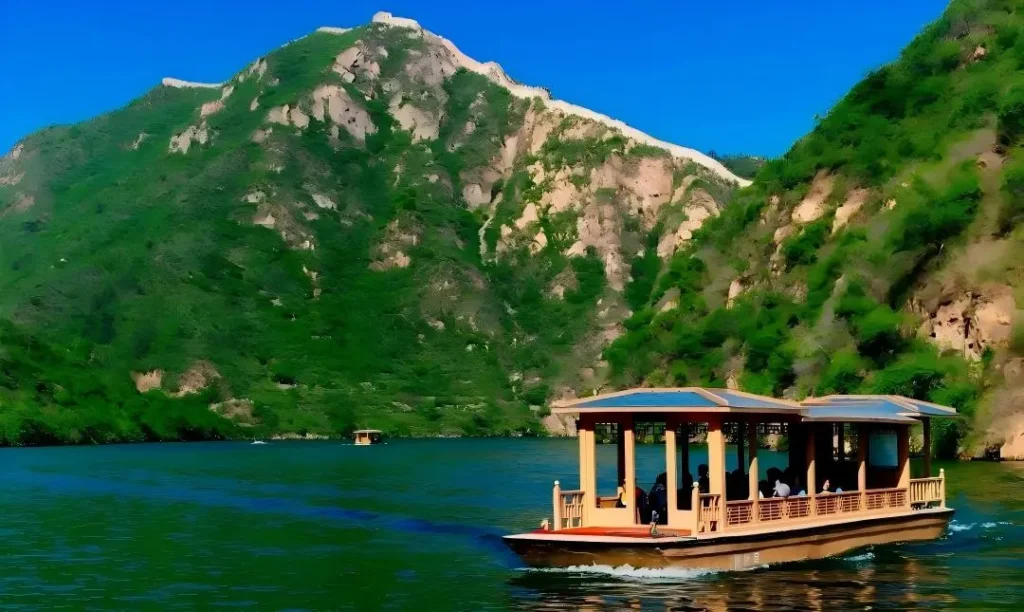
- Painted Boat: A large, antique-style sightseeing boat that moves smoothly, ideal for sightseeing.
- Speedboat: Fast-paced and thrilling.
- Kayak: Self-paddled; you can get close to the Great Wall’s water-facing sections, but be careful not to bump into the bricks and stones.
Ticket prices are subject to on-site announcements at the scenic area. The blogger’s recommendation: Consider a one-way trip on the painted pleasure boat to view the Great Wall from the water—the perspective is completely different from that on land.
How to Choose Between Huanghua Water Great Wall, Badaling, and Mutianyu?
| Huanghua Water Great Wall | Badaling | Mutianyu | |
| Core Experience | Great Wall combined with lakes and mountain scenery | Classic Ming Dynasty Great Wall at a strategic pass | Great Wall scenery along mountain ridges and through forests |
| Physical Demand | Varies widely depending on the route; can be easy or challenging | Moderate | Moderate to high |
| Family-Friendliness | Fairly family-friendly | Fairly family-friendly | Fairly family-friendly |
| Photography Highlights | Great Wall framed by a lake | Grand walls and passes | Panoramic views of the Great Wall along mountain ridges |
| Amenities | Boat tours, canyons, picnicking, and leisure activities | Well-developed amenities | Comprehensive cable cars, gondolas, and toboggan runs |
| Recommended Stay | 2–4 hours / Half a day | About 3 hours | 3–4 hours |
Tickets, Reservations, and Travel Tips for International Visitors
ℹ Important Note:
Admission tickets, boat rides, the suspension bridge, and the zip line are billed separately; combo tickets offer discounted packages. All prices and package details are subject to seasonal adjustments; please refer to the scenic area’s official announcements on the day of your visit.
1. Basic Admission Ticket: Includes park entry, the lakeside boardwalk, the chestnut orchard, and Black Dragon Pool Canyon;
2. Boat rides, the suspension bridge, and the zip line are additional activities that require separate payment;
3. If you plan to experience multiple activities, consider whether a combo ticket offers better value.
Foreign Tourists Visiting the Huanghuacheng Water Great Wall: 4 Things to Confirm Before You Go
1. Reservations: Use the WeChat mini-program “Huanghuacheng Water Great Wall,” which supports real-name reservations using your passport;
2. Payment: The ticket office and shops accept some international credit cards; for small purchases, we recommend using WeChat Pay or Alipay;
3. Navigation: Save the Chinese place name “Huanghuacheng Water Great Wall”; searching using only English is not recommended;
4. Return Trip: Due to its suburban location, be sure to confirm bus and private car return schedules before your trip to avoid getting stranded in the suburbs.
“How Do Foreigners Use Alipay in Beijing? Registration, Card Linking, Scan-to-Pay, and FAQs”
It is recommended to carry a small amount of RMB cash in case of poor mobile signal.
Transportation Options
How to Get to the Huanghua Water Great Wall: Transportation Options
| Travel Situation | Recommended Option | Tips |
| Families of 2–4 People | Drive / Chartered Vehicle | Parking is available at the scenic area; leave early on weekends and holidays to avoid traffic jams |
| Solo Backpackers on a Tight Budget | Public Bus | Fares are infrequent, and the trip takes a long time; be sure to check return bus schedules |
| No Local Private Vehicle | Tourist Shuttle / Chartered Vehicle | Check the operating dates for platform shuttles; when traveling to the suburbs, prioritize confirming your return trip |
- By Car (Highly Recommended): Set your GPS to “Huanghuacheng Water Great Wall.” From downtown, take the Jingcheng Expressway and exit onto Huai-Chang Road. The total distance is approximately 80 kilometers, and the trip takes about 1.5–2 hours (traffic on Ansi Road tends to be heavy on weekends, so we recommend leaving before 8:00 a.m.). The scenic area has a large parking lot, with a fee of approximately 20 yuan per visit.
- By Bus: Take the 916 Express from Dongzhimen Hub to the “Nanhuayuan Sanqu” stop in Huairou, then transfer to Bus H21 (Huairou–Water Great Wall) for a direct ride to the park entrance. The total journey takes about 2.5–3 hours. Fares are inexpensive (around 20 yuan), but buses run infrequently, making this option best suited for backpackers with ample time.️ Bus schedules are subject to change; please check real-time bus information before traveling.
- Tourist Shuttle: Some travel platforms (Ctrip, Meituan) offer direct round-trip shuttles from the city to the Great Wall; you can search for these options yourself.
Nearby Dining
What to Eat Near the Huanghua Water Great Wall?
The farmhouse restaurants around Jiuduhe Town specialize in Huairou rainbow trout. Common dishes include grilled rainbow trout and rainbow trout sashimi, served with flatbread, free-range eggs stir-fried with toon leaves, and cold wild vegetable salad. Prices range from 50 to 80 yuan per person.
Tip: We do not recommend specific restaurants; you can refer to ratings and reviews on review platforms and choose according to your budget.
FAQ
After Visiting the Huanghua Shui Great Wall, Where to Go Next
>① Haven’t decided on a Great Wall destination yet → “Beijing’s 9 Great Wall Sections: Badaling, Mutianyu, and More”
> ② Want to see the classic ridge-top Great Wall → “Mutianyu Great Wall Guide”
> ③ Want to see the Pass-Style Great Wall → “Badaling Great Wall Guide”
> ④ Want to experience the rugged, untamed Great Wall → “Jiankou Great Wall Travel Guide”
Personal On-Site Impressions: The Huanghua Water Great Wall offers a different experience from the typical ridge-top Great Wall. Here, you don’t necessarily have to climb steep walls constantly; you can sit under ancient chestnut trees and gaze at the ruins of the ancient Great Wall across the lake. It offers a relatively relaxed atmosphere, but the sections requiring a climb still present some hiking difficulty. Plan your route based on your physical fitness before you go.
Author’s Note: This article is based on on-site visits and publicly available scenic area information; ticket prices, schedules, and operational status are subject to change. Please check the official announcements from the Huanghua Water Great Wall before your trip.