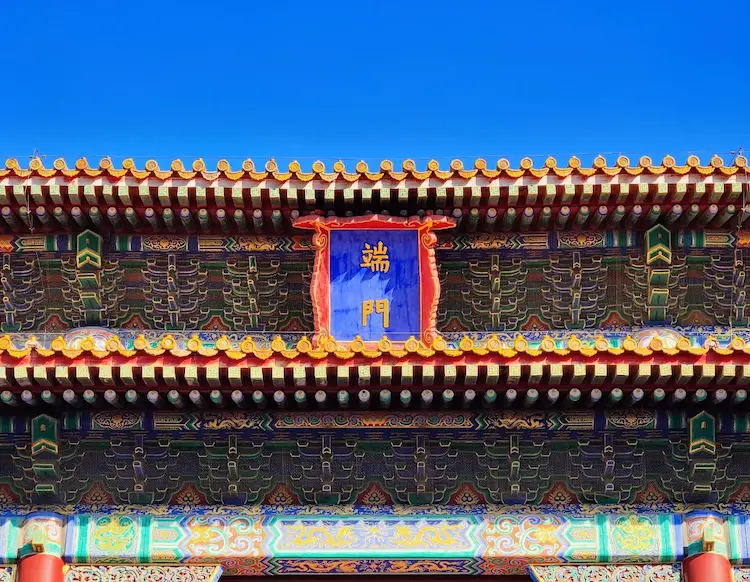
Beijing Yonghe Temple Spring Festival Blessing Guide: When to Go, How to Pay Respects, and What’s Different During the Spring Festival
Every Chinese New Year, large numbers of tourists visit Yonghe Temple in Beijing to experience traditional temple New Year customs and participate in New Year blessing ceremonies.
This article explains the best times to visit during the Chinese New Year, how to make reservations, recommended tour routes, and etiquette guidelines to help you prepare before your trip and ensure a smoother visit.
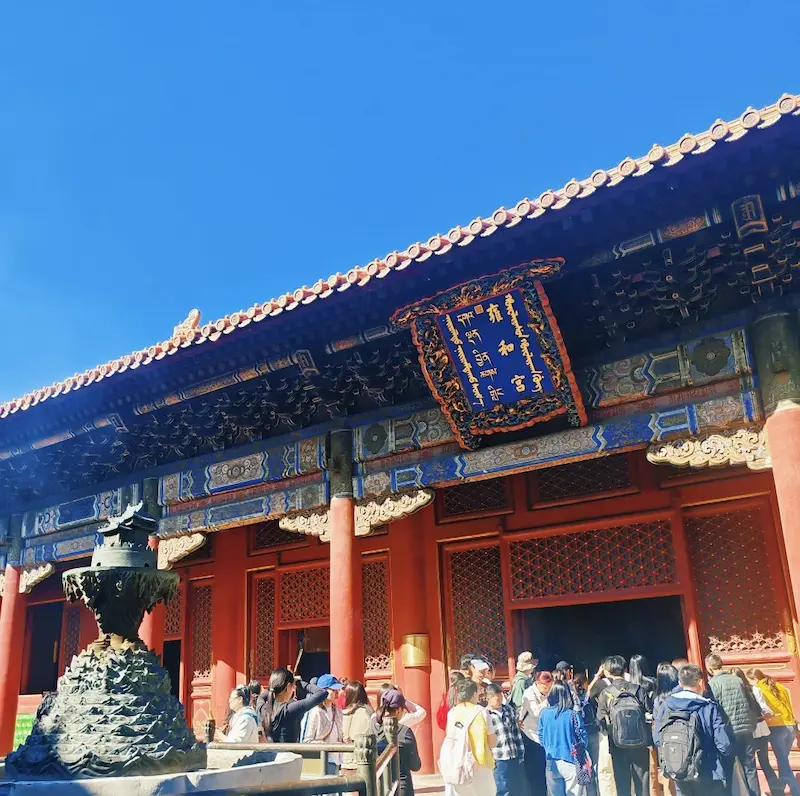
Table of Contents
The Best Time to Pray for Blessings During the Spring Festival
When visiting Yonghe Temple during the Spring Festival, the time you choose directly determines your experience.
- Peak Time: Early morning on the first day of the Lunar New Year. This is typically the time with the strongest sense of ceremony and the largest crowds during the Spring Festival, as many people rush to visit on the very first day of the New Year.
- Crowd Alert: Crowds are extremely heavy on the first day of the Lunar New Year; many people arrive to line up before dawn, and the site can get very crowded.
- A More Comfortable Alternative: If you’d like to avoid the peak crowds, visiting during the day from the 2nd to the 15th day of the first lunar month will be much more relaxed.
- Overall: The first day offers the most ceremonial atmosphere, while the other days provide a more comfortable experience.
Visiting Yonghe Temple During the Spring Festival: Decide First What Kind of Experience You Want
| Time Period | On-Site Experience | Best Suited For |
| New Year’s Eve | Traditional temple atmosphere on New Year’s Eve | Tourists who want to experience the temple atmosphere on New Year’s Eve |
| Early morning of the first day of the Lunar New Year | Most ceremonial atmosphere, extremely high foot traffic | Those who wish to experience the atmosphere of praying for blessings on the first day of the New Year and can tolerate crowds |
| Second to seventh days of the Lunar New Year | Still retains the Spring Festival atmosphere, with crowds having subsided somewhat | General tourists visiting Beijing for the first time |
| The 8th–15th day of the first lunar month | The festive atmosphere remains, and crowds are typically less dense | Tourists wishing to avoid extreme crowds |
Note: Annual visitor numbers are affected by holidays and weather; this table is for general reference only and does not represent absolute conditions.
Spring Festival Opening Hours and Reservations (Must-Read)
①General Reference Information (Long-Term)
- Visits during the Spring Festival require reservations with real-name registration. Tickets must be purchased through the official WeChat public account “Yonghegong Visitor and Devotee Services,” with separate time slots available for the morning and afternoon. If tickets for a given day are sold out, you will need to reschedule for another date.
- Regular opening hours (non-holidays): Gates open at 8:30 a.m., ticket sales close at 4:30 p.m., and the site clears at 5:00 p.m.
⚠️Important:
Special opening, closing, and ticket sales cutoff times apply during the Spring Festival. These are adjusted annually; do not treat previous years’dates as fixed rules. Be sure to check the official announcements for the current year.
②Special Arrangements for the Current Year’s Spring Festival (Example: 2026 Spring Festival; for reference only; please refer to official announcements for travel plans)
- New Year’s Eve: Opens at 8:30 AM, last admission at 12:00 PM, closes at 1:00 PM.
- First Day of the Lunar New Year: Opens early at 7:00 AM, last admission at 5:00 PM.
- Second through Seventh Days of the Lunar New Year and the 15th Day of the First Lunar Month: Opens at 8:30 AM, last admission at 4:30 PM.
Transportation: How to Get There on Your First Visit and What to Do Upon Arrival
Take Metro Line 5 to “Yonghegong” Station, exit via Exit F (southeast), and walk about 250 meters to reach the site.
Travel Tip: Roads in the area are highly likely to be congested during the Spring Festival, so prioritize the subway; driving is not recommended as your first choice.
Simple steps upon arrival: Exit the subway station → Locate the park entrance → Go through security and ticket inspection → Pick up incense, then begin your tour of the halls.
First-Time Visit to Yonghe Temple: Follow This Route (No Backtracking)
| Hall Location | Key Highlights for First-Time Visitors | Prayer Intentions | Recommended Duration |
| Yonghe Gate Hall | Architecture of the mountain gate hall and statues inside | Wishes for smooth sailing and fulfillment | 8–10 minutes |
| Yonghe Temple Hall | Grand architectural space of the main hall and statues | Peace and career aspirations | 10–12 minutes |
| Yongyou Hall | Architecture and interior furnishings | Warding off misfortune and attracting blessings | 8–10 minutes |
| Consecration Chamber (west side of Yongyou Hall) | Venue for blessing ceremonies; visitors may bring their own accessories | Cultural experience; not a must-see | As desired |
| Falun Hall | Tibetan Buddhist-style architecture and statues | Academic and career aspirations | 10–12 minutes |
| Wanfu Pavilion | Giant wooden Maitreya Buddha statue, grand pavilion | Wishes for peace and family well-being | 10–15 minutes |
| Suicheng Hall | Remains of the rear hall complex | Auspiciousness and smooth progress | 5–8 minutes |
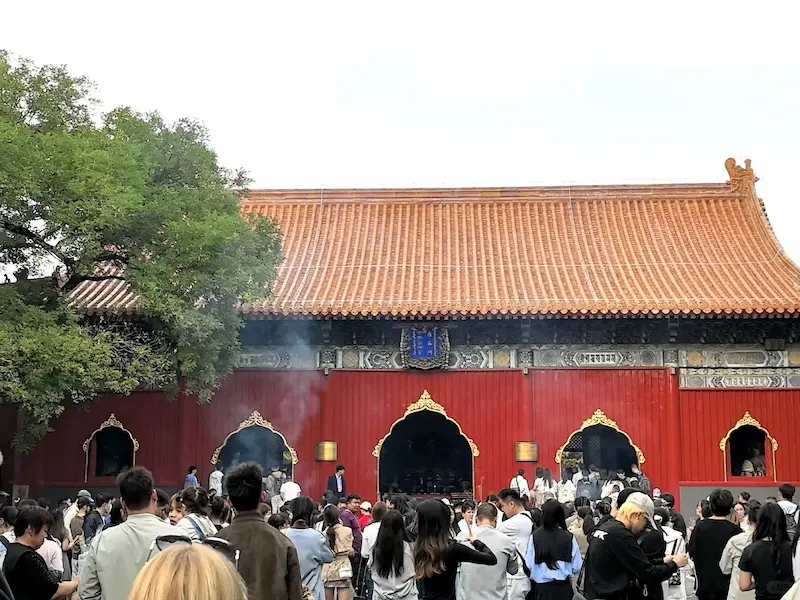
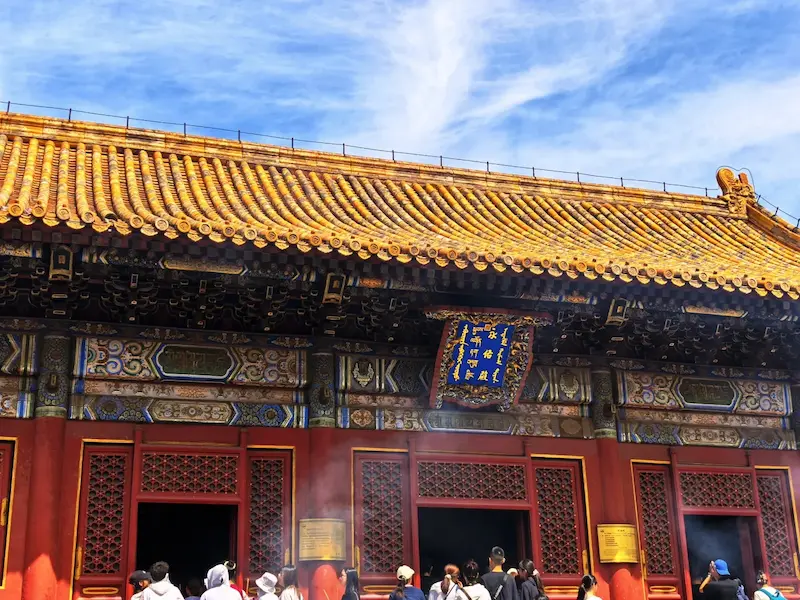
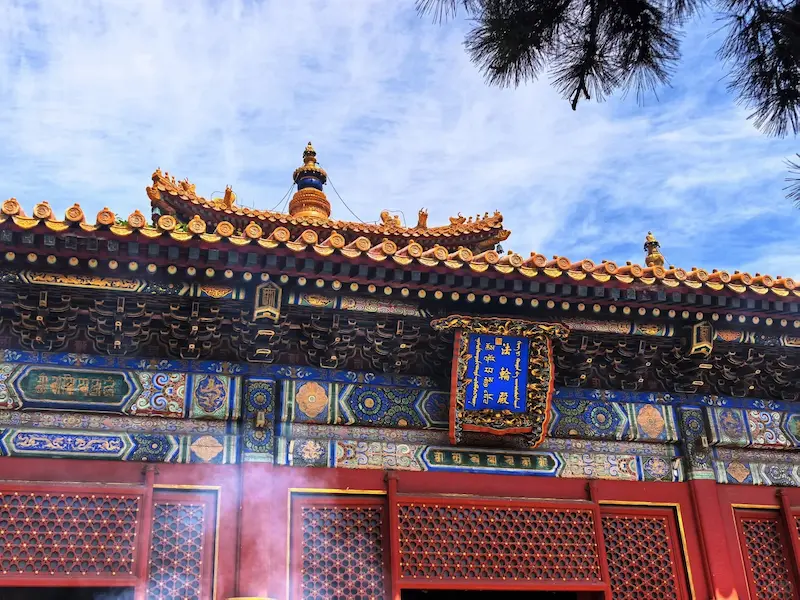
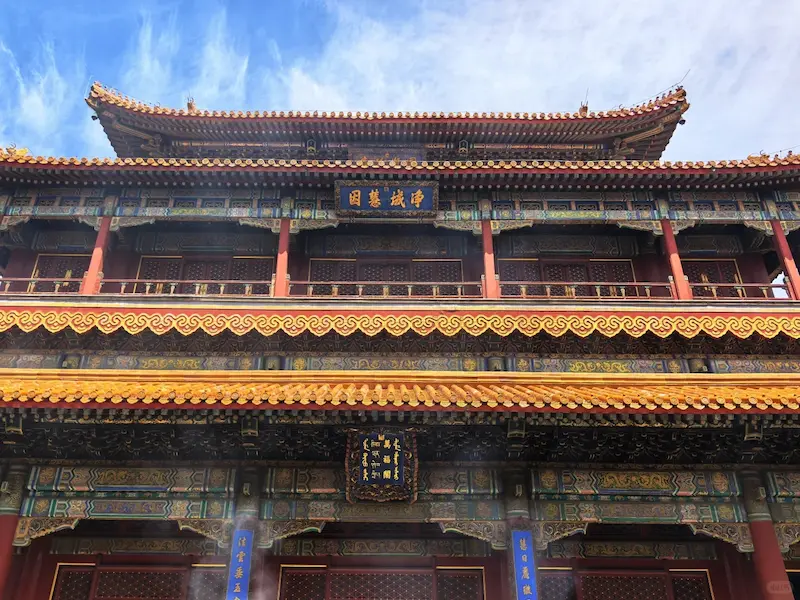
Suggested Tour Order: Enter through the ticket gate→(Optional) Buddhist Art Shop→Pick up free incense at the incense station→Enter through Zhaotai Gate, visit the sites in the order listed above, and exit through the small gate on the west side at the end of the tour.
Streamlined Itineraries of Different Durations—Just Follow the Plan
⏱1-Hour Quick Tour
Arrive by subway→Pass through the turnstiles and receive incense→Focus on visiting the Yonghemen Hall, Yonghe Palace, and Wanfu Pavilion→Leave.
⏱2-Hour Full Tour
Follow the complete hall itinerary above, visiting all sites in sequence. Experience the Blessing Hall as desired, then leave.
⏱In-Depth Experience (2+ Hours)
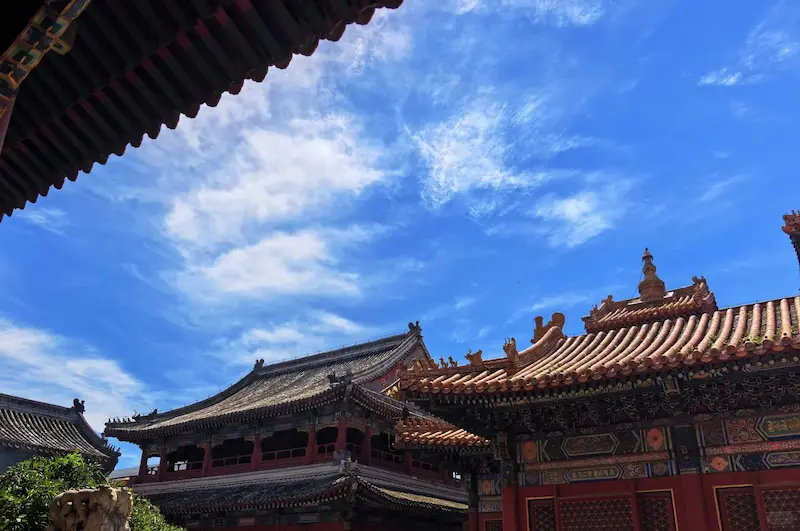
Complete the full tour of the halls, allowing time to observe the courtyard architecture and soak in the temple’s Spring Festival atmosphere—there’s no need to rush through every site.
Here’s What to Do When Praying for Blessings at Yonghe Temple for the First Time
When visiting Yonghe Temple and praying for blessings, observing temple etiquette not only shows respect for the site’s culture but also makes your visit more enjoyable.
1. Offering Incense
- Obtaining Incense: Free incense is included with admission tickets. Collect it at the “Incense Distribution Area”—no additional purchase needed. One bundle per person is sufficient.
- Quantity: Offer three sticks of incense at each hall entrance to symbolize reverence for the Buddha, the Dharma, and the Sangha.
- Method: Light all incense sticks at once. If a flame appears, gently fan it out—never blow it out with your mouth. After offering incense, place the entire bundle into the incense burner. Do not walk around the courtyard or enter halls while holding lit incense.
2. Entering Halls for Worship
- Entering: Use the side doors when entering any hall; avoid stepping on the threshold.
- Sequence: First pay respects to the Buddha in the main hall, then proceed to visit other halls in order.
Tip: There are no strict, fixed rules that visitors must follow when offering prayers. If you’re unsure of the proper way to proceed, simply observe other visitors and follow the staff’s instructions.
What Is the “Consecration Ceremony” at Yonghe Temple? Do Visitors Need to Participate?
A consecration ceremony is a ritual to bless religious objects. The consecration room is located on the west side of Yongyou Hall and is open to the public free of charge; you may also bring your own jewelry to have it blessed. During the ceremony, monks will ring bells and chant sutras; you simply need to kneel quietly and silently recite your prayer in your heart.
Important Note: General tourists do not need to participate in the consecration ceremony just to “check it off their list.” Treat it as an optional cultural experience—it is not a mandatory part of the visit.
Thinking of Getting a Prayer Bead Bracelet or a Sacred Object? Here Are 3 Things You Should Know First
The “Sacred Objects Distribution Center” at Yonghe Temple offers various exquisite souvenirs, such as the renowned incense ash glass beads, bracelets, necklaces, car charms, and lucky bags. There are three locations:
- Outside the Entrance: West of the ticket gate. No admission ticket required. Ideal for visitors purchasing bracelets without entering the temple.
- Beside Zhaotai Gate: Located on the left after entering through the ticket gate, this is the largest and most comprehensive location.
- Beside Yongyou Hall: Adjacent to the consecration room, this smaller location offers the convenience of having items consecrated immediately after purchase.
Important Notice
The Buddhist Art Supply Center may be closed during the period from New Year’s Eve through the 7th and 15th days of the first lunar month. Closure schedules vary each year; please check the official announcements for the current year before visiting. Purchasing cultural and creative products is an optional expense and is not a necessary step in the prayer ritual.
Is it worth visiting Yonghe Temple during the Spring Festival?
✅Recommended for
- Those interested in traditional Chinese Spring Festival temple customs and culture
- Those who want to experience the unique Spring Festival atmosphere at Yonghe Temple
- Those interested in Tibetan Buddhist architecture and statues
- Those who can handle large crowds during the holiday season
- Those who can set aside 1–2 hours for the visit
⚠May Not Meet Your Expectations
- If you strongly dislike crowded environments
- If your main goal is to take photos in peace and you dislike noisy crowds
- If your itinerary is very tight and you have limited time
- If you have no interest in religious or temple sites
10 Practical Tips for Visiting Yonghe Temple During the Spring Festival
1. Be sure to make an online reservation in advance; tickets often sell out quickly during the Spring Festival, so it’s not recommended to show up at the temple and try your luck.
2. Crowds are massive during the Spring Festival, so it’s best to arrive as soon as the temple opens to minimize waiting in line; traditional incense-burning and prayer rituals are typically held in the morning.
3. Dress neatly and appropriately; avoid wearing overly revealing clothing.
4. Keep your voice down inside the halls; do not talk loudly, run, or play around.
5. When offering incense, follow the rules for the incense burners; do not carry lit incense sticks into the halls.
6. Keep a close eye on your cell phone, wallet, and other valuables in crowded areas.
7. The courtyard is very crowded; follow the flow of the crowd and do not walk against the flow or gather in groups.
8. The distribution of offerings is at the monks’ discretion; it is a chance occurrence, so do not wait specifically for it.
9. Check the operating hours of the religious goods shop during the Spring Festival, as it may be closed.
10. Your visit during the Spring Festival may take longer than expected, so do not schedule subsequent plans too tightly.
Travel Tips for International Visitors to Yonghe Temple During the Spring Festival
Before You Go
- Confirm the temple’s opening hours and reservation policies for the current Spring Festival;
- Save the Chinese name “Yonghegong” to help with navigation and asking for directions;
- Bring your passport and other valid identification, as they will be required for reservations and ticket purchases;
- Have mobile payment ready and carry a small amount of cash as a backup;
- We do not recommend relying solely on purchasing tickets on-site.
Upon Arrival
- Follow on-site signage and staff instructions;
- Keep a close eye on your personal belongings in crowded areas;
- If unsure about etiquette, observe how other visitors behave for guidance.
After Leaving
- Confirm your return subway or bus routes in advance; avoid overbooking your subsequent itinerary.
After visiting Yonghe Temple, where should you go next?
- If you want to continue exploring Old Beijing’s hutongs: Drum Tower, Houhai Hutongs City-Walk
- If you want to visit imperial gardens and historic sites: Forbidden City, Jingshan Park, Beihai Park guides
- If you need information on transportation: Alipay/WeChat Pay for foreigners, Beijing subway and taxi guides
Spring Festival Blessings at Yonghe Temple | Travel Checklist (Feel free to take a screenshot)
✅Before You Go
□ Check Yonghe Temple’s Spring Festival opening announcement for the current year
□ Complete real-name reservation and ticket purchase
□ Save the Chinese name of the location: “Yonghe Temple”
□ Bring your ID card or passport
□ Have a payment method ready
✅Upon Arrival
□ Locate the entrance and pass through security and ticket inspection
□ Pick up free incense at the incense distribution area
□ Follow temple etiquette when offering incense and touring
□ Tour the halls along the designated route
✅Suggested Time Allocation
□ 1 hour: Quick tour of the main halls
□ 2 hours: Complete tour of all major attractions
□ The first day of the Lunar New Year: Highly ceremonial atmosphere with massive crowds
□ Other Spring Festival dates: Plan based on actual crowd conditions that year
FAQ
Author’s Note: This article is based on on-site visits and publicly available information. Opening and closing hours, visitor capacity limits, and shop operating hours during the Spring Festival are subject to annual changes; please verify all up-to-date information by checking Yonghe Temple’s official announcements before your visit.