Beijing Red Brick Art Museum Guide: Tickets, Transportation, Best Times to Visit, and Highlights of the Eastern and Western Gardens(Updated2026)
Last Updated: Jul. 2026
Planning a visit to the Beijing Red Brick Art Museum? This article offers the latest 2026 guide, including step-by-step ticket purchasing instructions in both Chinese and English, the best times to avoid crowds, an in-depth analysis of the garden’s highlights, and outfit suggestions for photo shoots.
We’ll take you on an in-depth journey to appreciate the beauty of this red-brick architecture that blends Eastern and Western styles, helping you effortlessly capture stunning, artistic photos.
Table of Contents
Quick Preview Card
- Recommended visit duration: 2–3 hours (at least 1.5 hours for the gardens)
- Budget per person: 160–190 RMB (tickets + transportation + light meal)
- Difficulty: Easy stroll, suitable for seniors and children
- Photo-op rating: ⭐⭐⭐⭐⭐ Instagram-worthy hotspot
- Best time to visit: Weekdays 10:00–11:30; 3:00–5:00 PM for the most beautiful light and shadows
Why Is the Red Brick Art Museum Worth a Visit?
Completed in 2014, the Red Brick Art Museum is a masterpiece by architect Dong Yugan, seamlessly blending the aesthetic of traditional Chinese gardens with modern Western architectural techniques.
The complex covers approximately 15,000 square meters, featuring a front exhibition hall and a rear garden. The garden area houses a private villa belonging to a collector, offering a new vista at every turn and providing a multifaceted experience that combines exhibitions, strolling, relaxation, and photography.
Here, red and blue-gray brick walls, ponds, arched gateways, and stone bridges intertwine, embodying both the poetic charm of Chinese landscape painting and the rationality of Western geometric architecture, making it a must-visit artistic landmark in Beijing.
2026 Visitor Guide: Tickets, Reservations, and Transportation
1. Tickets and Reservations
- Adult tickets: 130–150 RMB; discounts available for students and seniors with a valid ID
- How to make a reservation:
- Official website: www.redbrickartmuseum.com (Click “EN” in the top right corner to switch to English)
- WeChat Official Account: Red Brick Art Museum (WeChat Pay)
- International Visitors: If WeChat Pay is inconvenient, please inquire about purchasing tickets on-site with your passport
- Opening Hours:
- Summer (May 1–Sept. 30): 10:00–18:00
- Winter (Oct. 1–Apr. 30): 10:00–17:30
- Admission closes 30 minutes before closing time; closed on Mondays (except national holidays)
2. Transportation
- Subway + Taxi: Exit B at Maquanying Station (Line 15), then take a taxi for about 5 minutes (15 yuan)
- Subway + Bus: Take Bus 944 to Hegezhuang Village Station, then walk for 5 minutes
- Taxi/Ride-hailing:
- Capital Airport → Approx. 25 minutes, 40–50 yuan
- City Center (Sanlitun) → Approx. 40–50 minutes, 60–80 yuan
- Driving: On-site parking available, 5 yuan/hour
In-Depth Analysis: 4 Must-See Garden Wonders at the Red Brick Art Museum
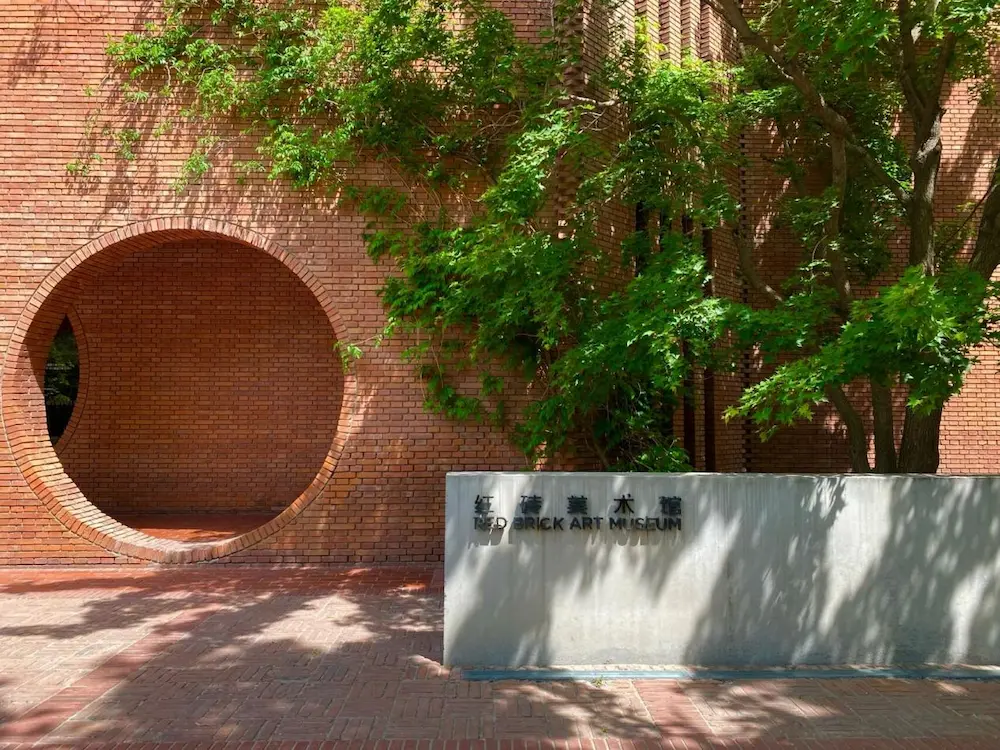
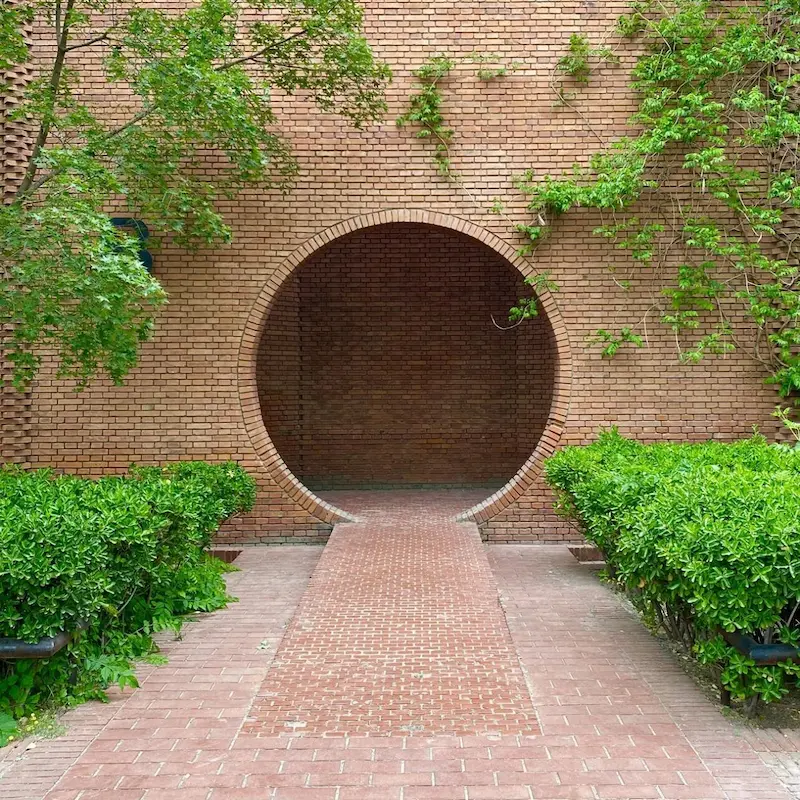
1. The “Big Eye” at the Entrance: A 20-Meter Red Brick Arch
As soon as you step through the main gate, you’ll encounter a 20-meter-long red brick arch that resembles the building’s eye.
This structure also functions as a moon gate—a classic feature of Chinese gardens—and employs the “framed view ” technique to render the scenery behind it as a natural painting. The open view creates a sense of transparency, while the atmosphere is truly captivating.
2. The Bridge Over the Pond: Three Blue-Brick Archways
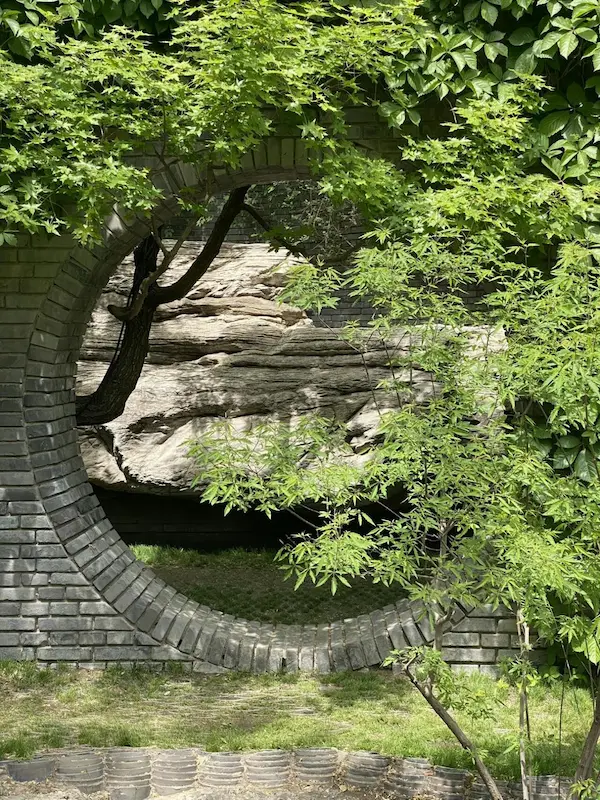
A long bridge spans the central pond, with three blue-brick archways lined up in a row on one side. Paired with rockeries of various shapes and utilizing Western principles of perspective—creating a sense of “gates within gates” and “arches within arches”—this is a must-visit, Instagram-worthy spot.
3. Red Bricks vs. Blue Bricks: A Pond Dividing Yin and Yang
The south side of the pond features predominantly red bricks (warm and sunny), while the north side features predominantly blue bricks (cool and shaded). Separated by a single body of water, the two create a balance of yin and yang, subtly echoing Daoist philosophy and representing a perfect fusion of architecture and philosophy.
4. A Changing View with Every Step: Chinese Gardens + Western Spatial Sequence
The scenery shifts with every few steps, embodying the essence of the Chinese garden’s “a changing view with every step. ”Simultaneously, through the expansion, contraction, turns, and openings of space, a spatial sequence characteristic of modern Western architecture is formed, resembling a piece of music with its rising and falling melodies.
Tips for Better Photos and a More Enjoyable Experience
1. Best Time for Lighting
From 3:00 PM to 5:00 PM, the setting sun casts a warm glow, giving the red brick a golden hue. The soft light makes this the perfect time for both portraits and architectural shots.
2. Outfit Recommendations
With red, blue, and gray dominating the background, wearing white, black, beige, or light khaki creates the most sophisticated look. Avoid busy patterns—minimalism yields the best results.
3. Must-Do Activities
- Take a break at the café by the pond and listen to the sound of water and the chirping of cicadas.
- Step into the moon gate for a photo and become a figure in a painting.
- Sit quietly on a bench, clear your mind, and enjoy the tranquility of the courtyard.
Cultural Trivia
– “Walkable, Viewable, Playable, Livable”: This phrase comes from the Northern Song Dynasty text Linquan Gaozhi (The Lofty Ambitions of Forest and Springs). A good garden should be a place where one can walk, view, play, and live. The Red Brick Art Museum adds a fourth element: “playful,” making it a relaxed and enjoyable space.
– The Significance of Red Bricks: A common material in traditional farmhouses, red bricks lend the art museum both a rustic feel and a contemporary edge. The arched vaults resemble Western churches, while the window openings evoke Chinese gardens—familiar yet fresh.
– Shaping Hills and Water: Creating artificial hills to mimic natural mountains and using ponds to simulate flowing water—bringing nature into the courtyard—is a core technique of Chinese garden design.
Sample Budget for One Person (2026)
| Item | RMB |
| Admission | 130–150 |
| Coffee + Snacks | 50–80 |
| Subway + Short Taxi Rides (Round Trip) | 30–40 |
| Total (excluding main meals) | 160–190 |
FAQ
The gardens at the Red Brick Art Museum are like a dialogue between Chinese and Western architects: you’ll see a moon gate beneath the red-brick archway, a Western perspective behind the blue-brick moon gate, and the Taoist concept of yin and yang by the pond—all designed to ensure you have a pleasant experience and enjoy the scenery.
We recommend arriving early in the morning, bringing your camera and a bottle of water, and taking your time to stroll through the grounds a couple of times.