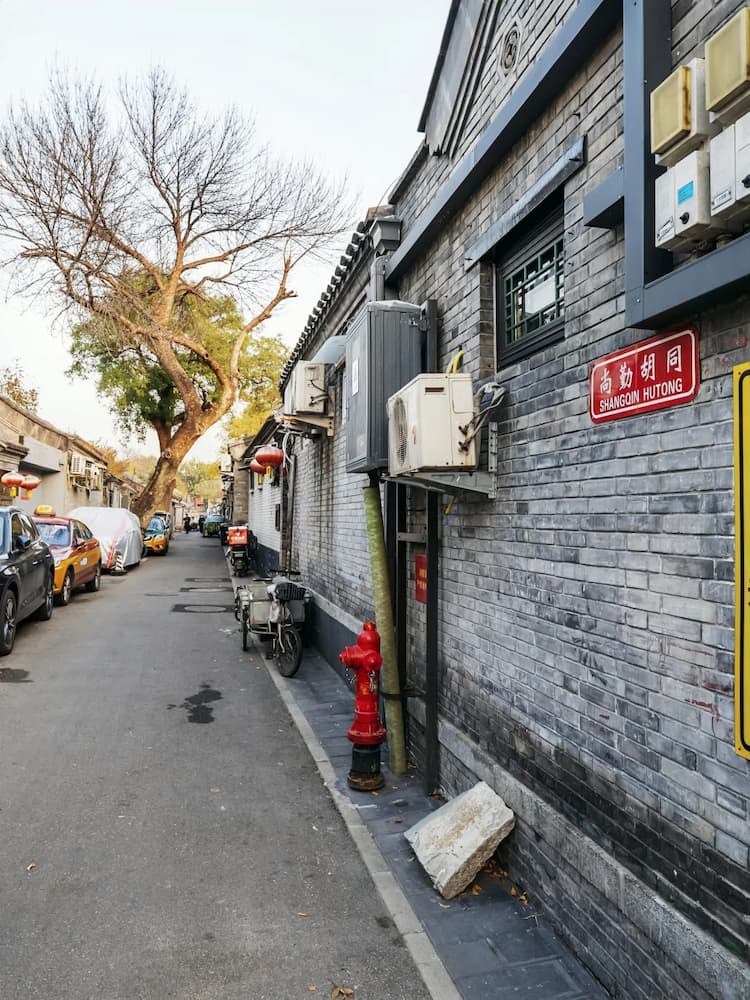
The Most Beautiful Hutong Near Qianmen and Dashilan in 2026: A Guide to Strolling Down Yangmeizhu Xiejie (A Bohemian Getaway to Avoid the Crowds)
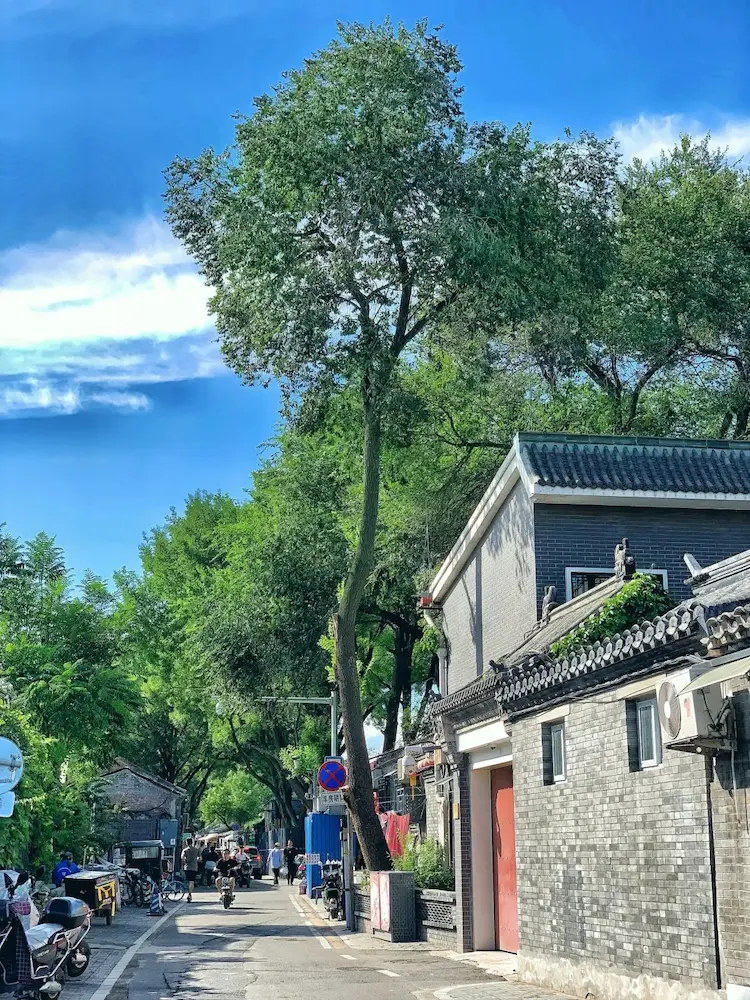
Tired of the crowds at Nanluoguxiang? Want to experience the authentic, everyday life of old Beijing? Just a 5-minute walk from Qianmen and Dashilan lies a 600-year-old sloping alley—Yangmeizhu Xiejie.
Here, you won’t find shoulder-to-shoulder tour groups—just locals chatting on their doorsteps, designer studios tucked away in the depths of courtyards, and the aroma of pour-over coffee wafting from cafes.
It’s just a 5-minute walk from Dashilan, yet it feels like stepping into a different time and place. If you’re planning a Beijing city walk or looking for a quiet, off-the-beaten-path hutong to explore for half a day, this guide is for you.
Table of Contents
Key Highlights at a Glance
- 600 Years of History: Once home to a cluster of bookstores, this area was the former site of seven renowned publishing houses, including World Book and Kaiming Book.
- The Literary Atmosphere of the Republic of China Era: Named after Yang Meizhu, a Qing Dynasty official, this hutong was a gathering place for literati and scholars in modern times.
- Walking Distance to Qianmen: Just 400–600 meters from Tiananmen Square, Qianmen Street, and Dashilan, seamlessly connecting major attractions with the quiet alleyways.
- Minimal Commercialization: Unlike Nanluoguxiang and Wudaoying, it retains the laid-back and warm atmosphere of a traditional hutong.
Why Is This Street Called “Yangmeizhu Xie Jie”?
Two stories are circulating about the origin of the name Yangmeizhu Xie Jie.
Story One: The Legend of Matchmaker Yang (The Most Widely Circulated)
Legend has it that in the early Qing Dynasty, a matchmaker surnamed Yang lived on this sloping street. She was a master of sweet talk and brought many couples together. People thus began calling the street “Yangmei Xie Jie”(Yang the Matchmaker’s Sloping Street).
During the Guangxu era of the Qing Dynasty, when people sought more refined place names, the character “媒” (matchmaker) was elegantly replaced with its homophone “梅” (plum), and the character “竹” (bamboo) was added.
This eventually evolved into “Yangmeizhu Xie Jie”—the character “杨”(Yang) preserved the historical connection, “梅” (plum) added a touch of elegance, and “竹”(bamboo) subtly implied the noble character admired by literati and scholars.
Version Two: Related to the Coal Market
Another account holds that during the Qing Dynasty, this sloping street was located near an important coal market in the capital. Coincidentally, a family surnamed Yang operated a coal shop on the street, so the locals called it“Yang Coal Sloping Street.”
Later, “coal”(mei) was replaced with its homophone“plum”(mei), and the character“bamboo”(zhu) was added, resulting in the name “Yangmeizhu Sloping Street.”
Records in Official Documents
In the 15th year of the Qianlong reign (1750), the *Complete Map of the Capital*, commissioned by the imperial court, clearly labeled this street as“Yangmei Xie Jie”—this is the earliest recorded mention of Yangmei Xie Jie in official documents.
Ji Xiaolan also mentioned“Yangmei Zhu Xie Jie” in his *Notes from the Yuewei Cottage*, written during the Qianlong era.
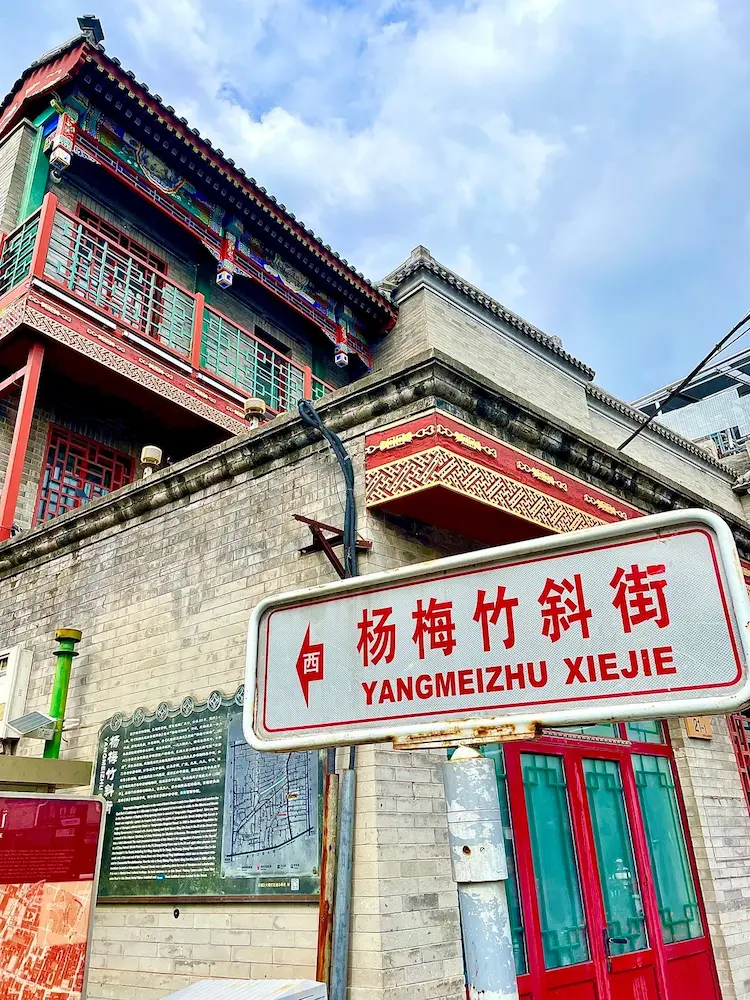
In 1965, during Beijing’s place-name standardization campaign, Xixing Hutong and Yichi Dajie were merged to form the current 496-meter-long Yangmeizhu Xie Jie.
From Ming Dynasty Market Streets to the“Bookstore Street” of the Republic of China Era
Ming Dynasty: Market Side Streets
Although Yangmeizhu Xiejie in the Ming Dynasty did not become the renowned cultural street it would later be, it was already a bustling, lively neighborhood alley.
Shops lined both sides of the street, including general stores selling grain, cloth, and silk; inns and restaurants; stationery shops offering brushes, ink, paper, and inkstones; as well as artisanal workshops such as carpenters’, blacksmiths’, tailors’, and shoemakers’shops.
At that time, the Liulichang area had gradually become a cultural hub of the capital, and as the main thoroughfare connecting Qianmen and Liulichang, Yangmeizhu Sloping Street was frequently traversed by literati and scholars.
Republic of China Era: The Heart of the Publishing Industry
During the Republic of China era, Yangmeizhu Xiejie reached its heyday—becoming the most concentrated hub of Beijing’s publishing industry.
Within this short 496-meter-long hutong, seven publishing houses were clustered: World Book Bureau, Zhongzheng Book Bureau, Kaiming Book Bureau, Guangyi Book Bureau, Global Book Bureau, Dazhong Book Bureau, and Zhonghua Printing Bureau.
Many of the books that inspired the Chinese people’s pursuit of new knowledge in modern and contemporary times were born in these unassuming little buildings.
Today, as you walk down the street, you can still see the former site of the World Book Bureau (No. 75)—a two-story brick-and-wood building oriented north to south, featuring a blend of Chinese and Western architectural styles, which has been preserved quite well.
Although the main gate is closed and entry is not permitted, just looking at the exterior allows you to imagine the bustling scene of scholars and intellectuals coming and going in those days.
Footsteps of Famous Figures
Many cultural figures have lived on this street:
- No. 25 Yangmeizhu Xie jie: The residence bestowed by Emperor Qianlong upon Liang Shizheng, Grand Secretary of the East Pavilion
- No. 61 Yangmeizhu Xie jie (Youxi Guild Hall): Shen Congwen’s first residence upon arriving in Beijing in 1923. With no stove in the winter, he wrapped himself in every piece of clothing he could find and wrote such classic works as *Border Town*, *The Long River*, and *Random Notes from Western Hunan* right here.
- Dai Yuexuan, a master of Hu brushes; Yang Xiaolou, a Peking Opera martial artist; and Xin Fengxia, a Pingju actress, also once lived here.
Hidden Easter Egg: Qingyun Pavilion—The Meeting Place of Cai E and Xiao Fengxian
In the middle section of Yangmeizhu Xiejie stands a very conspicuous two-story building bearing the three characters “Qingyun Pavilion.”
These characters were inscribed in the first year of the Xuantong era (1909) by He Weipu, a veteran statesman who served three dynasties during the late Qing period and a renowned calligrapher.
At the time, he was already in his seventies; nostalgic for his youthful career that had soared to the heights of power, he named the building “Qingyun Pavilion.”
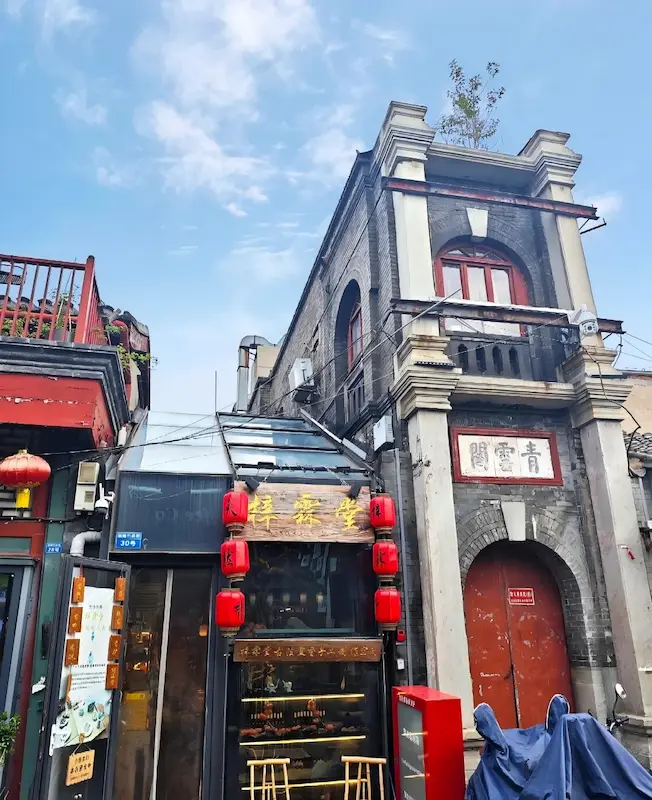
The building, which is over 200 years old and was renovated in 1905, is a typical “palanquin-style” structure (with the main body set back from the street and passageways extending north and south).
It was once the leading shopping center among Beijing’s four major markets during the late Qing and early Republican eras and even introduced fashionable sports such as billiards.
Cai E and Xiao Fengxian often chose to enjoy a drink at the Puzhen Garden within Qingyun Pavilion. It is said that Xiao Fengxian was particularly fond of the restaurant’s signature dish, “Spicy Chicken Wings.”
In the 1980s, the film *Soulmates*, adapted from the couple’s love story, was filmed at the original site of Qingyun Pavilion.
In addition, during his 14 years in Beijing, Lu Xun recorded more than 30 visits to Qingyungge in his diary—he loved going to the Yuhuchun Teahouse, where he particularly enjoyed spring rolls and shrimp noodles, and would also buy daily necessities at the small general store downstairs. Prominent figures such as Kang Youwei also gathered here to drink and socialize.
Yangmeizhu Xie jie preserves the back entrance of Qingyun Pavilion; the main entrance is located at No. 33, West Dazhalan Street.
How do I get there from Dashilan?
After exploring Qianmen Street or the Dashilan shopping district, many visitors follow their GPS into an unassuming alley and eventually discover Yangmeizhu Xiejie.
Directions:
- From the west entrance of Dashilan Street (near the “Daguanlou” movie theater), walk south for 50 meters. When you see the “Yangmeizhu Xiejie” sign, turn left to enter.
- Alternatively, exit at Exit C of Qianmen Subway Station, walk south along Meishi Street for about 400 meters, and you’ll find the eastern entrance on your right.
⚠The difference between the two entrances:
- East Entrance (Meishi Street Entrance): Closer to the subway station; there’s a “Yangmeizhu Xiejie” sign at the entrance, and the back door of Qingyungge is right next to it—you’ll see this historic building as soon as you enter.
- West Entrance (toward Liulichang): Leads to Yanshou Street and is closer to Liulichang, allowing you to create an artsy itinerary: “Liulichang → Yangmeizhu Xiejie → Dashilan.”
The entire walk takes no more than 5–8 minutes, allowing you to step from the bustling commercial streets into a quiet, artistic haven. We highly recommend adding this alley to your Qianmen–Dashilan half-day itinerary so you can experience both the “bustle” and the “quiet” in a single afternoon.
Must-Visit Unique Shops
1. Ci Ci Fang–[Intangible Cultural Heritage Creative Goods / Traditional Chinese Style Photo Spot]
Using fragments of ancient porcelain as raw materials, the shop transforms these shards into exquisite works of art.
As soon as you walk in, you’ll see walls covered with blue-and-white porcelain shards, meticulously pieced together by artisans into one-of-a-kind works of art.
The store’s crowning jewel is a cheongsam made entirely of blue-and-white porcelain shards—thousands of pieces from different eras and kilns are inlaid along the silhouette of the cheongsam, blending traditional Chinese cheongsam design with porcelain culture in a stunning yet understated way.
Recommended purchases: “Fu” character ornaments made from ceramic fragments, blue-and-white porcelain earrings, and small-scale ceramic painting hangings. Each piece is one-of-a-kind, making them meaningful gifts for friends or cherished keepsakes for yourself.
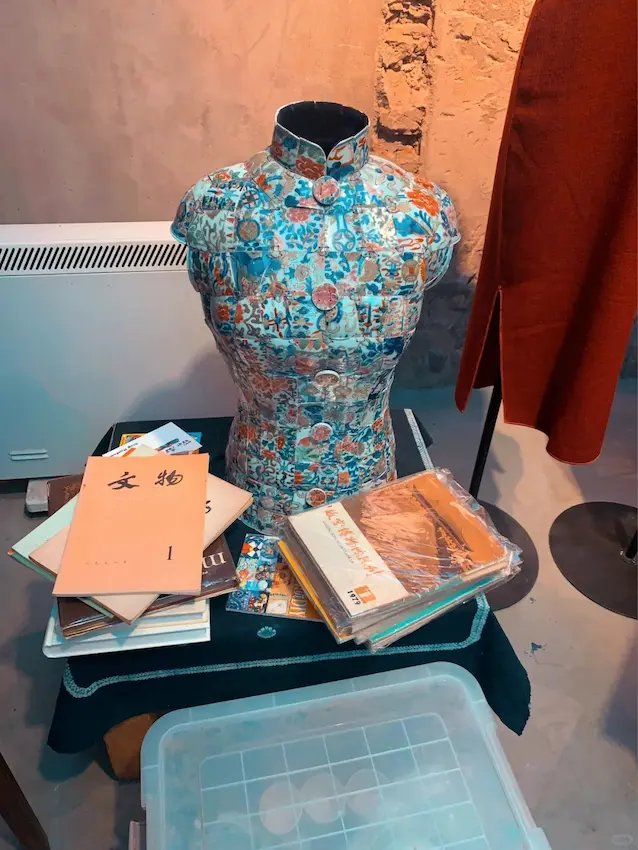
Location: Midway down the hutong. The storefront is small—look for the wooden sign reading “Ci Ci Fang.”
2. Qiankun Space–[Cultural and Creative Collection / Old Beijing Design]
The sign above the door reads “Qiankun,” and stepping inside feels like entering a treasure trove of arts and culture.
The walls are adorned with reproductions of old Beijing maps, while the shelves are lined with canvas bags, fridge magnets, and prints featuring Beijing dialect phrases… The items aren’t expensive, but each one exudes the designer’s love for Beijing.
This spot is particularly popular with foreign tourists because many of the items feature both Chinese and English labels, and the designs are stylish and far from tacky.
If you’re looking for some presentable Beijing souvenirs, you can’t go wrong with a browse here.
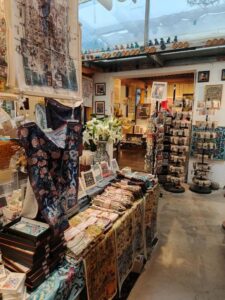
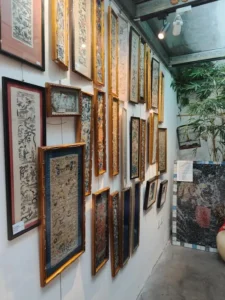
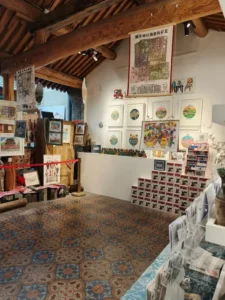
Location: Near Dongkou; the storefront is unassuming but always bustling.
3. Jingwei Times–[Nostalgic Photo Spot / Instagram-Famous Courtyard]
This shop is a hidden gem for those deeply enamored with “old Beijing charm.” An entire wall is lined with vintage enamel mugs, printed with old-style bus stop signs, authentic Beijing dialect phrases, and the White Pagoda of Beihai Park… holding one feels like stepping back into the 1980s.
Tucked away in the back is a serene courtyard. The staggered glass windows create a kaleidoscopic visual effect, making it a popular spot for social media photos.
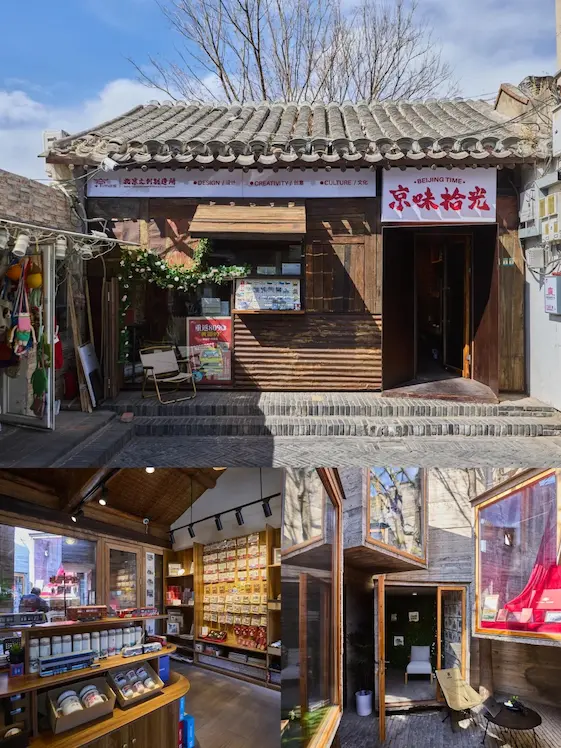
Note: There is usually a minimum purchase requirement to enter the courtyard (buy a drink or a small item). It’s best to ask the staff before entering.
4. Model Bookstore (Closed, but the former site is still visible)—[Historic Site]
Many travel guides still recommend the “Model Bookstore,” but it’s important to note that the original store on Yangmeizhu Xiejie has closed; the former site is located at No. 31 at the eastern entrance of the hutong.
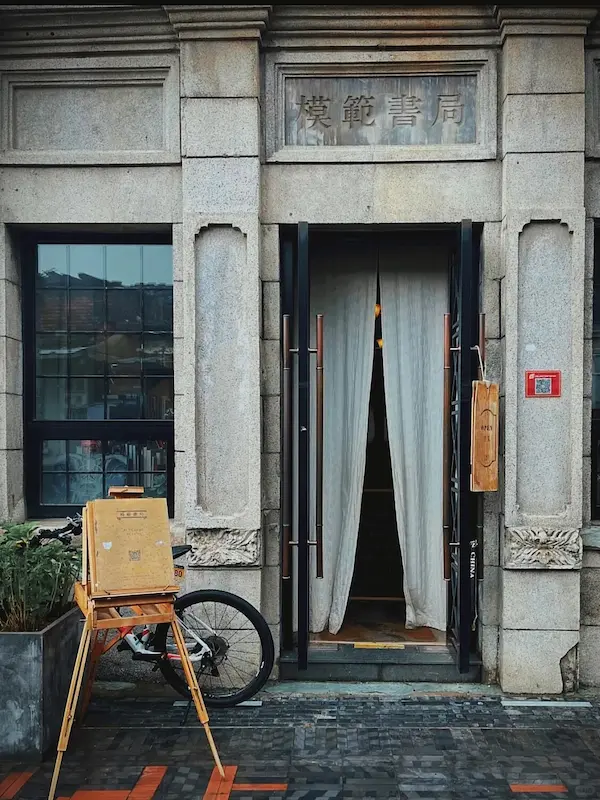
However, you can still stop by to see the building—it was converted from the former site of a newspaper office during the Republic of China era and was once named one of the top ten “Most Beijing-esque ”brick-and-mortar bookstores by the Beijing Reading Season.
The name “Model ”is quite thoughtful: the character “模” (mó) refers to movable type, while“范” (fàn) refers to a mold, representing ancient movable-type printing.
If you’re interested in Model Bookstore, you can visit “Model Bookstore + Poetry Space” on Tonglingge Road—a bookstore converted from a century-old church that remains open for business and is hailed as the “most beautiful bookstore.”
The Vibrant Everyday Life of the Hutong
Aside from the shops, what makes Yangmeizhu Xiejie most charming is its authentic, everyday atmosphere.
You’ll often come across an elderly man setting up a stall by the roadside to carve seals. His small table is filled with all kinds of seals—in addition to traditional decorative seals, he carves lifelike cats and puppies.
The old man carves seals with a laid-back attitude: he carves them first, and if you’re satisfied, you can take it; the payment is up to you—whether you give 10 or 20 yuan, he’ll accept it with a smile, and he doesn’t seem to chase after you if you don’t pay.
You can also spot amusing couplets pasted on residents’ doors. One couplet incorporates all ten auspicious phrases—”smooth sailing, two dragons soaring, three suns bringing good fortune… perfect in every way”—counting from one to ten.
The ingenuity of Chinese character culture and the everyday hopes of ordinary people are all captured on this red paper.
These everyday details have no signs and no admission fees, yet they are the true soul of Yangmeizhu Xiejie.
Travel Tips
| Item | Information |
| Admission & Reservations | Free; no reservation required. The entire alley is open to the public. |
| Nearest Subway Station | Line 2, “Qianmen Station,” Exit C, about a 400-meter walk (5 minutes); Line 7, “Zhushikou Station” Exit A, about a 600-meter (8-minute) walk. |
| Visit Duration | Recommended 1.5–2.5 hours. Take your time browsing shops, taking photos, and sitting down for a cup of coffee. |
| Best Time | Weekday afternoons (2:00–5:00 PM) are the least crowded; weekends before 11:00 AM are also relatively quiet. |
| Payment Methods | Most independent shops accept Visa/Mastercard (via POS machine or QR code). Street vendors (such as the elderly seal carver) accept cash only; it is recommended to have small bills under 50 RMB on hand. Nearby convenience stores and cafes generally accept Alipay/WeChat Pay, and Alipay linked to international cards is also supported. |
| Getting There | We recommend taking a ride-hailing service directly to “ Yangmeizhu Xiejie East Entrance ” (at the intersection with Meishi Street). Taxis can drop you off there, and you can walk in from there. Vehicles are not allowed inside the hutong. |
| Parking Note | Driving is not recommended. Parking spaces in the area are extremely scarce and expensive. Public transportation or ride-hailing is the best option. |
FAQ
Yangmeizhu Xiejie isn’t the kind of “must-visit ” Instagram spot; it’s more the kind of place where you’d make a special detour for a cup of coffee while passing by Qianmen. Here, you’ll find 600 years of history alongside trendy design studios; an elderly seal carver setting up shop on a whim, and artsy young people lugging cameras…