Guide to Beiluoguxiang: Best Time to Visit, Transportation, and Cultural Insights (Updated for 2026)
Last Updated: Jul. 2026
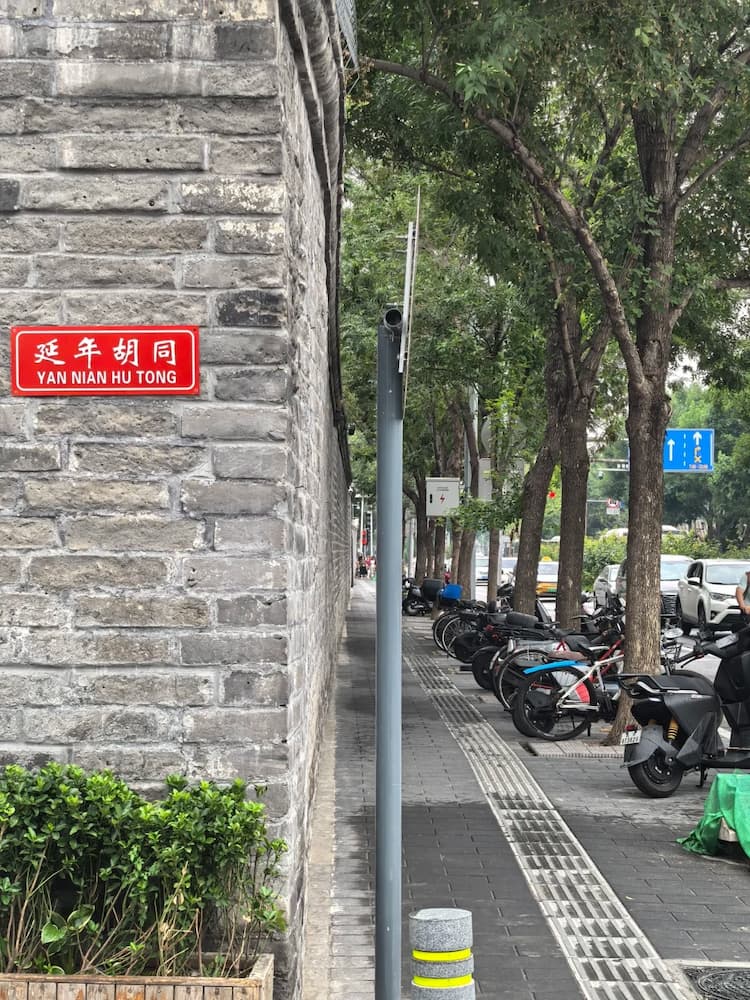
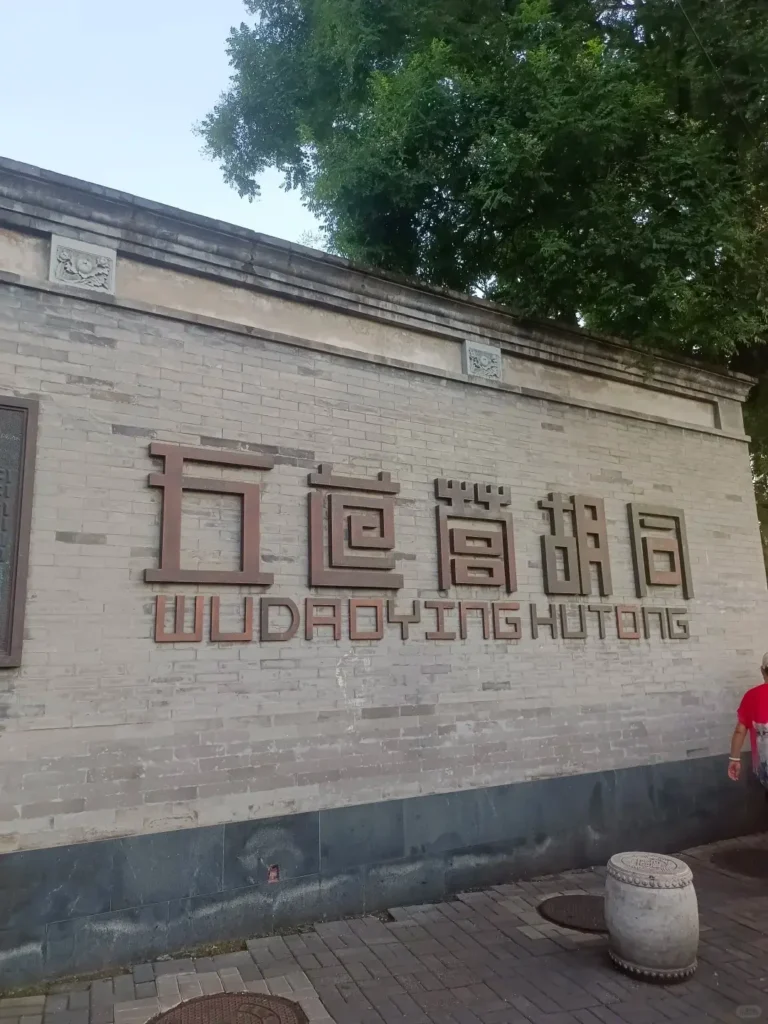
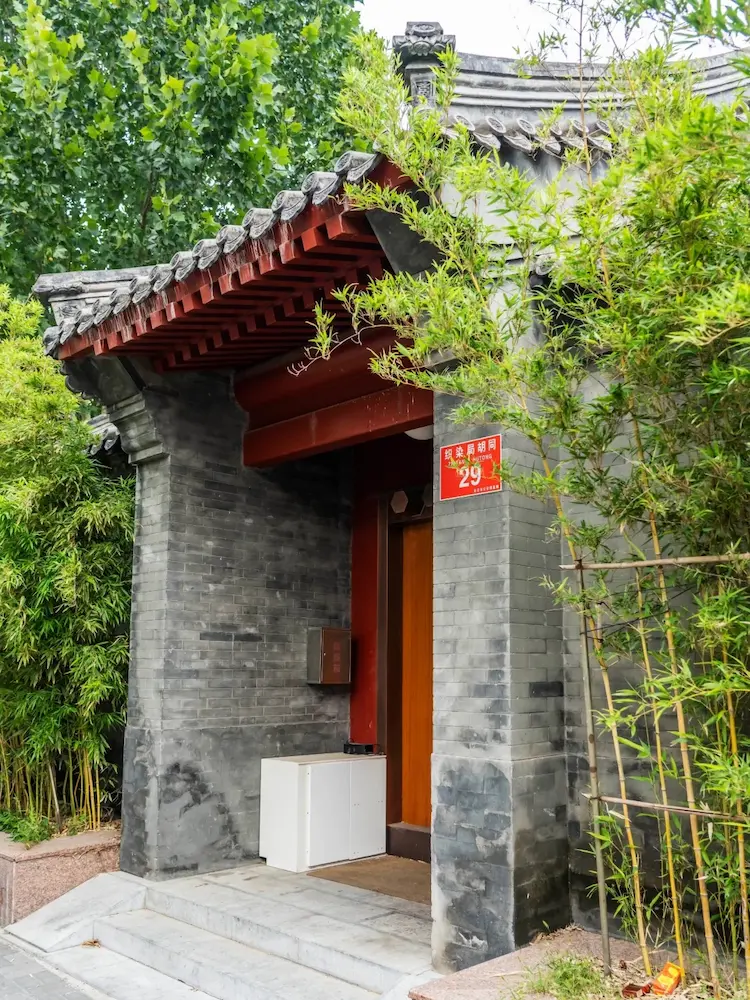
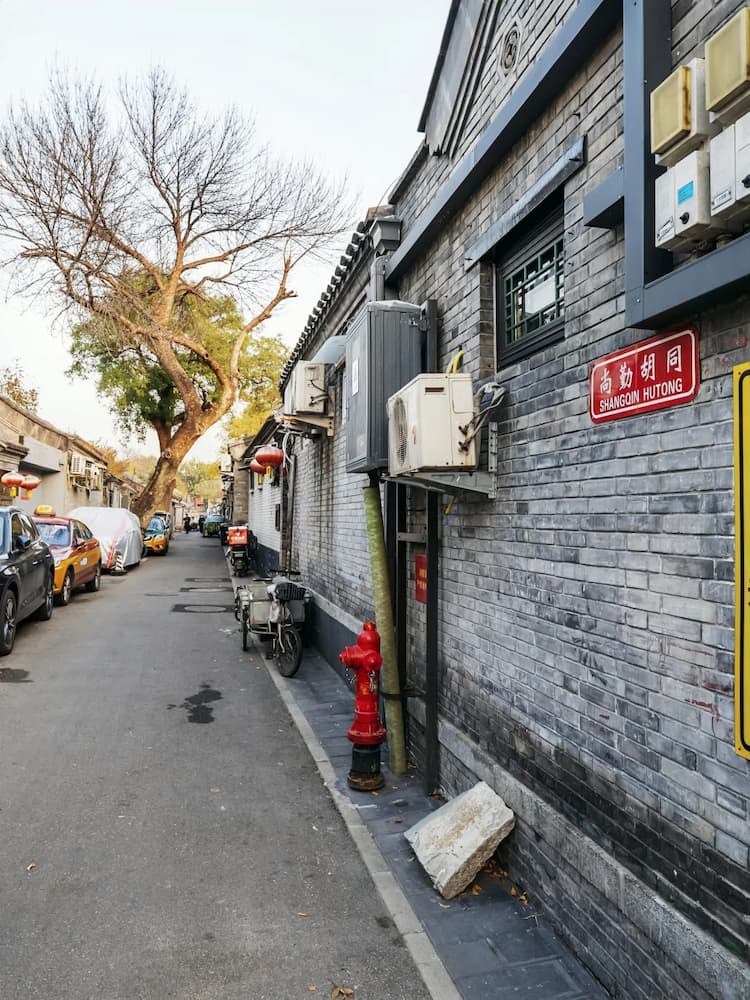
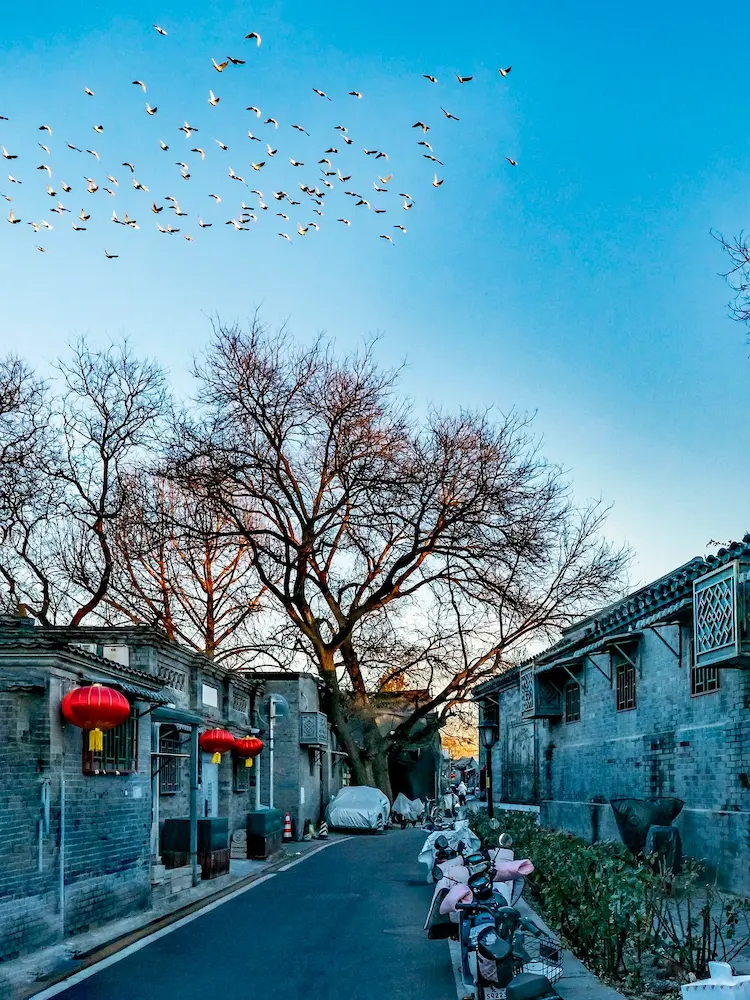
If you’re looking for a quiet, lively hutong in Beijing where you can snap some great photos, Beiluoguxiang is an excellent choice.
It’s just across the street from the bustling Nanluoguxiang, yet the atmosphere is completely different—fewer people, a slower pace, and a glimpse into everyday life in old Beijing, along with artsy boutiques and cafes.
Table of Contents
Practical Information and Transportation
- Location: Dongcheng District, Beijing. It is located directly north of Nanluoguxiang, separated by Gulou Dongdajie.
- Best Subway Exit (Highly Recommended): Exit A at Andingmen Station (Line 2). After exiting the station, walk south along Andingmen Neidajie for about 10 minutes to reach the north entrance of Beiluoguxiang. This is the most direct route.
- Alternative Subway: Line 6 / Line 8, “Nanluoguxiang Station,” Exit E. After exiting, you’ll need to first cross the crowded main street of Nanluoguxiang, walk to Gulou East Street, and then cross the road to reach the south entrance of Beiluoguxiang. The entire walk takes about 8–10 minutes, but it can be quite crowded.
- Best times to visit:
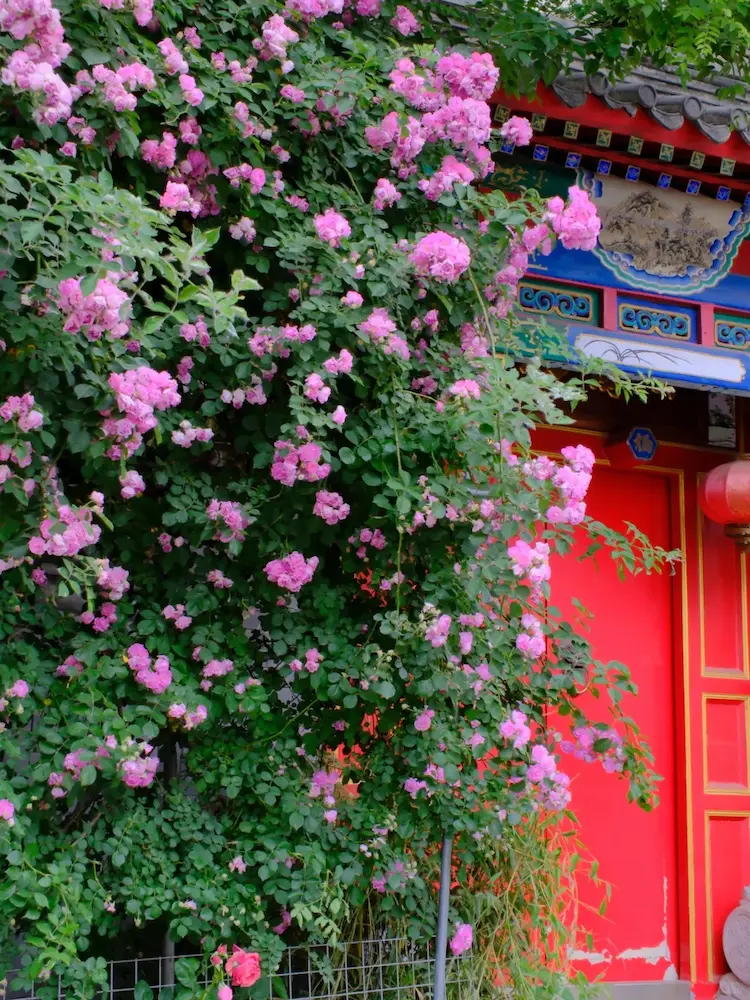
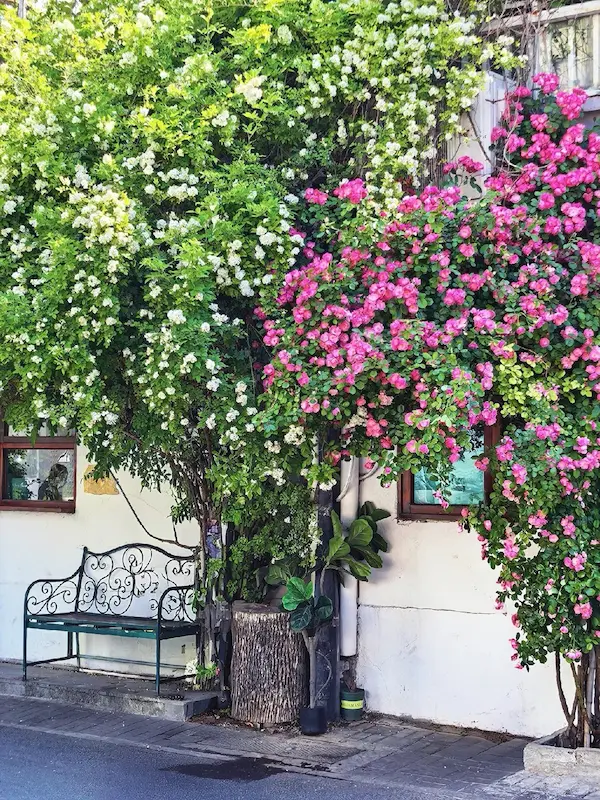
- Spring (early May): The roses are in full bloom, and the flower walls are stunning.
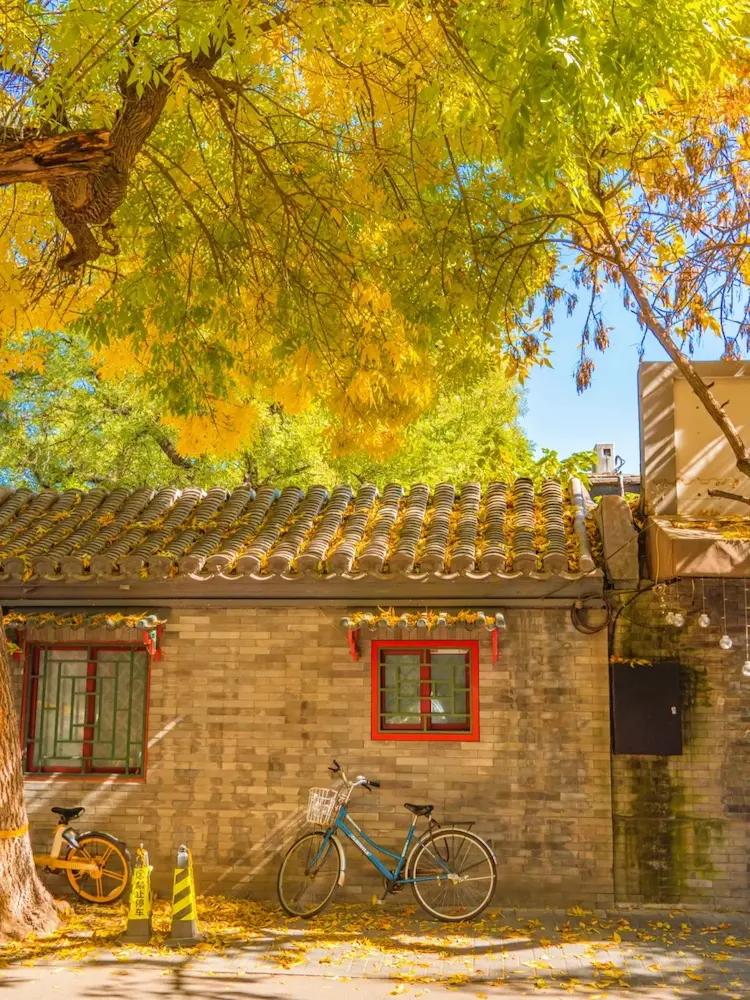
- Fall (late October – early November): The leaves of the maple and ash trees turn yellow, and the sunlight creates a scene reminiscent of an oil painting.
- Recommended times: Weekdays from 9:00 AM to 11:00 AM, when there are the fewest visitors and the lighting is ideal for photography. Weekday afternoons tend to be more crowded.
- Budget Guide (2026 prices):
- A cup of coffee: approx. 30–50 yuan (approx. $4–7 / €3.5–6)
- A light meal (rice noodles/noodles): approx. 35–50 yuan (approx. $5–7)
- Traditional Beijing snacks: Zha Jiang Mian (noodles with fried sauce) approx. 25 yuan, Bao Du (braised tripe) approx. 40 yuan
- Entry to the hutongs is free; no admission tickets are required.
> Tip: There are no attractions in Beiluoguxiang that require reservations. However, if you plan to visit the Forbidden City or Yonghe Temple on your way, be sure to book tickets in advance on their official websites (which have English interfaces).
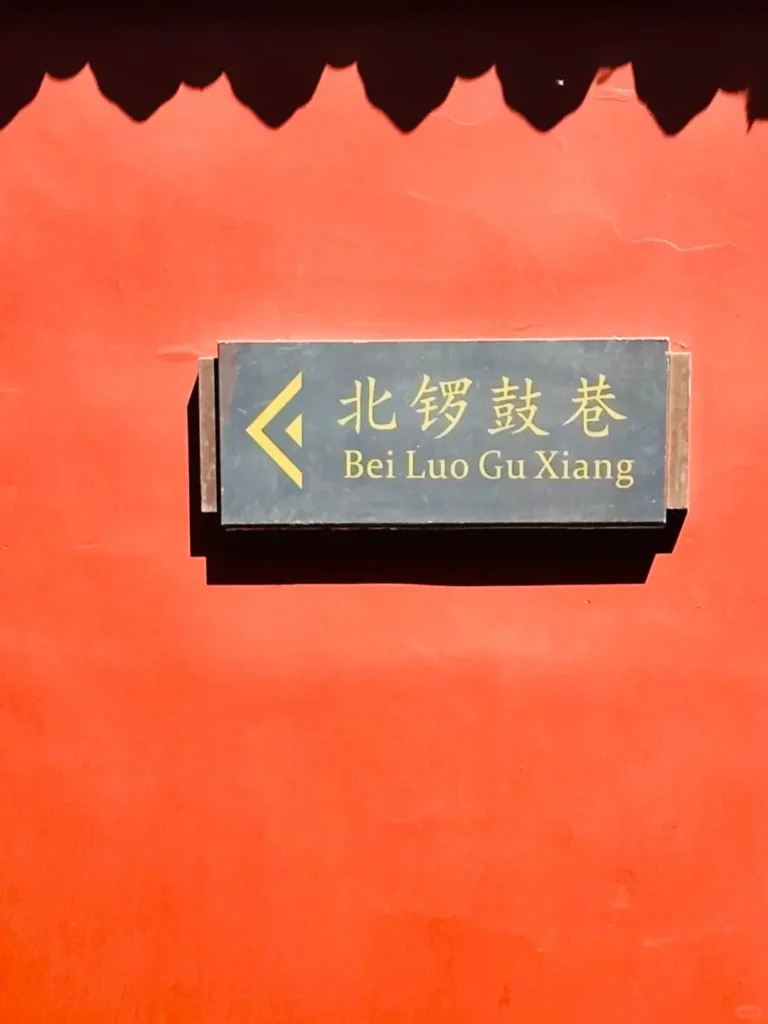
Recommended Walking Route (Total duration: approx. 2.5–3.5 hours)
This route runs from north to south without backtracking. You can take a break or end the walk at any point along the way, depending on your energy levels.
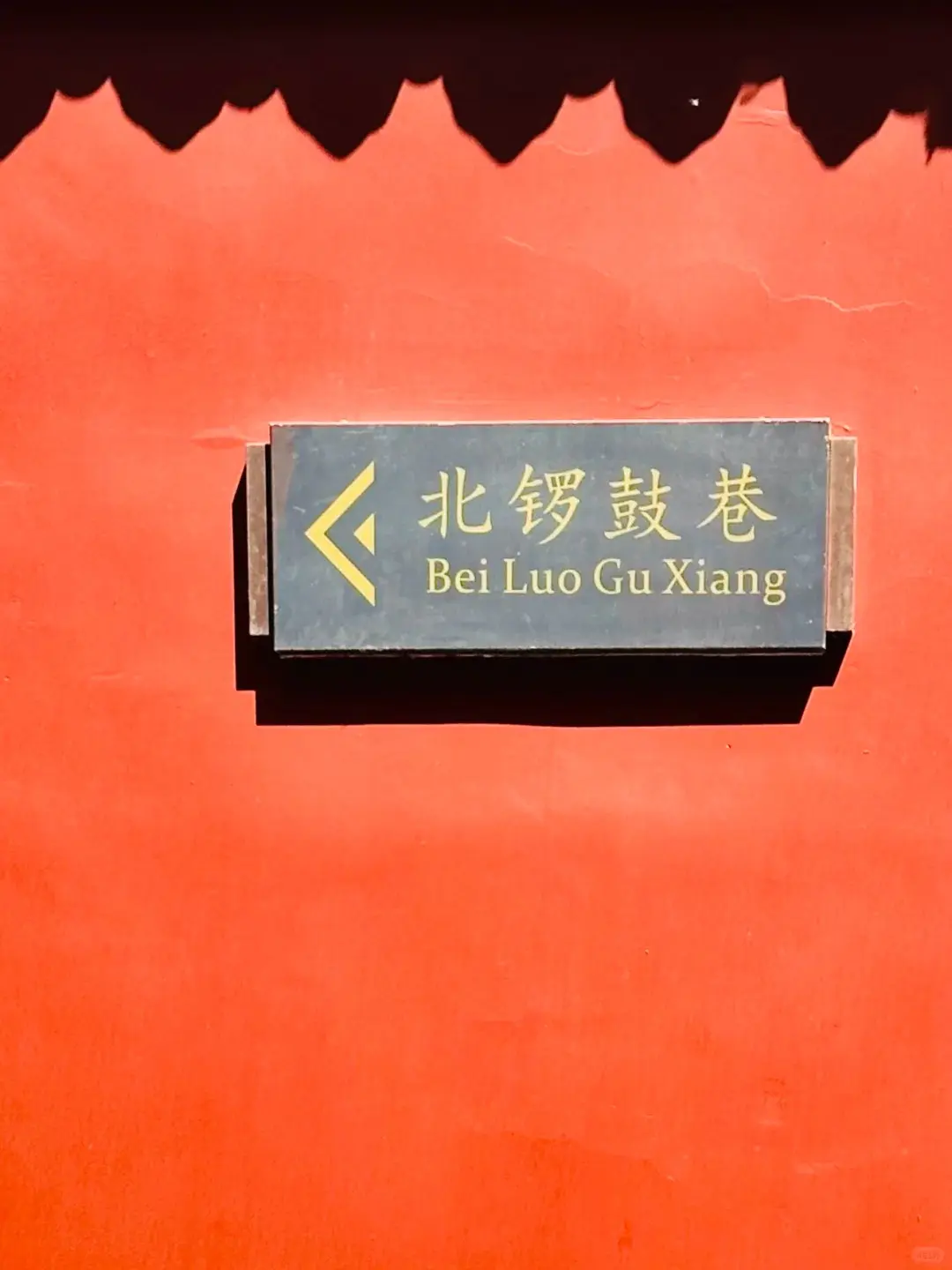
Starting Point: Enter Beiluoguxiang main street from the north entrance
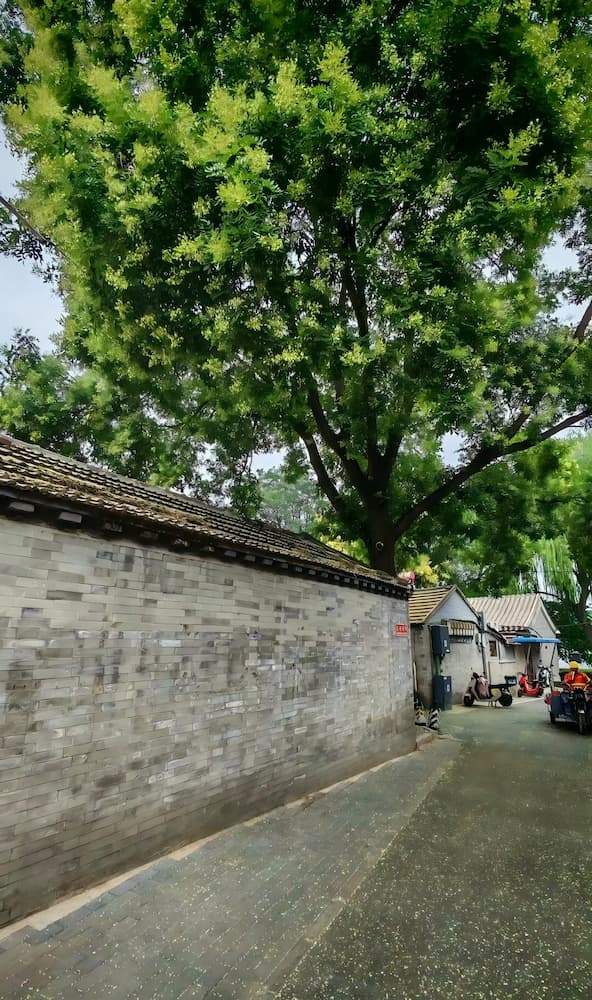
Exit from Exit A of Andingmen Station, walk to Andingmen Bridge, then turn south onto Andingmen Xidajie to reach the northern end of Beiluoguxiang. The main street is paved with asphalt and lined with white ash and ancient locust trees.
In autumn, the ground is covered in golden leaves, evoking the scene of “Autumn in Beiping” as described by Lao She.
Walking south along the main street, you will pass:
– Huangwa Caishen Temple (Huángwǎ Cáishén Miào)
This is a very unique little temple in Beiluoguxiang. The temple is small, consisting of only three rooms, but its roof is covered with bright yellow glazed tiles—in ancient times, only imperial buildings were permitted to use them.
Why was a small God of Wealth temple allowed to use yellow? A popular folk tale says that before he became emperor, Emperor Yongzheng (Yinzen) of the Qing Dynasty often made wishes here.
Later, after ascending the throne, he ordered the temple to be renovated and had yellow tiles installed. However, historians believe this may be a legend.
A more plausible explanation is that there was a Qing Dynasty copper coin mint nearby (the Baoquan Bureau’s West Workshop). Since this temple was associated with the institution responsible for managing currency, it was permitted to use the imperial color.
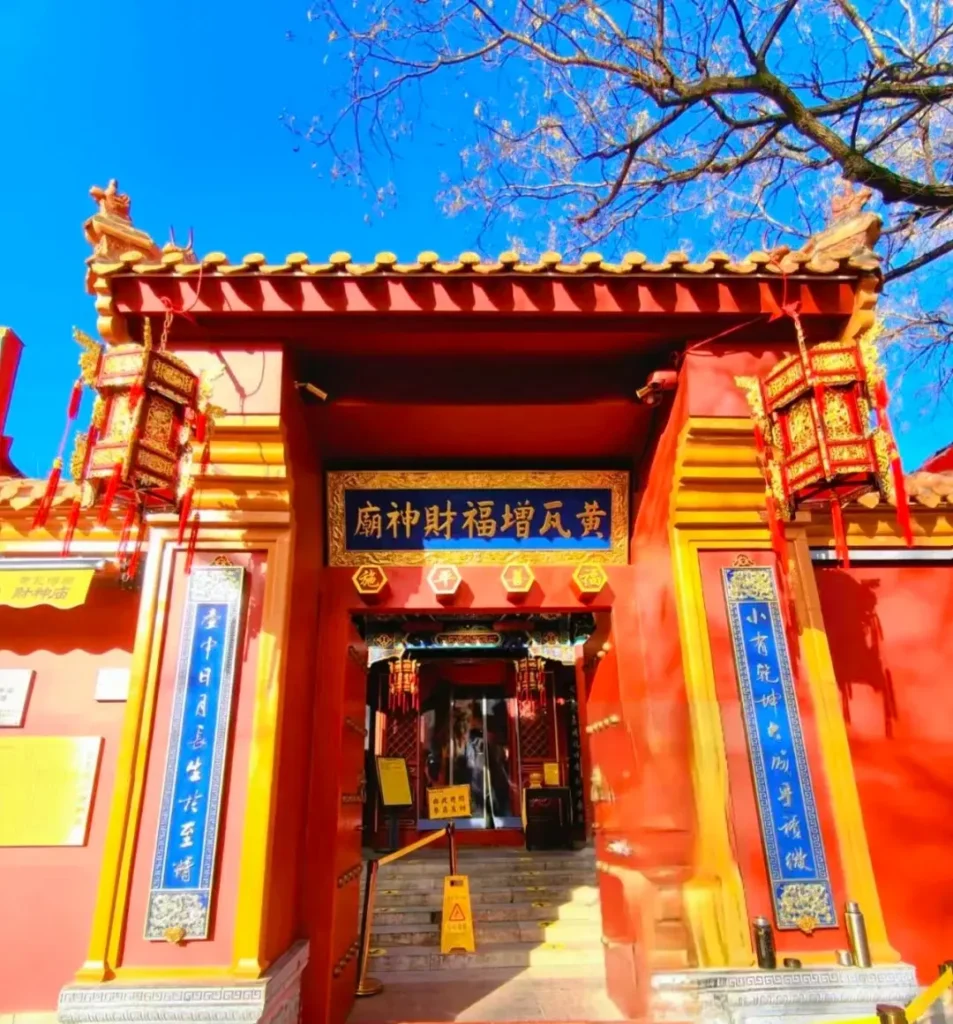
A quick tip for international visitors: Just as in the West, where only certain elements of church decor are allowed to be gold, yellow glazed tiles in China are also a symbol of imperial authority. Seeing this small temple with yellow tiles is quite fascinating.
Relaxing and Enjoying the Flowers on the Main Street
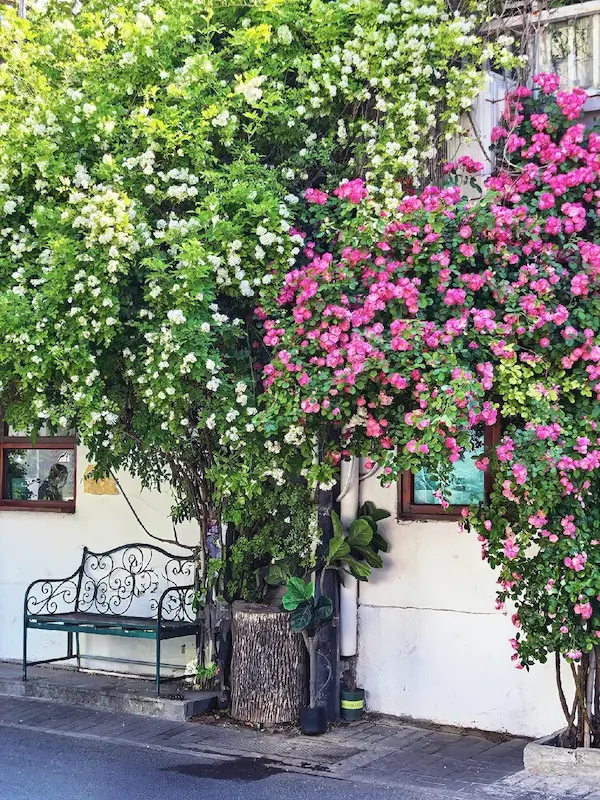
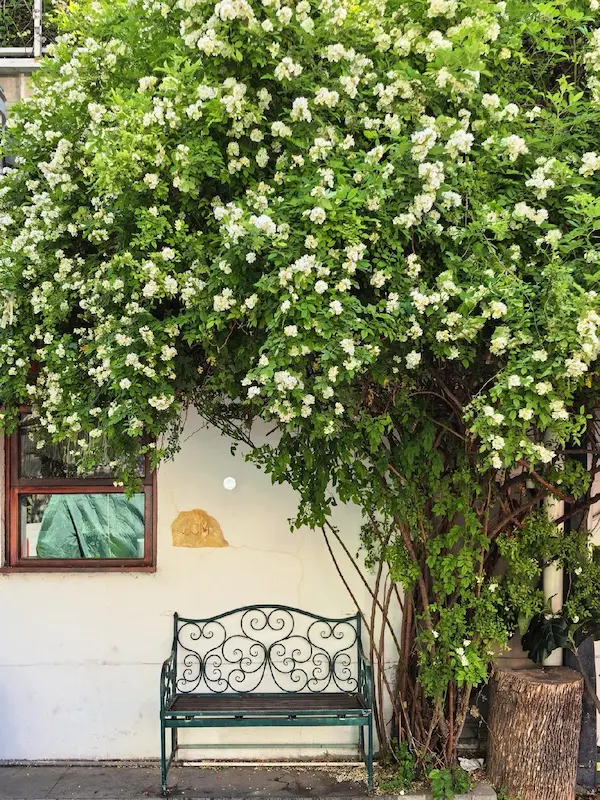
The middle section of Beiluoguxiang, especially near the intersection with Liulisi Hutong, is where you’ll find the most beautiful rose-covered walls in spring.
Every year in early May, pale pink and white blossoms cascade down the walls like a waterfall, creating a romantic scene against the backdrop of gray brick walls and wooden doors.
There are also several cafes with terraces along the street where you can sit, enjoy a cup of coffee, and watch the comings and goings in the hutong.
Note: The shops and flower walls in the hutong may vary slightly from year to year. If you can’t find a specific cafe, don’t worry—just walk into any one that catches your eye; you won’t be disappointed.
Food Recommendations
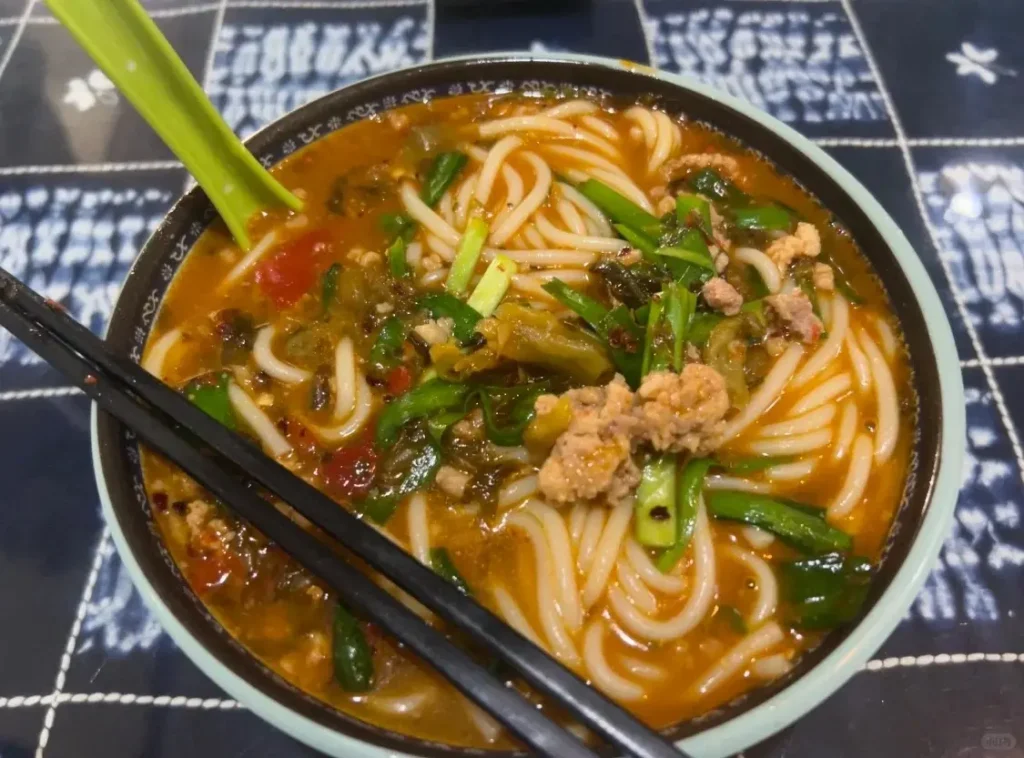
- Yun’er Town: Their Guoqiao Mianxian (crossing-the-bridge rice noodles) is delicious. A steaming bowl of chicken broth and rice noodles, served with a variety of side dishes, costs about 40 yuan.
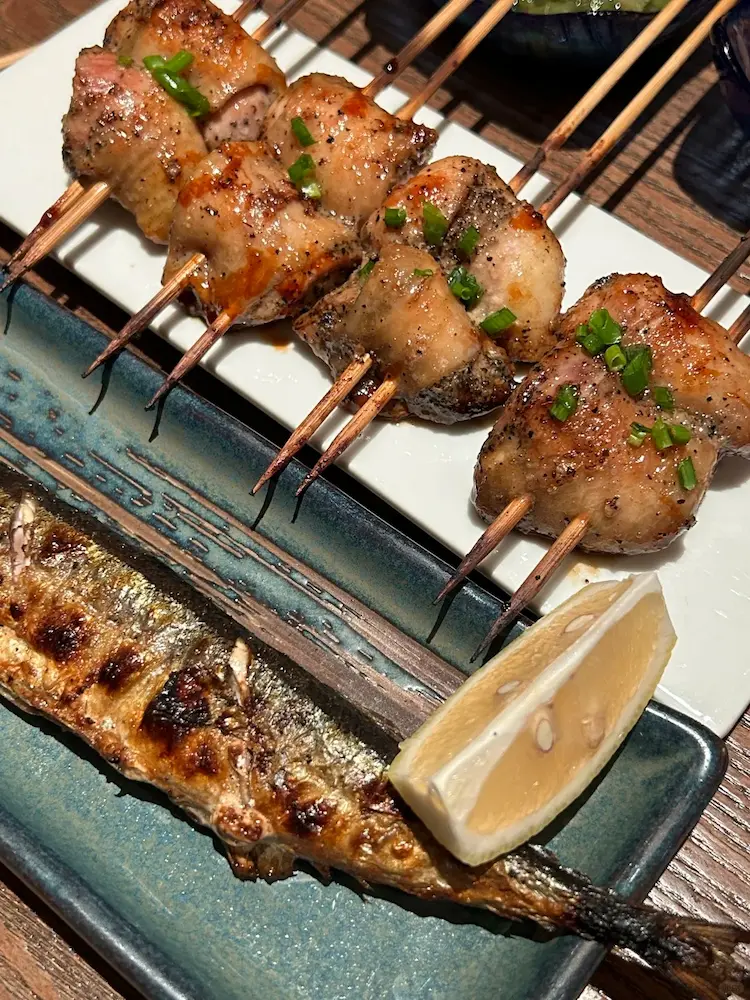
- Sanma no Aji: A Japanese snack shop where you can try grilled Pacific saury or other snacks.
- Old Beijing Flavors (recommended for those who dare to try something new): Near the south entrance of Beiluoguxiang, there’s a Yaoji Chao Gan (located near the Drum Tower, about a 5-minute walk), or you can find a small shop to try Zhajiangmian (noodles with pork and bean paste) or Baodu (stir-fried tripe). These are the everyday staples of old Beijingers. If you’re unsure what to order, just tell the owner, “Give me a bowl of Zhajiangmian”—simple and authentic.
If You’re Visiting in Spring or Fall, Here’s What You Need to Know
- Spring (early–mid-May): The roses are in full bloom. In addition to the intersection of Liuli Temple Alley mentioned above, you’ll also see pink and white blossoms in many corners of the alley. We recommend arriving before 9 a.m. when the light is soft, and the crowds are thin. The rose season is short—the flowers fade by the end of the month—so try to visit as early as possible.
- Fall (late October – early November): At the southern entrance of Beiluoguxiang stands a massive maple tree; its half-red, half-yellow leaves are particularly dazzling against the blue sky. Further down the alley, the rows of white hornbeam trees turn a golden yellow. The falling leaves drift down like gold leaf. Wearing white or light-colored clothing makes for the best photos.
- Experiences available year-round: You’ll see elderly residents sitting at their doorsteps chatting, bicycles leaning against walls, and cats basking in the sun on the steps. These are all authentic glimpses of Beijing life.
If You Want to Explore Further: Nearby Hutongs
On both sides of Beiluogu Xiang’s main street, there are many small hutongs, such as Baochao Hutong and Doufuchi Hutong.
Here’s a sneak peek: Hidden within Doufuchi Hutong is Hong’en Temple—an ancient Taoist temple dating back to the Yuan Dynasty, now transformed into Beijing’s trendiest retro café and cultural creative space.
You’ll also find the former residence of Yang Changji, where Mao Zedong lived during his youth. These places have fascinating stories to tell, and I’ll take you on an in-depth exploration in my next guide—stay tuned!
If you’d like to take a stroll right now, you can also wander into these small hutongs to experience the quiet, old neighborhoods free of tourists.
FAQ
Beiluoguxiang isn’t as crowded as Nanluoguxiang, nor does it have as many cookie-cutter souvenir shops. Here, you’ll find the shade of old locust trees, the aroma wafting from cafés, and roses peeking out from the walls.
There’s no need to rush, nor do you need to go out of your way to find “tourist attractions.” Simply strolling around and sitting down for a drink is the best way to explore.
I hope you find your own quiet moment in Beiluoguxiang.