Zhengyangmen Gate Tower Reopens: The Most Comprehensive 2026 Visitor and Reservation Guide
Old Beijingers refer to Zhengyangmen as “Qianmen Tower.” During the Ming and Qing dynasties, it served as the “national gate” reserved exclusively for the emperor—you can think of it as Beijing’s Arc de Triomphe, though it predates the one in Paris by more than 400 years and held a higher status.
On July 27, 2026—the second anniversary of the successful inscription of Beijing’s Central Axis on the World Heritage List—the Zhengyangmen Gate Tower (Zhengyangmen Gate / Qianmen Gate / Zhengyangmen City Gate) reopened after being closed for exactly six years.
If this is your first visit to Beijing, don’t limit yourself to the Forbidden City and Tiananmen Square. Spend half a day standing on the Zhengyangmen Gate Tower: look north toward Tiananmen Square and the Great Hall of the People, and south toward the Zhengyangmen Arrow Tower and Qianmen Street—the most central section of the entire Central Axis unfolds right at your feet.
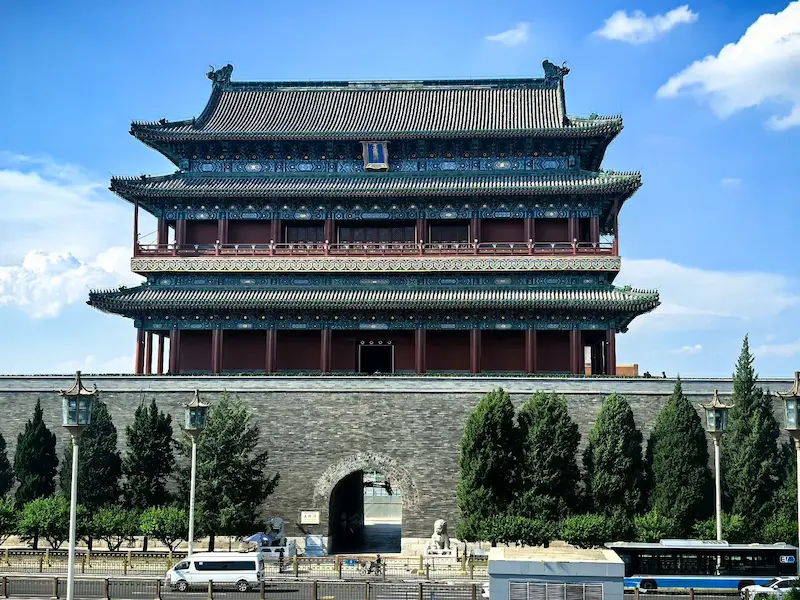
Table of Contents
Before You Go: Make Sure You’ve Got All These Details Sorted Out
Tickets and Reservations (The Most Important Thing—No Exceptions)
The Zhengyangmen Gate Tower does not sell tickets on-site, nor does it offer same-day tickets. The only way to visit is to make a real-name reservation in advance through the WeChat official account “Beijing Central Axis Heritage Conservation Center.”For reservations at other attractions, check out the [Beijing Attractions Reservation Guide].
Ticket Release Time: Slots for the next 7 days are released daily at 5:00 PM. During the first few weeks after the system went live, weekend tickets were essentially a first-come, first-served race—if you plan to visit on the weekend, we recommend setting an alarm. The system undergoes maintenance daily from 11:00 PM to 1:00 AM, during which time reservations cannot be made.
Ticket Prices: Full price is 20 yuan (approximately $2.80); full-time undergraduate students and below pay 10 yuan upon presentation of a valid student ID. Admission is free for those under 18, over 60, active-duty military personnel, and people with disabilities upon presentation of valid identification—this also applies to foreign visitors with passports; simply present your ID at the ticket checkpoint.
Once your reservation is confirmed, you automatically gain access to Tiananmen Square: you do not need to make a separate reservation for the square; simply present your reservation confirmation and passport or ID card when passing through security.
Step-by-Step Reminders for Foreign Tourists Making Reservations via WeChat:
1. The WeChat Official Account interface is entirely in Chinese. If you do not understand Chinese, please use WeChat’s built-in “Long-press to Translate” feature or your phone’s screen translation function to assist with the process.
2. For “ID Type,” please select “Passport” (simply look for the word “Passport” in the list of options). Enter your name exactly as it appears in uppercase English on the first page of your passport, including any spaces.
3. You must pay the admission fee when making a reservation. Those eligible for free admission (such as those under 18 or over 60) must still make a reservation, but the payment amount will be 0 yuan.
WeChat Pay now supports linking international credit cards (Visa, Mastercard, etc.). If you haven’t linked your card yet, we recommend doing so before departure to avoid payment issues on-site. For questions regarding card linking and payment, please refer to [The Complete 2026 Guide to Payments for Foreigners in Beijing].
A common pitfall: The City Gate Tower and the Arrow Tower are two separate structures, so you must book them individually.
The Zhengyangmen City Gate Tower (on the north side, near Tiananmen Square) and the Zhengyangmen Arrow Tower (on the south side, at the northern end of Qianmen Street) are separated by a major road, so reservations must be made for each structure separately. Booking a reservation for the City Gate Tower does not grant access to the Arrow Tower.
If you have ample time, we recommend booking both. It’s very convenient to cross the street from the City Gate Tower to reach the Arrow Tower. Conversely, going from the Arrow Tower to the City Gate Tower requires a long detour.
Security Check at Tiananmen Square (By far the most time-consuming part of the process)
The Zhengyangmen Gate Tower is located within the Tiananmen Square area; you can’t simply walk straight to the base of the tower as soon as you exit the subway.
From the subway station to the gate tower, you’ll need to pass through three security checkpoints: the square’s security check (the slowest—it can take 30–40 minutes during peak season), random spot checks by patrols inside the square, and the ticket and security check at the gate tower entrance.
We recommend arriving at Qianmen Station at least one hour before your scheduled time—don’t wait until the last minute.
The most practical advice is to pack light. The larger your backpack, the longer it will take to get through security. Power banks and water are essentials, but leave behind snacks, selfie sticks, and folding stools if you can.
Transportation
Subway (Highly Recommended): Take Line 2 or Line 8 and get off at Qianmen Station. After exiting through Exit C (southwest exit), walk south along Qianmen East Street until you reach Security Checkpoint No. 7 (southwest) at Tiananmen Square. It takes about 5 minutes to walk from the station exit to the security checkpoint. How to ride the subway? See [The Best Ways to Get Around Beijing (Practical Guide for Foreign Tourists 2026)].
Driving (Absolutely Not Recommended): The Qianmen area is one of the most congested and hardest places to park in Beijing.
Taxi: Set your destination to “Zhengyangmen Tower” or “South Side of Tiananmen Square.” You’ll still need to walk a short distance after getting out.
Hours of Operation and Recommended Visit Duration
Tuesday through Sunday, 9:00 a.m.–5:00 p.m. (last admission at 4:30 p.m.); closed on Mondays (except on national holidays). The museum may be temporarily closed due to special circumstances; please refer to on-site notices for updates.
We recommend allowing 1 to 1.5 hours for your visit: approximately 30 minutes to view the exhibits, 30 minutes to go up to the observation deck to enjoy the view and take photos, plus time for walking around and waiting in lines.
Clothing and Sun Protection
Wear comfortable flat shoes—the steps leading up to the city gate tower are steeper than ordinary stairs, with 30 to 40 steps in a single stretch.
The platform of the city gate tower is paved with old city bricks, and the surface is uneven, so wearing high heels will be very uncomfortable.
Apart from a small shaded area inside the gate tower, there are virtually no awnings on the city gate platforms. Standing there between 11:00 a.m. and 3:00 p.m. in the summer, you’ll be exposed to intense direct sunlight.
Wearing a hat is more practical than using an umbrella (it’s windy on the city gates, and umbrellas can easily be blown inside out). Be sure to bring water and apply sunscreen.
Photography Rules
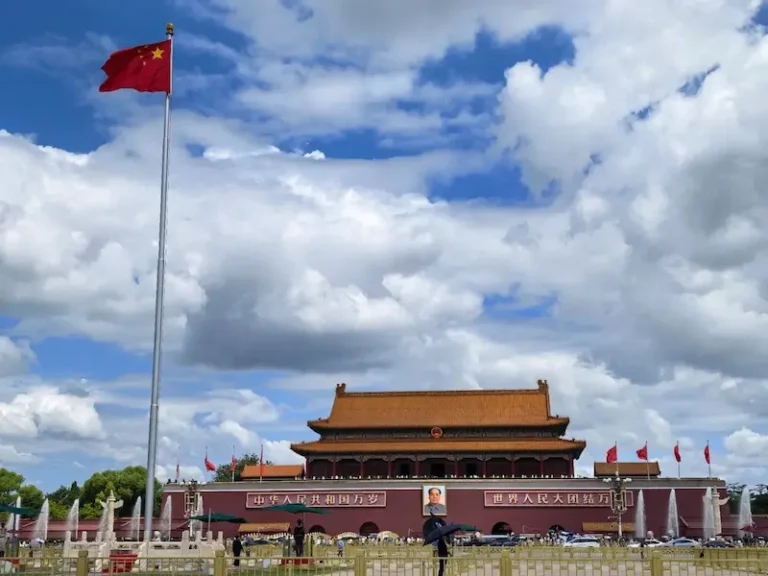
You may take photos on the city gate tower. Standing on the tower and looking north, you’ll have a panoramic view of Tiananmen Square, the Great Hall of the People, and the National Museum—this angle makes for great photos.
Please note: You may take photos of the exterior of the Chairman Mao Memorial Hall, but photography is prohibited inside the hall.
In the exhibition areas on the city gate tower, flash photography is not permitted for certain cultural relics and exhibits; there are signs on-site, so please pay attention to them.
Signal Issues
Cell phone reception is fine on the city gate platform, but the signal is weak in the inner areas of the exhibition hall. If you’re using a mobile e-ticket, we recommend taking a screenshot of your reservation code before entering the exhibition hall to ensure you can access it once inside.
Language Support
For the “Majestic Zhengyang” exhibition inside the city gate tower, the display panels are primarily in Chinese, and free guided tours (in Chinese) are offered daily. International visitors can install a translation app with a camera translation feature on their phones in advance and use it to translate the display panels directly; this should be sufficient.
What is Zhengyang Gate? Why is it called “the foremost of the Nine Gates”?
Zhengyang Gate was built in the 17th year of the Yongle reign of the Ming Dynasty (1419) and has a history of 607 years. It is located exactly in the center of the southern city wall of Beijing’s Inner City, directly facing the Imperial City and the Palace City, making it the very heart of the entire city.
During the Ming and Qing dynasties, the Inner City of Beijing had nine city gates: Zhengyangmen, Chongwenmen, Xuanwumen, Chaoyangmen, Fuchengmen, Dongzhimen, Xizhimen, Andingmen, and Deshengmen.
Zhengyangmen is the only one of the nine gates with a front facade spanning seven bays. Standing 43.65 meters tall, it surpasses the other eight in both scale and status, which is why it is called “the foremost of the nine gates.”
During the Ming and Qing dynasties, the central archway of Zhengyang Gate was reserved exclusively for the emperor—it was opened only when the emperor went to the Temple of Heaven to offer sacrifices or went on an imperial tour. Commoners were permitted to pass only through the gateways in the flanking watchtowers. A single city gate clearly separated the Son of Heaven from the common people.
So what’s the story with “Qianmen”?
Old Beijingers have never called it “Zhengyangmen”; they’ve always referred to it simply as “Qianmen” or Qianmen Tower. Because it’s the main southern gate of the Inner City, directly facing the Imperial Palace, this has been its common name among the people for hundreds of years. If you ask about“ Zhengyangmen” in Beijing, some people might pause to think about it, but everyone knows Qianmen Tower.”
The City Gate Tower and the Arrow Tower Are Two Different Structures
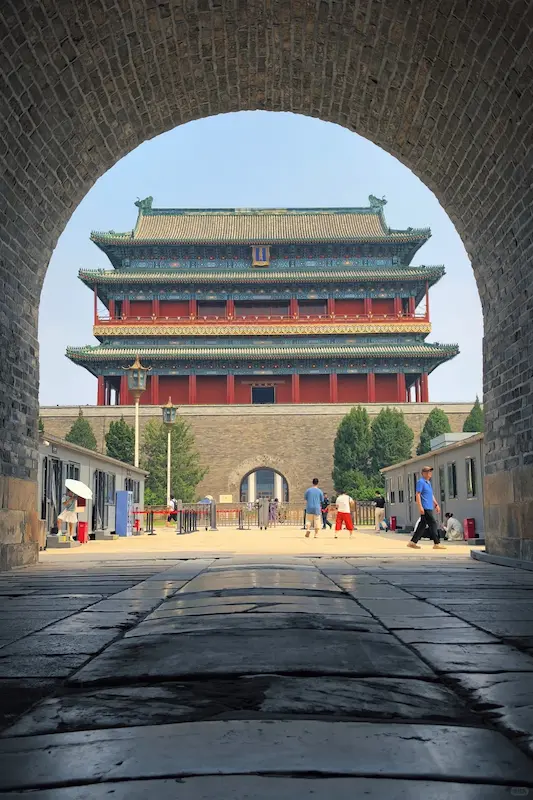
Zhengyangmen isn’t a single building—it consists of two separate structures standing across from each other on either side of Qianmen East Street:
- Zhengyangmen Gate Tower (on the north side, near Tiananmen Square)—this is the one that has just reopened. Admission is 20 yuan, and a separate reservation is required.
- Zhengyangmen Arrow Tower (on the south side, at the northern end of Qianmen Street) — It opened in December 2024 and is free to visit, but reservations are also required.
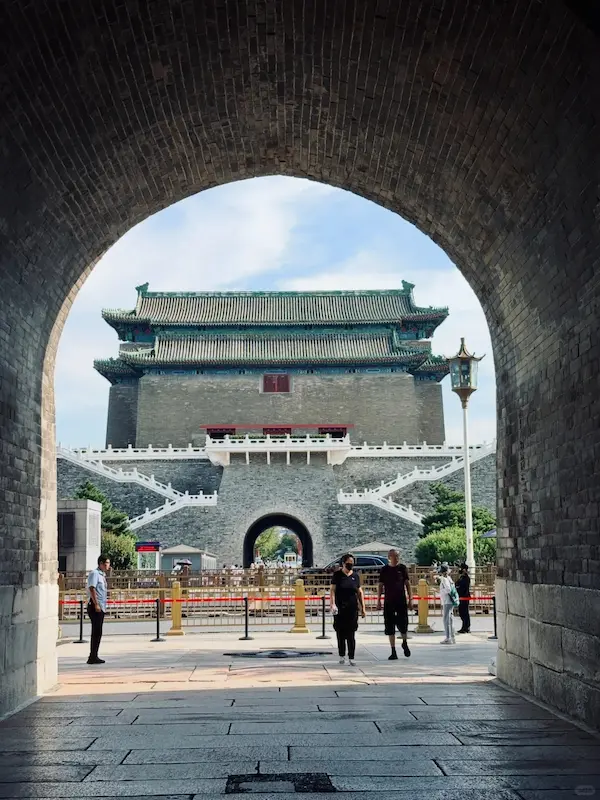
You must make separate reservations for each tower; booking the City Gate does not grant access to the Arrow Tower. If you have enough time, we recommend booking both.
It’s very convenient—just cross the street from the City Gate to reach the Arrow Tower. Conversely, going from the Arrow Tower to the City Gate requires a long detour.
What’s Inside the City Gate Tower? The “Majestic Zhengyang” Exhibition
Upon entering the city gate tower, visitors are greeted by the “Majestic Zhengyang” permanent exhibition, which is divided into four sections: “The Foremost of the Nine Gates,” “The Gate of Etiquette,” “The Prosperity of the Treasure Market,” and “Zhengyang Through the Ages. While the number of artifacts on display is not large, there are a few items that deserve special attention:
1. *Complete Draft Diagram of Proposed Construction Work from the Wumen Gate to the Zhengyang Bridge Archway*—the original is housed at the Palace Museum. This diagram is related to the renowned “Yangshi Lei” family of the Qing Dynasty.
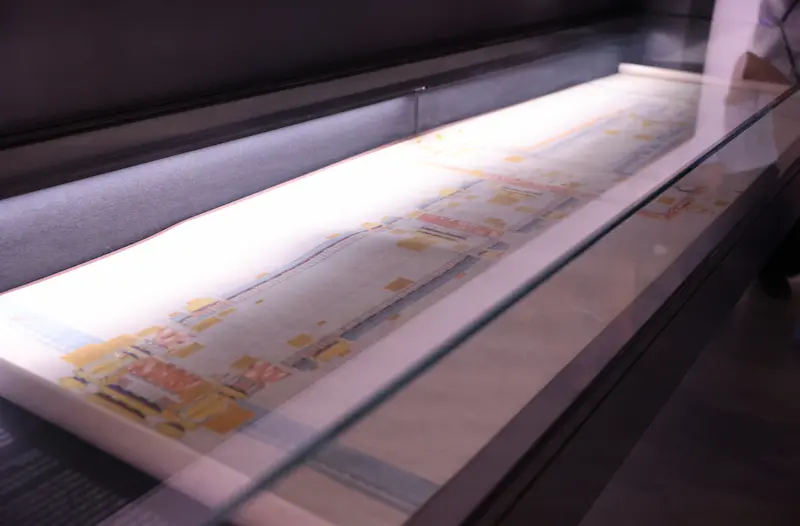
A brief introduction: You can think of the “Yangshi Lei” family as a legendary dynasty in the realm of Chinese imperial architecture.
Over a period of more than 200 years, eight generations of the Lei family served successively in the Qing court’s Style Bureau, holding the position of chief architect for imperial projects.
They presided over or participated in the design and construction of numerous important structures, including the Forbidden City (its restoration and expansion), the Temple of Heaven, the Summer Palace, the Old Summer Palace, and the Eastern and Western Qing Tombs.
The hand-drawn design sketches on display here are as precious as the original design sketches by Renaissance masters found in museums.
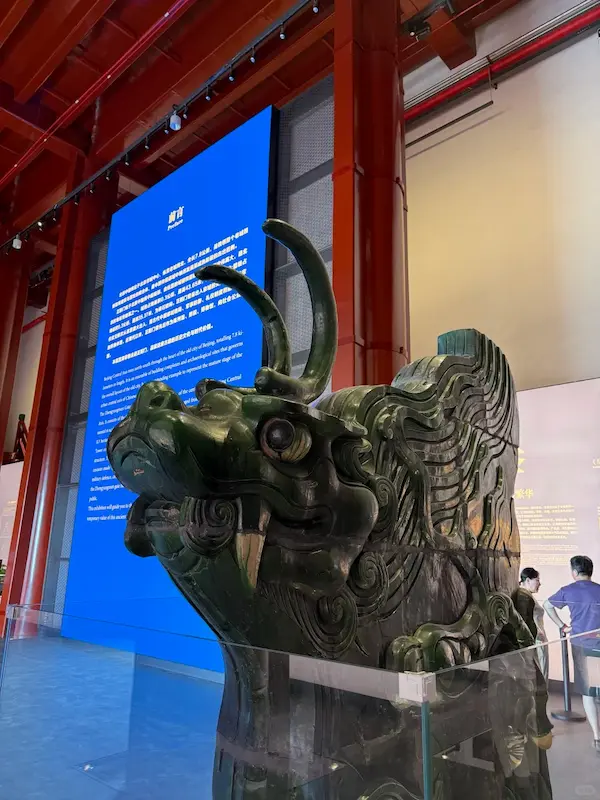
2. Giant Glazed Ceramic Guardian Beasts—These large green glazed ceramic components, removed from the city gate tower’s roof during this restoration, are larger than a person. Only when standing in front of them can one truly appreciate just how massive the roof decorations actually are.
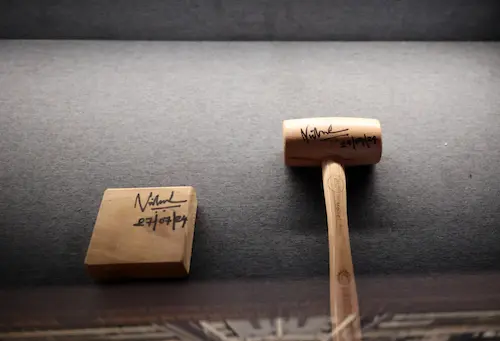
3. Tangible Evidence of the Central Axis’s Successful World Heritage Designation—Includes the World Heritage Certificate, the wooden mallet used during the nomination ceremony, and celebratory banners. These items aren’t particularly exquisite in themselves, but they are authentic artifacts from that historic moment on July 27, 2024.

4. VR Experience — In the exhibition hall, visitors can put on VR goggles to “tour the Central Axis,” “flying” from Yongding Gate all the way to the Bell and Drum Towers in just a few minutes. If you bring children, they usually really enjoy this activity.
What to See from the City Wall? Three Viewpoints Worth Stopping At
Looking North—A Panoramic View of Tiananmen Square
The northern section of the city gate tower is closed off and inaccessible, but the eastern and western sides are open to the public.
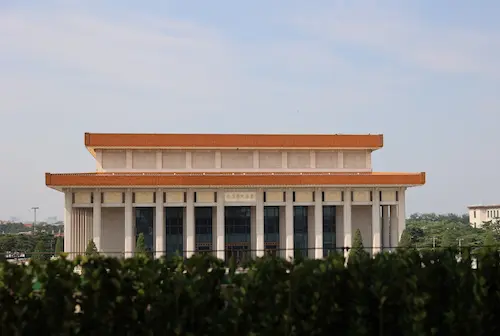
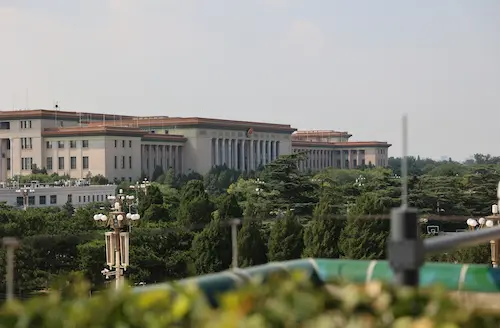
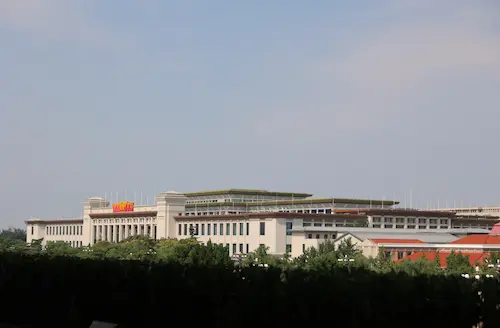
Standing on either the east or west side and looking north, Tiananmen Square unfolds before your eyes—the Mao Zedong Memorial Hall is slightly south of center, the Great Hall of the People is to the west, and the National Museum is to the east.
This is one of the best vantage points for viewing the core landmarks along the Central Axis.
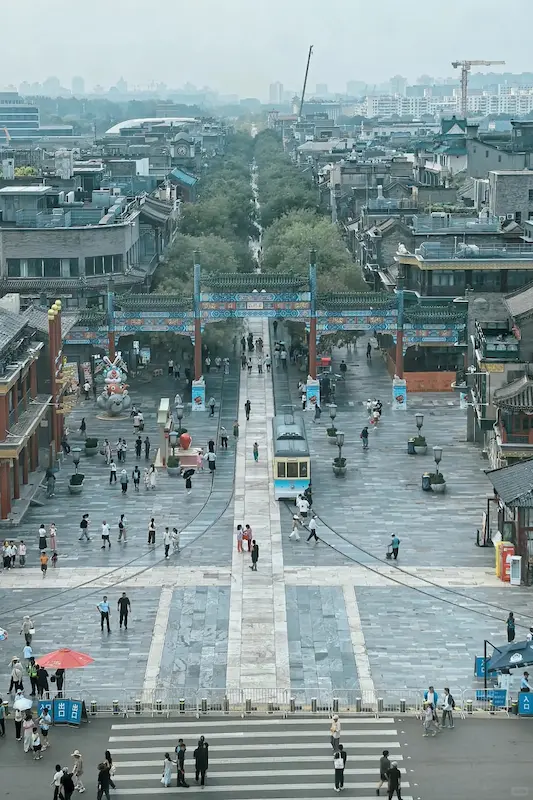
Looking South—The Zhengyangmen Arrow Tower and Qianmen Street
Look down toward the south, and you’ll see the Zhengyangmen Arrow Tower right across the street. The rows of arrow slits on the tower are clearly visible—these were used for archery defense in ancient times.
Further south from the Arrow Tower lie Qianmen Street and Dashilan, one of Beijing’s oldest commercial districts, where you can see a dense array of historic shop signs lining the street.
Look Down—”China’s Highway Kilometer Zero”
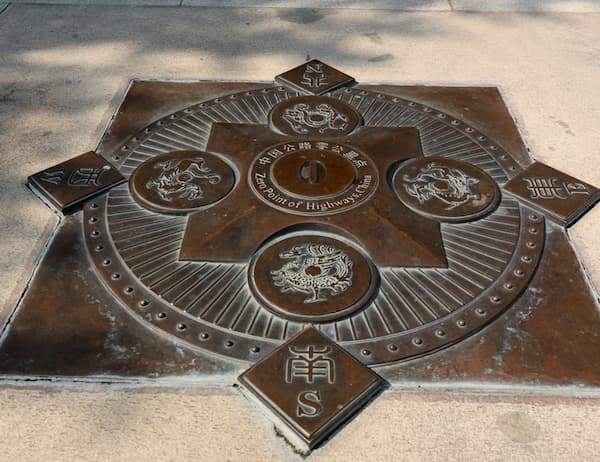
On the ground in front of the gate tower’s archway lies a bronze floor sculpture engraved with the Four Divine Beasts: the Azure Dragon, the White Tiger, the Vermilion Bird, and the Black Tortoise.
This is China’s Highway Kilometer Zero—the starting point from which the mileage of all national highways is calculated.
It’s worth crouching down to take a closer look; the carvings of the Four Divine Beasts are exquisitely detailed.
Details You’ll Only Discover Once You’re There
The following points aren’t evident from maps or travel guides, but they’ll affect your experience once you arrive:
Security Check Pace: As mentioned in the first section, I’ll emphasize this again—there are three security checkpoints, and during peak season, the longest wait is at the first one in the square. Be mentally prepared, and don’t let this dampen your spirits.
The City Gate Stairs: The stairs leading up to the city gate are steeper than ordinary stairs, and there are no landing platforms in between—you’ll have to climb about 30 to 40 steps in one go.
If you have weak knees, hold onto the railing and take it slowly; don’t rush.
The Floor of the City Gate Tower: The platform is paved with old city bricks, and the surface is uneven, making it very uncomfortable to walk in high heels. This is why we repeatedly recommended wearing flat shoes in the first section.
No Shade on the City Gate Tower: Aside from a small patch of shade inside the city gate tower itself, there is virtually no shade on the platform—a reminder: Wearing a hat is more convenient than carrying an umbrella.
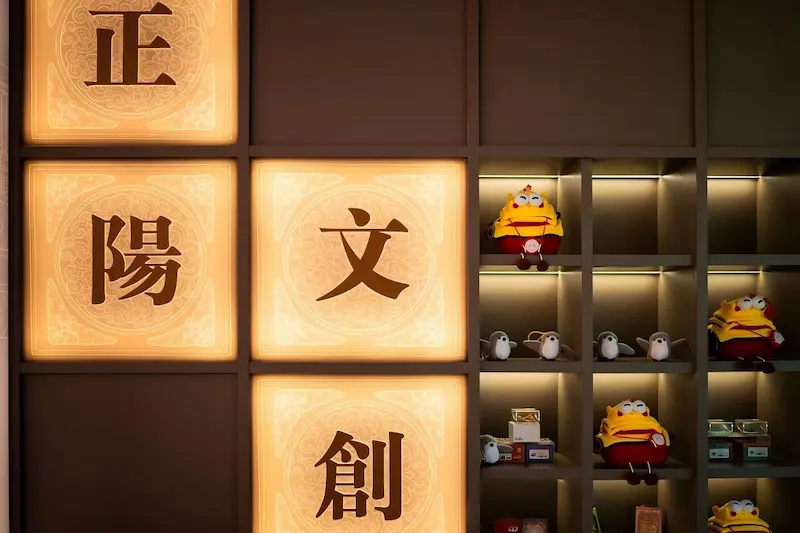
Souvenirs: There’s a cultural and creative goods area at the west entrance of the gate tower. While the selection of coffee and beverages isn’t yet complete, you can borrow their signature coffee mugs to take a photo.
There are also several Zhengyangmen-themed fridge magnets and postcards available; the designs are quite nice and far superior to the mass-produced souvenirs found on Qianmen Street.
What to Do After Visiting the City Gate Tower? A Recommended Half-Day Itinerary
Zhengyangmen is located right in the center of the Central Axis, surrounded by places that are all within walking distance. Here’s a recommended itinerary:
1. Zhengyangmen City Gate (1–1.5 hours) — Check out the exhibits, climb the tower, and take photos at the “Zero Kilometer” marker.
2. Cross the street to the Zhengyangmen Arrow Tower (30 minutes) — Admission is free, and there are exhibits inside the tower as well.
3. Walk south along Qianmen Street (1 hour) — Browse the time-honored shops, grab a bowl of zhajiang noodles, or try some candied hawthorn on a stick.
4. Turn into Dashilan (1 hour)—a hub of century-old shops. If you’re curious about the origin of Dashilan’s name or want to explore the Eight Great Lanes, the birthplace of Peking Opera, check out our site’s [A Stroll Through Southern Beijing: From Dashilan to the Eight Great Lanes and Ji Xiaolan’s Former Residence].
5. After exploring Qianmen, if you plan to head north along the Central Axis to the Drum Tower and want to try the small, hidden-away eateries in the back alleys that locals actually frequent after work, check out our guide [2026 Shichahai and Drum Tower Food Guide: Locals’ Secret Picks to Avoid Trendy Scams].
This entire route takes about 4–5 hours on foot—no need to take public transportation—and it’s convenient to exit via Dashilan to catch the subway afterward.
FAQ
The reopening of the Zhengyangmen Gate Tower is definitely worth a special trip.
Standing on this gate tower, which is over 600 years old, you can look north to see the heart of modern-day Beijing, and south to Qianmen Street—a place where ordinary people have been strolling for centuries. This single gate connects the imperial court on one side and the common people on the other; it bridges history and the present.
Admission is 20 yuan, but you’ll need to make a reservation, go through security, and walk a bit to reach the top. The process is indeed a bit of a hassle, but the moment you stand on the city gate tower, you’ll feel that all the effort was worth it.
When you visit Beijing, set aside half a day for Zhengyangmen. This “Foremost of the Nine Gates” will offer you a view of Beijing unlike anything you’ll find at the Forbidden City or Tiananmen Square.