Beijing Zhuanta Hutong Guide: How to Explore the Wansong Elderly Pagoda, Lu Xun’s Former Residence, and the 700-Year-Old Hutong (2026)
Last Updated: Sep. 2026
The first time I stood at the eastern entrance of Zhuanta Hutong, I was actually a bit taken aback—not because of its width (it’s quite narrow, as expected), but because the first thing I saw was a tower.
Yes, a nine-story, octagonal, bluish-gray ancient pagoda stood in a small courtyard right at the entrance of the hutong, squeezed between the surrounding high-rises and traffic, like an old monk in a worn robe meditating in the bustling city. I thought to myself at the time: So the name of this hutong really does come from a brick pagoda.
I later learned that this hutong is the “ancestor of all Beijing hutongs”—named during the Yuan Dynasty, its name has remained unchanged for seven hundred years, and it is recorded in historical texts from every dynasty. The renowned architectural historian Luo Zhewen once said, “This is the root of Beijing’s hutongs.”
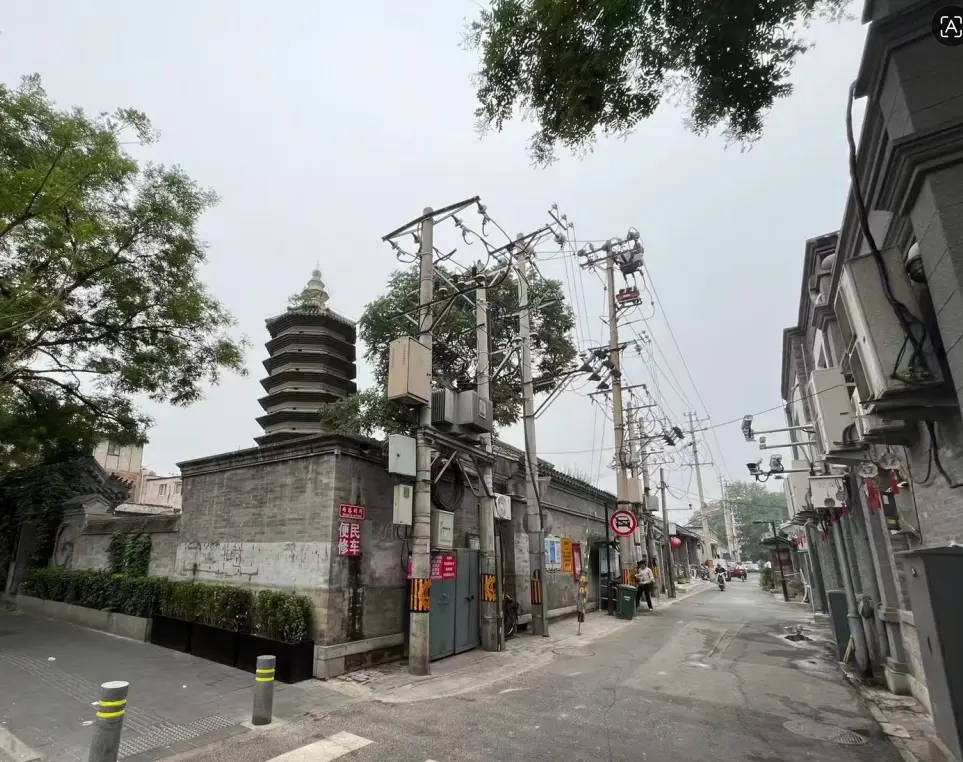
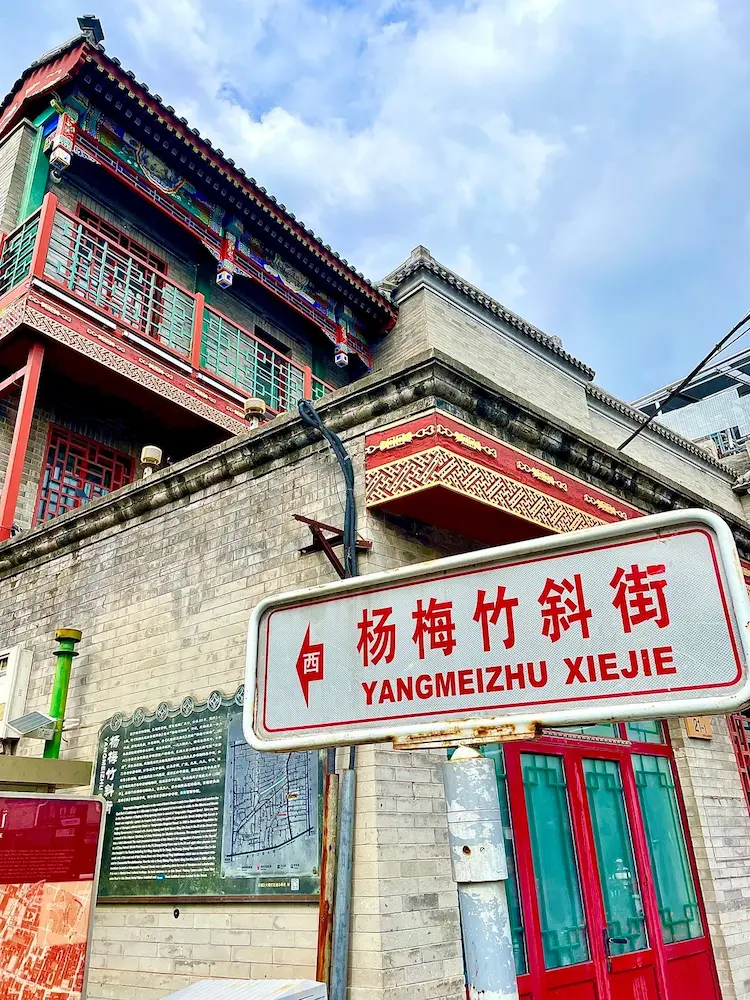
But to be honest, after my first visit, I was left with mixed feelings. It isn’t decked out with lanterns and decorations like Nanluoguxiang, nor is it as artsy and bohemian as Yangmeizhu Xiejie.
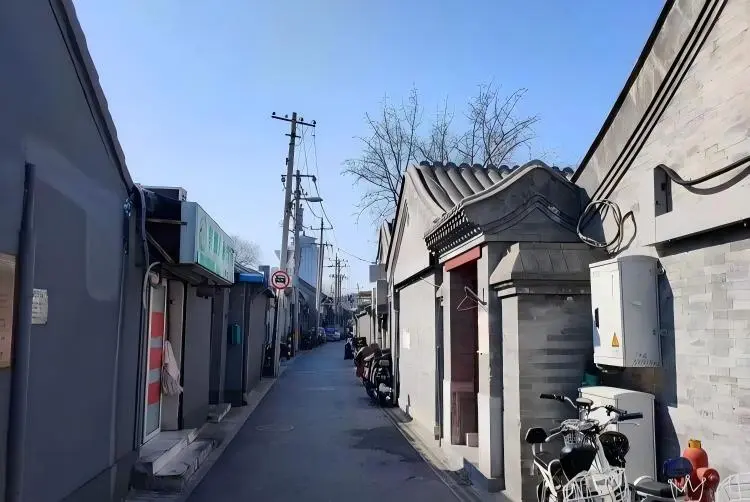
It’s just an ordinary old alleyway, lined on both sides with gray-brick bungalows and aging apartment buildings. At its eastern end stand the glass curtain walls of Financial Street, while its western end is filled with the bustling atmosphere of Xisi. There are no admission fees, no barriers, and not even any obvious tourist signs.
But that’s precisely what makes it authentic.
If you’ve grown tired of those “replica historic streets” and are looking for a hutong with genuine antiques, authentic stories, and no commercialization—a place to spend an afternoon strolling and taking your time—Zhuanta Hutong won’t let you down.
Table of Contents
Visiting Zuan Ta Hutong for the First Time? Keep These 5 Things in Mind
| What You Need to Know on Your First Visit | Answers |
| Is there an admission fee? | The hutong area is free |
| What are the highlights? | The Wansong Elderly Pagoda, the Pagoda Courtyard, and the Zhengyang Bookstore |
| Can you go inside the historic homes of famous figures? | Most courtyards can only be viewed from the outside; entry is not permitted |
| How long does it take? | About 30–45 minutes for a quick walk; allow about 1.5 hours for a stroll |
| Is it worth a special trip? | Best suited for visitors interested in history, literature, and old Beijing life |
Visiting Zhuanta Hutong for the First Time: 4 Things You Should Know First
- This is not a “tourist alley”: there are no chain souvenir shops or long lines for trendy snacks. It feels more like a living residential neighborhood, where elderly residents sit in their doorways soaking up the sun, and delivery vans zip by.
- Most famous figures’ former residences are closed to the public: The courtyards where Lu Xun, Zhang Henshui, and others once lived are now mostly residential compounds or office spaces. You can only take photos at the entrance; entry is not permitted.
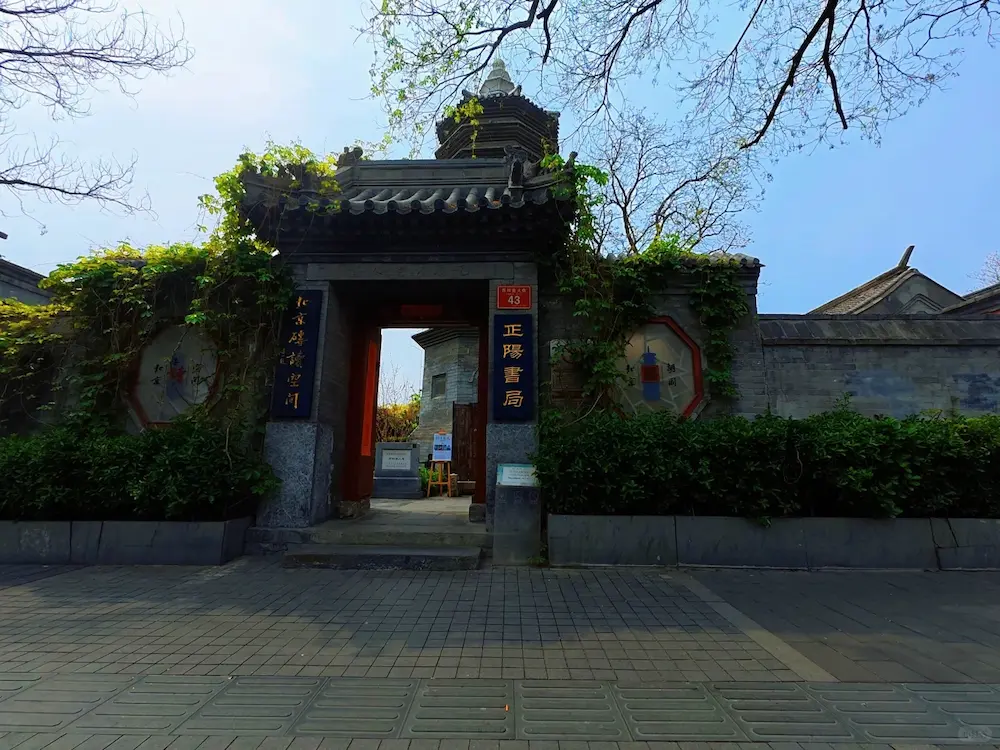
- The Pagoda Courtyard is small but well worth a visit: The Zhengyang Bookstore, where the Wansong Elderly Pagoda is located, is open to the public free of charge. You can enjoy tea and read books at the foot of the pagoda—this is the highlight of the entire alley.
- We recommend visiting during the day: Streetlights in the alley are dim at night, and the residential area is quiet, making it unsuitable for nighttime exploration.
A heads-up: If you’re expecting a commercial street experience like Nanluoguxiang, Zuan Ta Hutong might leave you feeling like “there’s nothing to see”; but if you want to see an old hutong that’s still used as a residential neighborhood, that’s precisely where its charm lies.
What’s the difference between Zhuanta Hutong and Nanluoguxiang?
| Zhuanta Hutong | Nanluoguxiang | |
| Main Experience | History and literature, authentic local hutong life | Hutong shopping street + historical sites |
| Level of Commercialization | Low | High |
| Famous Figures and History | Former residences of modern and contemporary literary figures such as Lu Xun and Zhang Henshui | Numerous historic residences of famous figures |
| Way to Explore | Stroll, observation | Main street + side alleys |
| Best for | History and literature enthusiasts, urban strollers | First-time hutong visitors and tourists looking to shop and check off landmarks |
6 Must-See Spots in Zhuanta Hutong
| What to See | Why It’s Worth Seeing | Is It Open to the Public? |
| Wansong Elder’s Pagoda | The origin of Zhuanta Hutong’s name; the remains of an ancient pagoda from the Jin and Yuan dynasties | The pagoda courtyard is accessible; specific opening hours are subject to on-site conditions |
| Zhengyang Bookstore | Read local historical documents about Beijing amidst the ancient pagoda setting | Accessible |
| Lu Xun’s Former Residence | Learn about Lu Xun’s life and creative work during his time in Beijing | Currently only viewable from the outside; not open to the public |
| Zhang Henshui’s Former Residence | Learn about the later years of Republican-era writer Zhang Henshui’s life in Beijing | Viewable only from the outside |
| The Hutong Itself | Observe the old Beijing streets and alleys where residents still live today | Public streets and alleys are open |
| Hutong Roots Cultural Experience Hall | Learn about the history of hutongs and the culture of traditional place names | Subject to actual opening hours |
Practical Information for Zhuanta Hutong: Your Go-To Guide for First-Time Visitors to Beijing
- Admission: The hutong area is free; no reservation is required, and you can enter at any time
- Hours: The hutong is open all day (recommended daytime hours: 9:30 a.m.–5:00 p.m.; Zhengyang Bookstore hours: 9:00 a.m.–6:00 p.m)
- Address: Xicheng District, Beijing; bounded by Xisi South Street to the east and Taipingqiao Street to the west
- Duration: 30–45 minutes for a simple stroll through the hutong; 1.5–2 hours if you include reading at the Tower Courtyard, taking photos at the entrances of famous figures’ former residences, and visiting the experience center; allow half a day if combined with shopping and dining in Xidan
- Best Time to Visit:
- Seasons: April–May (spring) and September–October (fall), when the weather is pleasant
- Times: Before 10:00 a.m. on weekdays, when the hutongs are quiet; on weekend afternoons, Xisi gets crowded, but foot traffic inside the hutongs remains relatively light
- Practical Tips: There are no public restrooms within the hutong; the nearest free restrooms are at KFC or Zhengyang Bookstore on Xisi South Street (Ta Yuan has restrooms). Public safety is excellent during the day, and it’s safe to explore alone.
Note: While the hutong itself is an open area, the operating hours of bookstores, cultural spaces, and surrounding commercial facilities may change. It’s recommended to double-check the on-site situation before heading out.
If This Is Your First Time in Beijing, Here’s How to Plan Your Visit
- If this is your first time in Beijing and you’ve already planned to visit the Xisi, Baita Temple, or Xidan areas that day, Zhuanta Hutong is a great place to add to your itinerary—you don’t need to set aside a whole half-day just for it.
- If you only have 30–45 minutes: Focus on the Wansong Elder’s Pagoda, Zhengyang Bookstore, and the hutong itself.
- If you have 1–2 hours: Add literary landmarks such as the former residences of Lu Xun and Zhang Henshui.
- If you have half a day: You can combine Zhuanta Hutong with Xisi South Street, Guangji Temple, and the Temple of the Emperors of All Dynasties into a single walking route.
- If you haven’t decided on your itinerary for the day yet, check out my Xisi / Baita Temple City Walk and incorporate these locations into the same route.
How to get there? (Subway is the best option to avoid traffic)
Subway (Highly recommended, no traffic)
- Take Line 4 to “Xisi Station”:
- Exit at Exit D (southwest exit): Walk south (backward) for about 300 meters; when you see a small courtyard with an ancient pagoda, you’ve reached the east entrance of Zhuanta Hutong. It’s a 5-minute walk.
- There are bilingual (Chinese-English) signs inside the station, so don’t worry about getting lost.
Why not get off at “Lingjing Hutong Station”? Zhuan Ta Hutong is not far from Lingjing Hutong Station (about a 15-minute walk), but the shortest route is from Exit D at Xisi Station.
Recommended Walking Route
Xisi Station, Exit D→East Entrance of Zhuanta Hutong→Wansong Elderly Pagoda→Zhengyang Bookstore→No. 43, Zhang Henshui’s Former Residence→No. 61, Lu Xun’s Former Residence→West Entrance of the Hutong→Xisi South Street
Bus
Take Bus No. 3, 13, 42, 102, 103, or 612 to the “Xisi Road South” stop; get off, and you’ll be right at the east entrance of Zhuan Ta Hutong.
Taxi/Ride-Hailing
- Destination: “East Entrance of Zhuanta Hutong” or “Zhengyang Bookstore (Zhuanta Hutong)”
- Estimated time & cost: About 15 minutes and around 20 yuan from the Forbidden City in light traffic; traffic jams are inevitable on holidays or in the evening, so we strongly recommend taking the subway.
Where to go after exploring the hutongs?
1. Xisi South Street (right outside the east exit)
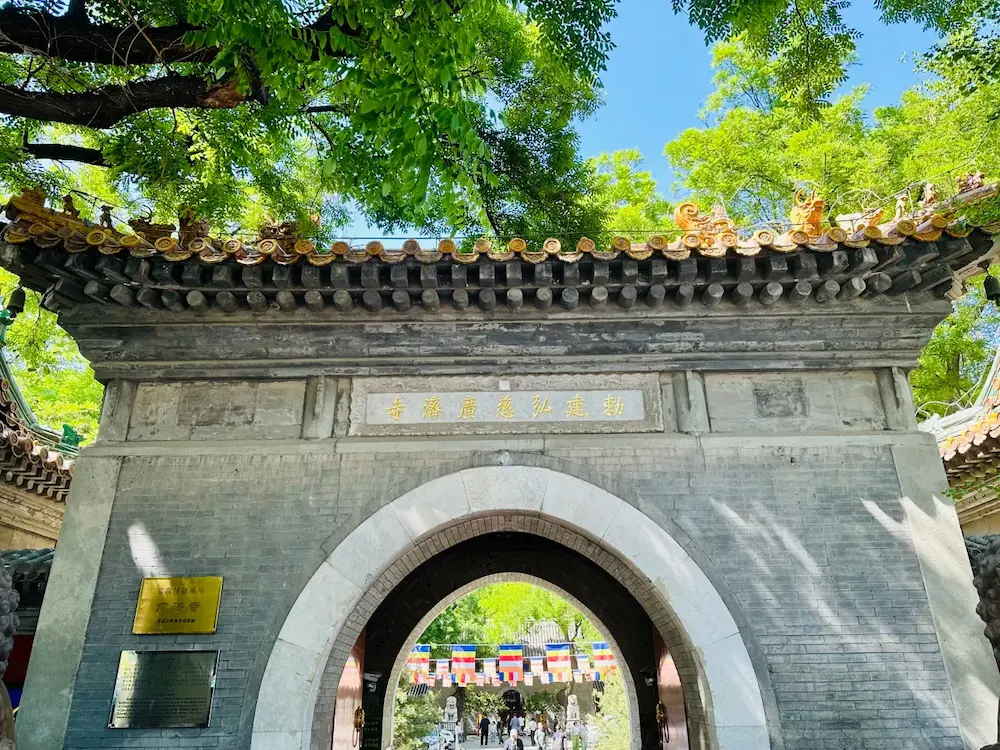
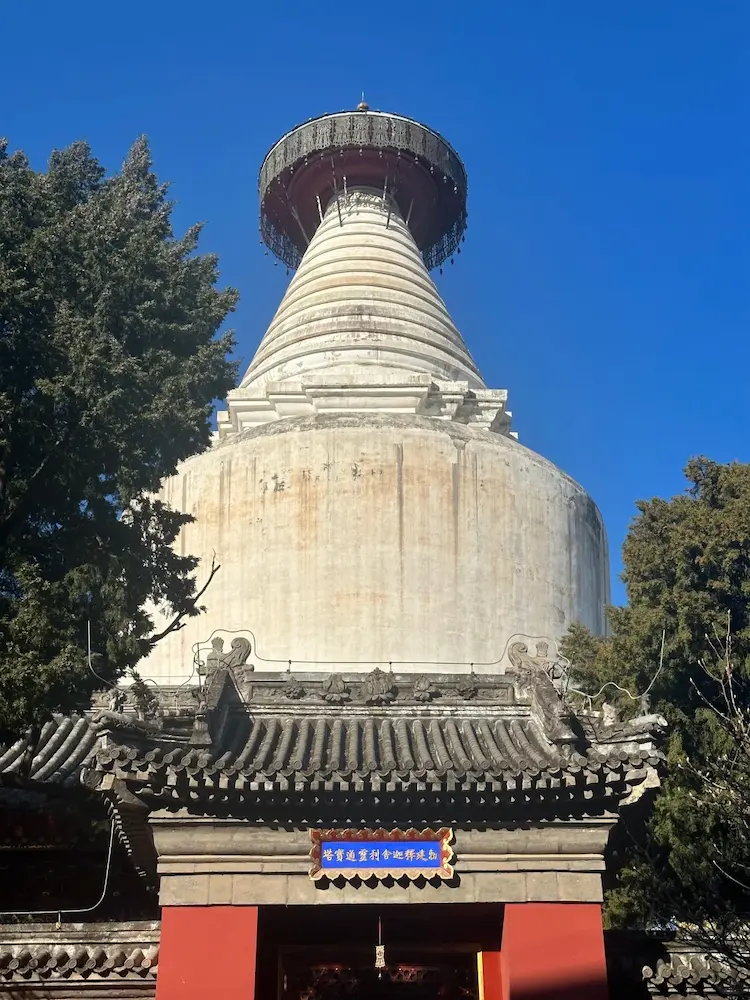
Exit the hutong at the east end, and you’ll find yourself on Xisi South Street. On the west side of the street are Guangji Temple (home to the Buddhist Association of China; free admission), the Temple of the Emperors of All Dynasties (tickets required), and White Pagoda Temple (a 15-minute walk).
If you’re looking for a bite to eat, Xingyuan Restaurant (knife-cut noodles, braised meat) and Huguosi Snacks (green pea pudding, wheat flour porridge) at the Xisi intersection are both time-honored establishments.
2. Xidan Shopping District (15-minute walk)
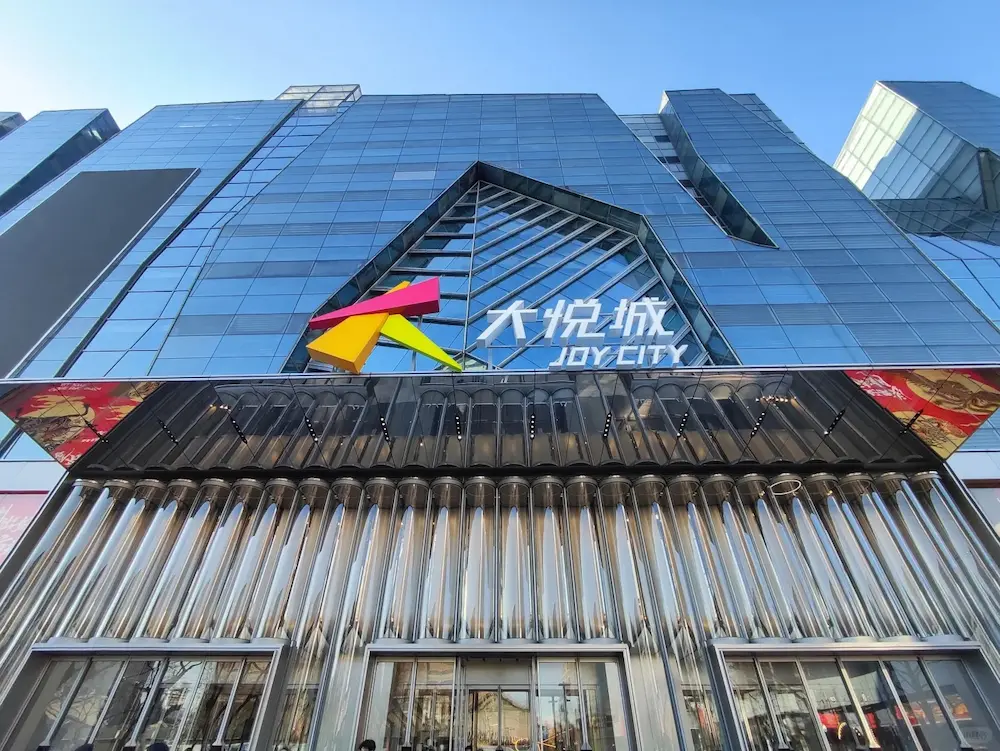
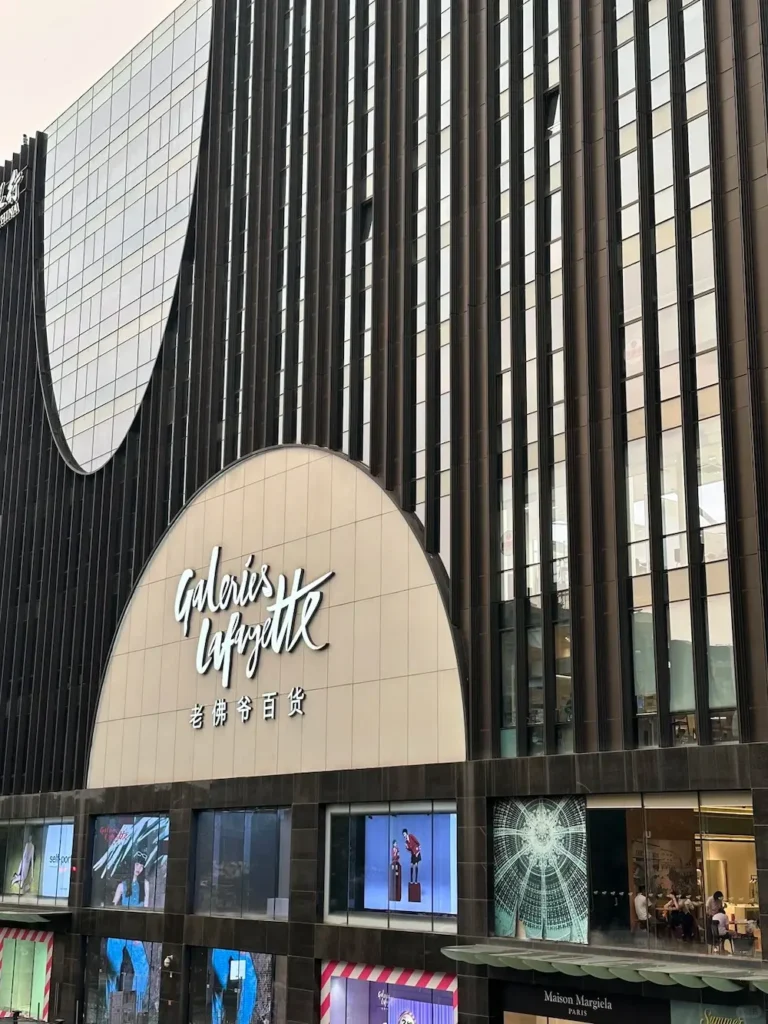
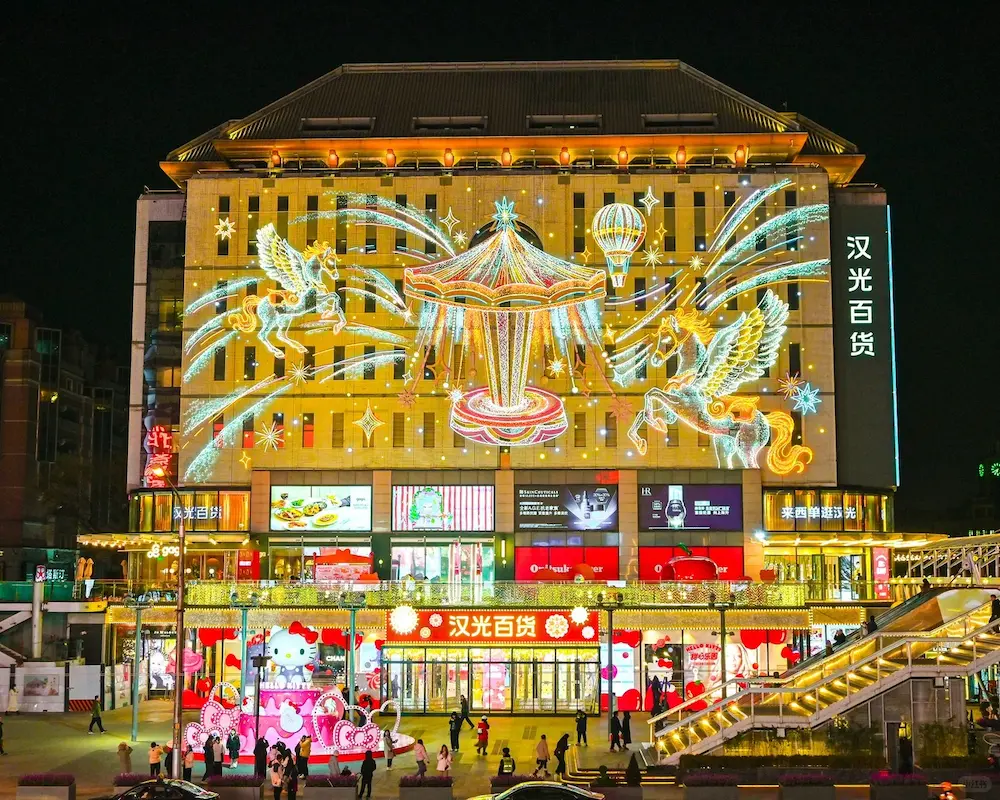
Walk south from the west entrance of the hutong for about 15 minutes to reach Xidan North Street—home to Joy City, Galeries Lafayette, and Hanguang Department Store. You’ll find everything you need here, from dining and shopping to bubble tea.
3. Lingjing Hutong (15-minute walk)
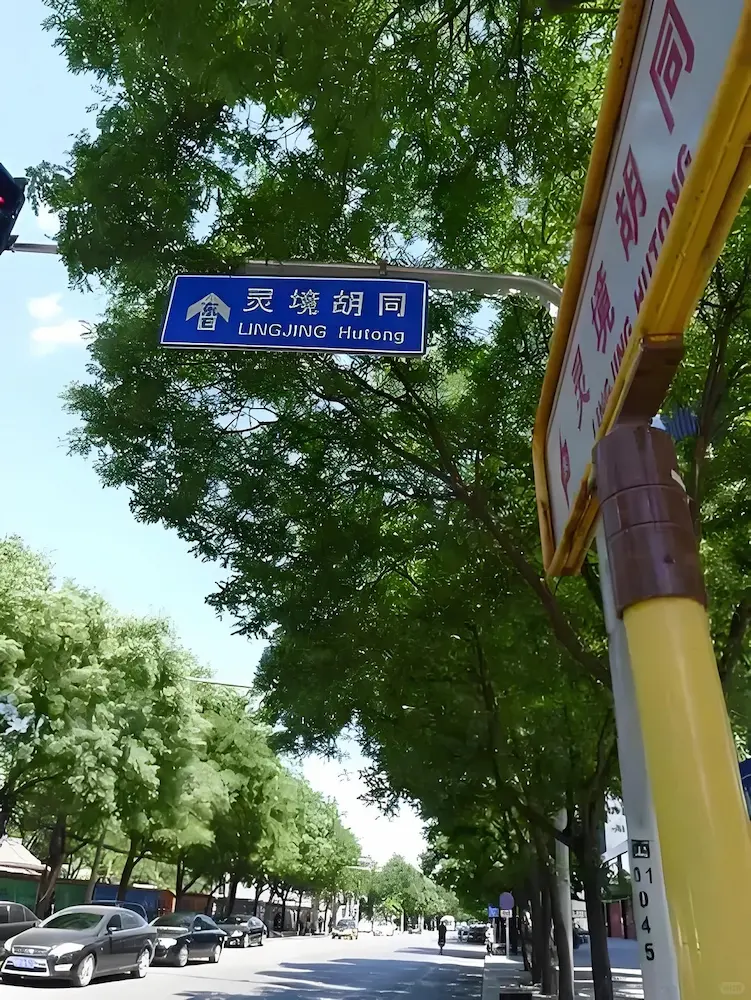
Head south from the western entrance of Zhuan Ta Hutong, then turn east. A 15-minute stroll will take you to Lingjing Hutong, known as “Beijing’s widest hutong,” which you can easily explore on your way.
4. Zhengyang Bookstore (located inside the pagoda courtyard)
This is the absolute must-see spot in the entire hutong—a non-profit bookstore specializing in historical documents about Beijing. You can sip tea, browse books, and just relax under the ancient Yuan Dynasty pagoda. More details to follow.
If you’d like to continue exploring, here are some options
- To see more historic buildings: → Guangji Temple → Temple of the Emperors of All Dynasties
- To explore more hutongs: → Lingjing Hutong → the area around Baita Temple
- To grab a bite to eat or take a break: → Xisi South Street
- To shop or wrap up your trip: → Xidan
- If you’re planning a complete Beijing Hutong City Walk, consider including Zuan Ta Hutong as one of your stops rather than treating it as a standalone attraction.
The Origin of Zuan Ta Hutong: A Tower, a Street, Seven Centuries
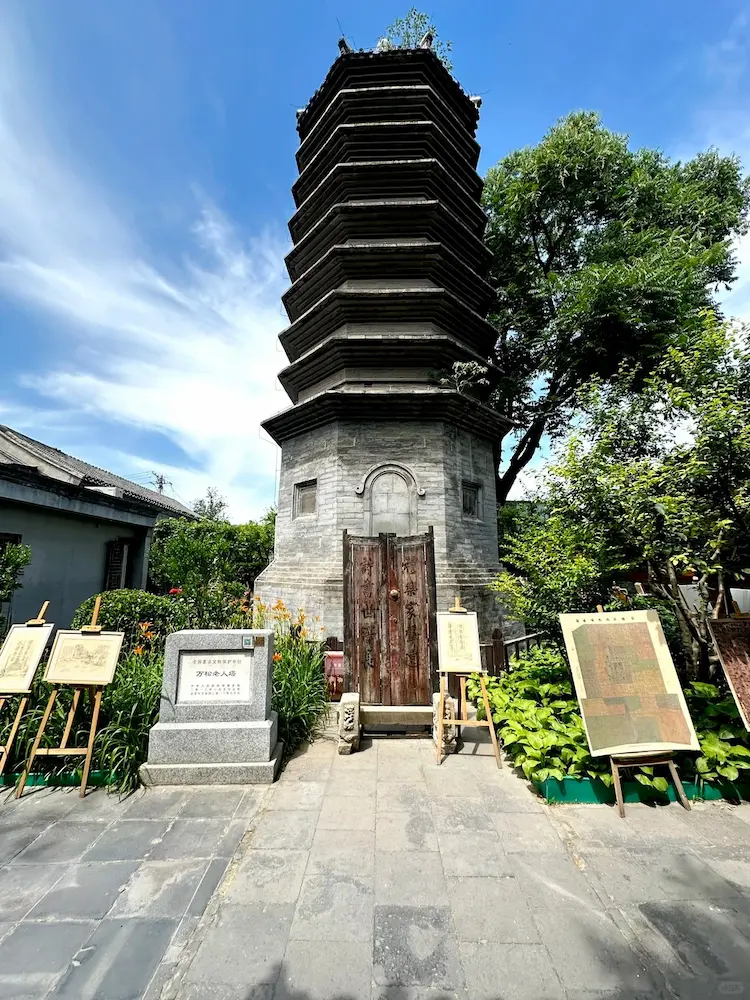
Let’s start with the tower that first caught my eye—the Wansong Elder’s Pagoda.
The pagoda was built during the transition from the Jin to the Yuan dynasty and houses the remains of the eminent monk Wansong Xingxiu. This master had a famous disciple—Yelü Chucai, the founding chancellor of the Yuan Dynasty.
After Wansong Elder passed away, his disciples constructed this memorial pagoda. At that time, even “Yuan Dadu” (the capital of the Yuan Dynasty) hadn’t been built yet, making this pagoda one of the oldest surviving structures in Beijing.
Interestingly, the pagoda originally had seven stories. During its renovation in the Qianlong era of the Qing Dynasty, a layer of bricks was simply added around the old structure, raising it to nine stories and creating a unique “pagoda-within-a-pagoda” structure—with a Qing Dynasty shell on the outside and a Yuan Dynasty core on the inside.
What Can You See When Standing in Front of the Wansong Elderly Pagoda?
1. Observe the pagoda’s overall design—a nine-story, octagonal brick pagoda with overlapping eaves;
2. Examine the brickwork of the pagoda’s body and identify traces left by repairs from different eras;
3. Use the ancient pagoda to understand the origin of the place name “Brick Pagoda Alley”;
4. Step inside the Zhengyang Bookstore to connect the ancient pagoda with the history of Beijing’s hutongs.
If you run your hand over the bricks of the tower, you can feel the traces of repairs from different eras.
The name of the hutong derives from this very tower. The four characters “Zhuanta Hutong” first appeared in the Yuan dynasty zaju play Zhang Sheng Zhus Hai: “Go to the gate of the general store in Zhuanta Hutong at the corner of Yangshi Street to find me.”
A line from seven hundred years ago that still holds today—you won’t find another example like this anywhere else in Beijing.
In 2022, Zhuanta Hutong was included in the List of Traditional Place Names for Protection in the Capital’s Core Functional Area.
In 2025, Courtyard No. 33 opened the Roots of the Hutong Cultural Experience Hall and a cultural and creative-themed post office. This old hutong is gradually transforming into a “living museum” that visitors can explore while learning about its history.
Three Literary Landmarks in the Hutong
The greatest pleasure of strolling through Zhuanta Hutong is searching for house numbers. Although most courtyards are not open to the public, it’s still fascinating to stand at the entrance and imagine what life was like hundreds of years ago.
1. Site of the Yuan Dynasty Goulán (The Entire Hutong)
During the Yuan Dynasty, Zhuanta Hutong was not a quiet residential area, but rather the liveliest “goulán washè” in all of Dadu—the street was packed with opera performers, storytellers, and street artists.
Guan Hanqing wrote The Injustice Done to Dou E here, and Wang Shifu staged The Peony Pavilion here. You can stand in the middle of the alley, close your eyes, and imagine the sounds of gongs, drums, and stringed instruments playing in your mind.
Of course, you won’t hear any opera in Zhuanta Hutong today, but when you see those unassuming old walls lining the alley and think that seven hundred years ago this was the “Broadway” of Chinese theater, the sense of time and space intertwining is truly magical.
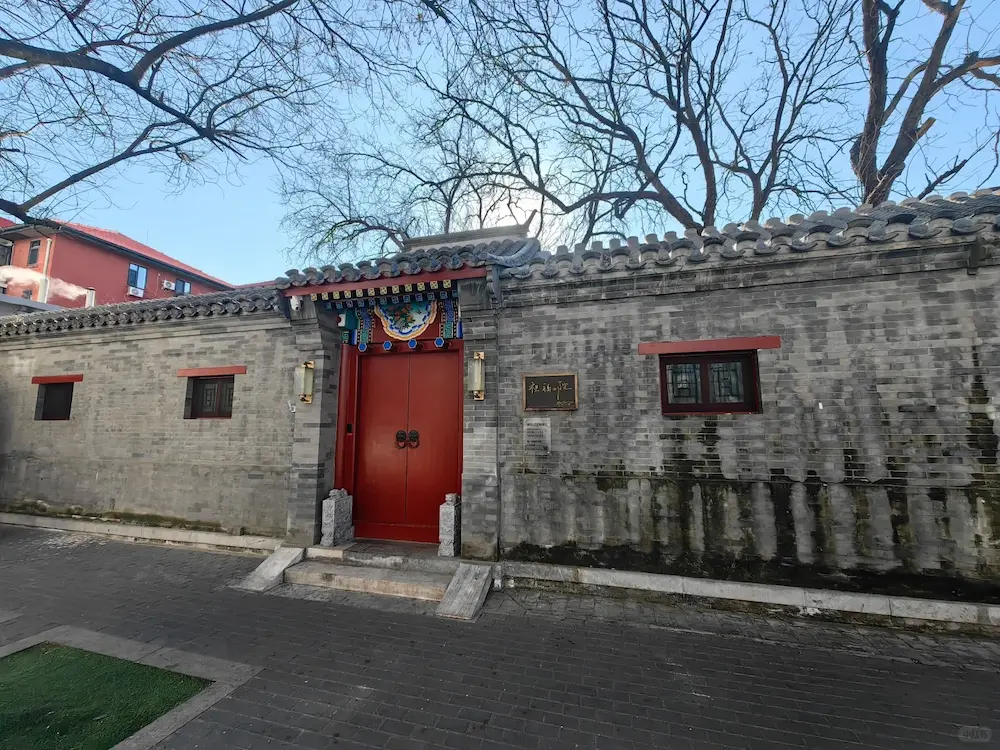
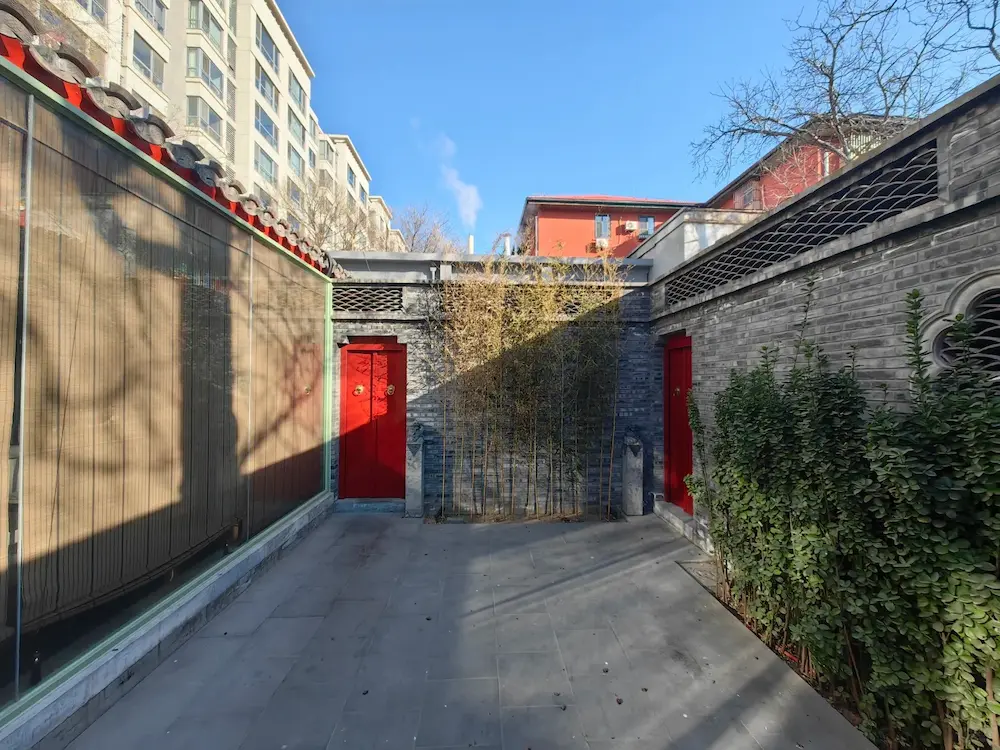
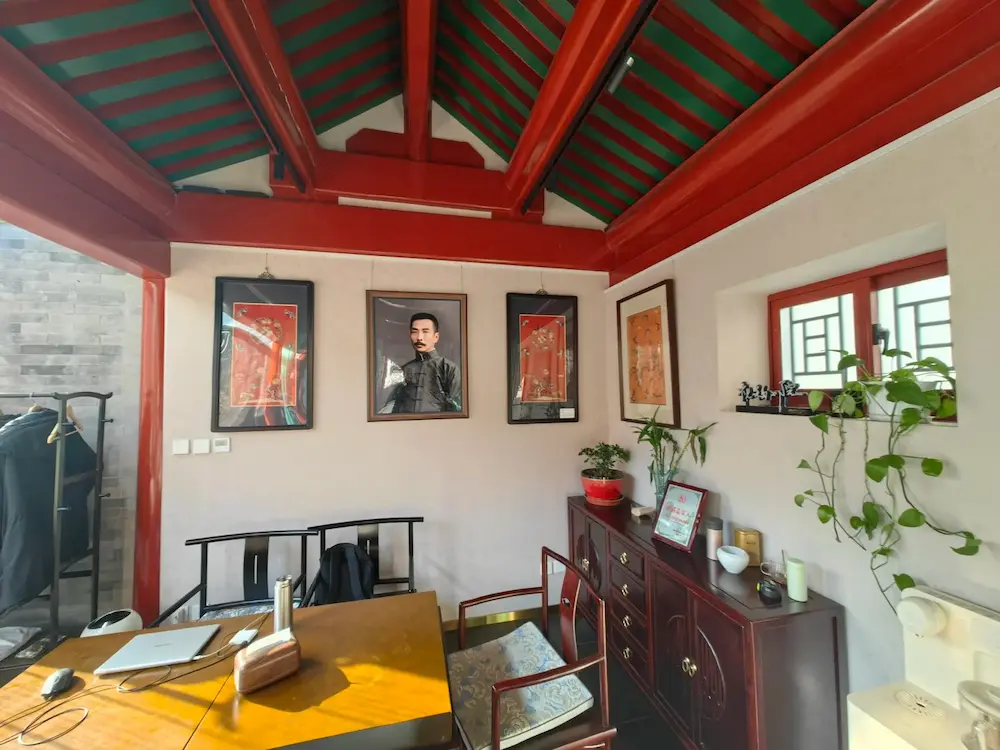
2. Lu Xun’s Former Residence (No. 61)—Where He Wrote New Year’s Sacrifice
In the summer of 1923, after falling out with his brother Zhou Zuoren, Lu Xun moved out of the large mansion in Badaowan and settled at No. 61 Zuantahutong.
The courtyard was tiny, and the three north-facing rooms totaled just over 20 square meters, with the bedroom, study, living room, and dining room all crammed into a single space.
Yet it was in this tiny space that he wrote “New Year’s Sacrifice,” “On the Restaurant Balcony,” and “Soap,” and completed the second volume of A Brief History of Chinese Fiction. Can you imagine? The fate of Xianglin’s Wife in “New Year’s Sacrifice” was conceived right here in this cramped space.
Current Status: No. 61 is now an ordinary residential compound. The gate is locked tight, and there is no sign at the entrance (you’ll need to check a map or ask locals).
I stood at the gate for a while and saw clothes hanging to dry inside the courtyard; I could hear the sounds of Peking Opera coming from a radio—a hundred years have passed, and ordinary people still live here. That’s actually quite nice.
3. Zhang Henshui’s Former Residence (No. 43)—The Final Sixteen Years
After the victory in the War of Resistance Against Japan, Zhang Henshui, known as “the Republic of China’s best-selling author,” moved into No. 43 at the western end of Zuan Ta Hutong. He lived there until he died in 1966—a total of sixteen years.
Many people are unaware that Zhang Henshui had a “special reader”—Lu Xun’s mother. Mrs. Lu loved reading Zhang Henshui’s novels; every time a new book was published, Lu Xun would buy a copy and send it back to his hometown.
Thus, these two literary giants with vastly different styles found an interesting connection right here in Zhuan Ta Hutong.
Current Status: No. 43 is now a cultural heritage site under the protection of Xicheng District, with an information plaque at the entrance. However, the courtyard is a residential compound and is not open to the public.
I took a photo at the entrance, and an elderly man standing nearby told me, “Quite a few people come by; they just stand at the gate to take a look, then leave.”
Visitor Guide to the Former Residences of Famous Figures in Zhuanta Hutong
| Location | What to See | Accessibility | Recommended Stay |
| Lu Xun’s Former Residence | Lu Xun’s life and literary career in Beijing | Subject to on-site conditions; currently, only the exterior is viewable | 5–10 minutes |
| Zhang Henshui’s Former Residence | Traces of Zhang Henshui’s later life in Beijing | Not open to the public; only the exterior is viewable | 5 minutes |
| Wansong Elder’s Pagoda | Origin of the hutong’s name; remnants of an ancient pagoda from the Jin and Yuan dynasties | Focus on exploring the pagoda courtyard when access is permitted | 20–30 minutes |
Footsteps of Other Celebrities
- Gu Taiqing, the foremost female lyric poet of the Qing Dynasty: After her husband’s death, she was expelled from the prince’s mansion and lived in Zhuanta Hutong with her children for nineteen years.
- Modern figures such as Shao Lizi, Liu Shaoqi, and Qi Yanming also resided here.
The Evolution of the Hutong: From Brothels and Taverns to a Living Museum
While sipping tea in the courtyard, I met an elderly woman who had lived in the hutong for nearly sixty years. She told me that the changes in Zhuan Ta Hutong were actually “not that significant”—not in the sense that buildings were torn down and rebuilt, but rather that many of the old courtyards still stood, though the people living inside had changed.
“Back in the ’60s, we still had dirt roads here; every time it rained, you’d step right into mud,” she said, pointing to the asphalt road outside the courtyard. “The Tower Courtyard used to be a factory warehouse—it was a real mess. Later, it was renovated and turned into a bookstore, so we gained a place to relax in the shade.”
As she said, the preservation of Zhuanta Hutong isn’t about “tearing down and rebuilding,” but rather “a tailored approach for each courtyard and micro-renovation.” Xicheng District has designated it as a pilot project for voluntary lease termination: those willing to move can do so, while those who stay continue to live there. The houses are restored to their original condition, without large-scale demolition or reconstruction.
In 2025, the Hutong Roots Cultural Experience Hall and the cultural and creative-themed post office opened in Courtyard 33. The experience hall features an exhibition on the history of the hutong, where visitors can get their postcards stamped and purchase cultural and creative products.
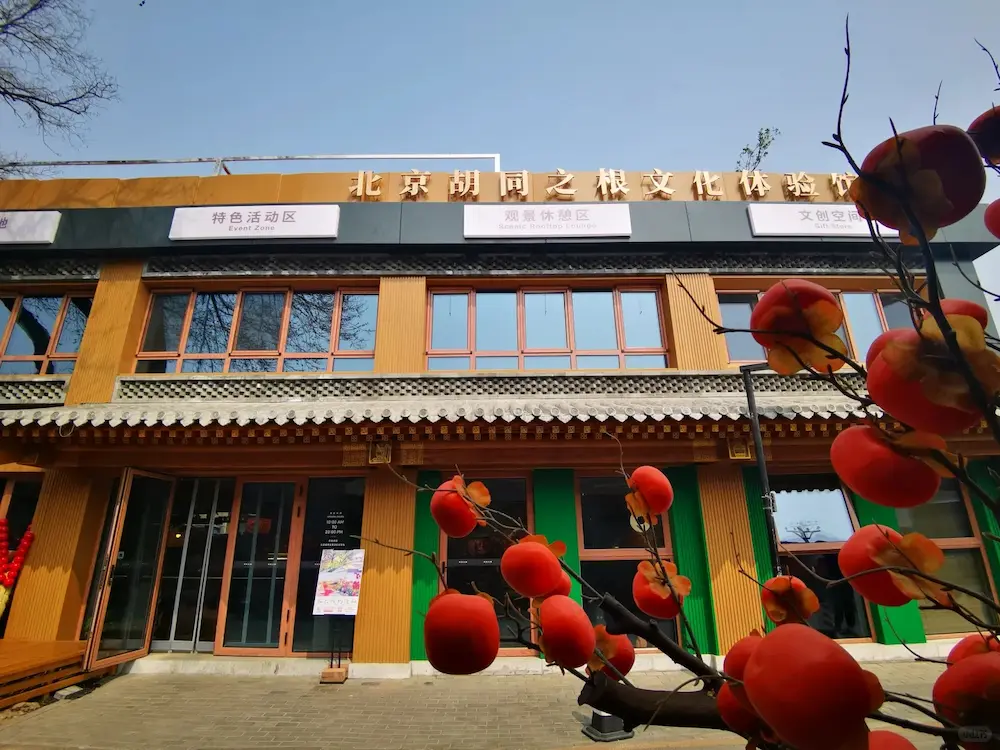
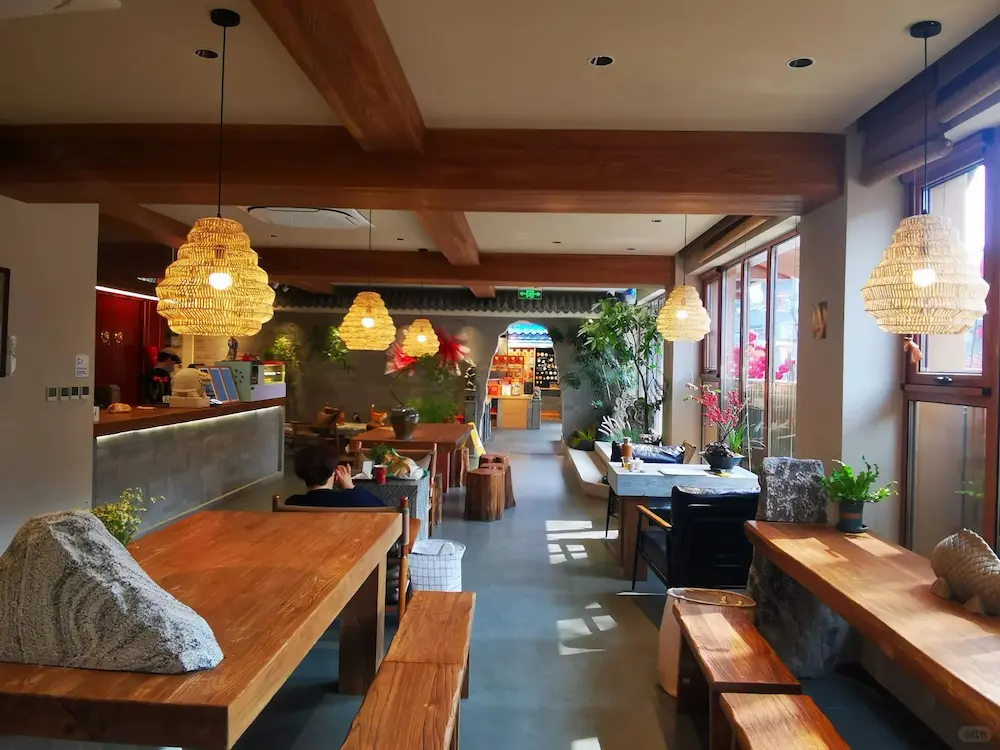
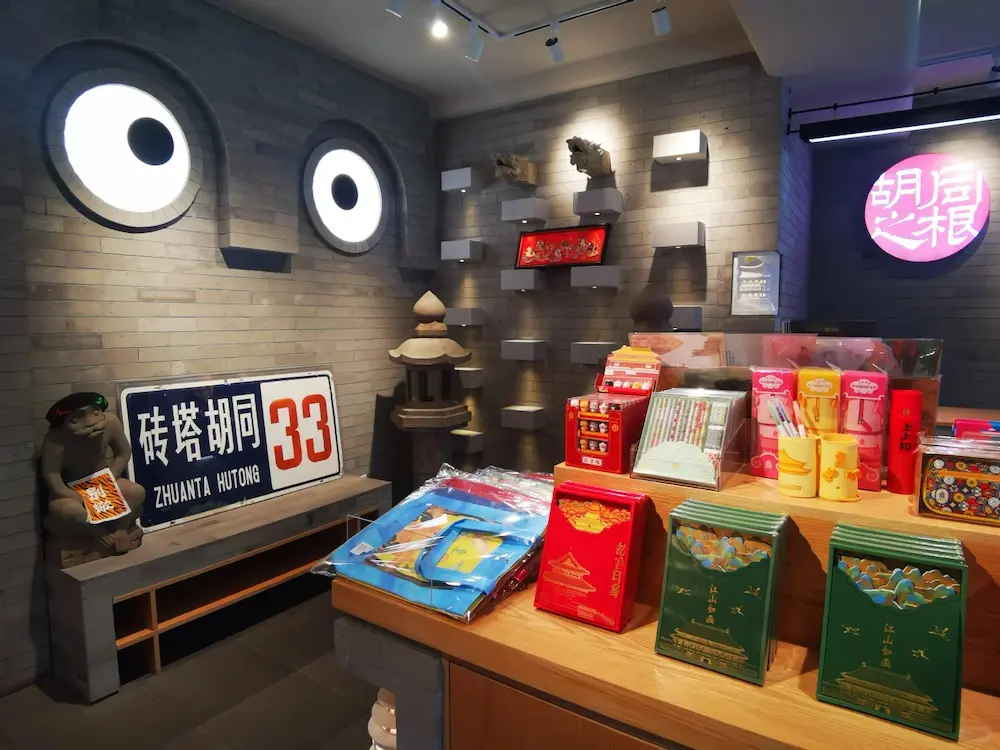
At the post office, visitors can mail postcards and have them stamped with a commemorative “Zhuanta Hutong” postmark.
I asked the elderly lady what she thought of these new changes. She smiled and said, “It’s good to have more activity; it used to be too quiet. We’re happy to see more people coming.”
Recommended Photo Spots
1. Wansong Elderly Tower (inside the Zhengyang Bookstore compound)—A Must-Visit
This is the star attraction of the entire alley. We recommend using a wide-angle lens (0.5x on a smartphone) and standing at the base of the tower to shoot upward, which captures the tower’s soaring elegance.
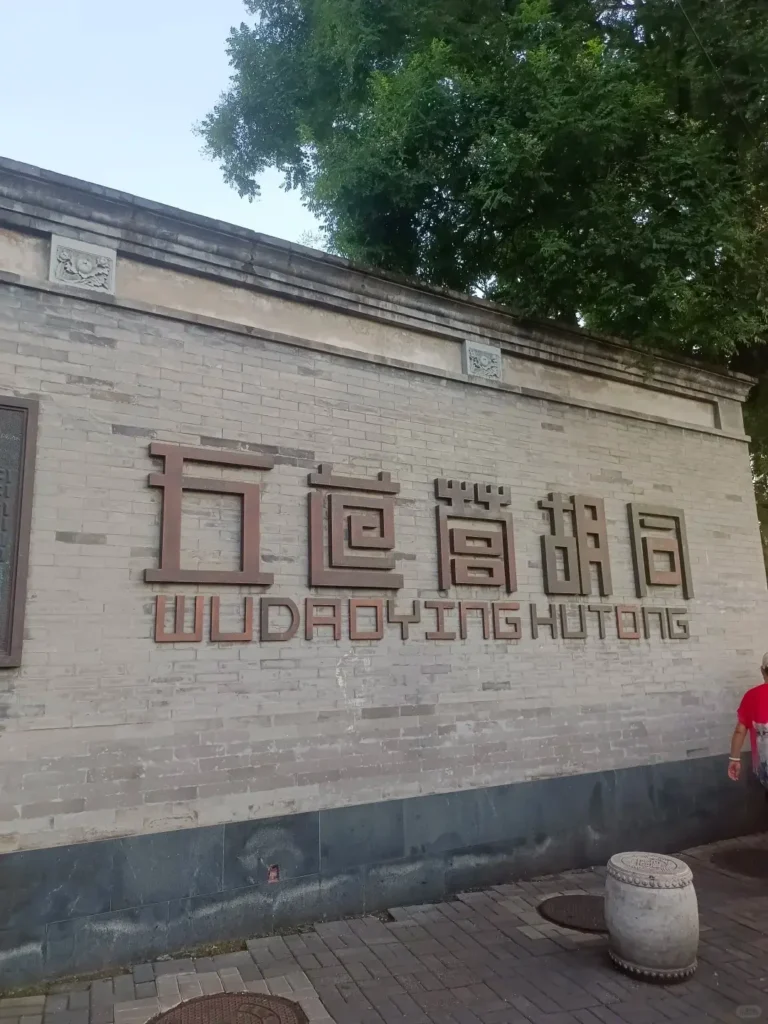
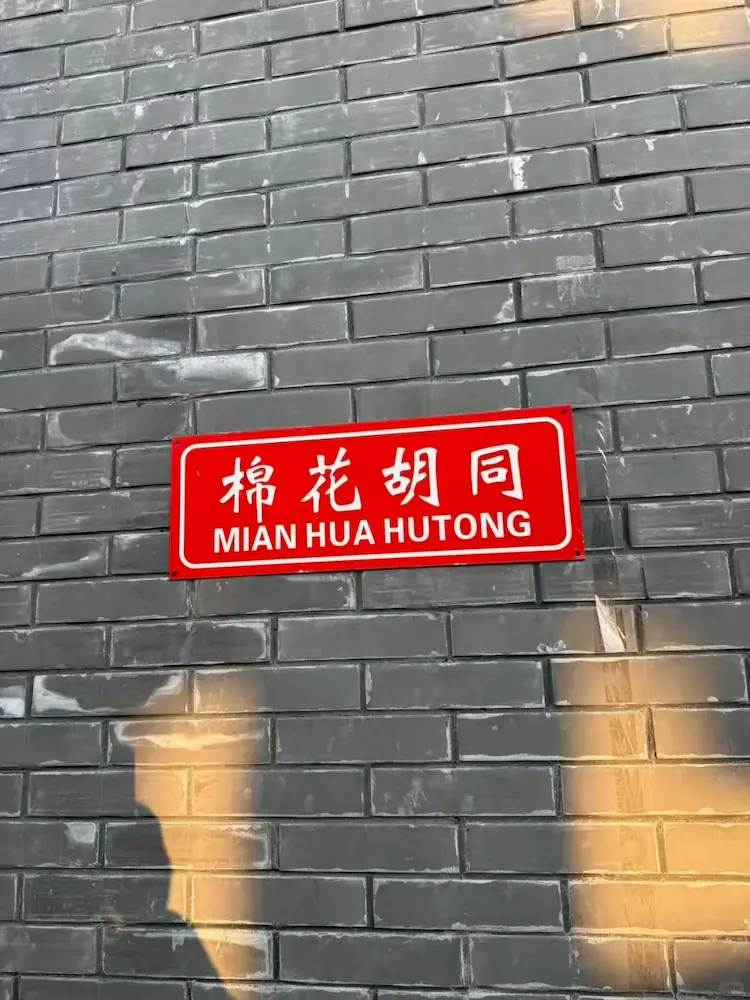
Alternatively, step back to the courtyard entrance and frame the tower along with the alley sign—the four characters “Zhuanta Hutong” plus the ancient tower make for a classic photo.
Best time: 3–4 PM, when the sunlight streams in from the west, making the brick patterns on the tower stand out clearly.
2. Zhengyang Bookstore Reading Corner—Atmospheric Vibe
Inside the tower courtyard are two rooms filled with old Beijing books. Find a spot by the window and snap a photo of yourself “reading under the ancient pagoda”—it’s very atmospheric. There are also a few old door couplets and stone carvings in the courtyard that you can capture while you’re at it.
3. Entrance to Zhang Henshui’s Former Residence (No. 43)
There’s a cultural heritage plaque at the entrance, set against a backdrop of an old wooden door and gray brick walls. With no tourists around, it’s very quiet—perfect for taking candid shots. Be sure not to knock on the door and disturb the residents.
4. Near Lu Xun’s Former Residence (around No. 61)
Although No. 61 isn’t officially marked, the gray brick walls and old wooden windows in that area have a lot of character. You can take a “Searching for Lu Xun ”themed photo—use your phone’s map to locate No. 61, then hold up the map and take a photo with the house number, adding a touch of mystery to the shot.
5. West Entrance of the Hutong (on the Taipingqiao Street side)
Standing at the west entrance and looking east, the hutong offers a great sense of depth. In the distance are the skyscrapers of Financial Street, while in the foreground stand old single-story houses—a striking contrast between past and present that makes for great photos.
Photography tip: Zhan Ta Hutong is fairly narrow, so using a 2x focal length for portraits can compress the background and help avoid capturing too many cluttered power lines.
Walking Itineraries of Different Durations (Just Follow the Plan)
If You Only Have 30 Minutes (Quick Visit)
Xisi Station→East Exit→Wansong Elderly Pagoda→Zhengyang Bookstore→Return the same way or exit via the West Exit
If You Have 1 Hour (Standard Tour)
East Exit→Wansong Elderly Pagoda→Zhengyang Bookstore→Zhang Henshui’s Former Residence→Lu Xun’s Former Residence→West Exit
If you have half a day (in-depth tour, including surrounding areas)
Zhuanta Hutong→Xisi South Street→Guangji Temple / Temple of Emperors of All Dynasties→Lunch
Want to save this itinerary right away?
- 30 minutes: A Quick Walking Tour of Zhuanta Hutong
- 1 hour: Zhuanta Hutong + Wansong Elderly Pagoda + Zhengyang Bookstore + Former Residences of Famous Figures
- Half a day: Zhuanta Hutong + Xisi South Street + Guangji Temple / Temple of the Emperors of All Dynasties
If this is your first time visiting Beijing, you can save this itinerary along with my “Beijing Hutong City Walk” guide and mix and match the stops based on your schedule for the day.
Recommended Itinerary: Half-Day Tour of Xisi + Zhuanta Hutong + Zhengyang Bookstore (3 hours, relaxed and rewarding)
Perfect for those who love history, literature, and strolls—I’ve personally tested it and found the pace to be just right:
1. 10:00 AM: Exit D at Xisi Station on Metro Line 4 → Stroll through Zhuanta Hutong (30 minutes): Walk from the east entrance to the west entrance, stop by the former residences of famous figures at No. 61 and No. 43 to take photos, and experience the daily life of an old Beijing residential neighborhood.
2. 10:30 AM: Zhengyang Bookstore + Wansong Elder’s Pagoda (40 minutes): Enter the pagoda courtyard, take photos of the pagoda from inside the courtyard, then head into the bookstore to browse old Beijing photo albums. Order a pot of tea (about 30 yuan) and relax at the foot of the pagoda. This is where you’ll want to spend the most time.
3. 11:10 Roots of the Hutong Cultural Experience Hall (Courtyard 33) (20 minutes): View the exhibition, collect commemorative stamps, and mail postcards.
4. 11:30 Exit the hutong at the west end and walk north along Xisi South Street for 5 minutes → Have lunch at Huguosi Snacks or Xingyuan Restaurant (30–50 RMB per person): Recommended dishes include pea pudding, noodles with fried sauce, and knife-cut noodles.
5. 12:10 After lunch, walk to Guangji Temple (free, 10 minutes) or the Temple of the Emperors of All Dynasties (ticket required, 20 yuan); explore until 1:30 PM.
6. Return: Take Line 4 from Xisi Station; if you wish to continue exploring, walk 15 minutes to Xidan or Lingjing Hutong.
FAQ
Author’s Note: This article is based on information gathered during on-site visits; the opening hours of courtyards, experience centers, and bookstores are subject to change. Please verify the current situation on-site before visiting.