Guan Shuyuan Hutong: 3 Hidden Gems Near Yonghegong Temple (Updated 2026)
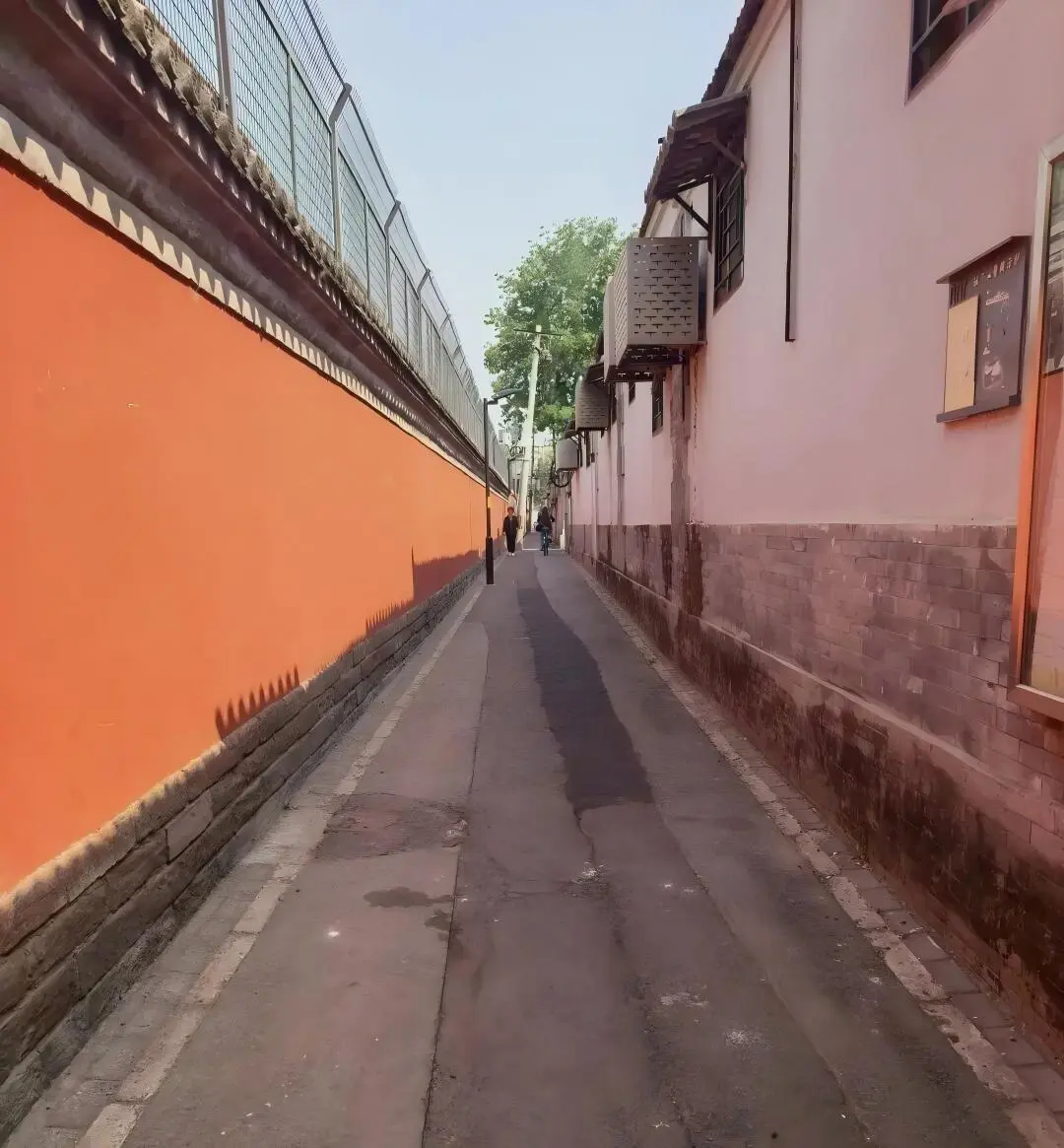
The first time I walked into Guan Shuyuan Hutong, I was drawn by the long stretch of red wall on the east side of the Confucius Temple.
The wall was tall, its red hue in the sunlight as serene as frozen time. Grass sprouted from the cracks in the blue-tiled roof, and to my surprise, even small flowers had bloomed. I stood there for a long time, thinking to myself: This alley must be hiding some story.
Later, I learned that the name of this alley itself conceals layer upon layer of dynastic changes.
Table of Contents
Where is Guanshuyuan Hutong? How do I get there?
Guanshuyuan Hutong is located in the Dongcheng District, Beijing, to the east of the Confucius Temple and the Imperial Academy.
Its southern entrance opens onto Guozijian Street; its western side runs right up against the red walls of the Confucius Temple; the northern section curves eastward, and the exit is on the west side of Yonghegong Street (diagonally across from the main gate of Yonghegong).
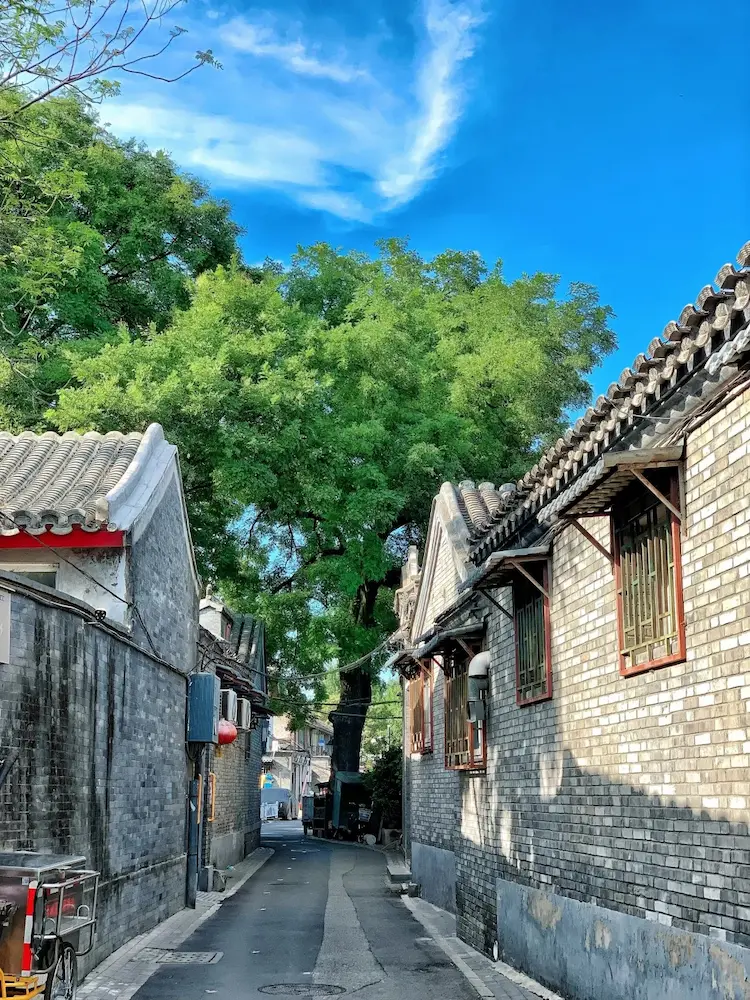
The entire alley is approximately 290 meters long and L-shaped. It is very narrow, with the narrowest section barely wide enough for two people to walk side by side.
The eastern end of the alley connects to Zuan’er Hutong, while the western end connects to Guoxue Hutong. At the northwest corner of the Confucius Temple, there is a fork: one branch connects to Guoxue Hutong, while the other continues northward toward Yonghegong Street.
– Subway Line 2/5, Yonghegong Station: Exit via Exit C (southeast exit) and walk south along Yonghegong Street for about 3 minutes. When you reach the intersection with Guozijian Street, turn right (west) onto Guozijian Street.
Walk for about 2 minutes. Look for a very narrow alley on the north side of the road (on your right), right up against the tall red wall of the Confucius Temple—this is the south entrance to Guanshuyuan Hutong. The entire walk takes about 5–8 minutes.
– Metro Line 5, Beixinqiao Station: Exit via Exit B, walk north along Yonghegong Street for about 10 minutes, then turn left (west) at the intersection with Guozijian Street; you will find the south entrance there as well.
Tip:
If you plan to visit [Yonghe Temple (gong)] first, exit through the main gate (South Gate), cross the street to the west side, then walk north for about 50 meters. The first alley entrance is the north entrance of Guanshuyuan Hutong (the eastern end of the L-shaped alley).
If you visit the [Confucius Temple and Imperial Academy] first, exit through the East Gate of the Confucius Temple, and you’ll immediately see the southern entrance to Guanshuyuan Hutong. Sandwiched between these two major attractions, this hutong offers the perfect “hutong-hopping” route.
Best time to visit: Weekdays from 10:00 AM to 12:00 PM. At this time, the sunlight from the east illuminates the red walls of the Confucius Temple, creating the most vibrant hues, and tour groups haven’t yet flooded Guozijian Street.
In autumn (late October to November), the ginkgo leaves in the Confucius Temple turn yellow, and the hutong is also very beautiful. Avoid weekend afternoons, as visitors from Yonghe Temple and the Imperial Academy tend to wander in, and though the alley is small, it can get crowded.
Budget: Exploring the alley is free. The community mobile library is open to the public at no charge. Tea at Tea Flavor Tea House costs about 50–100 RMB per person (approx. $7–14), and you can stay for the entire afternoon.
The Name of the Hutong: From “Official Pig Pen” to “Official Academy ”
I walked through the hutong twice but couldn’t find a sign explaining its name. Later, after doing some research, I learned that the name of this hutong has undergone a rather interesting evolution.
One theory goes like this: After the Confucian Temple was built during the Yuan Dynasty (1302), an annual ceremony to honor Confucius was held, requiring the preparation of “tailao”—that is, a whole pig, a whole cow, and a whole sheep.
To raise these sacrificial animals, an “official pigsty” was established on the east side of the Confucian Temple, where eunuchs raised the pigs. By the end of the Ming Dynasty, the pigsty had been moved, but the locals continued to refer to the site as “Official Pigsty.”
So why did it later come to be known as “Official Academy”? Because the Chinese characters for “pig” (猪) and “Zhu” (朱)—the red ink used to mark top scholars in the imperial examinations—are homophones, and the character for “hoof” (蹄) is homophonic with “question” (题)—referring to exam questions and the act of having one’s name inscribed on the golden list of successful candidates.
During the Ming and Qing dynasties, pigs actually became a symbol of good luck for the imperial examinations. So, although there were no longer any pigs at this site, the cultural memory remained, and “Official Pigsty” was gradually refined into “Official Academy.”
Another account suggests that during the Qianlong era of the Qing Dynasty (a 1750 map marked the site as “Yushulou”), an “Imperial Book Tower” was built at the northern end of this alley, housing books bestowed by the emperor upon the Imperial Academy.
The Annals of Shuntian Prefecture from the Guangxu era also mentions an “Imperial Book Tower” northeast of the Imperial Academy. Later, the name “Imperial Book Tower” was shortened to “Guan Shuyuan.”
It is worth noting that during the Qing Dynasty, the area around Guanshuyuan Hutong also served as a center for the carving and printing of Buddhist scriptures—scriptures were carved and printed in Tibetan, Manchu, and Mongolian scripts, making it one of the most important centers for Buddhist scripture publication in Beijing at the time.
This explains why this alley is imbued with a unique atmosphere of scholarly refinement and spiritual joy. It shares a close historical connection with the [Yonghe Temple] across the street: Yonghe Temple is a royal Tibetan Buddhist monastery, while Guanshuyuan served as its “back-end workshop” for producing scriptures. I strongly recommend visiting both sites on the same day—the sense of history will be amplified.
Regardless of which theory is correct, the name of this alley is linked to the Confucius Temple and the Imperial Academy (the highest institution of learning in ancient times) located nearby, giving it a strong scholarly atmosphere.
In 2022, Guanshuyuan Hutong was included in the “List of Traditional Place Names for Protection in the Capital’s Core Functional Area,” officially certifying it as a historic place name.
Red Walls and Gray Walls: A Contrast Between Solemnity and Everyday Life
Walking down Guanshuyuan Hutong, the most striking impression is this: on one side are red walls, and on the other, gray walls.
On the west side stands the wall surrounding the Confucius Temple—red, towering, and solemn. Wild grasses and flowers sprout from the blue tiles atop the wall, bearing the marks of time. If you reach out and touch the red wall, you can feel the rough paint and the effects of decades of wind and sun.
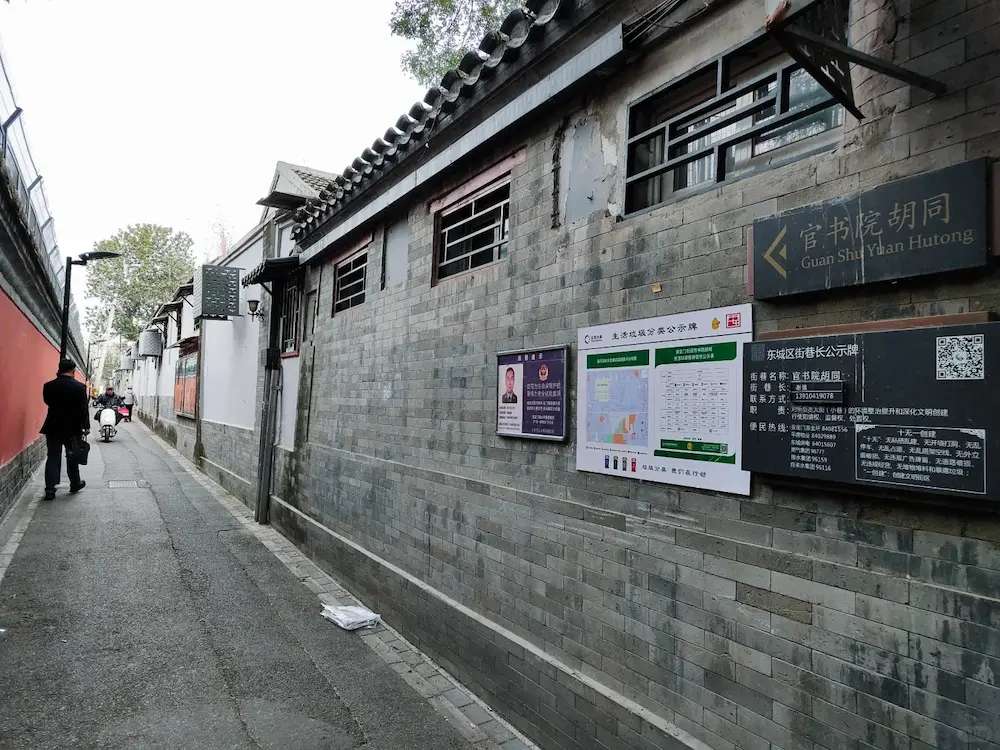
On the east side are the gray walls of ordinary residential courtyards; some are whitewashed, while others reveal the blue-gray bricks beneath. The gatehouses vary in height—those of wealthy families are grand, featuring brick carvings and gate pillars; those of modest households are simple openings in the wall, with clutter piled at the entrance and clotheslines strung across them.
Take a close look at the door sills in front of those old gatehouses—made of stone, the rounded ones belong to military officials, while the square ones belong to civil officials. This is the “status symbol” of old Beijing siheyuan courtyards.
In the old days, whether it was a prince’s mansion or the home of an official, red lanterns were never hung in front of the main gate; at most, white lanterns were used, inscribed with “X Mansion” (where X represents the family surname). Even then, only households with official status were entitled to do so.
When ordinary people asked each other, “Where is your residence?” it was merely a polite formality; their own modest homes were hardly worthy of being called a “mansion.” Therefore, the majority of courtyard gates you see in the hutongs are those without lanterns.
Photography Tip: If you’re captivated by the interplay of light and shadow between Beijing’s imperial red walls and the tree silhouettes in the hutongs, besides this section of red wall at the Confucius Temple, the red wall along the eastern alleyway of Miaoying Temple—which I mentioned in my guide [Miaoying Temple White Pagoda In-Depth Guide: Hidden Photography Spots for Red Walls and White Pagodas in Xicheng District]—can also yield photos imbued with a profound sense of historical destiny. One in the east, one in the west—together, they form Beijing’s two most beautiful historical backdrops.
The red walls symbolize the solemnity of Confucius and the authority of the imperial court; the gray walls represent the daily lives of ordinary people—the mundane details of existence. A single narrow hutong places these two facets of Beijing side by side.
Chawei Tea House: A Cat-Filled Courtyard Hidden at the End of a Narrow Alley
This was my biggest surprise in Guanshuyuan Hutong.
Enter from the southern end of Guanshuyuan Hutong and walk to the middle section. Keep an eye out for a narrower alley on the east side. Turn into it and walk to the end, where you’ll find a small courtyard. Push open the door—and you’ll be greeted by a sudden sense of openness.
Walk north from the southern entrance of Guanshuyuan Hutong (the one on Guozijian Street) for about 150 meters until you see a narrow alleyway on your right—there might be a bamboo sign at the entrance.
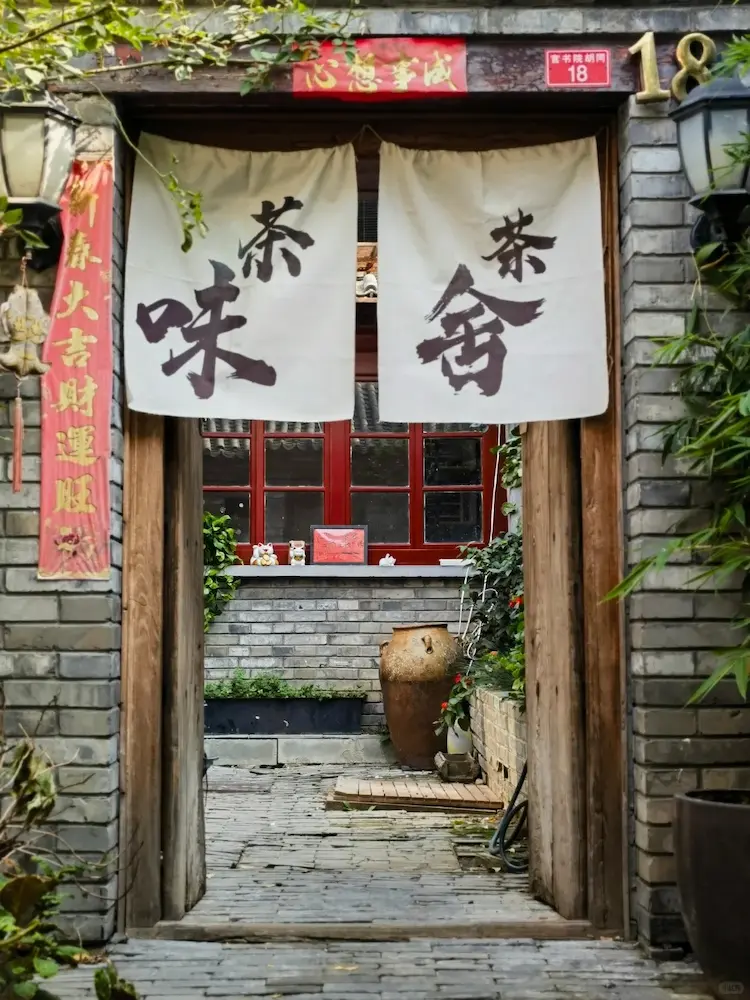
Turn in and walk to the end; “Tea Flavor Teahouse” will be on your right. If you can’t find it, search for “Tea Flavor Teahouse (Yonghegong Branch)” on a map.
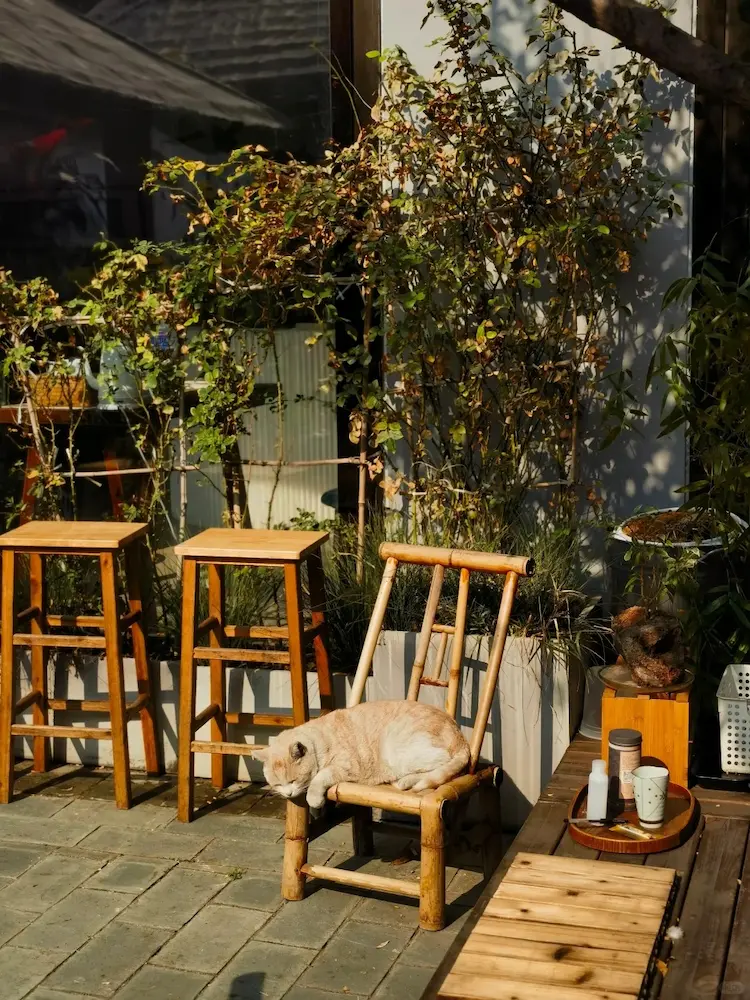
The courtyard isn’t large, but it’s thoughtfully decorated. There are a few stalks of green bamboo, a pomegranate tree (which bears fruit in the fall), a few bamboo chairs lined up along the wall, and a tabby cat lazily basking in the sun.
That cat is named “Liu Liu” and is the “manager” here. Apparently, one-fifth of the customers come specifically to see Liu Liu. When it first arrived, it was no bigger than a palm, but now it’s grown plump and has such a gentle temperament that it lets anyone pet it.
Tips for foreign friends visiting tea houses:
Traditional Chinese tea houses in the hutongs often have doors that look quiet, even closed off. Many Western tourists hesitate at the entrance: Is this place open? Can I go in?
The answer is: just push the door open. The doors are usually unlocked, and there are no complicated entry systems. Once you step inside, the staff will greet you very warmly—by 2026, staff at these independently run teahouses will generally be able to communicate in basic English. You can say “Tea” or “Coffee,” or simply point to someone else’s table and say “This one.”
Prices: About 50–100 yuan (US$7–14) per person for a cup of tea. By 2026, these shops will fully support WeChat Pay and Alipay payments via QR code using international credit cards linked to your account, though cash is also accepted.
There are no formal tea ceremonies here, nor the clatter of mahjong tiles. You can take off your shoes and walk barefoot around the small courtyard, play with the cats, soak up the sun, charge your phone, or write in your travel journal. This is the perfect hidden gem to rest your feet during a stroll through City Walk and experience the purest form of China’s slow-paced lifestyle.
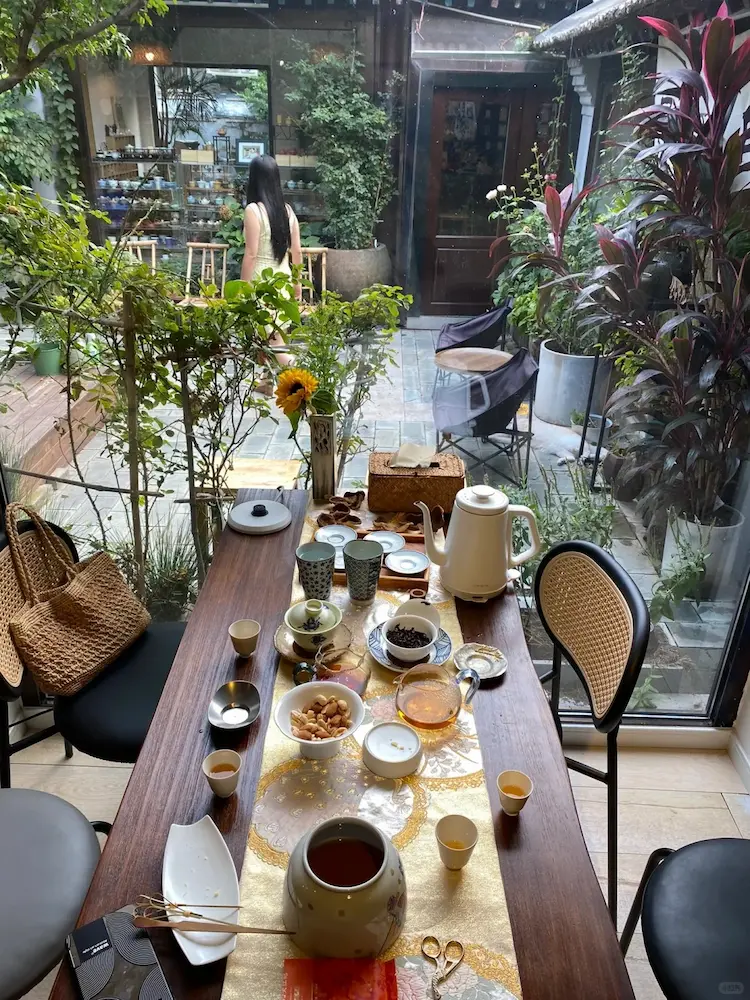
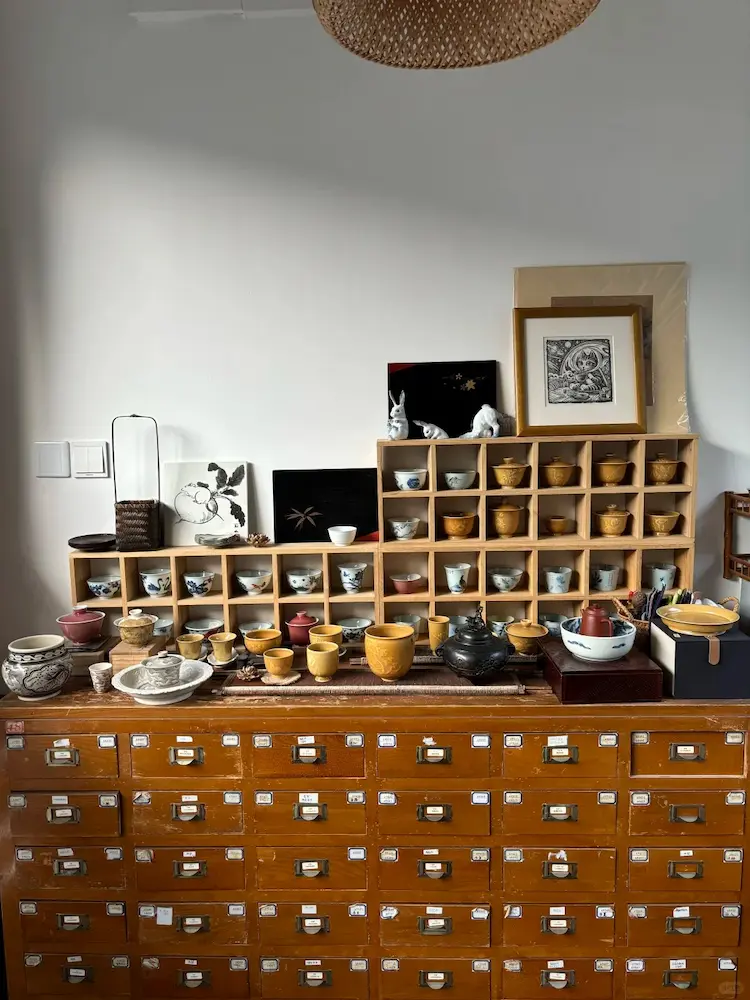
The founder is a young woman named Shiwen. She noticed that many young people view “going to a teahouse” as old-fashioned, boring, or a place filled with the clatter of mahjong tiles. She wanted to help young people rediscover tea.
So she designed the teahouse to appeal to young people:
- No stuffy tea ceremonies (the kind where someone in a cheongsam brews tea in silence, making everyone else feel they can’t speak up);
- No clattering sounds of mahjong;
- Just handcrafted teaware (imperfect but with its own warmth), delicious tea, and quiet afternoons.
There are particularly many foreign tourists. Shiwen says that many foreigners take off their shoes as soon as they walk in and run around barefoot in the small courtyard—in Beijing, it’s incredibly rare to find a small courtyard with such a lively atmosphere.
She designed the tea to resemble a blue-glazed brick. Blue-glazed bricks are the most common building material in Beijing’s hutongs; the Forbidden City and the Great Wall were both built brick by brick. She explained that blue-glazed bricks are highly absorbent, much like Beijing’s culture—they embrace everything.
Hours: Approximately 11:00 AM – 8:00 PM. We recommend visiting in the afternoon when the sun slants into the courtyard, and the cat is at its most relaxed.
Photo Tip: When Liu Liu is asleep, use your phone’s portrait mode to capture her; the blurred background creates a truly “soothing” vibe. Also, the pomegranate tree in the courtyard looks especially photogenic when it’s laden with fruit in the fall.
The Northern Section of the L-Shaped Alley: Entering from Yonghegong Street
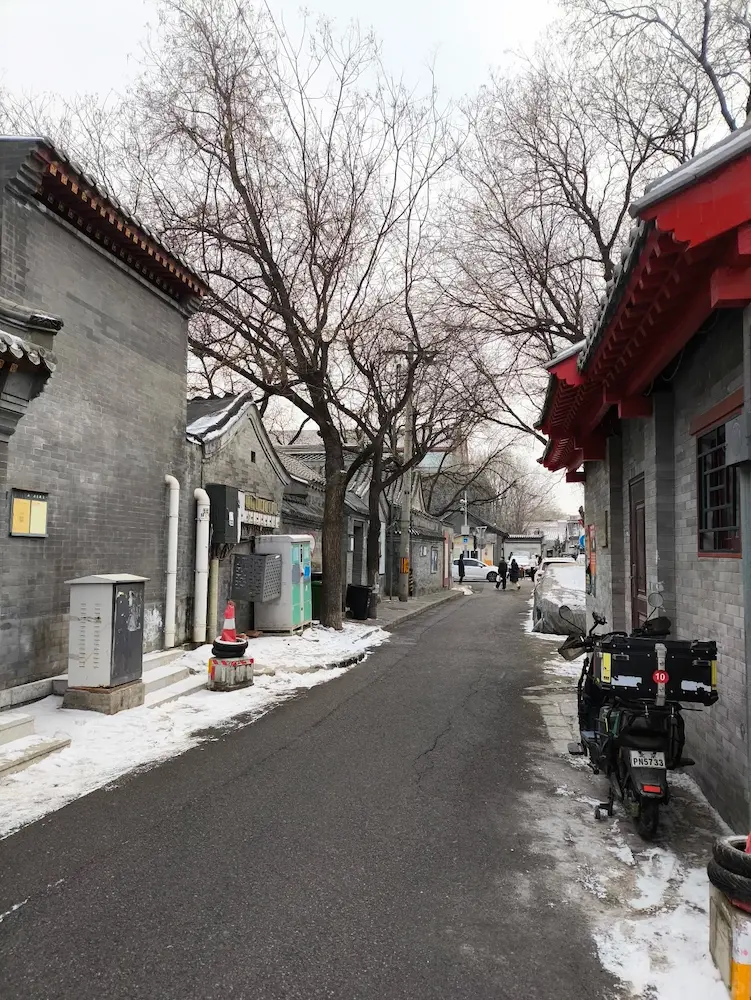
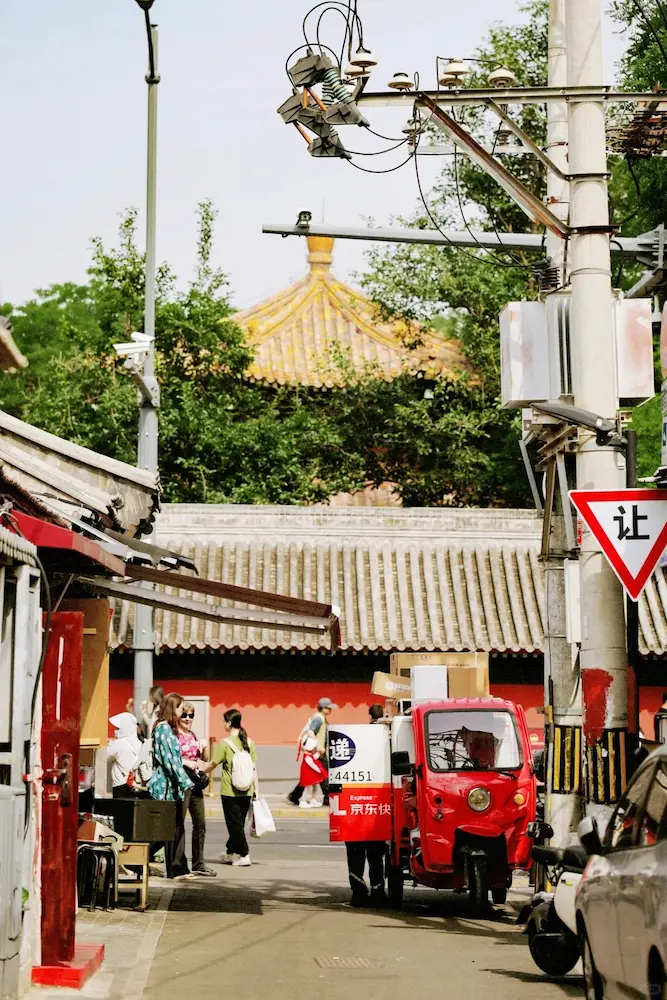
If you enter from the west side of Yonghegong Street, you’ll see the northern entrance to Guanshuyuan Hutong. This section runs east to west; it’s very narrow, with residential courtyards lining both sides. When you reach the corner, turn south to enter the main section, which runs north to south.
Standing here and looking south, the red walls of the Confucius Temple stretch into the distance, interspersed with gray residential buildings. Occasionally, a resident rides by on an electric scooter, or an elderly person drags a small stool out to sit in the sun at their doorstep. This is the most common scene in the alley.
During the Xuantong era of the Qing Dynasty, this alley was also known as “Xiaohoujing.” On a map from the 36th year of the Republic of China (1947), both “Guan Shuyuan” and “Xiaohoujing” were labeled. During the 1965 standardization of place names, “Xiaohoujing” was incorporated into the name, and the alley was officially renamed Guan Shuyuan Hutong.
Photography Tips: Visual Tags for Instagram Influencers
Two Must-Try Shooting Spots in Guanshu Yuan Hutong:
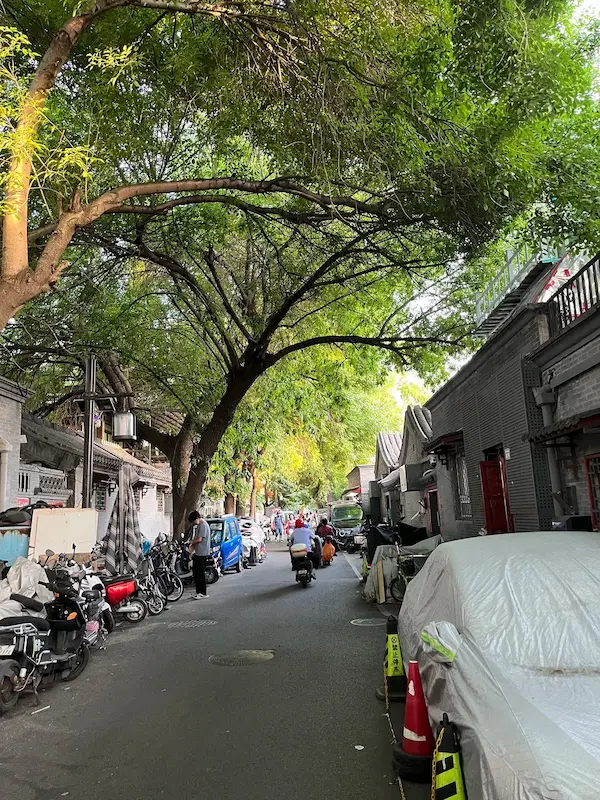
1. The Long Red Wall of the Confucius Temple + the Shady Greenery of the Hutong
- Time: 2:00–3:00 PM, when the sunlight slants in from the west, perfectly highlighting the texture of the red wall.
- Composition Tip: Use your phone’s telephoto lens (3x or 5x zoom) to frame the narrow gray hutong pavement, the green leaves of the ancient locust trees overhead, and the expansive, serene red wall on the side.
- Social Media Hashtag: `#ThePalaceRedWallAndHutongCanopy` (The Red Palace Wall and the Shade of the Hutong) — This is a classic, one-of-a-kind vantage point found nowhere else online.
2. L-Shaped Corner Fork (Northeast Corner of the Confucius Temple)
- Here, the hutong splits: one branch turns toward Guoxue Hutong, while the other continues north. You can wait for the moment when a local elderly man carrying a birdcage or pushing a bicycle passes by to capture the shot.
- Social media hashtag: `#TimelessVisualIntersection` (The timeless visual intersection of ancient and everyday Beijing) — This photo combines a sense of historical depth with the vibrancy of daily life, making it a real crowd-pleaser on Instagram.
Practical Information (Essential Reading for International Visitors)
✅Best Itineraries (Two Routes)
Route 1: Enter at the south entrance of Guozijian Street and exit at the north entrance of Yonghegong Street
1. Start by visiting the [Confucius Temple and Imperial Academy] (approx. 1.5 hours).
2. Exit through the east gate of the Confucius Temple and head straight to the south entrance of Guanshuyuan Hutong.
3. Walk north, taking in the red and gray walls along the way, as well as the No. 30 Community Mobile Library.
4. Find Chawei Tea House (located in a small alley), go inside to enjoy tea and play with the cats (approx. 1 hour).
5. Continue north until you reach an L-shaped corner, then turn east and exit through the north gate; Yonghegong Temple is directly across the street.
6. Explore [Yonghegong Temple] (approx. 1 hour).
Route 2: Enter via the north gate of Yonghegong and exit via the south gate of Guozijian Street
– This route follows the opposite order and is ideal for visiting Yonghegong in the morning (when it’s less crowded), then entering the hutongs via the north gate and exiting via the south gate to explore Guozijian Street.
✅Time and Budget
| Item | Duration | Cost (RMB) | Cost (approx. USD) |
| Guan Shuyuan and Hu Shu Walking Tour | 30 minutes | Free | Free |
| Mobile Community Library | 15–30 minutes | Free | Free |
| Tea at Chawei Teahouse | 1–2 hours | 50–100 RMB/person | $7–14 |
| Confucius Temple and Imperial Academy Admission | 1.5 hours | 30 RMB (peak season) | $4.2 |
| Yonghe Temple Admission | 1 hour | 25 RMB | $3.5 |
✅Payment and Internet
– Payment Tip for 2026: Chawei Tea House accepts WeChat Pay and Alipay via QR code scanning. You can use accounts linked to international credit cards.
If you haven’t linked your card yet, download the international version of Alipay or WeChat before your trip and follow the prompts to add your Visa or Mastercard. (Check out my article: 2026 Complete Payment Guide for Foreign Visitors in Beijing: Step-by-Step Tutorial on Setting Up Alipay and WeChat Pay)
– Internet: 4G/5G coverage is available throughout the hutongs. We recommend purchasing an eSIM or a local Chinese SIM card in advance.
✅Photography and Etiquette
- Red Wall: Between 2:00 and 3:00 p.m., the sun shines at an angle on the red wall, making the colors most vibrant—ideal for portraits. However, please do not climb on or deface the wall.
- Residential Courtyards: Do not enter private courtyards. It’s fine to take photos from outside the gate, but if the gate is open, do not lean inside.
- Tea Wei Tea House: Push the door open directly before entering the courtyard (don’t hesitate). You may take photos inside, but please do not use a flash to disturb other guests. Before petting the cat, ask the staff, “May I pet Liu Liu?”—Liu Liu has a gentle temperament, but please respect it.
✅Restrooms
There are no public restrooms in Guanshuyuan Hutong. The nearest public restrooms are on Guozijian Street (near the south entrance) or on Yonghegong Street (near the north entrance). Chawei Tea House has restrooms, but we recommend using them only after making a purchase.
✅Other Recommendations Nearby
After exploring Guanshuyuan Hutong, you can also walk to:
- Wudaoying Hutong (west of Yonghegong Temple, a hub for artsy shops and restaurants; 5-minute walk)
- Fangjia Hutong (features an art district housed in a repurposed old factory; 10-minute walk)
FAQ
Guan Shuyuan Hutong is so short that you could walk through it in twenty minutes. Yet it is so rich in history that this narrow alley, less than 300 meters long, holds a Yuan Dynasty pigsty, a Qing Dynasty imperial library, a Republican-era well, a free library from 2009, a trendy teahouse from around 2015, and a plump cat.
I love strolling beneath the red walls, admiring the wildflowers on the parapets and the elderly people basking in the sun by the gray walls. This alley lacks the bustling energy of Nanluoguxiang or the contrived bohemian vibe of Wudaoying. It simply sits quietly, nestled between the Confucius Temple and Yonghegong, living its own quiet life.
If you come to Beijing, why not spend an afternoon walking through the Yonghe Temple, Guanshuyuan Hutong, and the Confucius Temple and Imperial Academy? Have a cup of tea at the Tea Scent Tea House, give “Liu Liu” a pat, and then exit through the north gate—just in time to catch the golden roof of Yonghe Temple as the sun sets.
That scene is one you’ll remember for a long time.