Beijing’s Duanmen: A World Heritage Site on the Central Axis—The 600-Year-Old Ceremonial Gate Between Tiananmen Square and the Forbidden City (2026)
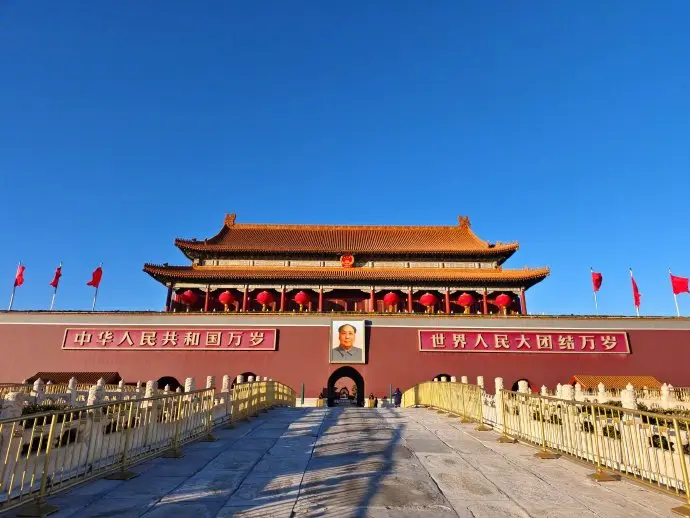
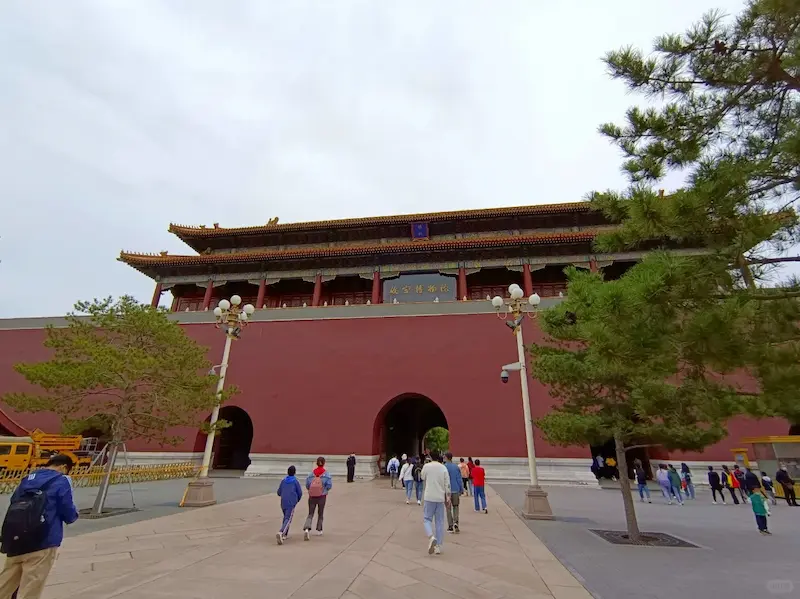
Walking north from Tiananmen Square and passing through the archway, you’ll see a gate tower that looks almost exactly like Tiananmen Gate. The vast majority of tourists walk straight through Duanmen without even looking up, heading straight for Wumen Gate and the Forbidden City.
But what they don’t realize is that they’ve just passed through the most unique gate on Beijing’s Central Axis. It is one of the few gates along the axis that isn’t connected to city walls on either side, and it served as the place where emperors stored their ceremonial regalia and officials adjusted their robes.
It also serves as the entrance for VIP guests during today’s military parades. It charges no admission fee and has no noisy tour groups, yet it has stood quietly for 600 years.
On July 27, 2024, the Duanmen Gate was inscribed on the World Heritage List as part of “Beijing’s Central Axis—A Masterpiece of the Order of China’s Ideal Capital.”
It’s accessible via Metro Line 1, admission is free, and it’s well worth taking a second look if you happen to pass by.
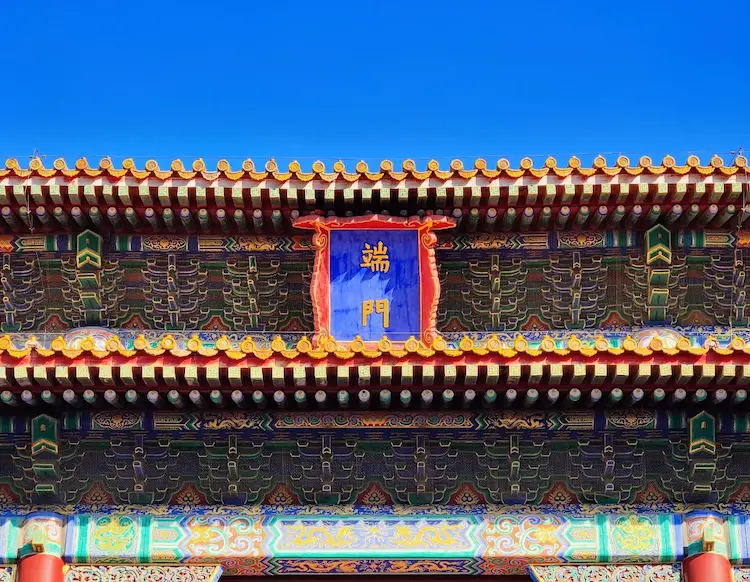
Table of Contents
Before You Go, Make Sure You Know These Things
Admission Fee: Duanmen Square is completely free; no ticket is required.
How to Enter: Duanmen is located within the security checkpoint area of Tiananmen Square. To enter Tiananmen Square, you must make a reservation in advance—use the WeChat mini-program “Tiananmen Square Visit Reservation” to book 1–7 days ahead of time. If you’ve already booked a visit to attractions such as the Forbidden City, the National Museum, or the Tiananmen Gate Tower, you can also enter the square area by presenting your booking confirmation.
Step-by-Step Security Check and Route Guide for Foreign Visitors at Duanmen:
1. Original Identification Required: To enter the Tiananmen Square area and proceed to Duanmen, you must carry your original passport (Passport Original) with you at all times. Screenshots or photocopies will not be accepted at security checkpoints.
2. One-way, non-reversible route: After crossing the Jinshui Bridge at Tiananmen and passing through the archway of the Tiananmen Gate Tower to reach Duanmen, the route proceeds northward (toward the Meridian Gate of the Forbidden City). If you wish to return to the south side of Tiananmen Square, you cannot retrace your steps and must take a detour to exit the area.
3. Forbidden City Wumen Ticket Checkpoint: Wumen is located 150 meters north of Duanmen Square. If you have reserved a Forbidden City ticket (requires booking 7 days in advance), simply present your passport after passing through Duanmen to have your ticket scanned at Wumen and enter the Forbidden City.
Opening Hours: Duanmen Square itself is open all day, but entry to Tiananmen Square is subject to time restrictions; you must enter according to the time slot specified in your reservation.
Best time to visit: Early morning (fewer visitors, soft light) or late afternoon (when the setting sun casts a warm golden glow on the yellow glazed tiles of the End Gate, making it the perfect time for photos).
Recommended duration: 15–30 minutes (walking through the End Gate, taking photos, and soaking in the atmosphere).
How to Get There:
- Subway (Recommended): Take Line 1 and get off at Tiananmen East Station or Tiananmen West Station. After exiting the station, go through security at Tiananmen Square, pass through the Tiananmen Gate, and walk north until you reach your destination.
- Bus: Take Buses 1, 2, 5, 8, 10, 20, 52, etc., and get off at the “Tiananmen East” or “Tiananmen West” stop.
- By Car (Highly Not Recommended): The area around Tiananmen Square is one of the most strictly regulated traffic zones in Beijing.
Dress Recommendations: Wear comfortable flat shoes. The entire route from Tiananmen Gate to Duanmen Gate and then to Wumen Gate is a considerable distance on foot.
Photography: Absolutely. Standing on the platform of Duanmen Gate, you’ll find excellent vantage points for taking photos—both looking south toward Tiananmen Gate and north toward Wumen Gate.
What Is the Duanmen Gate? Why Is It Called the “Gate of Etiquette”?
The Duanmen Gate was first built in the 18th year of the Yongle reign of the Ming Dynasty (1420), making it the same age as the Forbidden City and Tiananmen Gate.
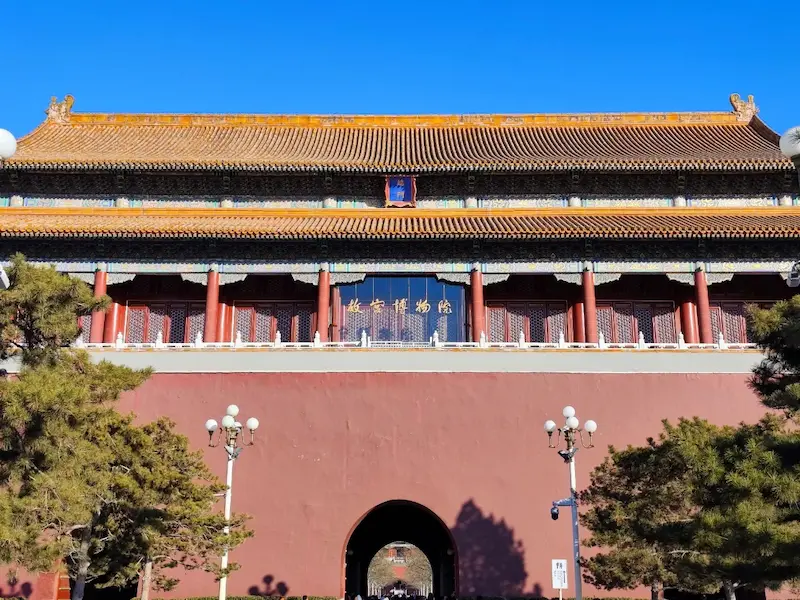
It is almost identical to Tiananmen Gate—both feature a double-eaved hipped-and-gabled roof, yellow glazed tiles, a width of nine bays, and a depth of five bays, subtly reflecting the imperial ritual system of the “Supreme Sovereign of Nine-Five.”
However, the Duanmen has one unique characteristic: it is one of the few city gates along the central axis that is not connected to the city walls on either side. Tiananmen is connected to the Imperial City wall, and the Wumen is connected to the Palace City wall; only the Duanmen stands alone between the two walls.
It serves no defensive purpose, is not used for opening or closing, and does not house a garrison—its sole purpose is ceremonial.
So why build a gate that isn’t connected to the city wall?
This brings us to the ancient Chinese system of the “Five Gates of the Son of Heaven.” As stated in *The Rites of Zhou*: “The Son of Heaven has five gates; the feudal lords have three.”
During the Ming Dynasty, the Imperial City of Nanjing featured Hongwu Gate, Chengtian Gate, Duan Gate, Wumen Gate, and Fengtian Gate as the Five Gates of the Son of Heaven.
When the capital was moved to Beijing during the Yongle era, this layout was retained. Duanmen existed precisely to complete the total of “five gates.”
The character “端” (duan) itself explains everything—“端” means upright and solemn. When officials arrived here, they had to adjust their attire and compose their minds, completing the psychological transition from the “secular world” to the “imperial sanctuary.”
For 600 years, countless people have taken a deep breath here before daring to take that next step northward.
Cross-cultural interpretation: You can think of the Duanmen as an “ancient version of a security checkpoint plus a departure lounge.” Tiananmen Square is the airport entrance, the Wumen is the boarding gate, and the Duanmen lies between the two—a place to tidy one’s appearance, await the ceremonial procession, and prepare mentally. The only difference is that this “departure lounge” has stood here for 600 years.
What Was the Duanmen Gate Used For? Its Three “Roles” Reveal Its Significance
Role 1: The “Grand Repository” of Imperial Ceremonial Regalia
Inside the Duanmen Gate tower, all the ceremonial regalia used by the emperor for grand ceremonies, sacrificial rites, and imperial processions—including parasols, banners, ritual vessels, weapons, and the imperial carriage—were stored year-round.
Whenever a major ceremony took place, the ceremonial paraphernalia would be brought out from the Duanmen and lined up along the Imperial Processional Way all the way to Tiananmen Gate, with banners fluttering in the wind, stretching for two huali.
Foreign envoys arriving to pay their respects would also often wait in front of the Duanmen to be summoned for an audience. The Duanmen was essentially the “ceremonial antechamber” of the Forbidden City.
When the ceremony began, bells would ring from the Duanmen tower, and drums would be beaten at the Wumen Gate, their sounds echoing in unison. The sound of the bells would travel southward from Duanmen, echoing throughout the entire city—marking the official commencement of a grand imperial ceremony.
Role 2: The “Waiting Room” for Officials Attending Court
Between Tiananmen and Duanmen, as well as between Duanmen and Wumen, there were official waiting halls on both sides. During the Ming and Qing dynasties, the Six Departments (the administrative offices for Personnel, Revenue, Rites, Military, Justice, and Works) were located here.
When civil and military officials attended court, they would arrive at Duanmen and wait here to adjust their attire and headgear, maintaining silence. When the emperor went on a procession, he would also board his imperial palanquin here, marking the ceremonial starting point. Duanmen has witnessed countless turning points in people’s destinies.
Role 3: The “Entrance” for National Celebrations
Today, the Duanmen Gate continues to serve ceremonial functions. During major national celebrations and military parades, distinguished guests from China and abroad enter through the Duanmen Gate and proceed to the viewing stand.
Why choose the End Gate?
Because this route aligns with the traditional Chinese architectural aesthetic principle of “suppressing before elevating” —from the grandeur of Tiananmen Square to the sense of containment at the End Gate Square, and then to the openness of the Meridian Gate Square.
This interplay of containment and expansion serves to highlight the majesty of the Son of Heaven. As guests walk through the End Gate, every step is steeped in history.
Cross-cultural interpretation: You can think of the Duanmen’s function as a combination of“the Changing of the Guard passage at Buckingham Palace and the waiting hall at Westminster Abbey”—it serves as both the starting point of the ceremony and a spatial transition. The only difference is that the Duanmen has stood here for 600 years, making it nearly 200 years older than Buckingham Palace.
What Can You See from the Duanmen Gate?
1. Duanmen Gate Tower (Almost Identical to Tiananmen Gate)
The Duanmen Gate Tower stands 23.8 meters tall and has a floor area of over 1,300 square meters. It features a double-eaved hipped-and-gabled roof with yellow glazed tiles; the ridge is adorned with dragon-shaped finials at both ends, and nine mythical beasts are arranged along the eaves.
Cultural Insight:
What do the “nine mythical beasts” signify? In ancient Chinese architecture, the number of small beasts arranged along the eaves directly reflected the status of the building’s owner.
The Hall of Supreme Harmony in the Forbidden City features 10 (the most in all of China), while the Duanmen has 9—one fewer than the Hall of Supreme Harmony, but more than the vast majority of other buildings. These mythical beasts are not mere ornaments, but a measure of status.
2. Sundial and Standard Measure (On both sides of the passageway north of the End Gate)
On either side of the passageway north of the End Gate leading to the Meridian Gate, one artifact is displayed on each side—a sundial on the east and a standard measure on the west. The sundial observes celestial phenomena and marks the hours, while the standard measure unifies measurements and standardizes weights. One governs celestial time, and the other regulates terrestrial measures, symbolizing the emperor’s authority over time and space.
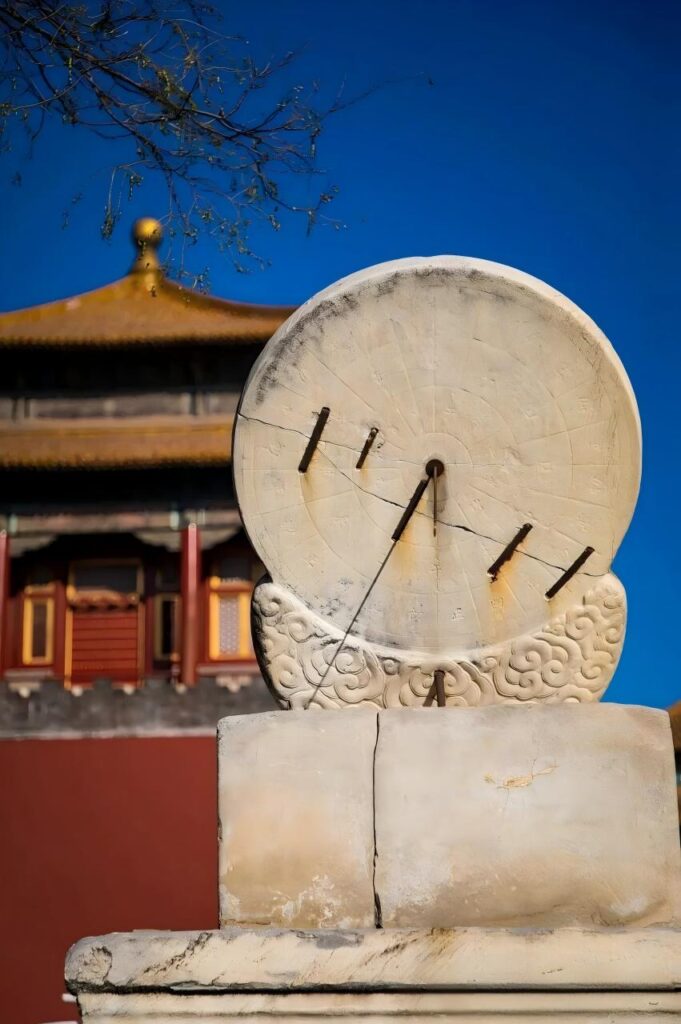
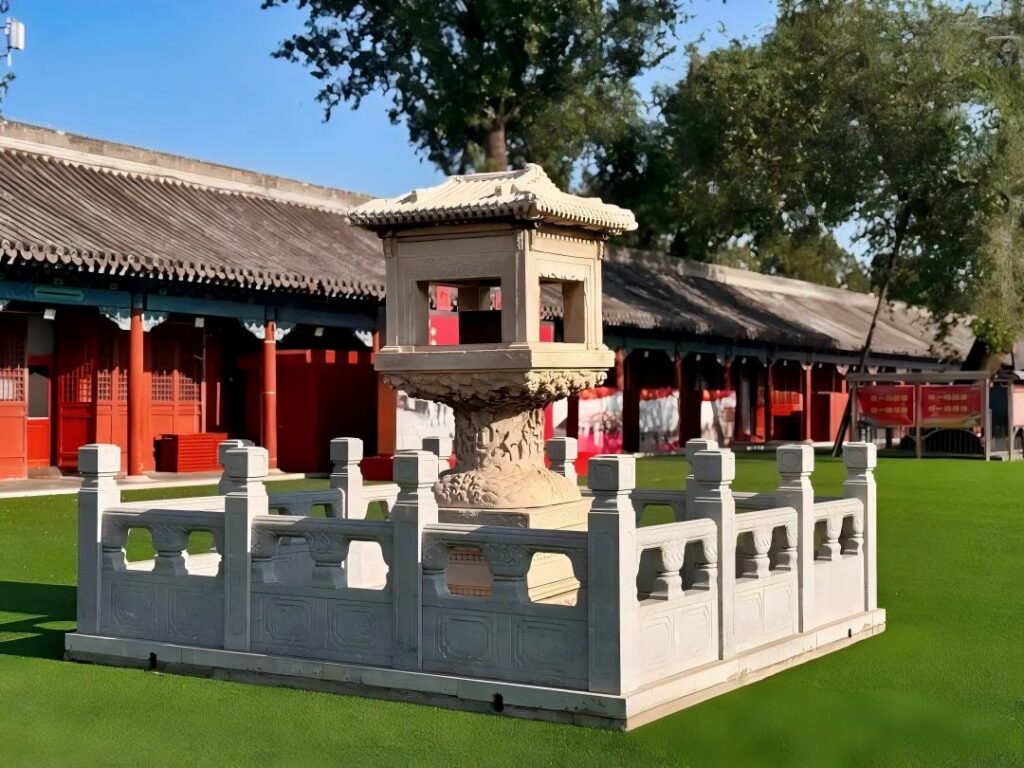
You can think of the sundial and the standard measure outside the Main Gate as ancient China’s “Imperial Greenwich Observatory and National Bureau of Standards and Metrology.”
The sundial symbolizes control over time (celestial phenomena), while the standard measure represents authority over space and trade (weights and measures).
Placed together, they proclaim to all officials coming to pay their respects: The emperor holds the ultimate authority over both time and space.
3. Duanmen Square—A“Transition Point” from Hustle and Bustle to Serenity
Standing on the Duanmen rampart:
- Looking south: The crowds on Tiananmen Square appear as tiny as ants
- Looking north: The three gate towers of Wumen resemble a giant door standing half-open
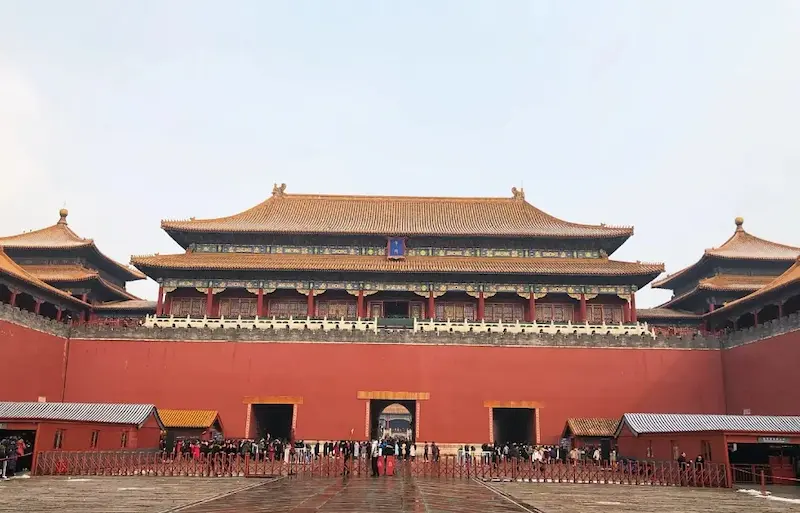
Duanmen stands precisely at the boundary between two distinct atmospheres—on one side, the vibrant energy of the secular world; on the other, the solemn authority of the imperial court.
Cultural Interpretation: This is what makes Duanmen so remarkable. Through a single city gate and a stretch of plaza, it facilitates the psychological transition from the “city” to the “imperial palace.” When you walk through Duanmen, you are, in fact, crossing an invisible boundary.
Recommended Tour Itinerary (approx. 30 minutes)
Starting Point: Exit at Tiananmen East Station or Tiananmen West Station on Subway Line 1, then pass through security at Tiananmen Square.
First Stop: Walk through the archway of the Tiananmen Gate Tower to enter the Imperial Processional Way between Tiananmen Gate and Duanmen Gate (approx. 5 minutes).
Second Stop: You’ll see the Duanmen Gate Tower directly ahead—it looks almost exactly like Tiananmen Gate (approx. 5 minutes). Stop to take a photo.
Third Stop: Pass through the archway of Duanmen Gate to enter Duanmen Square (approx. 5 minutes). Stand in the center of the square, looking south toward Tiananmen Gate and north toward Wumen Gate—take a moment to experience the transition “from the secular to the solemn.”
Fourth Stop: Walk to the passageway on the north side of Duanmen and look for the sundials and the standard measure of grain on the east and west sides (about 5 minutes).
Afterward: Cross Duanmen Square and continue north for 150 meters to reach Wumen—the entrance to the Forbidden City. It’s only two hundred steps from Duanmen to Wumen, but these two hundred steps span a distance of six hundred years.
Photography Guide
| Shooting Angle | Location | Best Time to Shoot | Tips |
| Full-front view of Duanmen | The Imperial Avenue between Tiananmen Gate and Duanmen | Early morning or evening | Stand in the center of the Imperial Avenue and shoot southward to capture both Tiananmen Gate and Duanmen in the same frame |
| End Gate and Meridian Gate in the Same Frame | Northern end of End Gate Square | Morning | Stand on the north side of End Gate Square and shoot northward to capture the End Gate tower and the three arched gateways of the Meridian Gate |
| View Looking Back from the Duanmen Platform | On the Duanmen Platform | Evening | Stand on the Duanmen Platform and shoot southward to capture the crowds on Tiananmen Square and Zhengyangmen in the distance |
| Ancient Cypress Trees and Duanmen | On both sides of the Duanmen Platform | All day | The ancient cypress trees on the platform, with their gnarled and vigorous branches, create a striking visual contrast against the yellow tiles and red walls |
Connecting Nearby Attractions: A Half-Day Tour of Tiananmen Square and the Forbidden City
Duanmen Gate is located between Tiananmen Square and the Forbidden City, allowing you to visit multiple attractions on foot:
| Attraction | Direction | Walking Time | Highlights | Admission |
| Tiananmen Gate Tower | South (walk back after passing through Duanmen) | 2 minutes | Site of the founding ceremony of the People’s Republic of China; visitors can climb the tower | 15 yuan (reservation required) |
| Tiananmen Square | South | 10 minutes | The world’s largest urban square | Free (reservation required) |
| The Forbidden City | North side (through Duanmen Square) | 5 minutes | Imperial palace of the Ming and Qing dynasties, a UNESCO World Heritage Site | 40-60 yuan (reservation required 7 days in advance) |
| National Museum of China | Southeast side | 15 minutes | China’s largest national museum | Free (reservation required) |
Recommended Half-Day Itinerary (approx. 3–4 hours):
Exit at Tiananmen East Station on Subway Line 1→Pass through security to enter Tiananmen Square→Dianmen Gate (30 minutes—take photos and experience the “Gate of Ceremonial Proclamation”)→Continue north to enter the Palace Museum (2–3 hours—reservation required 7 days in advance)→End
If you want to explore Beijing’s Central Axis in depth, heading either north or south: Duanmen is located at the heart of the Central Axis. It serves as a key node among the Five Imperial Gates along the axis. If you’d like to fully explore this 7.8-kilometer “spine” of the city, check out the comprehensive Central Axis guide prepared by Laohuaji:
Looking south: You can visit the [“Jinshui Bridge Outside Tiananmen Gate: 2026 Guide to the 7 Imperial White Marble Bridges on the Central Axis”], where a single misstep at the entrance could have cost you your head due to its strict hierarchy, as well as the [“Zhengyangmen City Gate Tower (Qianmen Tower): The Foremost of the Nine Gates—2026 Latest Guide”], which has reopened after a six-year closure;
Look north: Make your way through the Forbidden City to reach [“Beijing’s Wanning Bridge: A 700-Year-Old Living Fossil on the Central Axis”], where the Grand Canal intersects with the Central Axis.
FAQ
Many tourists who come to Beijing head straight for the Forbidden City and Tiananmen Square, yet few realize that between the two lies a city gate that most people overlook. It looks almost exactly like Tiananmen Gate, yet it never attracts any attention. Tourists hurry past it without even looking up.
Yet for 600 years, the Duanmen has stood there. It charges no admission fee, has no noisy tour groups, and makes no fanfare or publicity. It is simply a gate—one that reminds you, “From here on, you are no longer the person you were just a moment ago.”
On July 27, 2024, Duanmen, as part of Beijing’s Central Axis, was officially inscribed on the World Heritage List. It has finally received the attention it deserves.
If you visit Beijing, slow down. After passing through Tiananmen Gate, don’t rush straight to Wumen Gate. Stop in front of Duanmen, look up at its yellow glazed tiles, and feel the transition from bustle to solemnity.
Think about the people who have walked this same path as you—Zhang Juzheng walked here, Wei Zhongxian walked here, Emperor Chongzhen walked here, Emperor Kangxi walked here, and Puyi walked here.
Just like you, they all once paused before this gate and took a deep breath.