Guide to Beijing’s Shatan Houjie: From the Horse God Temple to the Imperial University of Peking (2026)
> Shatan Houjie, a 300-meter-long alley, holds the history of modern Chinese higher education.
During the Ming Dynasty, this site housed the Imperial Temple of the Horse God; in the Qing Dynasty, it became the residence of one of Emperor Qianlong’s daughters; and in 1898, during the Hundred Days’ Reform, it was converted into the Imperial University of Peking—China’s first national university and the predecessor of Peking University.
The Marxist Studies Society was founded here, and Mao Zedong once listened to a speech by Li Dazhao at this very location.
The entire tour is free of charge, with no admission fee required, and it is a 10-minute walk from the Forbidden City.
Table of Contents
Practical Information (Must-Read Before Departure)
| Item | Details |
| Name | Shatan Houjie (Pinyin: `Shatan Houjie`, literally meaning “the street behind Shatan.” Shatan does not refer to a beach but is the name of a location outside the Imperial City of Beijing during the Ming Dynasty, named after the sand and gravel used to build the palace that was stockpiled there) |
| Address | Dongcheng District, Beijing; runs east from Shatan North Street to Jingshan East Street, with a total length of approximately 323 meters |
| Subway | Line 8, National Art Museum of China Station (`National Art Museum of China Station`). Take Exit A, walk west along Wusi Avenue for about 3 minutes to Shatan Intersection (the junction of Shatan North Street and Shatan South Street), turn right onto Shatan North Street, walk a few steps north, then immediately turn left into the east entrance of Shatan Houjie. The entire walk takes about 5 minutes and is very convenient. |
| Bus | Take Buses 101, 103, 109, 111, etc., and get off at the “Shatan Road Intersection West” stop |
| Driving | Not recommended. There is a lack of parking for visitors in the surrounding area. If taking a taxi, use the destination “ West Entrance of Shatan Houjie (Jingshan East Street).” |
| Admission | Free throughout. The former site of Peking University Second Hospital (hosting the “ Great Beginning ” special exhibition) It is free, but reservations are required. |
| Opening Hours | The alleyway is open 24 hours a day. Former site of Peking University Second Hospital: Tuesday–Sunday 9:00 AM–5:00 PM (last entry at 4:00 PM); closed on Mondays. Please do not attempt to enter during closing hours. |
| Reservation Information | Reservations for the Former Site of Peking University Second Hospital (located within Courtyard 55) must be made in advance via the “ Great Beginning” Special Exhibition, WeChat official account, or the “ Peking University Red Building” WeChat official account. The platform requires real-name registration; it is recommended to book 3–7 days in advance. If international visitors encounter issues with the WeChat official account’s real-name verification system failing to recognize their passport, they may proceed directly to the visitor service counter or security office at the entrance of Courtyard 55 with their original passport. On-site staff will assist with manual registration and booking, and entry is typically granted without issue; there is no need for undue concern. |
| Best Times | Before 10:00 AM or after 3:00 PM on weekdays. The morning light is ideal for exploring the alleys before heading to the Forbidden City or Jingshan Park; the afternoon is less crowded, perfect for taking your time with the exhibition before grabbing a coffee nearby. |
| Recommended Duration | Approximately 1–1.5 hours for the former site of Peking University Second Hospital, plus about 30 minutes for wandering the alleys |
| Dress Code | Wear comfortable flat shoes. The streets are flat, but the old buildings and courtyards within Compound No. 55 are paved with old bricks, so we recommend wearing shoes that fit well. |
| Budget Guide | The former site of Peking University Second Hospital is free (reservation required). Dining in the surrounding area costs approximately 30–80 RMB (about $4–11) per person |
| Photography | Photography is permitted in most exhibition areas within the former site of Peking University Second Hospital, but flash photography is prohibited. The interior of the old buildings serves as a centralized exhibition area for National First-Class Movable Revolutionary Cultural Relics; flash photography can cause irreversible damage to paper artifacts. Follow on-site instructions in specific areas. Please do not photograph the interiors of some residential courtyards. |
| Language Support | Exhibitions at the Peking University Second Hospital Historic Site are primarily in Chinese, with English descriptions available for select key exhibits. We recommend using a mobile translation app for assistance. A small number of volunteers are on-site, but most are student volunteers with limited proficiency in both Chinese and English. |
> Friendly Reminder: Shatan Houjie and its surrounding areas (Wusi Avenue, Jingshan East Street) are among the busiest traffic zones in Beijing, with severe congestion during morning and evening rush hours. We recommend taking the subway whenever possible. Many residents in these streets and alleys are native Beijingers; please remain quiet and respect their privacy.
Building No. 55 also houses offices of higher education publishing institutions such as the People’s Education Press. The exhibition is limited to the designated areas; do not enter the office buildings without permission.
The Origins of Shatan Houjie: From the Ming Dynasty’s Horse God to the Qianlong Emperor’s“Princess Buddha’s Hand”
During the Ming Dynasty, this area fell under the jurisdiction of the Imperial Stables Bureau. As one of the twenty-four eunuch departments of the Ming Dynasty, the Imperial Stables Bureau wielded immense power.
While ostensibly responsible for raising and training the emperor’s horses, it also commanded a palace guard force directly under its command, standing on equal footing with the Ministry of War.
To ensure the health of the imperial horses, in the 11th year of the Zhengtong reign (1446), the court constructed a Horse God Temple adjacent to the Imperial Stable Bureau and held regular rituals to worship the Horse God.
The Qing Dynasty retained this site; though the temple’s structure remained, its functions were gradually encroached upon by the residences of the powerful and privileged.
During the Qianlong era, the area surrounding this Temple of the Horse God was granted to Fu Heng, one of the Qing Dynasty’s most distinguished ministers, for his military achievements.
Fu Heng was the younger brother of Empress Fuca, the consort of Emperor Qianlong, and served as the historical inspiration for Fu Lun, the father of Fu’er Kang in the TV series The Princess Returning Pearl.
As a member of the Manchu Yellow Banner, he distinguished himself in battle by leading campaigns to subdue the Zunghar and the Greater and Lesser Jinchuan regions.
Emperor Qianlong placed great trust in him and granted him the estate where the Horse God Temple stood for his residence.
In the 25th year of the Qianlong reign (1760), the Emperor’s fourth daughter, Princess Heshe Hejia, married Fu Heng’s son, Fu Long’an. The Qianlong Emperor granted special permission to expand the Princess’s residence on the site of the old Horse God Temple for his daughter and son-in-law.
It is said that the princess was born with webbed fingers resembling a Buddha’s hand, earning her the popular nickname “Princess Buddha’s Hand.” Tragically, she had a short life and passed away just seven years after her marriage, at the age of 23.
Literary accounts from the mid-to-late Qing Dynasty offer vivid descriptions of this Fourth Princess’s Mansion: “Its vast expanse and magnificent architecture made it the crown jewel of Beijing’s residences in its day.”
Regrettably, as the princess and her prince consort passed away so young, this grand estate stood uninhabited for most of its existence, remaining vacant for over a century.
Thus, a premier princess’s residence lay quietly at the foot of the Imperial City for the better part of the Qing Dynasty, awaiting the next chapter of history.
The Imperial University of Peking: The Birth of China’s First Modern University
In 1898, the earth-shaking Hundred Days’ Reform—a pivotal event in modern Chinese history—began. Emperor Guangxu sought to save the crumbling Qing Dynasty through a series of new policies.
Among the reforms implemented over the course of just 103 days, the most significant was the abolition of the imperial examination system and the establishment of modern schools.
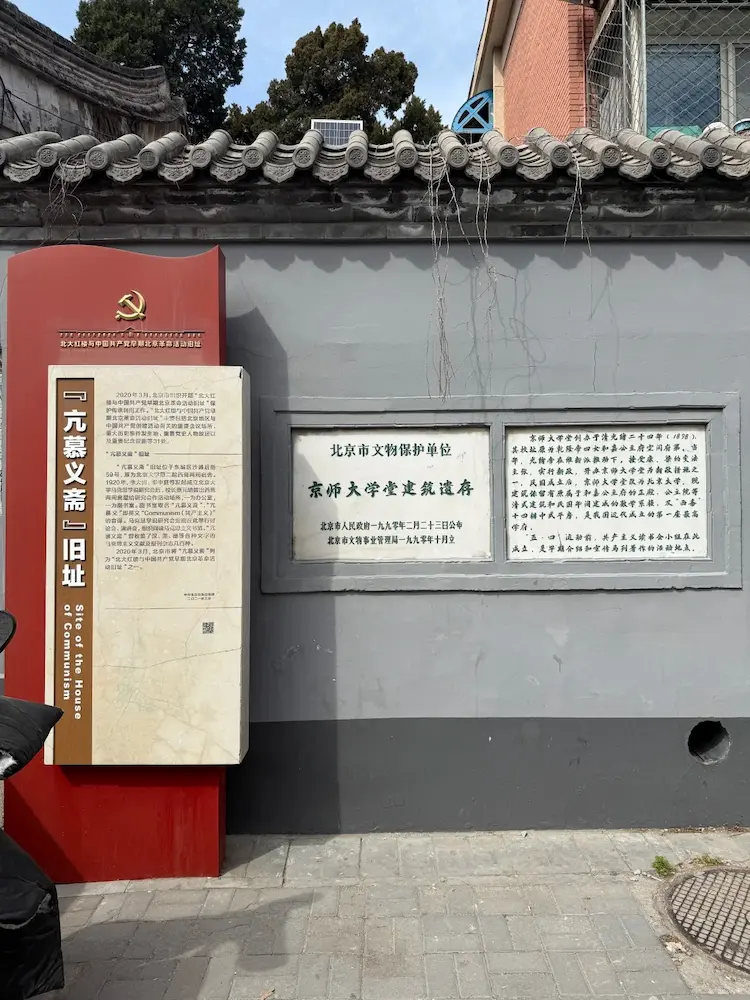
Emperor Guangxu issued an imperial edict establishing the Imperial University of Peking on the site of the former Princess’s Mansion, appointing his teacher Sun Jianai as the first Minister of Education—a position equivalent to the founding president of Peking University.
In less than 100 days, the Hundred Days’ Reform was crushed by Empress Dowager Cixi. Emperor Guangxu was imprisoned, Kang Youwei and Liang Qichao fled overseas, and the “Six Gentlemen of the Hundred Days’ Reform” were executed at Caishikou. Nearly all the new policies were rescinded.
Cixi spared only one thing—the Imperial University of Peking. This was the sole “legacy of the new policies” she recognized throughout the entire reform movement: in the turbulent late Qing dynasty, the Chinese people themselves must have a proper modern university.
Cixi even expedited its establishment, allocating the Princess’s Mansion—which had stood vacant for over a century—as the campus site for the Imperial University of Peking, and hastening its renovation and new construction.
The Imperial Household Department restored the original Princess’s Mansion’s more than 340 old rooms to their former glory and constructed over 130 new ones—complete with an auditorium, a library, a museum, lecture halls, dormitories, and a sports field.
According to records, more than a dozen “foreign instructors” from the United States, Britain, France, Germany, Russia, and Japan were also hired by the Imperial University at the same time to teach alongside Chinese scholars from the Hanlin Academy.
Peking University’s Second Campus—From “Western-Style School” to Cradle of the Revolution
In 1912, the Imperial University of Peking was renamed Peking University. In 1916, Peking University constructed the famous Red Building on the north side of Shatan (now Wusi Avenue). After its completion in 1918, it primarily served as the university’s administrative headquarters, library, and home to the liberal arts faculties.
The old campus of the Imperial University of Peking, originally situated on the site of a former princess’s mansion, became Peking University’s Second Campus (the location of the science buildings) after the Red Building was completed.
While the Red Building served as Peking University’s most glamorous new facade, the “old campus” on the backstreets of Shatan remained the university’s primary hub for academic activities.
One of the most central buildings in Peking University’s Second Campus is the small, two-story gray building with a Sino-Western architectural style and a colonnaded structure located in Courtyard 55. Completed in 1906, it predates the Red Building by 12 years.
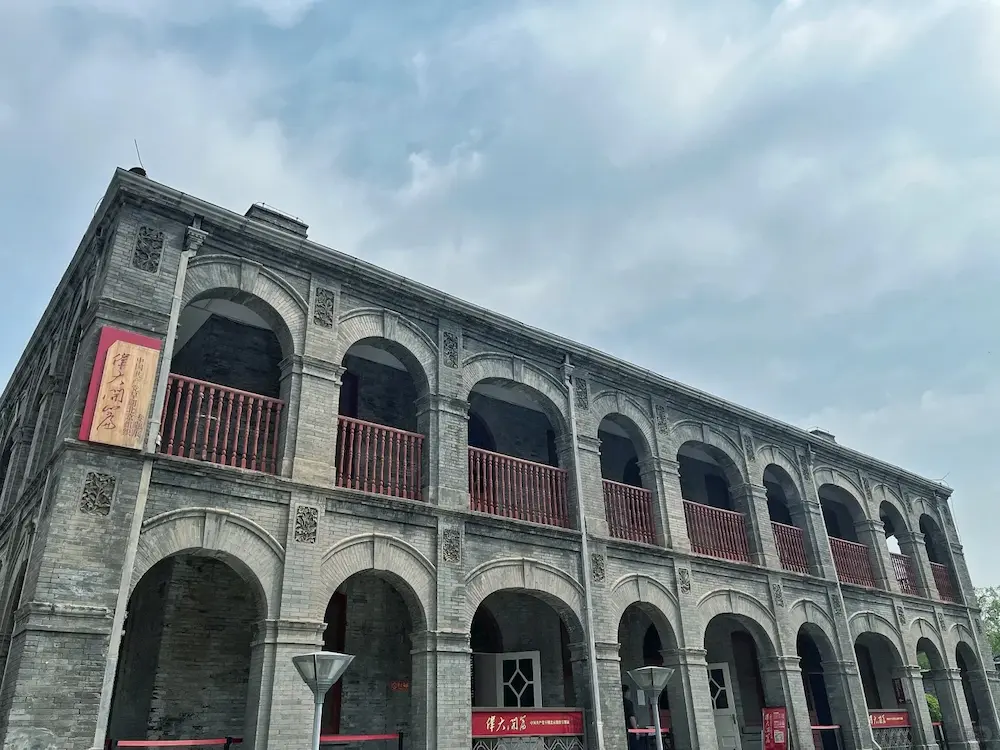
Today, it remains the most significant historical architectural remnant on Shatan Houjie.
It was precisely within this unassuming gray building at Peking University’s Second Hospital that the most turbulent intellectual fire in modern Chinese history was ignited.
In 1917, Cai Yuanpei assumed the presidency of Peking University and vigorously promoted the principles of “freedom of thought and inclusiveness.”
He appointed Chen Duxiu as Dean of the College of Arts, invited Liang Shuming—who lacked a university degree—to lecture on Indian philosophy at Peking University, and hired Li Dazhao as Director of the Library.
A large number of leaders of the New Culture Movement gathered at Peking University and the surrounding Shatan area.
Li Dazhao transformed the Peking University Library into Beijing’s earliest base for the dissemination of Marxism. In March 1920, under Li Dazhao’s initiative, the Peking University Marxist Studies Society was secretly established—one of China’s earliest organizations dedicated to the study and propagation of Marxism. Its first formal meeting took place in the Science Building of Peking University’s Second Campus.
The members of the Society also adopted the name “Kangmuyi Zhai”—the three characters “Kangmuyi” were a phonetic translation of the German word “Kommunismus” (communism). This literary yet somewhat mysterious code became the identity marker for this group of young people.
In March 1919, during his second visit to Beijing, Mao Zedong listened to Li Dazhao’s lecture titled “The Clash Between Old and New Ideologies” in Room 16 of the Science Building at Peking University’s Second Campus.
Mao Zedong later remarked: “By the summer of 1920, I had become a Marxist in theory and, to a certain extent, in practice.”
Cai Yuanpei, Chen Duxiu, Li Dazhao, Hu Shi, Lu Xun, Liang Shuming… virtually every prominent figure of China’s New Culture Movement had taken the stage to deliver a speech in the grand auditorium of Peking University’s Second Campus.
While working as an assistant at the Peking University Library, Mao Zedong also frequently came here to audit classes. This former site of the Princess’s Mansion had undergone a transformation from the residence of a Qing dynasty noble to a bastion of China’s intellectual enlightenment.
Key Highlights
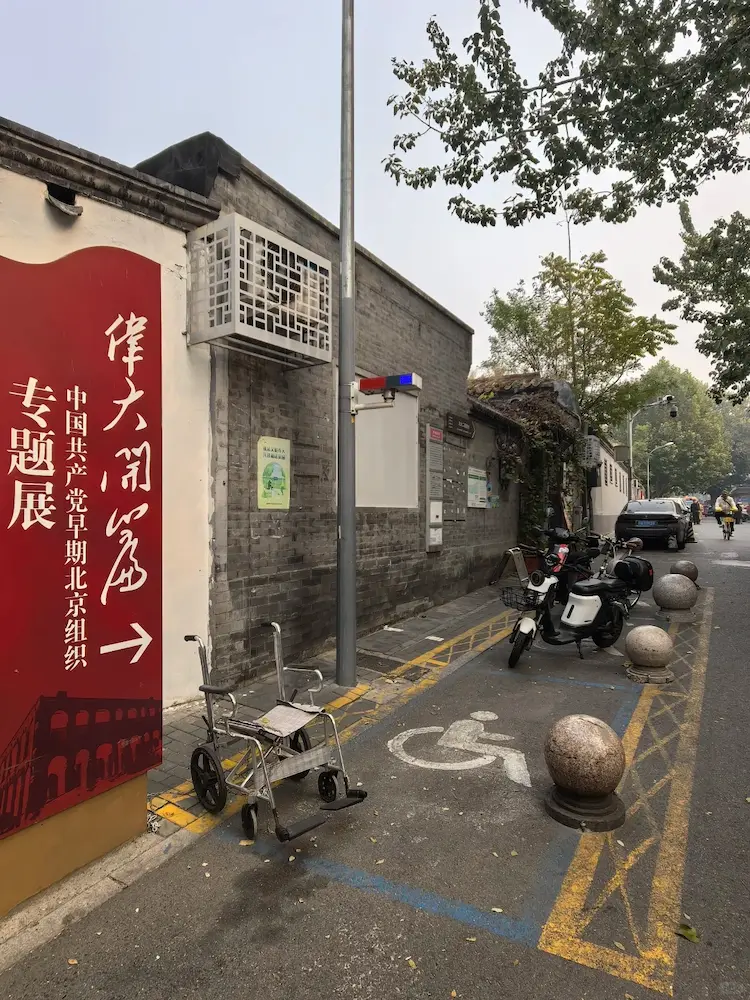
Entering Shatan Houjie from the West Entrance (Jingshan East Street) or the East Entrance (Shatan North Street), you’ll find a cluster of buildings spanning compounds 55 to 59 on the north side of this 300-meter-long alley—the area with the highest concentration of historical significance along the entire street. The following sites are listed in west-to-east order:
1. Former Site of Peking University Second Hospital— “A Great Beginning” Special Exhibition (Inside Courtyard No. 55)
The former site of Peking University Second Hospital is located within Courtyard No. 55. The exhibition hall is housed in a small two-story gray building constructed in 1906 in a Sino-Western architectural style. Inside, visitors can view the “A Great Beginning — Special Exhibition on the Early Beijing Organizations of the Communist Party of China.”
Covering an area of approximately 835 square meters, the exhibition features over 40 sets of artifacts and 472 exhibits, collectively illustrating the formation, establishment, and growth of the early Beijing organizations of the Communist Party of China. Several key exhibits are particularly worth examining:
– Historical Materials of Mao Zedong Listening to Li Dazhao’s Speech: The exhibition unveils for the first time precious historical materials documenting Mao Zedong’s attendance at Li Dazhao’s speech on March 10, 1919, in Classroom 16 of the Science Building at Peking University’s Second Campus. These include contemporary news reports and vintage photographs of Li Dazhao’s speech.
– Li Dazhao’s sole manuscript: A photocopy of the manuscript for “Russian Literature and Revolution” written by Li Dazhao; the original is housed at the Institute of Modern History of the Chinese Academy of Social Sciences. This article was originally scheduled for publication in Shatan HoujieNew YouthShatan Houjie but was withdrawn by the editor on duty, Hu Shi, and was not discovered until it was unexpectedly found in the archives after the founding of the People’s Republic of China.
– Reconstruction of the “Kangmuyi Studio”: The second floor features an immersive cinema titled “Impressions of a Century,” which recreates the secret meeting site of the Marxist Studies Society—the “Kangmuyi Studio.”
The exhibition also showcases video footage of Li Dazhao’s life, a recording of Zhang Tailai’s first speech at the Communist International, and original copies of the progressive publication Shatan HoujieDawnShatan Houjie.
On-site Reminder: Inside the gate of Compound No. 55, you will find not only the exhibition hall but also the offices of the People’s Education Press and other organizations. Upon entering, follow the signs along the gray-brick path on the left for about 100 meters to reach the small building. Do not enter the office buildings of the Higher Education Press or the People’s Education Press without authorization.
2. Architectural Remains of the Imperial University of Peking (Courtyards 55–59)
The area around Courtyards 55–59 still preserves some buildings from the Imperial University of Peking era, including the former main hall of the Princess’s Mansion (later converted into the university auditorium), the Princess’s Courtyard, the 14 rows of single-story buildings in the West Study Hall (built in 1904), and the remnants of the Mathematics Department teaching building from the time when the site served as Peking University’s Second Campus.
A significant portion of these buildings is now enclosed within the gaps between modern office buildings or hidden within residential compounds; while their interiors are not open to the public, the outlines of their old walls—with their blue bricks and gray tiles—can still be seen from the street.
3. Former Site of Peking University’s The Geology Building (Designed by Master Architect Liang Sicheng)
Near the south side of Shatan Houjie stands the former site of Peking University’s Geology Building, a dedicated teaching facility constructed in the 1930s for the university’s Department of Geology and designed by renowned Chinese architect Liang Sicheng.
This building is an early masterpiece by Liang Sicheng, combining functionalism with the traditional texture of Chinese brick and stone. Even a brief glimpse of its exterior from the alleyway reveals its clean geometric lines, which create a striking visual impact amidst the old hutongs.
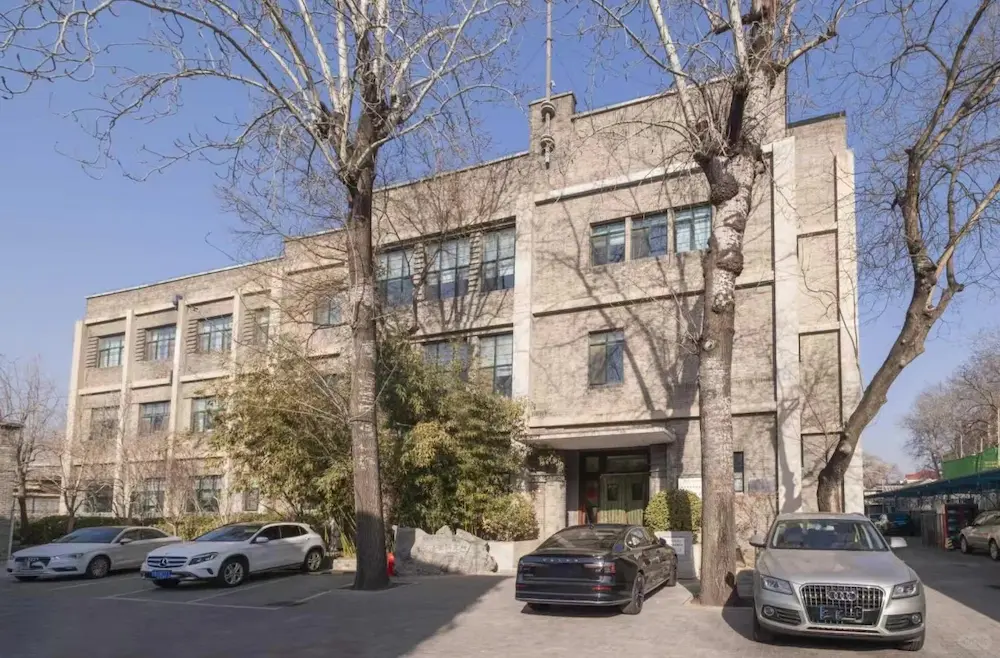
As the building has not undergone systematic restoration as a cultural heritage site for a long time, its current state of preservation and accessibility are uncertain; therefore, it is not recommended as a must-see attraction that you should go out of your way to find.
Visitors with a deep interest in architectural history may stumble upon it naturally while exploring the surrounding alleys, but please do not trespass into the courtyard.
4. The Street Itself: The Vibrant Atmosphere of Old Beijing
Shatan Houjie has become an integral part of the bustling neighborhood lined with local shops. Longtime residents come here to buy groceries, play chess, and take a stroll, while tourists occasionally pop in to snap a photo before moving on. Though there is no standardized “tourist site management” here, the street is alive with the spontaneous energy of the community.
Since 2023, the Jingshan East Street Community has formed a “Small Business Micro-Alliance,” in which merchants work together to maintain the environment and ensure a unified aesthetic.
Look up, and you’ll see old walls of gray brick and tile; look down, and you’ll spot moss sprouting from the cracks in the stone steps; overhead, quilts hang out to dry, and shared bicycles sit in the corners—a genuine, down-to-earth atmosphere of the old city washes over you.
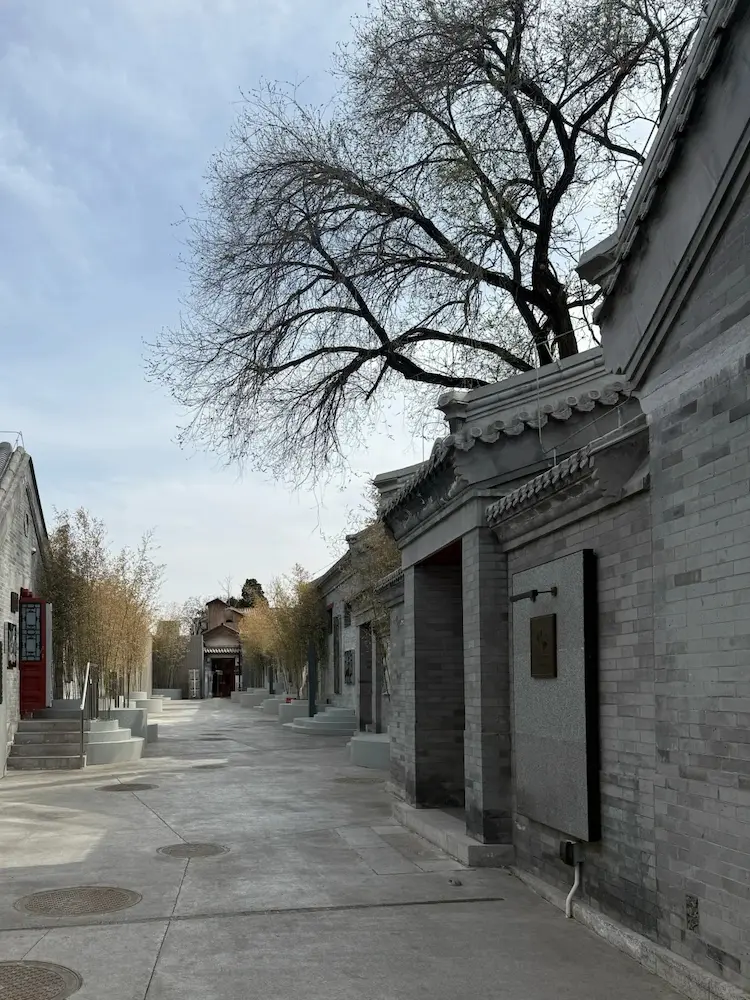
Surrounding Attractions: The Forbidden City, Jingshan Park, Peking University’s Red Building, and the Entire Shatan Hutong District
Shatan Houjie is located in a prime central location. Starting from this street, you can explore the most concentrated cluster of attractions along Old Beijing’s central axis on foot:
1. Peking University Red Building (May Fourth New Culture Movement Memorial Hall)
No. 29 May Fourth Avenue, about a 5-minute walk. The birthplace of China’s New Culture Movement and the May Fourth Movement. Chen Duxiu, Li Dazhao, and Mao Zedong all worked here. Admission is free, but reservations are required via the “Peking University Red Building” WeChat official account.
Visits to this Red Building and the former site of Peking University’s Second Hospital (located at No. 55 Shatan Houjie) can be arranged on the same day.
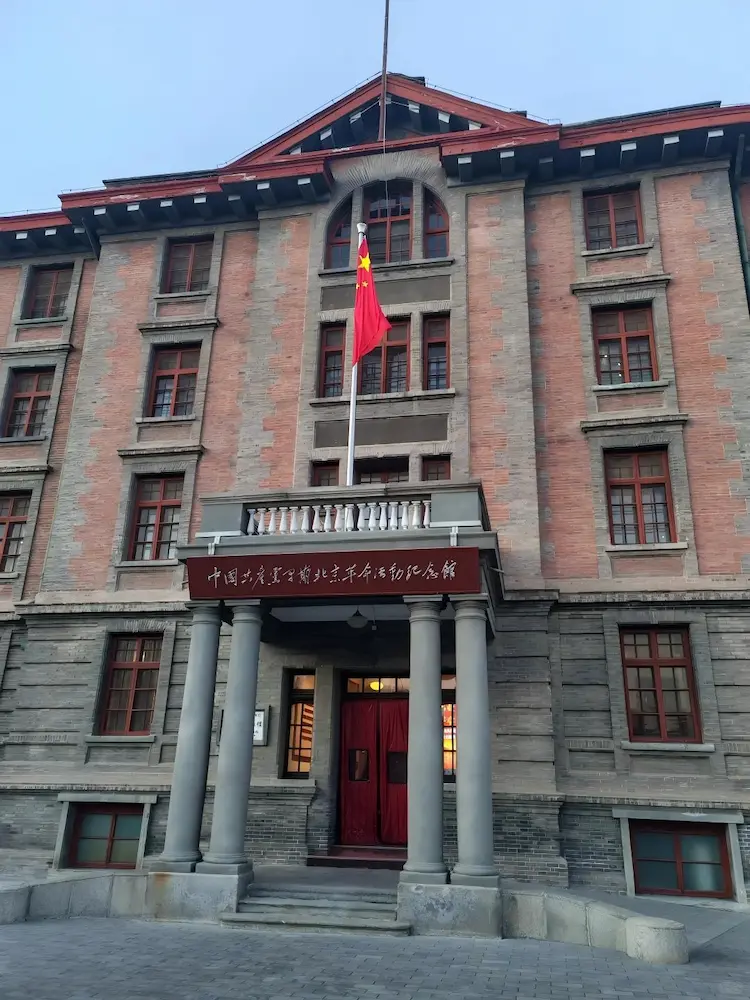
Start with the main exhibition at the Red Building (for a broad overview of the May Fourth Movement and the New Culture Movement), then proceed to the former site of Peking University’s Second Hospital to view the special exhibition (which delves into the specific activities of early Communist Party organizations in Beijing).
2. Shenwu Gate of the Forbidden City
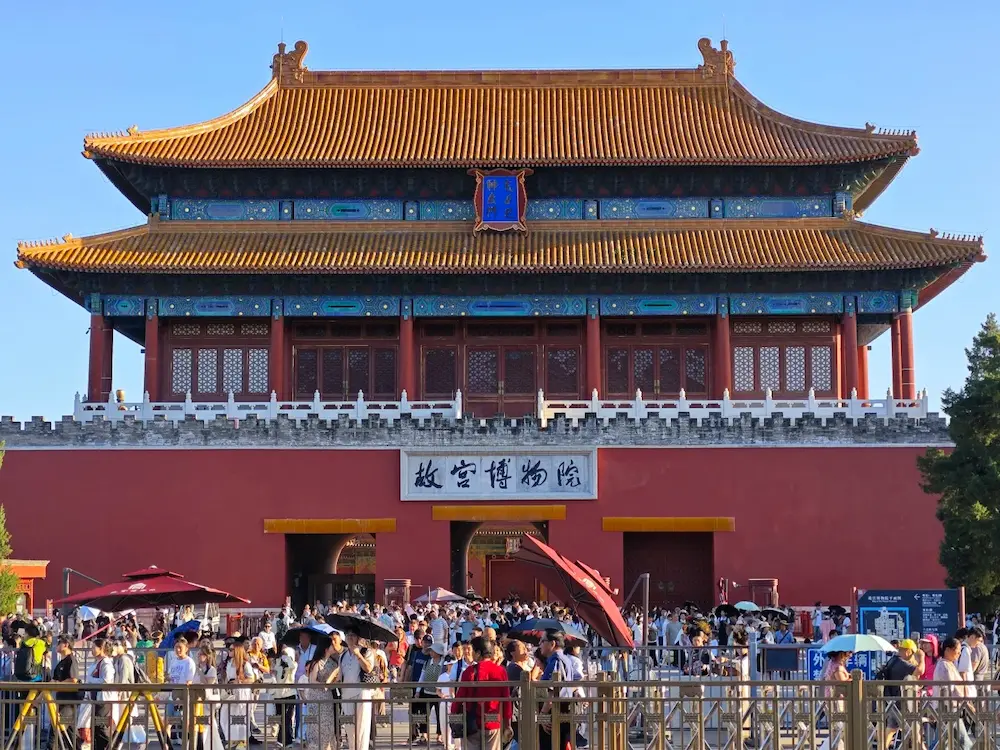
Head west from the western entrance of Shatan Houjie and walk straight along Jingshan East Street; it takes about 10 minutes to reach. Admission is 60 yuan (about $8.50); during peak season, reservations must be made at least 7 days in advance. Visiting the Forbidden City right after exploring Shatan Houjie can help you avoid the exhaustion of walking the entire street from start to finish.
3. Jingshan Park
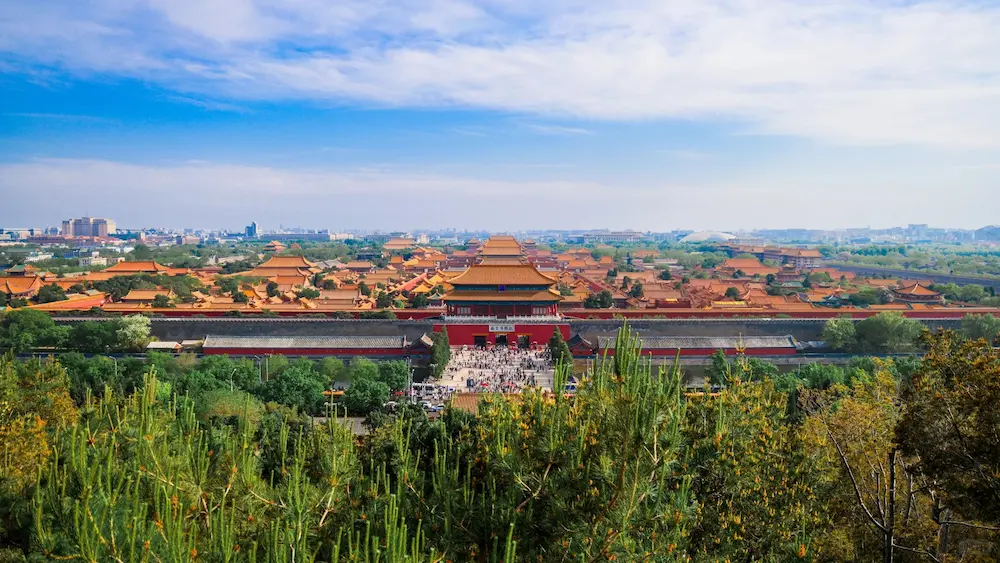
It’s just across the street from the Shenwu Gate of the Forbidden City, or about a 12-minute walk from Shatan Houjie. Admission is 2 yuan (about $0.30), and it offers the best value for money in all of Beijing, with panoramic views of the Forbidden City, its sea of flowers, and the crowds below.
4. National Art Museum of China
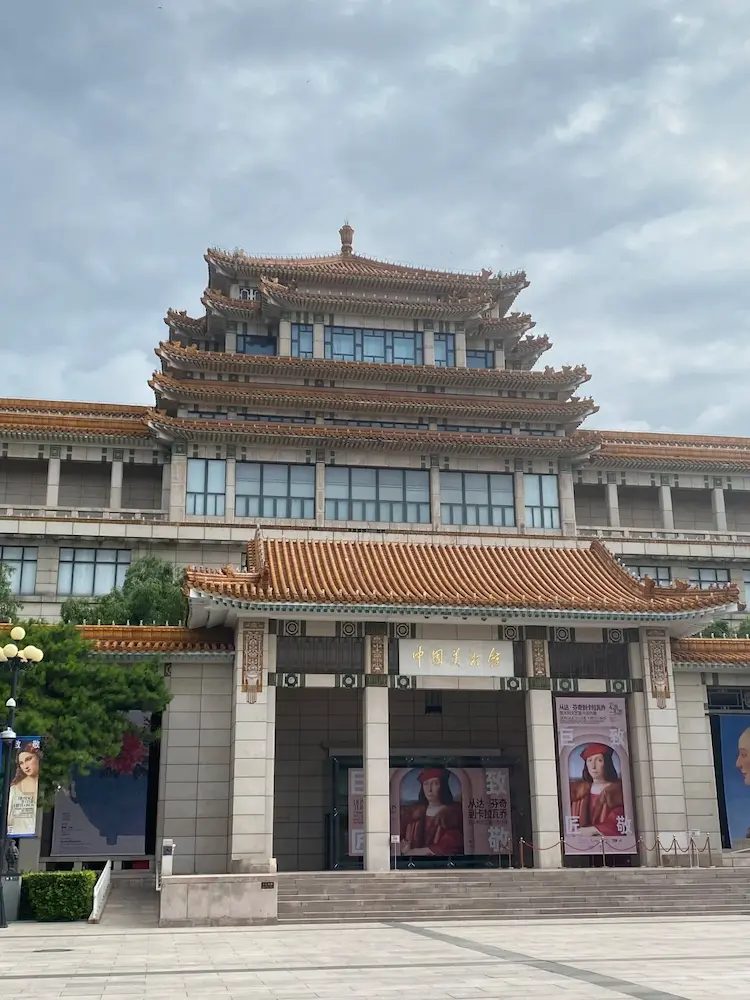
1 Wusi Avenue, about an 8-minute walk away. A national-level art museum that regularly hosts special exhibitions. Admission is free, but you must make a real-name reservation in advance through the official platform. After exploring the revolutionary-themed exhibits at Peking University’s Red Building or Shatan Houjie, spend an hour and a half here to immerse yourself in a pure artistic experience.
5. Multiple Hutongs Connected by the Same Route
North of Shatan Houjie, several classic hutong walking routes that I have previously compiled are densely clustered together:
– Zhiranju Hutong: The site of the Ming Dynasty’s Imperial Textile and Dyeing Bureau, it is intertwined with the early history of Peking University, just like Shatan Houjie. The early revolutionaries you see at the site of Peking University’s Second Hospital once walked through Zhiranju Hutong as well. It’s about a 10-minute walk away.
– Dongchang Hutong: The former site of the Ming Dynasty’s Dongchang secret police agency. You can seamlessly connect here to the mysterious compound I wrote about in [Dongchang Hutong: Beijing’s Hidden Gem—From Imperial Secret Service to Presidential Residence].
It’s hard to imagine that the very young people who ignited the spark of revolution at Peking University’s Second Hospital used to walk daily through what was, 500 years ago, the former headquarters of the infamous Dongchang secret police!
Walk east from Shatan Houjie to the intersection of Wusi Avenue and Shatan North Street; it takes about 8–10 minutes to reach the eastern entrance of Dongchang Hutong.
– Cuihua Hutong: Home to “Yuebin Restaurant,” China’s first privately owned eatery. After exploring the historic Peking University site, rich with patriotic sentiment, take a stroll down Dongchang South Alley to Cuihua Hutong to the south and check out Yuebin Restaurant, which I highly recommend in my article 【In-Depth Guide to Cuihua Hutong: A Free Hutong Near Wangfujing and China’s First Privately Owned Restaurant】.
Order a plate of the garlic-marinated pork hock that once wowed the capital, and experience the most down-to-earth transition from “intellectual fervor” to “the hustle and bustle of everyday life.” It takes about 10 minutes to walk east from Shatan Houjie toward Wangfujing.
– Doufuchi Hutong: Located near the Bell and Drum Towers, it extends the core historical timeline (early Republican era) of Shatan Houjie.
With multiple hutongs clustered around Shatan Houjie, this area is perfect for tourists to explore with the mindset of “walking through half of China’s modern history in a single day.”
Photography Guide (Including Useful Phrases for Overseas Visitors)
| Shooting Spot | Location | Best Time to Shoot | Tips |
| Gate of Courtyard 55 | North side of the middle section of Back Street | Morning | The gray courtyard wall paired with the black doorplate creates a sophisticated portrait with a distinct “ Academic Nostalgia ” vibe when you stand by the door and shoot a half-body portrait. Use the doorframe and doorplate to create vertical leading lines |
| Gray Two-Story Building | Deep within Courtyard 55, the Exhibition Hall of the Former Site of Peking University’s Second Hospital | Before 10:00 AM or after 3:00 PM | The Sino-Western hybrid colonnade structure is a highlight of modern architectural history in itself. Shooting with a wide-angle lens from a low angle or framing through the branches of the old locust tree captures a sense of historical depth |
| Western Section of the Alley | Close-up of Jingshan East Street | Afternoon | Capture the bustling street scene with the silhouette of Jingshan’s Wanchun Pavilion in the distance. The silhouette of the imperial pavilion in the distance, framed alongside shared bicycles and drying bedding in the foreground, is a textbook example of “ Framing the Imperial Past in Modern Daily Life ” |
| Under the Old Locust Tree | Any section of the street | When the afternoon sun casts oblique rays | Capture the tree shadows on the blue-brick walls to capture the quintessential Beijing atmosphere of light and shadow |
Frequently Asked Questions (FAQ)
From the Horse God Temple frequented by eunuchs who tended horses during the Ming Dynasty to the magnificent mansion of the Fourth Princess of the Qianlong era at the height of its splendor; from the Imperial University of Peking, born out of the Hundred Days’ Reform, to the Marxist Study Society in the Second Campus of Peking University during the Republican era—within its 300-meter stretch, Shatan Houjie encapsulates the most dramatic rise and fall of China’s 600-year history.
Standing before the small gray building at No. 55, with the foundation of the princess’s main hall beneath your feet and the science building where the young Mao Zedong and Li Dazhao crossed paths before your eyes, a single structure encapsulates an entire century of upheaval.
Today, this place remains alive in everyday life. Editors from publishing houses come and go with briefcases in hand; nearby residents pass through the courtyard gates carrying groceries they’ve just bought; and occasionally, a few young people with backpacks stop to take a photo in front of the plaque marking the “Site of Peking University’s Second Campus.” The lingering warmth of history and the bustling life of this small street have never been separated.
When you visit Beijing, don’t forget to add this little stretch of alley to your walking map—it never makes a fuss, but it quietly places the most pivotal page of modern Chinese history right at your feet.