A Guide to 9 Sections of the Great Wall in Beijing: How to Choose Between Badaling, Mutianyu, and Juyongguan? (2026 Guide)
Many first-time visitors to Beijing, when planning a trip to the Great Wall, immediately think of Badaling.
Visiting Beijing for the First Time and Not Sure Which Section of the Great Wall to Choose? Start Here
If this is your first time in Beijing and you’re planning just one Great Wall trip, Badaling, Mutianyu, and Juyongguan are the easiest options to include in your itinerary.
If you’re into photography, history, or hiking—or if you’ve already been to Badaling—Beijing offers other sections of the Great Wall, each with its own unique character.
The table below is the resource I most want you to save. Take 30 seconds to scan it, and you’ll be able to pinpoint the Great Wall section that’s right for you.
Table of Contents
Comprehensive Quick Comparison Chart of the Great Wall of Beijing
| Section Name | Restoration Level | Ideal for | Key Highlights / Blogger’s Insider Tips | Link to Full Article |
| Badaling | Fully Restored | First-time visitors, seniors, children, and those with strollers | Highlights: Holds the greatest historical significance and is the most famous. Tip: Visit during off-peak hours to take advantage of accessible facilities; arrive before 7 a.m. | View Guide [Badaling Great Wall: Tickets, North and South Routes, Cable Cars, and 2/3-Hour Hiking Routes] |
| Mutianyu | Fully Restored | Families, photographers, those who want a moderate hike without crowds | Highlights: High forest coverage and rare double-sided crenellations. Tip: The toboggan run is an optional activity. | View Guide [Mutianyu Great Wall: Cable Cars, Ropeways, Hiking Routes, and Visiting Times] |
| Juyongguan | Fully Restored | History Buffs, Architecture Enthusiasts, Half-Day Round Trip | Highlights: The Yuan Dynasty stone carvings at Yuntai are national treasures. Tip: Pay attention to the structure of the fortress to appreciate the layout of an ancient command center. | View Guide [Juyongguan Great Wall: Fortress, Yuntai Stone Carvings, and Tour Routes] |
| Simatai | Preserved in Original Condition | History Buffs, Night Tour Enthusiasts | Highlights: Sections that retain much of their original Ming Dynasty appearance; night tours are available. Recommendation: Night tours offer a unique experience. | View Guide [Complete Guide to Simatai Great Wall] |
| Jinshanling | Well-restored | Experienced photographers, serious hikers | Highlights: defensive walls, bricks with inscriptions, and remnants of horse-barrier stones. Recommendation: Ideal for visitors planning to photograph the sunrise. | View the guide: [Jinshanling Great Wall Hiking and Photography Guide] |
| Water Great Wall | Well-restored | Team-building, family trips, and those seeking unique sights | Highlights: The sight of the Great Wall entering the water. Recommendation: Visit in the summer; the boating experience is quite relaxing. | View Guide [Huanghuacheng Water Great Wall Travel Guide] |
| Jiankou | Rugged and weathered | Hardcore outdoor climbers (guide required) | Highlights: “Heavenly Ladder” and “Eagle Flying Upside Down”—precarious landforms. Recommendation: For experienced outdoor enthusiasts only; view the terrain from a distance and do not risk climbing closed sections. | View the guide: [Jiankou Great Wall: Zhengbei Tower, Beijing Knot, Hiking Routes, and Safety Guidelines] |
| Jiuyanlou | Well-restored | History buffs and those wanting to see the “Beijing Knot” Highlights: Numerous observation holes in the watchtower; located at the starting point of the “Beijing Knot.” | Recommendation: Enjoy the view where the Inner and Outer Great Walls converge. | View the guide: [Jiuyanlou Great Wall Tour Guide] |
Quickly Narrow Down Your Options Based on Your Situation
✨By Group
- First-time visitors to Beijing: Prioritize comparing Badaling / Mutianyu / Juyongguan
- Traveling with parents or elders: Focus on transportation convenience, cable car facilities, hiking distance, and stair incline
- Traveling with children: Prioritize restroom facilities, dining options, gentle trails, and overall physical exertion
- Photography enthusiasts: Focus on Jinshanling, Simatai (night tour), and Huanghuacheng Water Great Wall
- History enthusiasts: Key recommendations: Juyongguan, Gubeikou, Simatai, Changyu City
- Hiking enthusiasts: Key recommendations: Jinshanling, Jiuyanlou, Huangcaoliang
- Those seeking the unspoiled beauty of the “Wild Great Wall”: ⚠️ Jiankou is extremely risky and not suitable for casual tourists. Be sure to thoroughly assess your experience level and weather conditions; it is not recommended as a standard “must-visit” attraction
⏱Based on Available Time
- Only 3–4 hours: Juyongguan, Badaling
- Half a day: Badaling, Mutianyu, Juyongguan, Huanghuacheng Water Great Wall
- Full day: In-depth tour of Mutianyu, Jinshanling, Simatai, Jiuyanlou
If you’ve already visited Badaling, here are some options for your next Great Wall section:
1. Want to see the Great Wall amidst mountains and forests → Mutianyu
2. Prefer the historical architecture of a fortified pass → Juyongguan
3. Want to experience a night tour of the Great Wall → Simatai
4. Looking to photograph sunrises and sunsets → Jinshanling
5. Enjoy hiking to explore historical ruins → Jiuyanlou, Huangcaoliang
Tip: There’s no single “best” section—choose the one that best fits your schedule, stamina, and interests.
The Great Wall of Beijing by the Numbers: 520 Kilometers of Vigilance
Before we begin, let’s take a look at some hard data. According to the National Cultural Heritage Administration:
- Total length of the Great Wall in Beijing: 520.77 kilometers
- Of which, the Ming Dynasty wall sections: 474.06 kilometers (447 sections in total)
- Remains of the Northern Qi Great Wall: 24 sites
ℹNote: In terms of tourism, there are 9 core Great Wall scenic areas officially open to the public; in a broader sense, there are approximately 17 sites available for visitors. This figure is a common term used in the tourism industry and does not represent a strict official statistical standard.
In other words, you can choose a completely different section of the Great Wall based entirely on your interests, physical fitness, and available time.
So, please set aside the stereotype that “the Great Wall equals Badaling.” Let’s start with military logic to understand the deeper connections between these sections.
Military Logic: The “Iron Triangle” of Juyongguan, Badaling, and Mutianyu
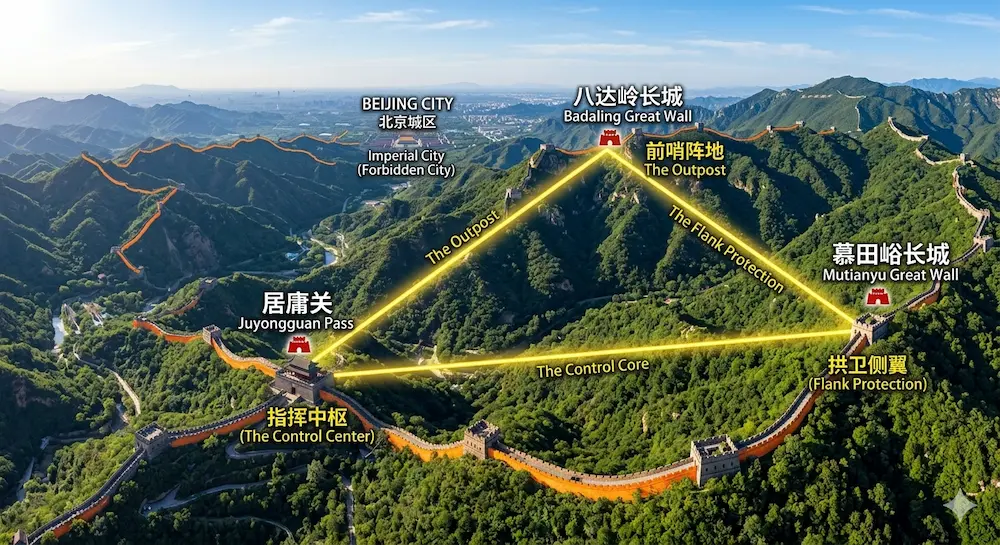
During the Ming Dynasty, the northern defense line of Beijing was not a disorganized collection of outposts, but rather a sophisticated defensive system. Within this system, Juyongguan, Badaling, and Mutianyu formed the most crucial “Iron Triangle.”
Command Headquarters: Juyongguan
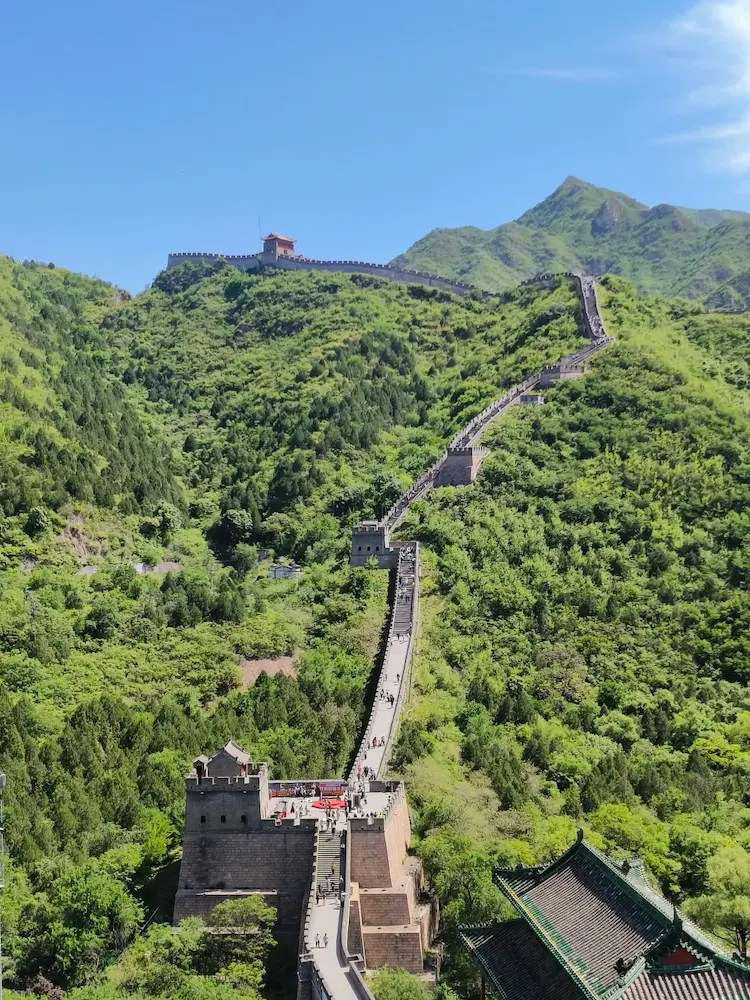
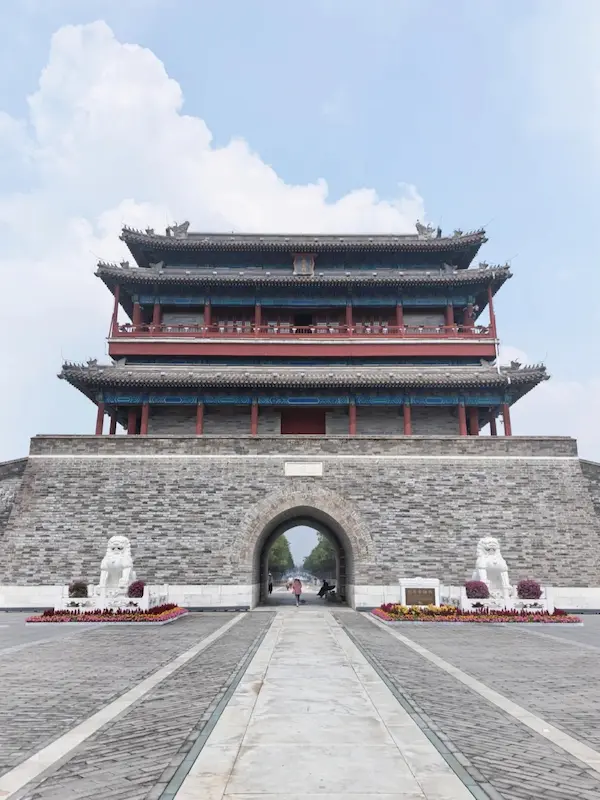
Known as “the most magnificent pass under heaven,” it was listed among the “Eight Scenic Views of Yanjing” 800 years ago. It was not only a massive fortress on the Great Wall but also the command center for the capital’s entire northwestern defense line.
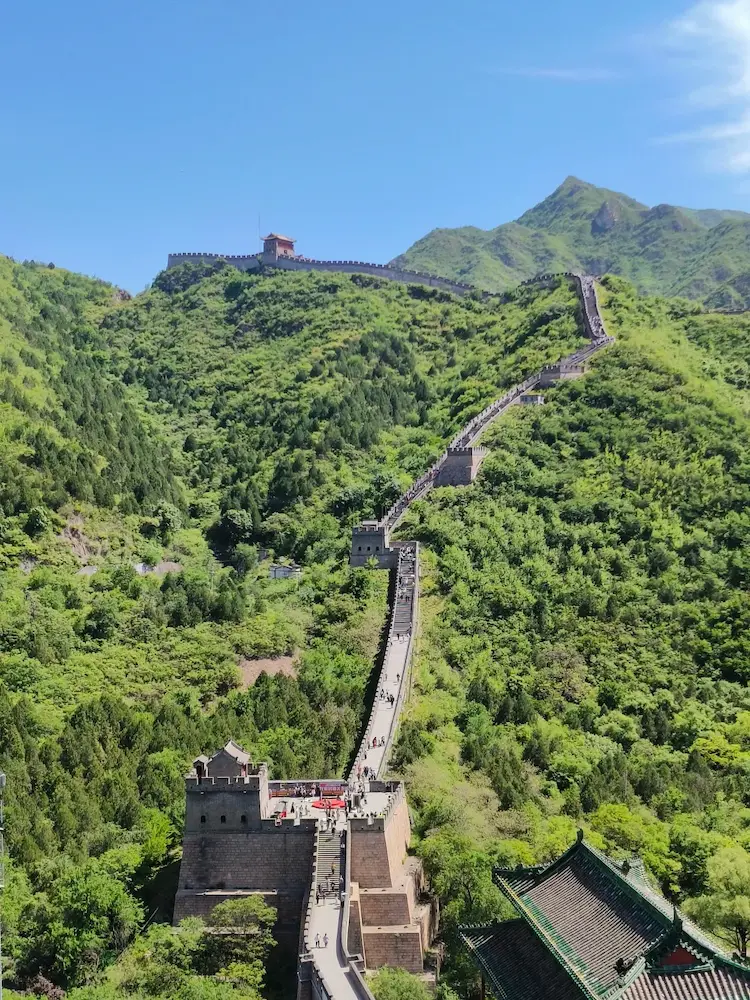
Upon entering Juyongguan, you can see the intact barbican, watchtowers, and barracks ruins, as well as the national treasure-level Yuan Dynasty Yuntai Stone Carvings—a testament to the fusion of Buddhist and nomadic cultures.
The role of Juyongguan was to “choke off” the passage; by holding this gorge, enemy forces were prevented from advancing directly on Beijing.
Fitness Alert: Although Juyongguan is “the closest to the city center” (about a 50-minute drive), its steps are extremely steep, with some sections nearly vertical. If you’re not keen on climbing intense staircases, the cable car at Mutianyu is a more manageable option.
The Outpost: Badaling
An ancient saying goes: “The true peril of Juyong Pass lies not in the pass itself, but in Badaling.” This means that the real natural barrier of Juyong Pass is actually the Badaling section. Located about 10 kilometers north of Juyong Pass, Badaling served as the first line of defense against enemy forces.
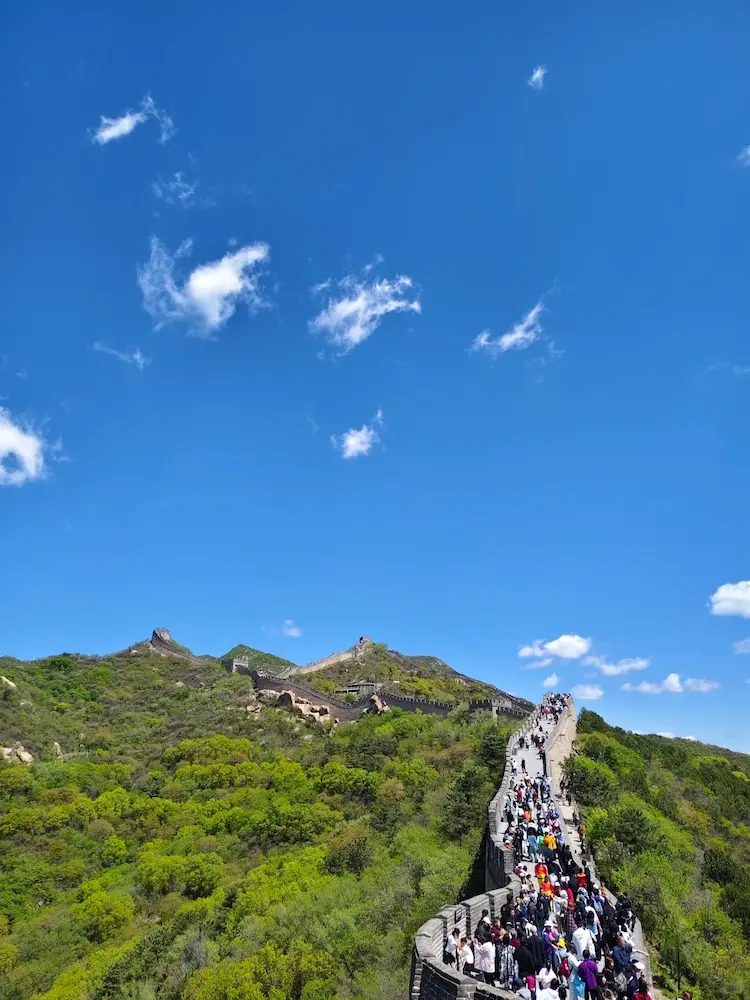
It sits at a higher elevation, features thicker walls, and has denser watchtowers. The reason Badaling is so famous today is precisely that it served as the frontline for early warning and defense in ancient times.
Guarding the Flank: Mutianyu
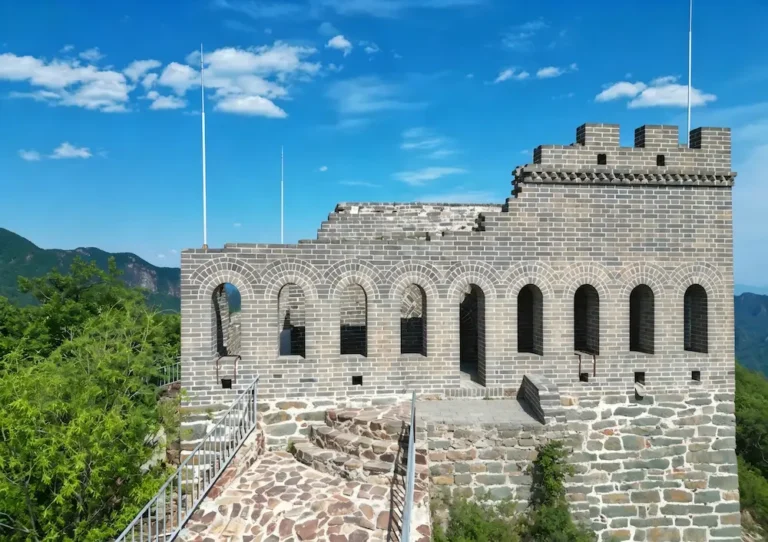
Mutianyu is located in Huairou, bordering Juyong Pass to the west and Gubeikou to the east, and is responsible for protecting the northeast flank of the capital. It is the longest single section of the Great Wall in Beijing, with 96% vegetation coverage, densely packed watchtowers, and rare double-sided crenellations (capable of repelling enemies from the outside and guarding against internal sneak attacks).
Compared to the grandeur of Badaling, Mutianyu possesses a more “delicate” beauty—hence its reputation as “the most exquisite section of the Great Wall.”
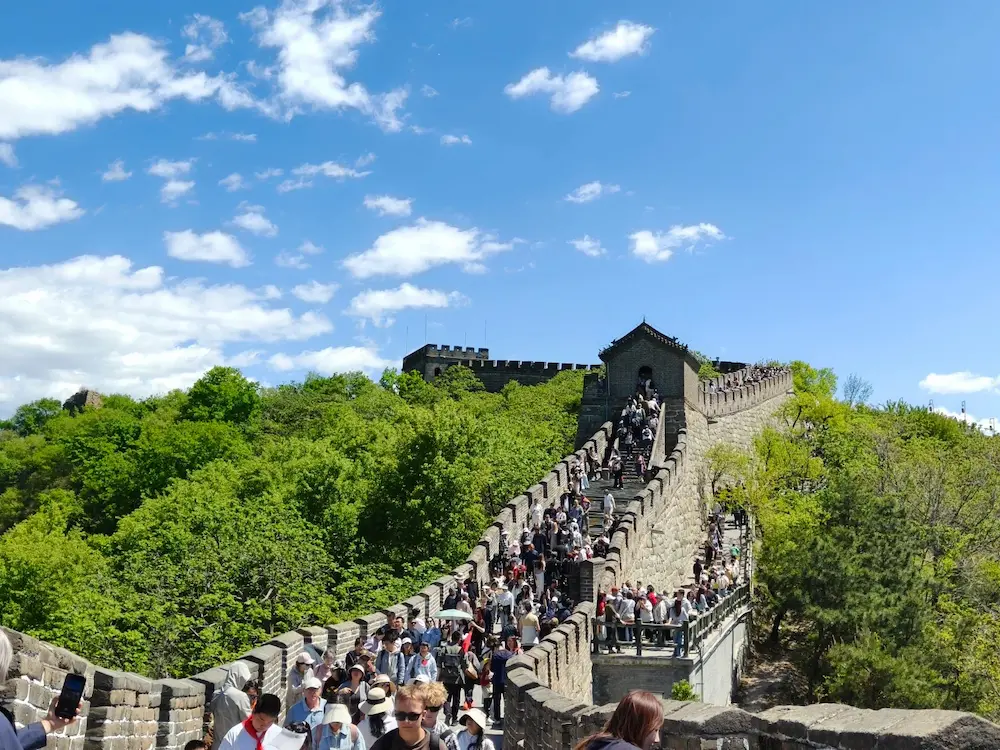
Once you understand this “iron triangle,” you’ll realize that the Great Wall is not a single point, but a chain. Next, we’ll explore the Great Wall sections across Beijing’s six districts one by one, following their spatial layout.
Spatial Layout: Six Major Sections of the Great Wall
Yanqing District—The Peak of Fame
- Overview of the Area: A well-known, established Great Wall scenic area with relatively well-developed transportation infrastructure.
- Representative Sections: Badaling, Badaling Ruins (Shuiguan), Jiuyanlou
Badaling may be the “face” of the Great Wall, but Yanqing offers much more. Jiuyanlou is the section with the most watchtowers along the Great Wall (nine observation holes), located at the starting point of the “Beijing Knot,” offering an exceptionally sweeping view.
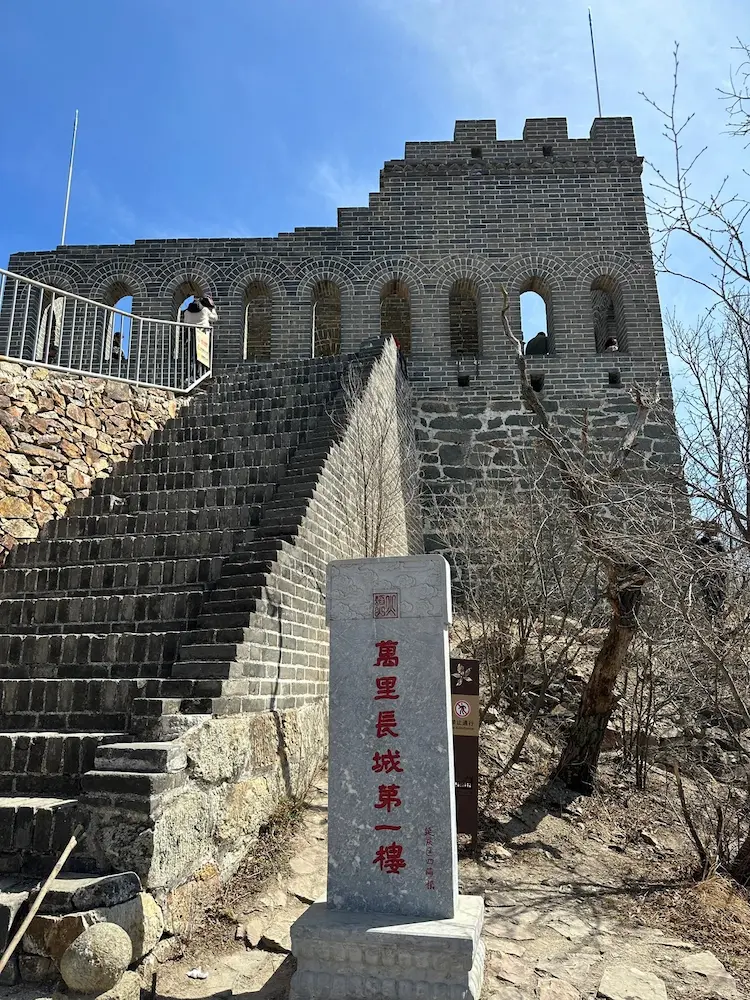
Standing atop Jiuyanlou, you can see where the Inner and Outer Great Walls converge—a sense of vastness that Badaling simply cannot replicate.
Changping District—The Culture of Majestic Passes
- Overview of this area: The main attractions are the large-scale fortified city and the historical remains of a Ming Dynasty military fortress.
- Representative Sections: Juyongguan Pass, Changyu City
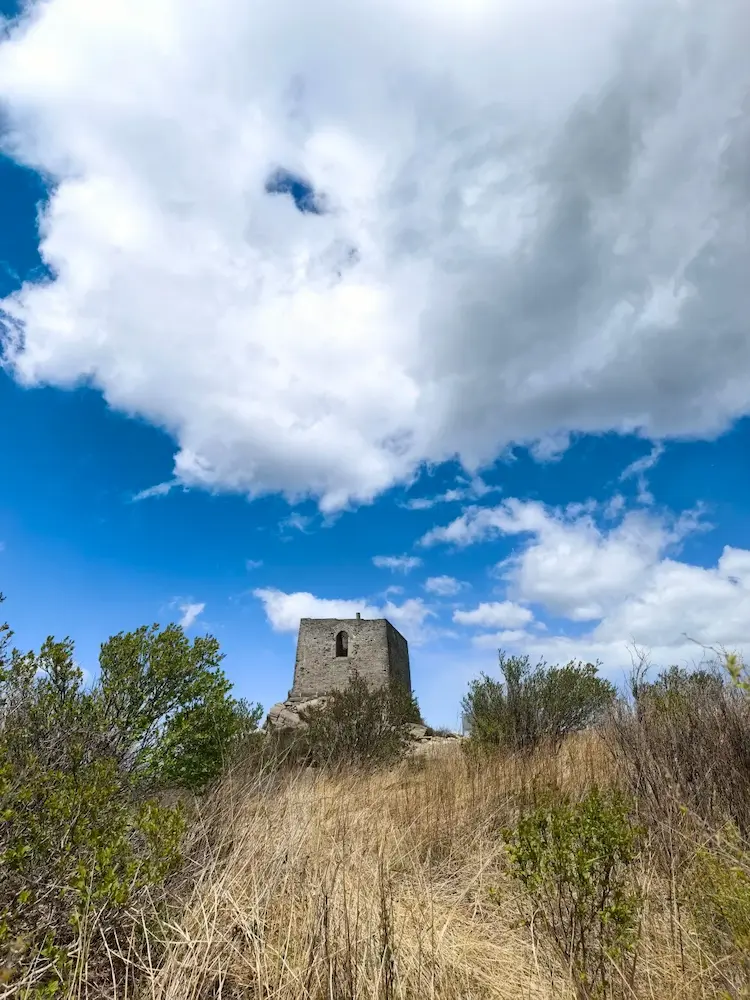
In addition to Juyongguan Pass, Changyu City is a well-preserved Ming Dynasty military fortress. If you’re interested in ancient military strongholds, this area is virtually free of commercialization, featuring only crumbling walls, ancient trees, and quiet villages.
Huairou District—The Finest Scenery
- Overview of the Area: A blend of scenic landscapes and the Great Wall, with abundant attractions and opportunities for hiking along the wild sections of the Great Wall.
- Representative Sections: Mutianyu, Jiankou, Huanghuacheng Water Great Wall, Xiangshui Lake, Beijing Knot. Huairou is the essence of the Great Wall in Beijing.
- Mutianyu: Scenic, comfortable, and equipped with a slide.
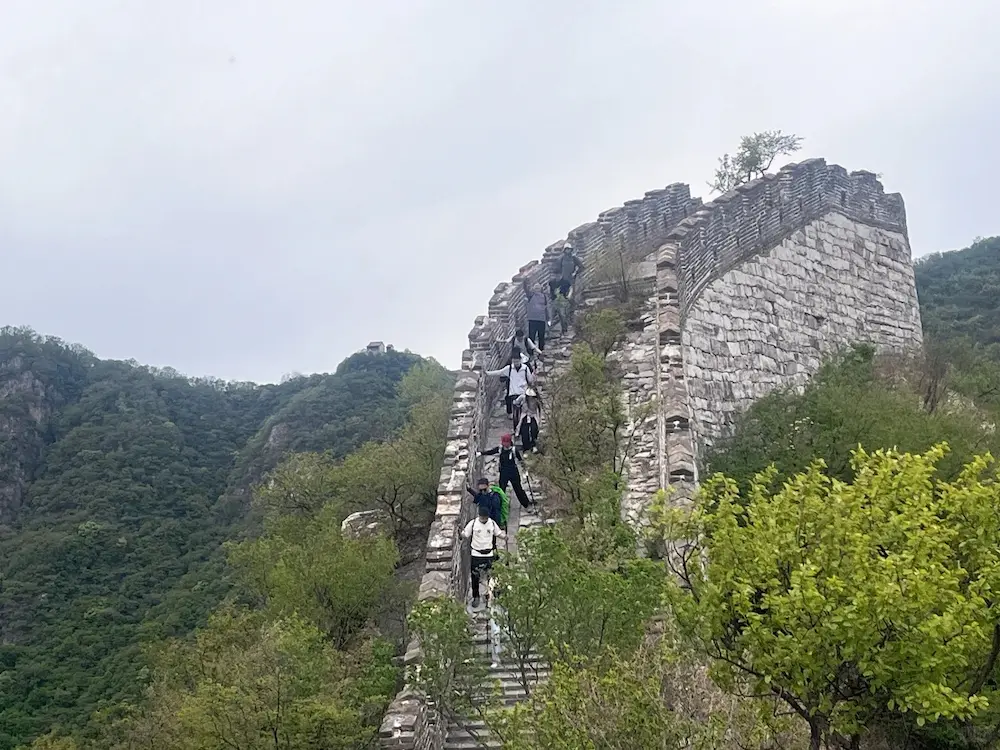
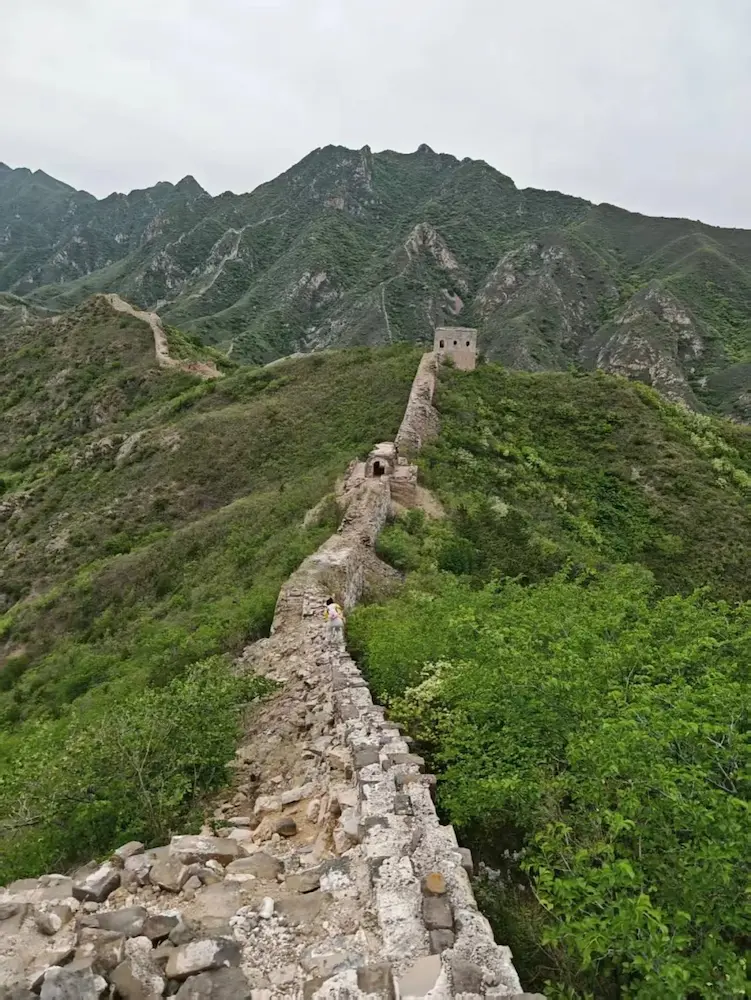
- Jiankou: Beijing’s most perilous section of the Great Wall (“Heavenly Ladder,” “Eagles Flying Upside Down”), recommended only for experienced outdoor enthusiasts with a guide.
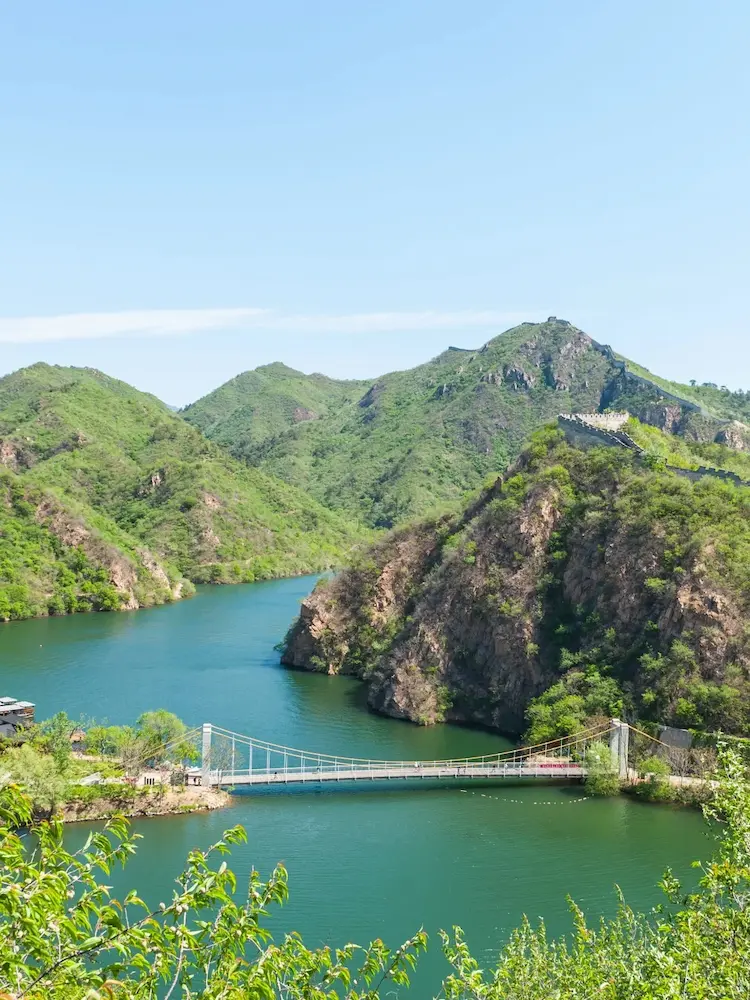
- Huanghuacheng Water Great Wall: The only spectacle where the Great Wall meets water—Haoming Lake submerges part of the low wall, allowing you to view the Great Wall by boat.
- Beijing Knot: The “crossroads” where the Inner and Outer Great Walls meet; three Great Wall routes converge here, making it a hiker’s holy grail.
Miyun District—Authentic Charm and Photography
- Overview of the Area: The historic character of the area is well-preserved; it offers outstanding photography opportunities, and it features a cluster of ancient towns.
- Notable Sections: Simatai, Gubeikou, Panlong Mountain
- Simatai: The only section that retains its original Ming Dynasty appearance; Mr. Luo Zhewen called it “the finest section of the Great Wall of China.” It offers a “lantern-lit night tour” after dark, which is incredibly romantic.
- Gubeikou: A small town with four sections of the Great Wall (Wohu Mountain, Panlong Mountain, Jinshanling, and Simatai), it is often called a “miniature museum of the Great Wall.”
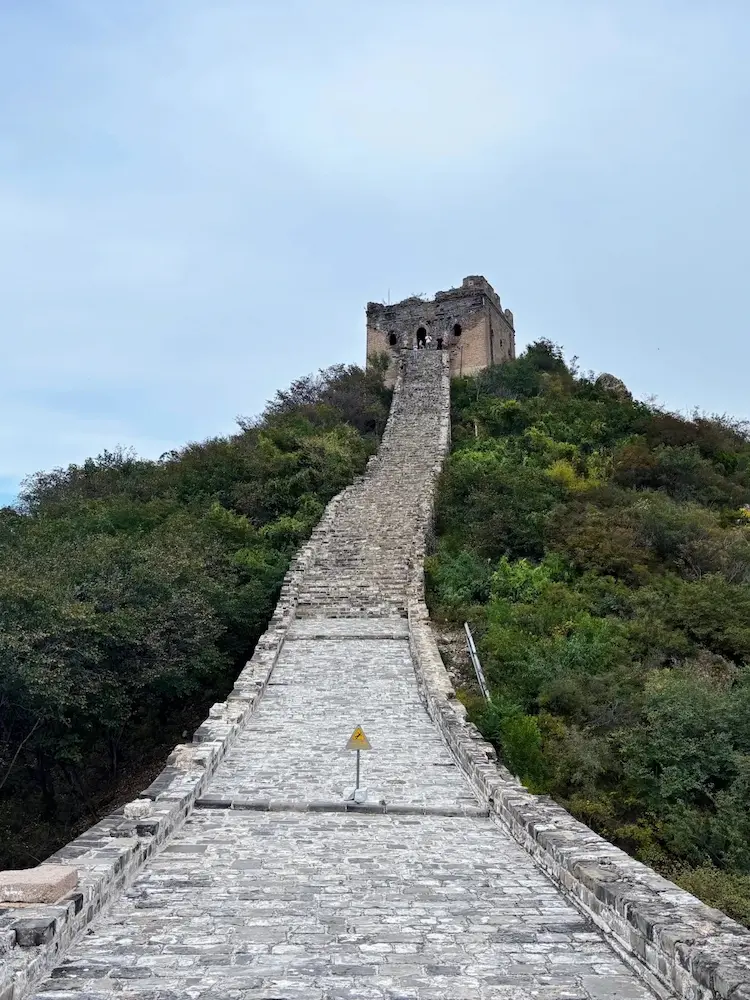
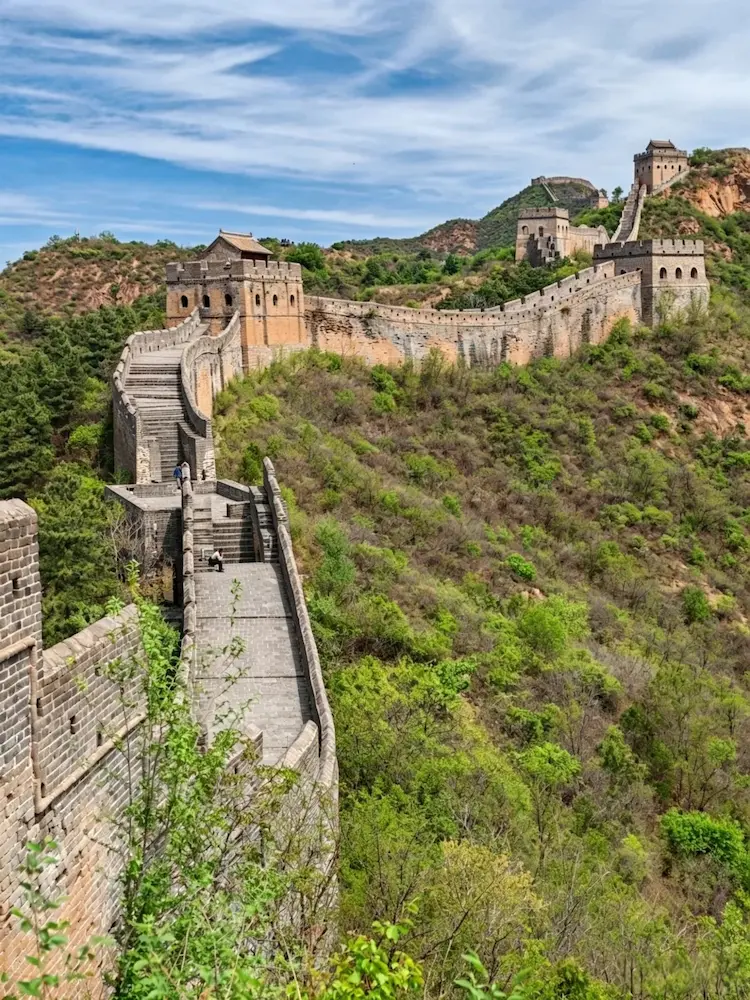
- Jinshanling (administratively part of Hebei, but typically accessed from Beijing): A photographer’s ultimate destination—featuring the “Three Wonders” of parapet walls, inscribed bricks, and horse-stopping stones—the sunrise here is truly sacred.
Pinggu District—The First Stop Upon Entering Beijing
- Overview of the Area: Few visitors, interesting photo spots, and generally underdeveloped.
- Representative Sections: Jiangjun Pass, Hongshimen
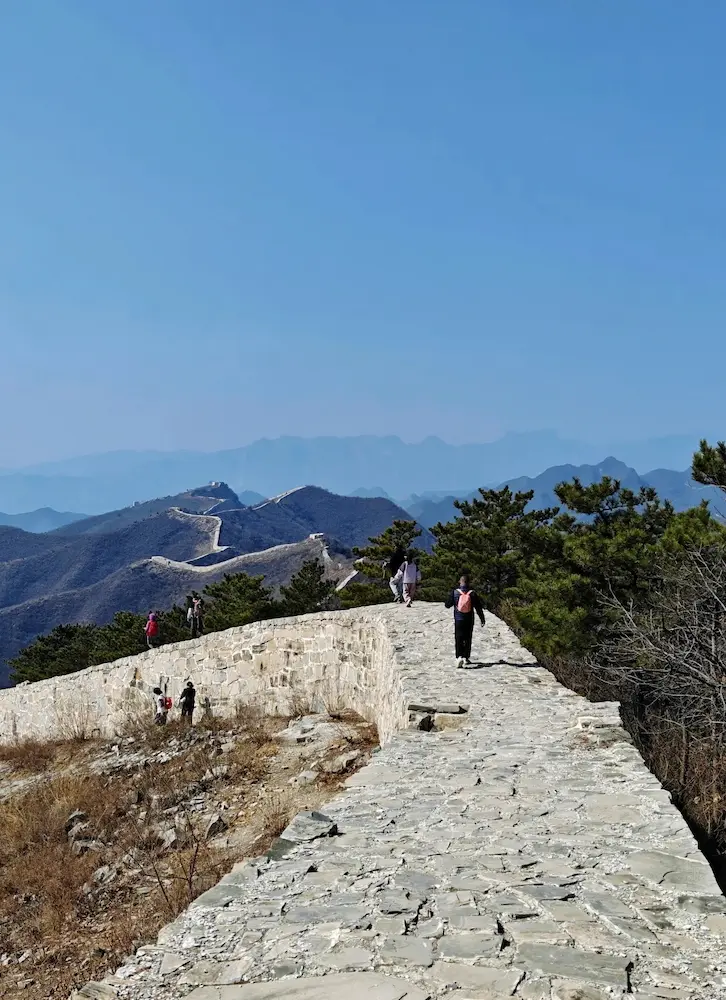
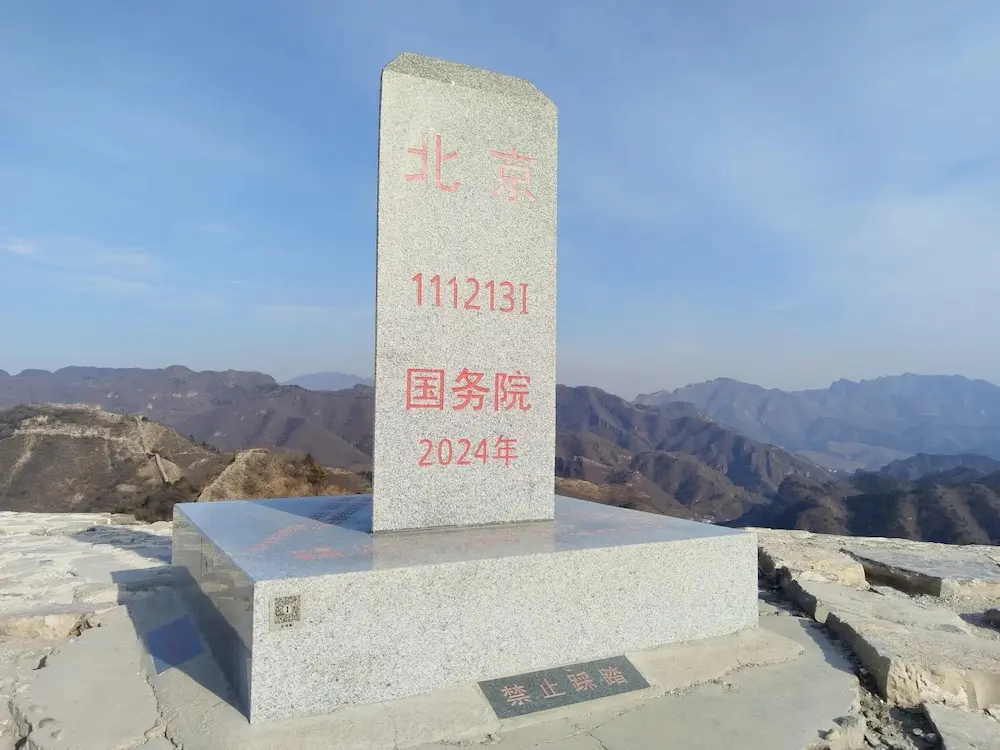
The Great Wall at Hongshimen features an interesting photo spot: “One Foot in Three Provinces” (Beijing, Tianjin, Hebei). This is where the Great Wall enters Beijing’s territory; with very few visitors, it’s ideal for travelers who appreciate tranquility and geographical curiosities.
Mentougou District—The Gateway to Western Beijing
- Overview of this area: Highlights include the Western Great Wall, Ming Dynasty military forts, and hiking trails through the mountains and countryside.
- Notable Sections: Huangcaoliang, Yanhecheng
The “Yan-series watchtowers” at Huangcaoliang represent the most exquisite section at the western edge of Beijing. The hiking trails are well-established, and in autumn, the mountains are blanketed in gold. Yanhecheng, meanwhile, is a fully intact Ming Dynasty military fortress with almost no visitors—time seems to stand still here.
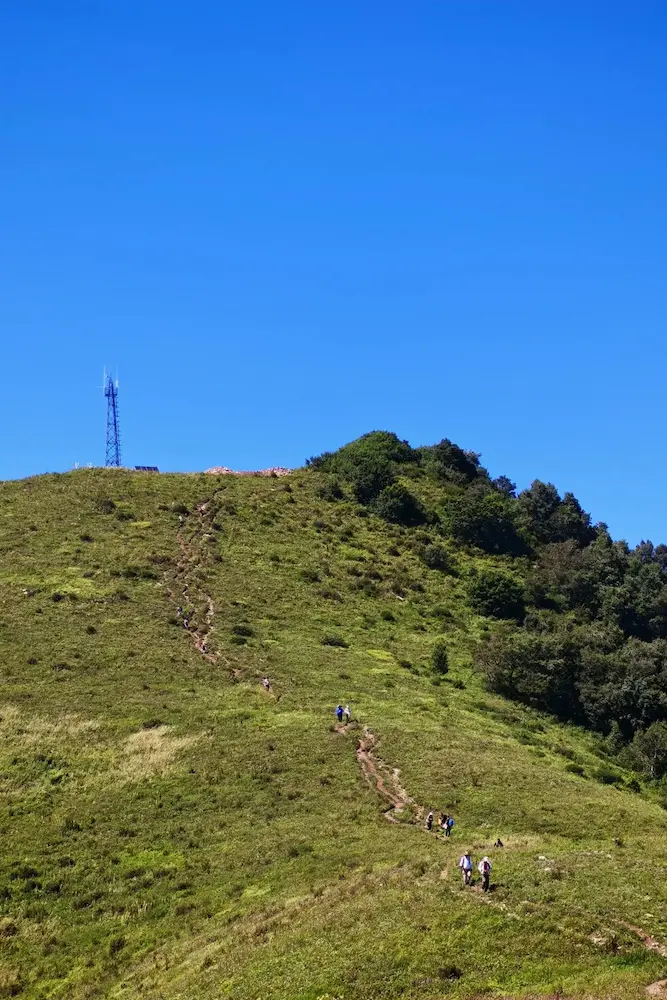
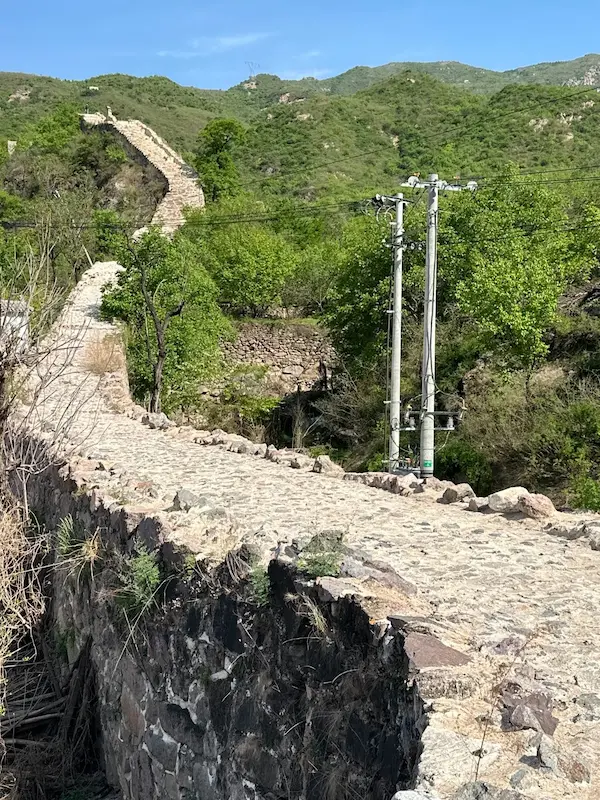
⚠Which sections of the Great Wall are not suitable for casual tourists to visit without proper preparation?
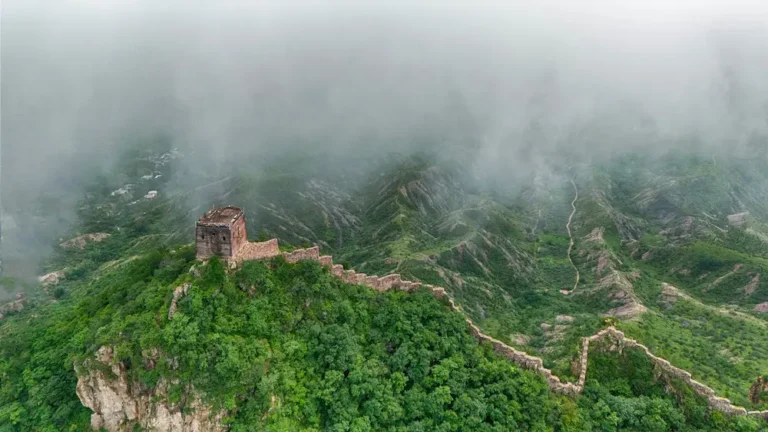
1. Jiankou: This section is rugged and treacherous, with many cliffs and loose rocks. Unless you have extensive hiking experience or a local guide, it is not recommended as a casual tourist destination. Access is prohibited during the fire prevention season.
2. Jiuyanlou and Huangcaoliang: Before traveling, confirm whether these areas are open, check fire prevention regulations, and verify trail conditions; do not visit on a whim based solely on online travel guides.
Practical Travel Tips
Reservations and Tickets: Rules Vary by Great Wall Site
Badaling, Mutianyu, Juyongguan, Simatai, and Huanghuacheng Water Great Wall are each managed by different operators, so their reservation portals and ticketing policies differ.
Before your trip, be sure to check the official website for the specific section of the Great Wall you plan to visit to confirm opening hours, reservation methods, and ticket prices. Do not assume the same rules apply to all sections of the Great Wall.
- Most sites require reservations under a real-name system; foreign visitors can register for reservations using their passports.
- Tickets for popular sites are in high demand during national holidays, so it’s recommended to plan well in advance.
Payment Information
Most ticket offices, restaurants, and souvenir shops at Mutianyu and Badaling accept Visa and Mastercard international credit cards.
At relatively remote locations such as Jinshanling, Huangcaoliang, and Gubeikou, small local shops and farmhouse-style restaurants typically only accept WeChat Pay, Alipay, and cash.
✅Tip: We recommend linking your international credit card to WeChat Pay or Alipay in advance; also, carry 200–300 RMB in cash with you to handle unexpected situations.
Transportation: Beware of “unlicensed taxis” on the roadside
Near the Dongzhimen or Deshengmen bus stops, you may encounter people telling you“ The Great Wall is closed today,” or“ I’ll take you via a shortcut for a lower price.”
Please stay vigilant and use only official transportation:
- Badaling: Suburban Railway Line S2 (“Great Wall Express”) or Bus Route 877
- Mutianyu: Take the 916 Express from the Dongzhimenwai bus stop to Huairou, then transfer to the H24 or take a taxi
- Official Day Tours: Choose products with plenty of authentic reviews on platforms like Ctrip or Meituan; do not trust street touts.
Gear and Stamina
The steps along the Great Wall vary in height, so a pair of non-slip hiking boots is more important than any fashionable shoes.
In winter (December–February), winds on the mountain are extremely strong, and the wind chill can make it feel 8–10°C colder than in the city. Be sure to bring a windproof jacket, a hat, and gloves.
Most sections have simple kiosks, but it is recommended that you bring 1–2 bottles of water and some snacks (chocolate, energy bars).
Foreign Tourists Visiting the Great Wall: 5 Things to Confirm Before You Go
1. Documents: Carry your passport with you; you’ll need it for reservations and ticket purchases.
2. Payment: Set up a mobile payment app linked to your foreign credit card, and bring a small amount of cash.
3. Transportation Apps: Download navigation and ride-hailing apps in advance.
4. Navigation: Make sure your destination is the official entrance to that section of the Great Wall; do not navigate to unknown, off-the-beaten-path entrances;5. Return Trip: Check the times of the last bus and last train in advance, and allow extra time for your return journey
7 Common Pitfalls to Avoid on Your First Trip to the Great Wall
1. Itinerary Pitfall: Planning to visit two or more sections of the Great Wall in a single day—the distance is enormous, and there simply isn’t enough time.
2. Transportation Pitfall: Focusing only on how to get there without confirming return transportation schedules in advance.
3. Hiking Pitfall: Looking only at the distance in kilometers on the map and ignoring the steep incline of the Great Wall’s steps, leading to a severe underestimation of the physical exertion required.
4. Ticket Pitfall: Assuming you can buy tickets on-site, when some popular time slots require advance reservations.
5. Unofficial Great Wall Pitfall: Treating sections like Jiankou—which aren’t fully open to the public—as regular tourist attractions and visiting them without proper preparation.
6. Payment Pitfall: Relying solely on mobile payments and not bringing cash for remote locations.
7. Timing Pitfall: Scheduling your Great Wall visit as the last stop of the day, resulting in a descent just as it’s getting dark.
Tips to Avoid Pitfalls
These are pitfalls my friends or I have fallen into; I hope they help you steer clear of them.
❌ “Day Tour” Trap: Don’t randomly buy extremely cheap day tours on the street or at hotel front desks (such as “30 yuan to visit the Great Wall”). They often take you to free attractions or shopping stores.
✅ The Smart Way: Book through platforms like Trip.com, Ctrip, or Meituan, and check reviews for complaints about “forced shopping.” Or go it alone—However, if you choose to use public transportation, please check the day’s schedule and last departure times in advance.
❌ Underestimating the Difficulty of “Wild Sections”: Some people have attempted the Jiankou section without a guide, only to get stranded on the “Eagle Flying Upside Down” cliff and require a fire department rescue.
✅ Best Practice: If you want to hike the wild Great Wall, Jinshanling, Gubeikou, and Huangcaoliang are relatively safe and well-managed options. Bring trekking poles, wear long pants, and avoid climbing watchtowers that are visibly collapsed.
❌ Relying solely on mobile payments: The farmstay restaurants at the foot of Huangcaoliang only accept cash.
✅ Best practice: No matter which section you visit, keep 200 yuan in cash on hand (broken down into smaller denominations, such as four 50-yuan notes).
The Great Wall Is Not Just a Scenic View, but the Very Breath of History
Quick Recap to Help You Narrow Down Your Options:
- First-time visitors to Beijing: Prioritize comparing Badaling, Mutianyu, and Juyongguan
- For photography enthusiasts: Jinshanling, Simatai, and Huanghuacheng Water Great Wall
- History enthusiasts: Juyongguan, Gubeikou, and Simatai
- Hikers: Jiuyanlou and Huangcaoliang
- Want to explore the “Wild Great Wall”: First check whether the section is open and assess route risks—don’t treat Jiankou as a typical tourist attraction.
When I first stood on the Hongshimen section of the Great Wall—with my left foot in Beijing, my right foot straddling the border into Hebei, and the ridges of Tianjin still visible behind me—I suddenly grasped the true weight of the words “Great Wall.”
It is not merely bricks and stones, but a lifeline for countless soldiers, artisans, and common people over the centuries. Behind every brick lies a pair of hands that once touched it; atop every watchtower, a pair of eyes once gazed out toward the northern grasslands.
Today, the Great Wall is no longer a defensive line in the midst of war, yet it still stands there, waiting for you to come and hear its stories.
Author’s Note: This article provides a general overview. For specific details on admission fees, routes, and transportation for each section of the Great Wall, please refer to the corresponding individual guide. Policies at each Great Wall scenic area are subject to change; be sure to check the official announcements for the relevant scenic area before your trip.