Guide to Beijing’s Doufuchi Hutong: Where Mao Zedong Once Lived + Hong’en Temple + Transportation Guide (Updated for 2026)
Last Updated: Aug. 2026
Doufuchi Hutong is a small alley just 477 meters long, located right next to Beijing’s Bell and Drum Towers, yet it holds over 700 years of history—including Hong’en Temple, known as the “strategic point at the tail of the dragon” during the Yuan Dynasty; the small courtyard where Mao Zedong and Yang Kaihui fell in love; and the legendary stories of Ming Dynasty tofu merchants.
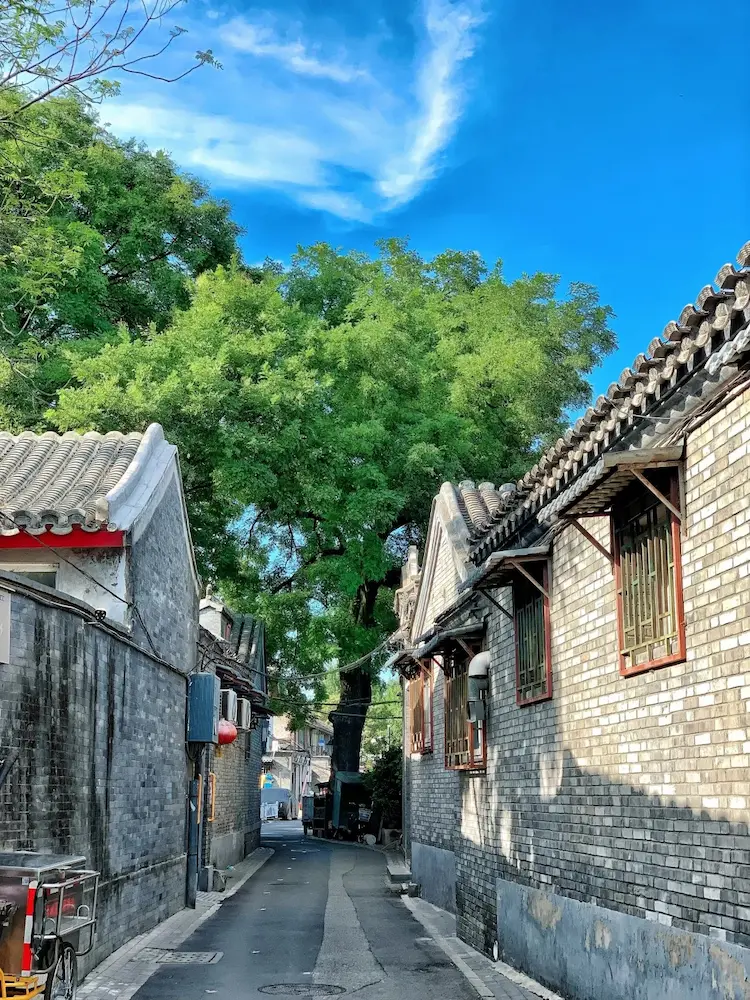
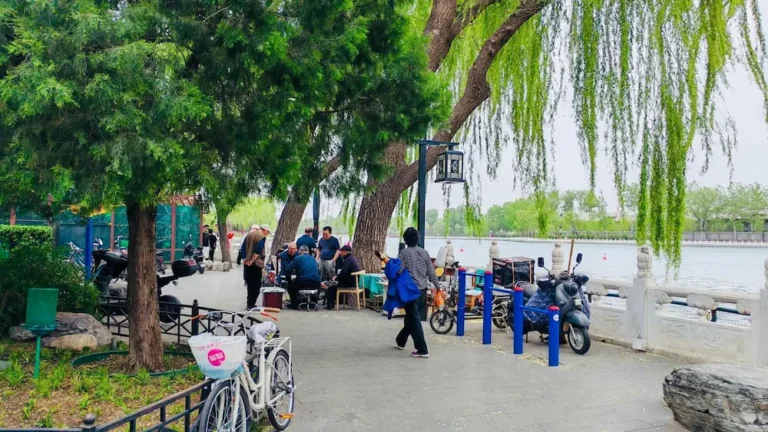
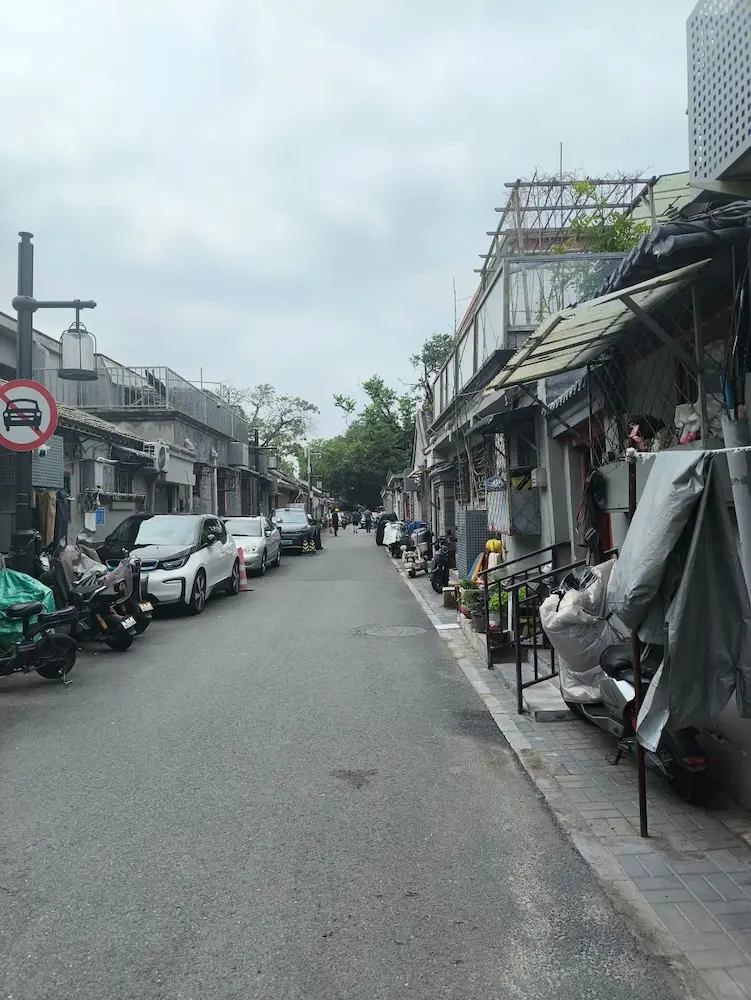
Unlike the crowds of Nanluoguxiang, here you’ll find only blue-gray bricks, gray tiles, and the everyday life of old Beijing. Accessible via Metro Lines 8 or 2, the alley is open to the public free of charge, and admission to Hong’en Temple is also free.
Table of Contents
Practical Information (Must-Read Before You Go)
| Item | Details |
| Name | Doufuchi Hutong (Pinyin: `Doufuchi Hutong`) |
| Address | Dongcheng District, Beijing; west of Jiugulou Street to east of Baochao Hutong |
| Subway | Line 8, Shichahai Station (`Shichahai Station`), Exit A2, about a 10-minute walk; or Lines 2 and 8, Gulou Dajie Station (`Gulou Dajie Station`), Exit G, about an 8–12-minute walk |
| Bus | Routes 135, 27, 60, etc.; get off at the “Baochiao Hutong ”or “Gulou” stop |
| Driving | Not recommended. The hutongs are narrow, and there is no parking lot for visitors. If taking a taxi, ask the driver to go to “West Entrance of Doufuchi Hutong ”or “No. 15 Doufuchi Hutong ” |
| Admission | The hutong itself is free. Hong’en Temple is free (some digital exhibitions may require a fee). The Yang Changji Former Residence is a Dongcheng District cultural heritage site; the interior is not open to the public (exterior viewing only). |
| Reservation Information | Hong’en Temple officially recommends following the “Guanzhong ” WeChat official account to make reservations. For foreign visitors: If you encounter language issues when registering on WeChat, you can usually go directly to the site, show your passport to the staff, and register for entry (on-site ticket purchase/registration is generally not a problem). |
| Opening Hours | The alley is open 24 hours a day. Hong’en Temple is open approximately from 10:00 AM to 5:00 PM (opening hours vary by area; we recommend checking the latest announcements on the “ Guan Zhong” WeChat official account before your visit). |
| Best Time to Visit | Weekdays from 9:00 AM to 11:00 AM or after 3:00 PM. The morning offers good lighting and fewer tourists, plus you can observe locals going about their daily routines, such as buying groceries or walking their dogs; in the afternoon, it’s very pleasant to enjoy coffee and soak up the sun at Hong Eng Temple. |
| Recommended Duration | 1.5–2 hours (about 30 minutes for a stroll through the hutong; 1–1.5 hours for an in-depth visit to Hong’en Temple and coffee) |
| Dress Code | There’s a lot of walking, so wear comfortable shoes. The hutong is a standard street with flat, easy-to-walk surfaces. |
| Budget Guide | The hutong is free. Coffee at Hong’en Temple costs about 40–60 RMB (approx. $5.50–$8.50). Lunch nearby ranges from 30–80 RMB (approx. $4–$11). |
| Photography | Photography is permitted throughout the hutong and in the outdoor areas of Hong’en Temple—It’s very photogenic. Please do not take photos inside private residences without permission. |
| Language Support | No English-speaking guides. Some exhibition panels inside Hongeng Temple have English translations. We recommend using a mobile translation app. |
Friendly Reminder: Doufuchi Hutong is a living residential community where many residents live. Please keep quiet, avoid loud noises, and do not enter private courtyards. When taking photos inside Hongeng Temple, please follow the signage; photography may be restricted in certain exhibition areas.
The Origin of the Hutong: From “Doufu Chen” to“Doufu Chi”
The name Doufu Chi Hutong sounds as if it describes a large pond, but it actually has nothing to do with ponds.
During the Ming Dynasty, this hutong was called “Doufu Chen Hutong.” It is said that a tofu merchant surnamed Chen lived there at the time; his tofu was of excellent quality and reasonably priced, and his business was exceptionally prosperous.
People began using “Doufu Chen” to refer to the alley, meaning “the alley where the Chen family, the tofu makers, lived.” This naming convention was quite common in Beijing—much like “Fangjia Hutong” or “Shijia Hutong”—where streets were named after the families residing there.
By the Qianlong era of the Qing Dynasty (around 1750), the pronunciation of “Chen” and “Chi” had become similar in colloquial speech. Through word of mouth, the name gradually evolved into “Doufu Chi Hutong.”
The character “Chi” (pool) evokes a more vivid image, as if there were actually a large pool used for making tofu there, and this name has remained in use to this day.
During the 1965 standardization of place names, the western section of the alley, “Niangniangmiao Hutong,” was merged into Doufuchi Hutong. During the Cultural Revolution, it was briefly renamed “Chaohong Hutong,” but the original name was quickly restored.
Cultural Insight: Many hutong names in Beijing derive from the artisans or merchants who lived there, such as “Liulichang” (a factory producing glazed roof tiles), “Caishikou” (a vegetable market), and “Mishidajie” (a rice market).
These names reflect centuries of urban life in old Beijing—where ordinary people, through their crafts and trades, left their mark on the streets they called home.
Highlights: One Hutong, Landmarks of Two Eras
1. Yang Changji’s Former Residence (No. 15)—The Starting Point of Young Mao Zedong’s“Beijing Drift”
Current Status: A cultural heritage site under the protection of Dongcheng District; the interior is not open to the public, but the exterior can be viewed.
What kind of history is this?
In 1918, a professor from Hunan named Yang Changji was hired by Cai Yuanpei, President of Peking University, to teach in the Department of Philosophy. He moved his entire family from Hunan to Beijing and settled into a small siheyuan courtyard at No. 9 (now No. 15) Doufuchi Hutong. A bronze plaque hung above the main gate, inscribed with the words “Yang’s Residence at Banchang.”
At the time, Yang Changji was a highly influential educator and thinker. He taught many students, the most famous of whom was Mao Zedong, who would later change the course of China’s history.
In August 1918, the 25-year-old Mao Zedong left Hunan for Beijing for the first time. With nowhere to stay, he took up temporary residence at his teacher Yang Changji’s home—specifically, in a small room of less than 8 square meters on the south side of the courtyard. Yang Changji’s daughter, Yang Kaihui, lived in the eastern wing.
It was here that Mao Zedong and Yang Kaihui first became acquainted and later married. The jujube tree in the courtyard is said to have served as a “secret mailbox” through which Mao Zedong and Yang Kaihui exchanged messages back then.
Yang Changji also used his connections at Peking University to secure Mao Zedong a position at the university library, where he was responsible for managing periodicals and registering readers. There, Mao Zedong encountered a vast collection of Marxist literature for the first time and met his spiritual mentor, Li Dazhao.
Just how small is this courtyard?
Covering an area of only 455 square meters (roughly the size of two tennis courts), it is a two-courtyard siheyuan with 16.5 rooms remaining. It measures less than 30 meters from north to south and only 12 meters from east to west.
The front courtyard has three rooms on each side, while the rear courtyard has four rear-wing rooms. Despite its cramped dimensions, this modest space became a crucial intellectual starting point in modern Chinese history.
In January 1920, Yang Changji passed away from illness in Beijing. On his deathbed, he wrote a letter to his close friend Zhang Shizhao, in which he included the following line: “To save the nation, we must rely on Mao and Cai.” — “Mao” referred to Mao Zedong, and “Cai” to Cai Hesen. His foresight was truly extraordinary.
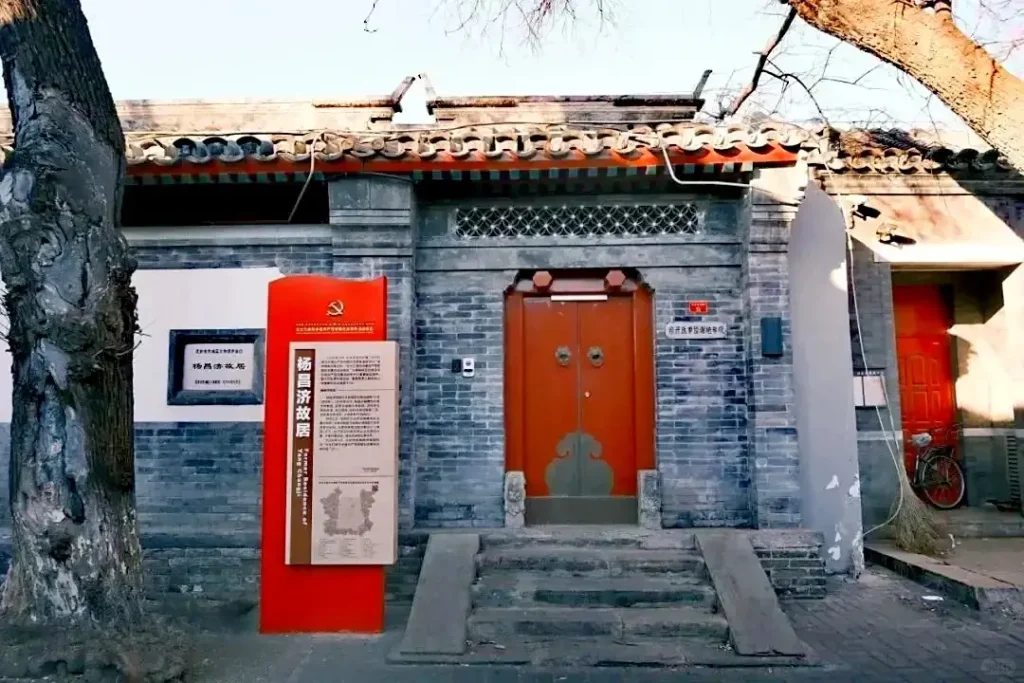
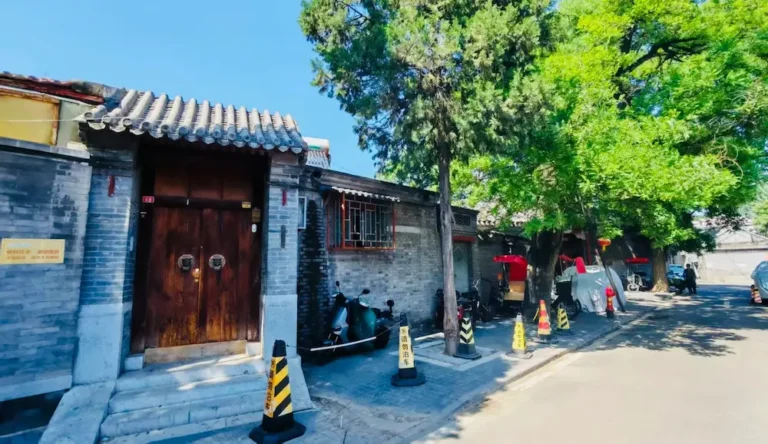
Historical Perspective: Standing at the entrance of Courtyard No. 15 today, you still see an ordinary red wooden door and gray brick walls. Ordinary families live within the courtyard, and the jujube tree atop the wall continues to bear fruit every year.
On those nights in 1918, as the young Mao Zedong discussed China’s future with his teacher and classmates by the light of a kerosene lamp, he likely never imagined that more than a century later, people would make special trips from all over the world just to visit this place.
2. Hong’en Temple (Courtyards 21–23)—A Cultural Landmark at the“Crux of the Dragon’s Tail.”
Current Status: Opened to the public following renovations in January 2024; free admission (some digital exhibitions may require a fee). The complex features a bookstore, café, digital art gallery, a Central Axis-themed post office, and a tea room. Recommended English Name: `The Temple Hub (Guanzhong Cultural Space)`
If No. 15 Doufuchi Hutong represents modern history, then Hong’en Temple in Courtyard 21 represents an even older Beijing.
The history of Hong’en Temple dates back to 1295 (during the Yuanzhen era of the Yuan Dynasty), making it over 730 years old. It was originally called “Qianfo Temple” and served as a Buddhist monastery.
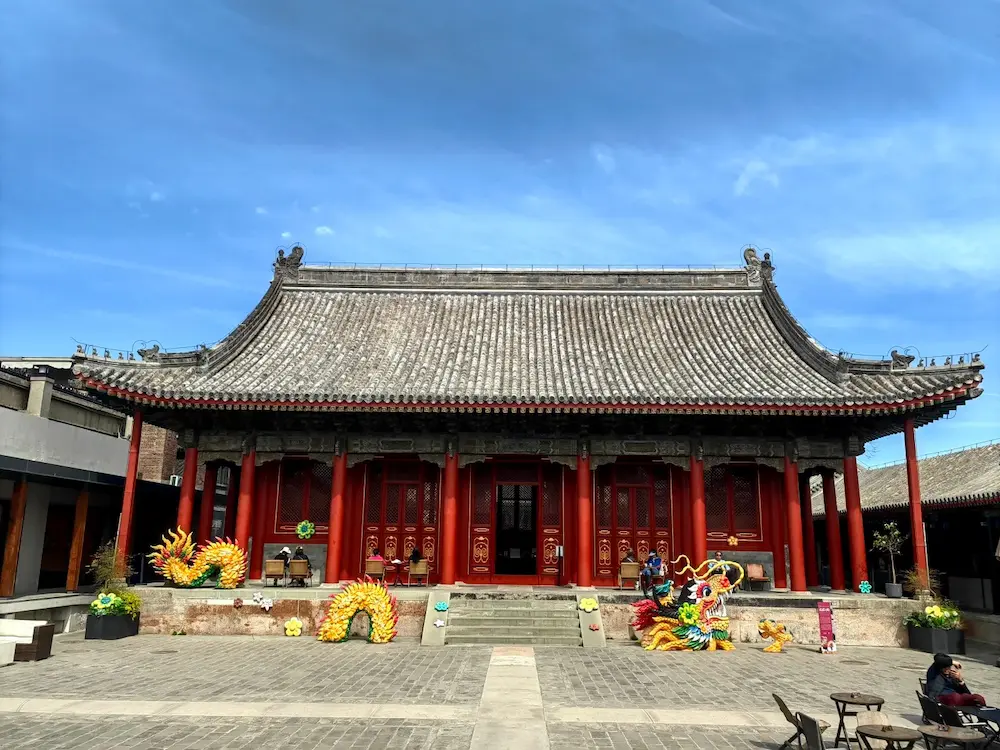
Why Is It Called the “Crux of the Dragon’s Tail”?
This name is quite evocative. Beijing’s central axis runs north to south through the entire city, starting at Yongding Gate in the south and ending at the Bell and Drum Towers in the north.
Hong’en Temple is situated at the northernmost end of the central axis of the Yuan Dynasty’s capital, to the north of the Bell and Drum Towers. As the northernmost structure along the entire axis, it resembles the very tip of a giant dragon’s tail.
Ancient people believed that the Dragon Vein (symbolizing the imperial family’s fortune and vital energy) extended from the south all the way to the north and needed to be “contained” at its northernmost point to prevent the imperial energy from leaking out. Therefore, Hong’en Temple was built to contain the Dragon Vein, earning it the name “The Pivot of the Dragon’s Tail.”
The historical layers of this alley, Doufuchi Hutong, lie adjacent to the northern end of Beijing’s central axis, stretching east-west just north of the Bell Tower. To its south stand the Bell and Drum Towers (originally built in 1272), which served as the timekeeping centers during the Yuan, Ming, and Qing dynasties; the western section of the alley houses a 730-year-old ancient temple—Hong’en Temple.
Standing in this alley, you can essentially take in all the core structures at the northernmost end of Beijing’s Central Axis from the Yuan, Ming, and Qing dynasties: the Central Axis (north-south) + the Bell and Drum Towers (timekeeping) + Hong’en Temple (concluding point) + Doufuchi Hutong (the bustling streets)—a condensed version of the northern section of the Central Axis.
The History of Hong’en Temple:
| Period | Name | Use |
| 1295 (Yuan Dynasty) | Qianfo Temple | Buddhist temple |
| Ming Dynasty | Qingjing Temple/Jixiang Temple | Buddhist temple |
| Qing Dynasty | Hong’en Temple | Taoist temple (rebuilt during the Guangxu era) |
| After the founding of the People’s Republic of China | Factory/Warehouse | Standard Parts Factory No. 2, vegetable market, etc. |
| 2024–present | Guanzhong Cultural Space | Local cultural museum, bookstore, café, and cultural and creative park |
An Interesting Story About a Qing Dynasty Eunuch:
During the Guangxu reign of the Qing Dynasty, a eunuch named Liu Duosheng (whose Taoist name was “Suyun Daoren”) funded the reconstruction of Hong’en Temple, converting it into a Taoist temple, and cast two iron lions in front of the Hall of the Heavenly Kings.
Why would a eunuch restore a temple? In old Beijing, many eunuchs chose to donate money to build temples or move into monasteries after retirement, seeking a spiritual home and sanctuary for their twilight years.
Liu Duosheng was one such example. Unfortunately, those two iron lions disappeared in the 1960s and remain missing to this day; now, they can only be seen in old photographs.
What’s Inside:
| Chinese Name | Description |
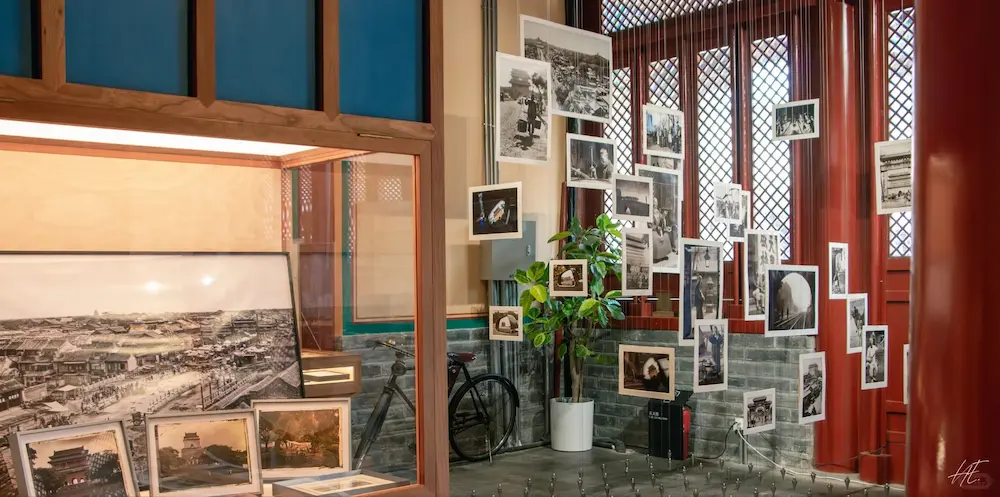
| Grand Hall Exhibition Hall | Permanent exhibition “ Hong’en Temple: The Story of a Beijing Temple,” featuring nearly 100 exhibits, including old photographs, digital media, and artifacts |
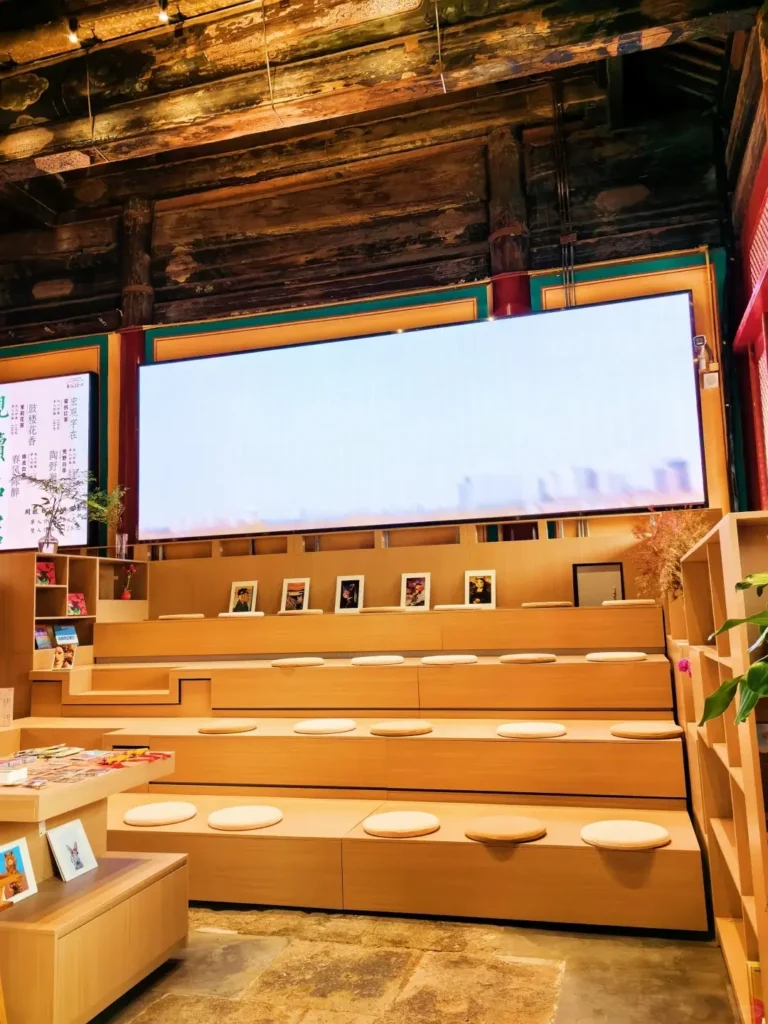
| Temple Library / Book Sanctuary | A bookstore housed within an ancient hall, featuring tiered seating on the east side and a large LED screen above showing documentaries |
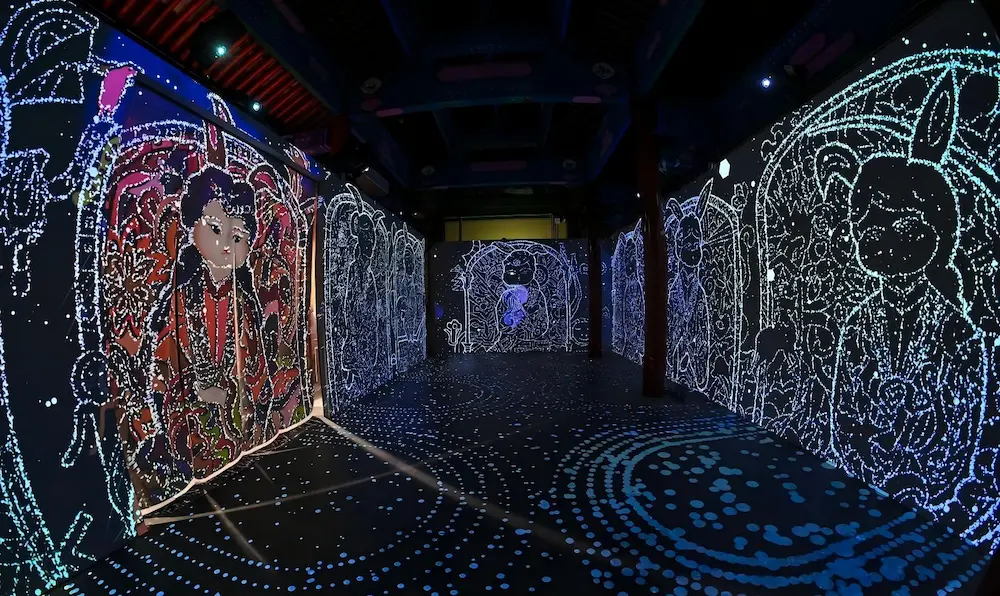
| Mountain Gate: Digital Art Hall | A digital art experience within a traditional building |
| Beijing Central Axis Theme Post Office | The nation’s first postal cultural and creative space themed around the Central Axis, offering postcards, mailbox keychains, and more |
| Tea House | A quaint tea house with Chinese-style furniture, accented with bamboo and Buddha’s hands |
| HALF COFFEE·Guan Space | A café tucked away in a century-old Taoist temple; the combination of coffee cups and ancient architecture makes for great photo opportunities |
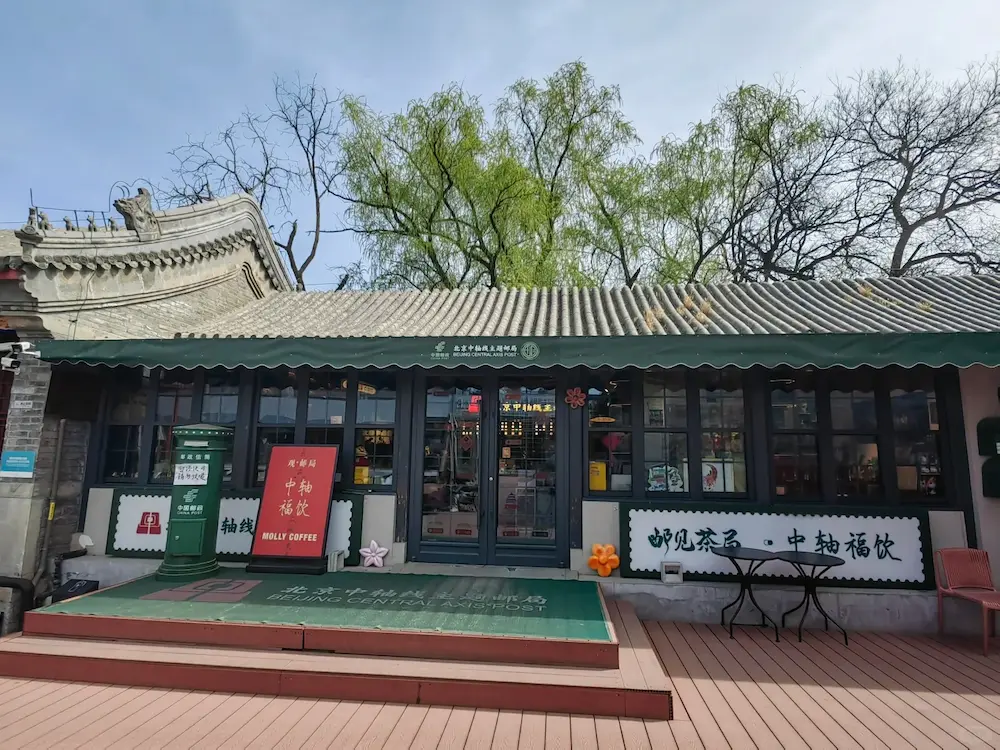
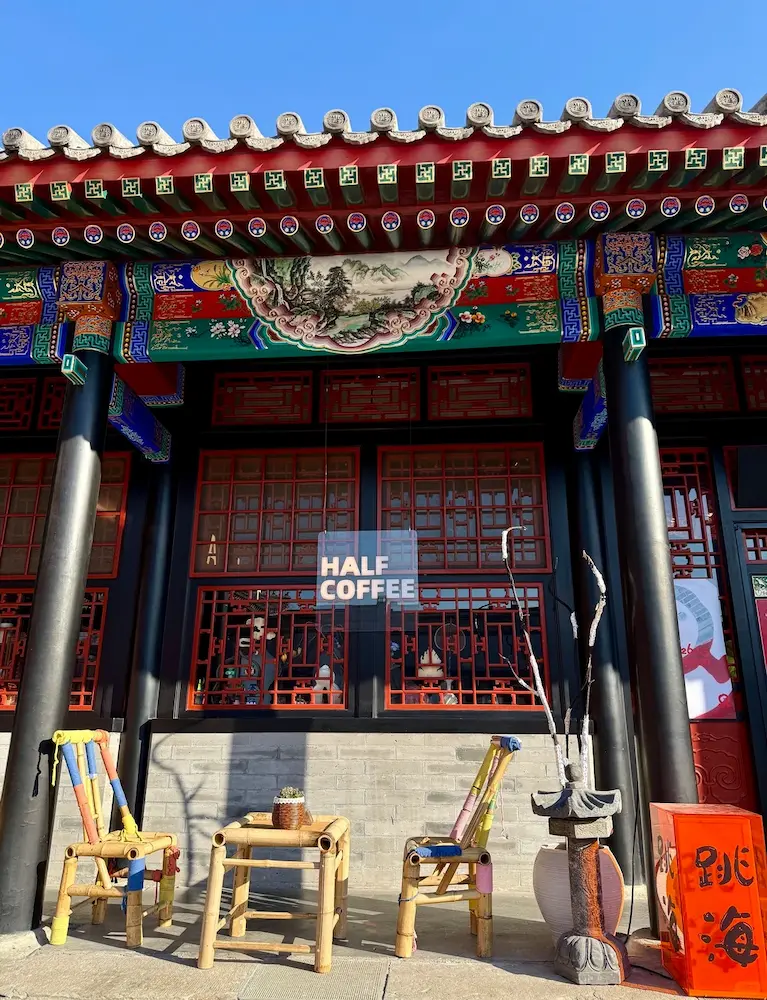
☕Café Experience: The café is located right inside Hongen Temple; you’ll spot it as soon as you walk in. Order the classic “Three-in-One” (black coffee + milk coffee + specialty coffee)—the portions are small but unique, and the cakes are delicious, too.
Sipping coffee outdoors while soaking up the sun, with centuries-old architecture towering overhead, creates a truly special atmosphere—even by Beijing hutong standards.
Nearby Attractions: Bell and Drum Towers + Shichahai + Beiluogu Alley + Baochao Hutong
Although Doufuchi Hutong isn’t very long, it’s in a prime location—right next to the Bell and Drum Towers. In just a few minutes’walk, you can visit several of Beijing’s most iconic attractions. It also serves as the central hub connecting the many hutongs I’ve previously introduced.
Bell and Drum Towers (1-minute walk)
As you exit the west end of Doufuchi Hutong, the massive gray building directly in front of you is the Bell Tower—it’s located directly south of the hutong’s western entrance, so you’ll come right up against it as soon as you turn the corner. To the south of the Bell Tower stands the Drum Tower; together, they are known as the Bell and Drum Towers.
Important Notice (Updated May 2026): The Bell Tower will be temporarily closed starting May 10, 2026, for structural reinforcement work on the bell frame. The reopening date will be announced at a later time. The Drum Tower will remain open during this period. We recommend checking the latest opening status via the “Beijing Bell and Drum Towers” WeChat official account before your visit.
Full-price ticket: 30 yuan (approx. $4.20), combined ticket for the Bell and Drum Towers. Peak season (approx. March–October) opening hours: 9:30 AM–5:30 PM. Drum-beating performances take place on the second floor of the Drum Tower at 10:00 AM, 11:00 AM, 1:00 PM, 2:00 PM, 3:00 PM, 4:00 PM, and 5:00 PM.
Food Pairing: After visiting the Drum Tower, head to Yaoji Chao Gan (on East Drum Tower Street) to sample some classic Old Beijing snacks—chao gan (stir-fried liver), baozi (steamed buns), zha geqi (fried dough sticks), and douzhi (fermented soybean drink). It’s a popular spot among locals, with prices ranging from 30 to 50 yuan per person.
Shichahai (5–10-minute walk)
Continue south from the Bell and Drum Towers, or exit the east end of Doufuchi Hutong and head south through Yandai Xiejie to reach Shichahai—one of Beijing’s most famous lakeside parks. Here, you can row a boat in summer and ice skate in winter, with bars and cafes lining the lakefront.
Beiluoguxiang (5-minute walk)
Beiluoguxiang is just a short walk south from the east end of Doufuchi Hutong. Compared to the crowds at Nanluoguxiang, Beiluoguxiang is much quieter, featuring many artsy boutiques, cafes, and residential courtyards.
If you’re looking for a quiet alley lined with rose-covered walls and home to a yellow-tiled God of Wealth temple. I highly recommend reading my other in-depth guide: “Beiluoguxiang: The Perfect Alternative to Escape the Crowds of Nanluoguxiang”.
Baochao Hutong (Directly Connected at the East Entrance)
The east entrance of Doufuchi Hutong leads directly to Baochao Hutong. In the history of old Beijing, this hutong was a symbol of “money” —during the Yuan Dynasty, the “Baochao Tiju Si”(Office of the Commissioner of Treasury Notes) was located here, equivalent to today’s currency printing plant and bank, where ordinary people would exchange old coins for new ones.
If you’d like to learn more about Yuan Dynasty finance and the“ scent of money ” in these hutongs, check out The In-Depth Walking Guide to Baochao Hutong.
Recommended Itinerary (Half-Day Tour)
Morning Itinerary (approx. 3–4 hours): Enter at the west end of Doufuchi Hutong (with the Bell Tower directly ahead) → Hong’en Temple (approx. 1 hour, including coffee) → Yang Changji’s Former Residence (exterior view, 10 minutes) → Walk east to the east end of the hutong → Stroll north along Luogu Alley → Cross Yandai Xiejie to the shores of Shichahai Lake → Walk along the lake until evening to watch the sunset.
Afternoon Itinerary (approx. 2–3 hours): Bell and Drum Towers (1–1.5 hours) → Enter at the west end of Doufuchi Hutong → Explore Hongeng Temple (approx. 1 hour) → Take a break at the café inside the temple.
Photography Guide
| Shooting Spot | Location | Best Time to Shoot | Tips |
| Main Gate of Hongen Temple | Red-lacquered gate of Courtyard 21 | 10–11 a.m. | Stand at the bottom of the steps outside the gate and shoot upward to capture the gate plaque and architectural details |
| Inside Hong’en Temple | Courtyard in front of the Emperor’s Hall | All day | Gray brick walls + red columns + ancient trees; use the ancient architecture as a backdrop for portraits |
| Café Terrace | HALF COFFEE inside the temple | Afternoon | Shoot against the light with the Bell Tower’s majestic roof as a backdrop (the Bell Tower is located south of Hong’en Temple; its massive gray silhouette makes an excellent background) |
| West Entrance of the Alley | Intersection with Old Drum Tower Street | Before Sunset | Exit the west entrance to face the Bell Tower directly; capture the alley’s depth with the Bell Tower as a backdrop |
| Mid-section of the Alley | Near Courtyard No. 15 | Morning | Blue-gray bricks and tiles + old locust trees; capture candid shots of passing locals or cyclists |
| Along the wall in front of the Bell Tower | Outside the main gate of the Bell Tower | Morning | Take portraits with the red walls of the Bell Tower as a backdrop; there are few tourists here, making it a hidden spot for photography |
Restaurants and Cafés
Inside Hongen Temple
| Name | Location | Features | Average Price |
| HALF COFFEE Guan Space | Inside Hong’en Temple | A café in a century-old Taoist temple; historic architecture + coffee, perfect for photos | 40–60 RMB |
Around the Hutong
| Name | Location | Features | Average Price |
| café sambal | No. 43, Doufuchi Hutong | Malaysian home-style cuisine; foreign owner; perfect for a change of pace | 80–120 RMB |
| Yaoji Chao Gan Shop | East Gulou Street | Old Beijing snacks: stir-fried liver, steamed buns, fried dough sticks, and soybean milk; popular with locals | 30–50 RMB |
| V7 COFFEE | Near Beilogu Xiang | Japanese-style dark-roast flannel pour-over coffee; quiet and off the beaten path, with professional baristas | 40–50 RMB |
| Yinxiang Xiaoguan | No. 11 Zhonglouwan Hutong | Antique Chinese decor; the menu features rosewood-carved order boards | 60–80 RMB |
Frequently Asked Questions (FAQ)
One Alley, Two Layers of History
Doufuchi Hutong is less than 500 meters long, yet it layers together two distinct “depths of history” in Beijing—
Ancient architecture from the Yuan and Qing dynasties: Hong’en Temple has stood here for 730 years. From Qianfo Temple to Qingjing Mosque to Hong’en Temple to a vegetable market to a cultural landmark, its reputation as the “crucial point at the tail of the dragon” has remained unchanged.
The starting point of modern revolutionary history: The small house number 15 witnessed the young Mao Zedong’s first long journey from Hunan to Beijing, witnessed his meeting with Yang Kaihui, and witnessed an unassuming yet pivotal incubator of ideas in modern Chinese history.
It also lies right next to the Bell and Drum Towers, the timekeeping center of the Yuan, Ming, and Qing dynasties, and is just a few minutes’ walk from Shichahai and Beiluogu Alley. Exit the east gate, and you’ll find yourself in Baochao Hutong—the currency exchange center of the Yuan Dynasty.
Here, there are no commercial hawkers, no rows of souvenir shops; only authentic life beneath the blue-gray bricks and tiles—an elderly man pushing a bicycle passes by, people sip coffee and read books inside Hong’en Temple, and the shadow of an old locust tree falls upon the gray walls.
If you’re visiting Beijing and want to avoid being swept along by the crowds in Nanluoguxiang, why not head to Doufuchi Hutong? It will reveal another side of Beijing—quieter, more down-to-earth, yet just as rich in stories.