How to Explore Beijing Central Axis: Itineraries for 15 Attractions and Reservation Guide (2026)
Beijing Central Axis stretches 7.8 kilometers from the Bell and Drum Towers in the north to Yongding Gate in the south, running through the heart of the city.
On July 27, 2024, it was officially inscribed on the UNESCO World Heritage List, becoming China’s 59th World Heritage Site.
It is not a single building, but a “line”—a line that connects the Bell and Drum Towers, the Forbidden City, Tiananmen Square, and the Temple of Heaven, forming a 7.8-kilometer-long “open-air museum.”
Table of Contents
Practical Information (Must-Read Before You Go)
| Item | Details |
| Name | Beijing Central Axis (English: `Beijing Central Axis`) |
| Type | World Cultural Heritage Site (inscribed in 2024) |
| Total Length | 7.8 kilometers |
| Area of the Heritage Site | 589 hectares |
| Area of the Buffer Zone | 4,542 hectares |
| Components of the Heritage Site | 15 in total |
| Admission | Separate fees for each attraction; some are free (see below for details) |
| Recommended Duration | 2–3 days |
| Best Time to Visit | Spring (April–May) and Fall (September–October) |
| Transportation | Line 8 covers several key areas along the Central Axis, making it a very convenient way to explore parts of the route |
Important Note: The 15 heritage elements along Beijing’s Central Axis do not constitute 15 separate tourist attractions.
They include palaces, city gates, bridges, altars and temples, remnants of ancient roads, and urban public spaces—each with its own unique way of being visited.
The focus of a tour of the Central Axis is not to “check off” all 15 sites, but to understand why these buildings and spaces are arranged in such a way.
What Exactly Is the Beijing Central Axis?
The Beijing Central Axis was first established in the 13th century (during the Yuan Dynasty) and took its current form in the 16th century (during the Ming Dynasty). It has been continuously refined over the course of more than seven centuries. It is a complex of architectural structures and historic sites that defines the overall layout of Beijing’s Old City.
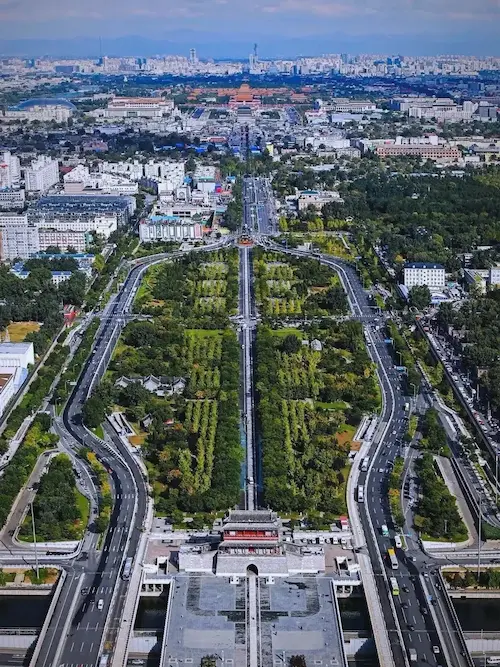
You can think of it in terms of three levels:
First Level: It is a north-south urban axis. Running from Yongdingmen to the Bell and Drum Towers, it cuts straight through the Old City of Beijing. This layout, characterized by left-right symmetry and undulating terrain, is a prime example of the mature stage in the development of the central axis in traditional Chinese capital cities.
Second Level: It connects Beijing’s most important imperial, ceremonial, and urban public spaces.
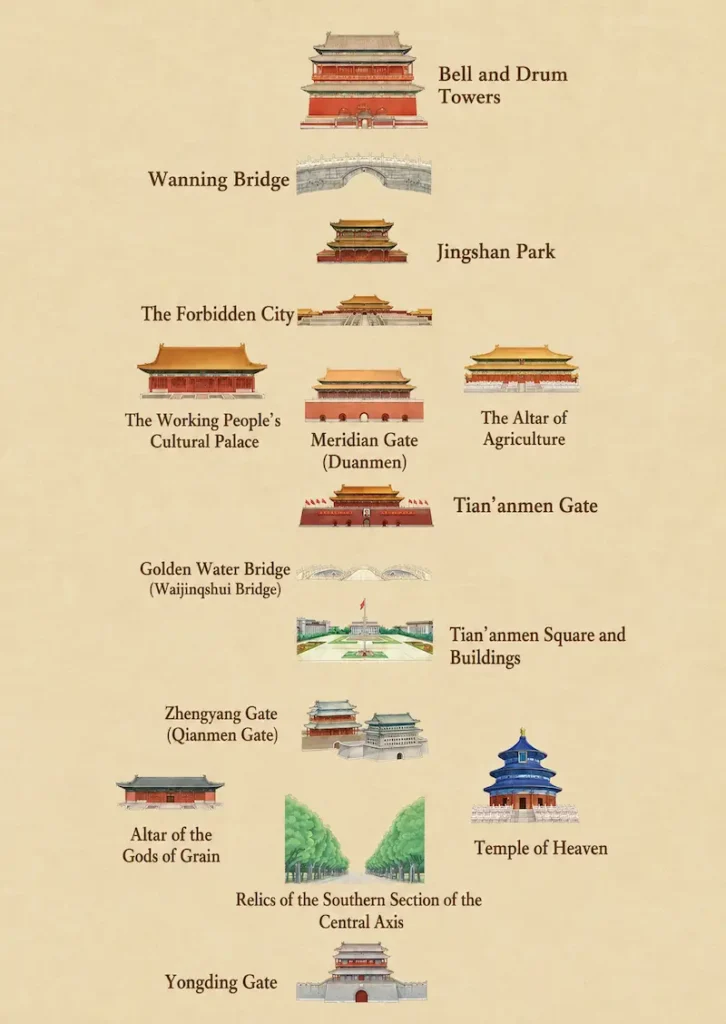
The Bell and Drum Towers, Wanning Bridge, Jingshan Hill, the Forbidden City, Duanmen Gate, Tiananmen Gate, the Outer Jinshui Bridge, the Imperial Ancestral Temple, the Altar of Land and Grain, Tiananmen Square and its complex of buildings, Zhengyangmen Gate, the remnants of the southern section of the road, the Temple of Heaven, the Altar of Agriculture, and Yongdingmen Gate—all are arranged along this line.
Third Layer: The 15 heritage elements we see today are the various components that remain from the historical layout of this urban axis.
The Imperial Ancestral Temple and the Altar of Land and Grain are situated on the eastern and western sides, respectively, while the Temple of Heaven and the Altar of Agriculture are also arranged in an east-west symmetrical layout. They are not merely “ordinary tourist attractions deviating from the Central Axis,” but rather integral components of the Central Axis’s urban ritual system.
Cross-cultural interpretation: You can think of Beijing’s Central Axis as Paris’s Champs-Élysées—a straight line connecting the city’s most important landmarks.
However, the Beijing Central Axis is not a commercial street but a ceremonial axis—stretching from north to south, it sequentially features the city’s timekeeping center (the Bell and Drum Towers), the imperial garden (Jingshan), the imperial palace (the Forbidden City), the main gate of the Imperial City (Tiananmen), the national ceremonial square (Tiananmen Square), and the imperial altars (the Temple of Heaven and the Altar of Agriculture)—a city’s functional zones, all condensed along a single axis.
How many categories can the 15 heritage elements be divided into?
For ease of understanding, the 15 heritage elements can be divided into five categories based on their functions:
Imperial Palaces
- The Forbidden City
Imperial Ritual Buildings
- The Imperial Ancestral Temple (for ancestral rites)
- The Altars of Land and Grain (for rituals honoring the gods of the land and the five grains)
- Temple of Heaven (for sacrificing to Heaven)
- Xiannongtan (for sacrificing to the God of Agriculture)
Urban Administration and City Gate Structures
- Bell and Drum Towers (for marking the time)
- Zhengyang Gate
- Yongding Gate
Roads, Waterways, and Remains
- Wanning Bridge
- Remains of the Southern Section of the Central Axis Road
State Ceremonies and Public Spaces
- Duanmen Gate
- Tiananmen Gate
- Outer Jinshui Bridge
- Tiananmen Square and its Complex of Buildings
Why Was the Beijing Central Axis Designated a World Heritage Site?
The Beijing Central Axis was inscribed on the World Heritage List primarily based on three core values:
① A Model of Urban Planning: It embodies the overall spatial order of ancient Chinese capital cities, characterized by “selecting the center to establish the palace” and “placing the ancestral temple on the left and the earth and grain altars on the right.” Mr. Liang Sicheng once remarked, “Beijing’s unique and majestic order stems from the creation of this central axis.”
② Spatial Expression of Ritual Systems and Power: Palaces, altars, temples, city gates, and roads are not arranged randomly but are sequentially arranged according to a strict hierarchical ritual system.
③ Long-Term Continuity and Preservation: Constructed in the 13th century, the layout of Beijing’s Central Axis has been continuously used throughout the Yuan, Ming, and Qing dynasties and into the modern era, reflecting the long-term evolution and preservation of Beijing’s urban structure.
Central Axis Tour Map (North to South)
To help with travel planning, this article divides the Central Axis into northern, central, and southern sections—a division designed to make it easier for visitors to plan their itineraries, not to imply that the Central Axis itself consists of only three official sections.
Northern Section: Bell and Drum Towers → Wanning Bridge → Jingshan Hill
Central Section: The Forbidden City → Duanmen Gate → Tiananmen Gate → Outer Jinshui Bridge → Imperial Ancestral Temple (east side) → Altar of Land and Grain (west side) → Tiananmen Square and its complex of buildings → Zhengyangmen Gate
Southern Section: Remnants of the Southern Central Axis Road → Temple of Heaven (east side) → Xiannongtan (west side) → Yongdingmen Gate
Note: Although the Imperial Ancestral Temple, Altar of Land and Grain, Temple of Heaven, and Xiannongtan are located on the eastern and western sides of the Central Axis, respectively, they are integral components of the Central Axis’s ritual layout.
What’s Worth Seeing? Priority Recommendations for Different Types of Visitors
The following recommendations are based on my personal travel experience and are provided for your reference.
First-Time Visitors to Beijing
Must-Sees (Recommended to Visit First):
- The Forbidden City (the heart of the Central Axis)
- Jingshan Hill (the best spot to overlook the Forbidden City)
- Tiananmen Square (the world’s largest urban square)
- Temple of Heaven (where Ming and Qing emperors performed sacrifices to Heaven)
Highly Recommended:
- Bell and Drum Towers (the northern starting point of the Central Axis)
- Imperial Ancestral Temple (2 yuan admission; an imperial hall even wider than the Hall of Supreme Harmony)
- Zhengyang Gate (reopening in 2026; reservations required)
- Xiannongtan (home to “China’s most beautiful coffered ceiling”)
Perfect for history buffs:
- Wanning Bridge (Beijing’s oldest bridge)
- Remains of the Southern Road Section (a cross-section of seven superimposed road layers)
- Altar of Land and Grain (featuring five-colored earth)
- Duanmen Gate and Outer Jinshui Bridge
Northern Section of the Central Axis: Bell and Drum Towers→Wanning Bridge→Jingshan Hill (Recommended: Half a Day)
1. Bell and Drum Towers—The Northern Starting Point of the Central Axis
The Bell and Drum Towers were first constructed in the ninth year of the Zhiyuan era of the Yuan Dynasty (1272) and served as the timekeeping centers during the Yuan, Ming, and Qing dynasties. The Drum Tower is located to the south and the Bell Tower to the north, with the two structures arranged in a north-south orientation.
The Drum Tower stands 46.7 meters tall, while the Bell Tower stands 47.9 meters tall. The bronze bell suspended inside the Bell Tower is hailed as the “King of Ancient Bells.”
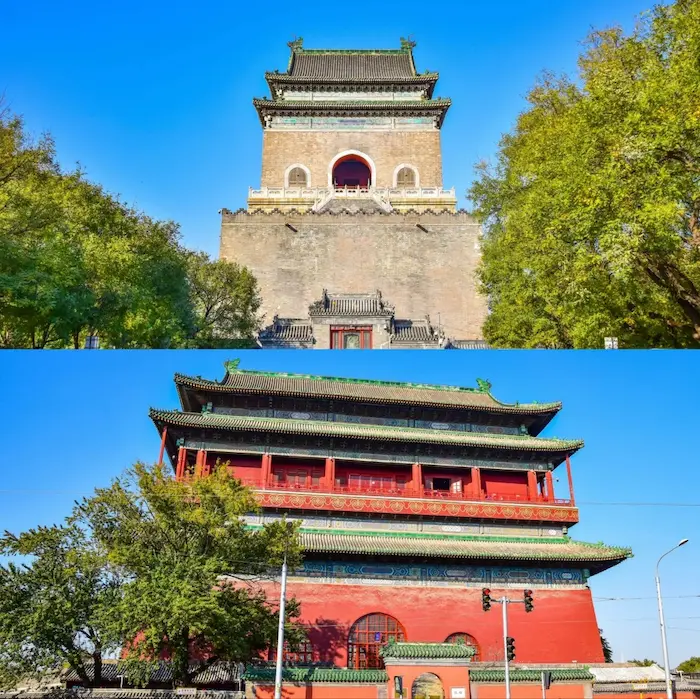
>Cross-Cultural Insight: The Bell and Drum Towers served as the “city clock” of ancient Beijing—drums were struck to mark the hours during the day, and the bell was rung to signal the watch at night. In an era without wristwatches, the entire city’s daily routine was governed by these sounds.
Practical Information:
- Address: No. 9, Zhonglouwan Hutong, Dongcheng District
- Opening Hours: Peak Season (March 26–October 25) 9:30 a.m.–5:30 p.m.; Off-Season 9:30 a.m.–4:30 p.m.
- Admission: Drum Tower 20 yuan, Bell Tower 10 yuan, Combined Ticket 30 yuan
- Reservations: WeChat Official Account “Beijing Bell and Drum Towers”
- Recommended Visit Duration: 1–1.5 hours
2. Wanning Bridge—The Oldest Bridge on the Central Axis
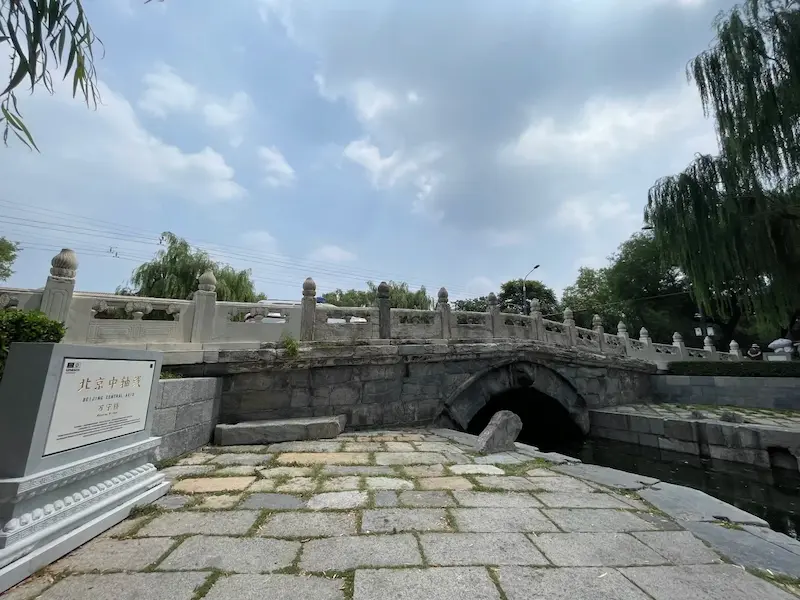
Wanning Bridge is the oldest bridge on Beijing’s Central Axis, and its location has remained unchanged for more than 700 years since the Yuan Dynasty. It consists of the bridge structure, wing-like extensions, water-suppressing beasts, and the remains of the upper sluice gate.
This 700-year-old stone bridge from the Yuan Dynasty carries cars above and the waters of Shichahai below. It is the oldest bridge in all of Beijing that is still “on duty.”
Practical Information:
- Address: Midway along Di’anmenwai Street (east bank of Shichahai)
- Admission: Free
- Recommended visit duration: 15–20 minutes
Jingshan Hill—The Best Spot to Overlook the Forbidden City
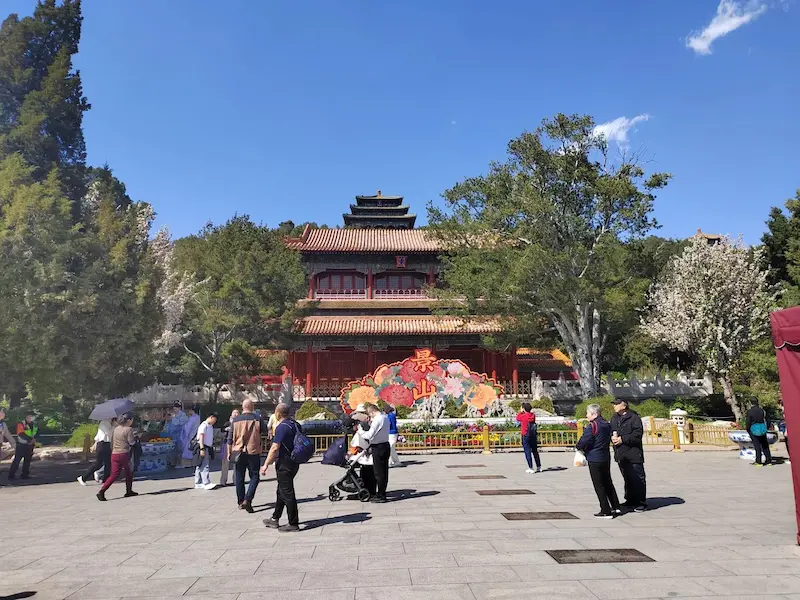
Jingshan Hill served as the imperial garden during the Ming and Qing dynasties and was formed from the earthen embankments of the Forbidden City’s moat. Five pavilions are arranged symmetrically along the central axis on the ridge; among them, the Wanchun Pavilion—the tallest and grandest—stands at the very center of the summit.
Standing in the Wanchun Pavilion and looking south, the entire Forbidden City unfolds before your eyes—this is Beijing’s most iconic vantage point.
Practical Information:
- Address: No. 44, Jingshan West Street, Xicheng District
- Hours: 6:00–21:00 during peak season; 6:30–20:00 during off-peak season
- Admission: 2 yuan
- Reservation: No reservation required; tickets purchased on-site
- Recommended visit duration: 1–1.5 hours
Central Section of the Central Axis: The Forbidden City→Zhengyang Gate (Recommended for one day)
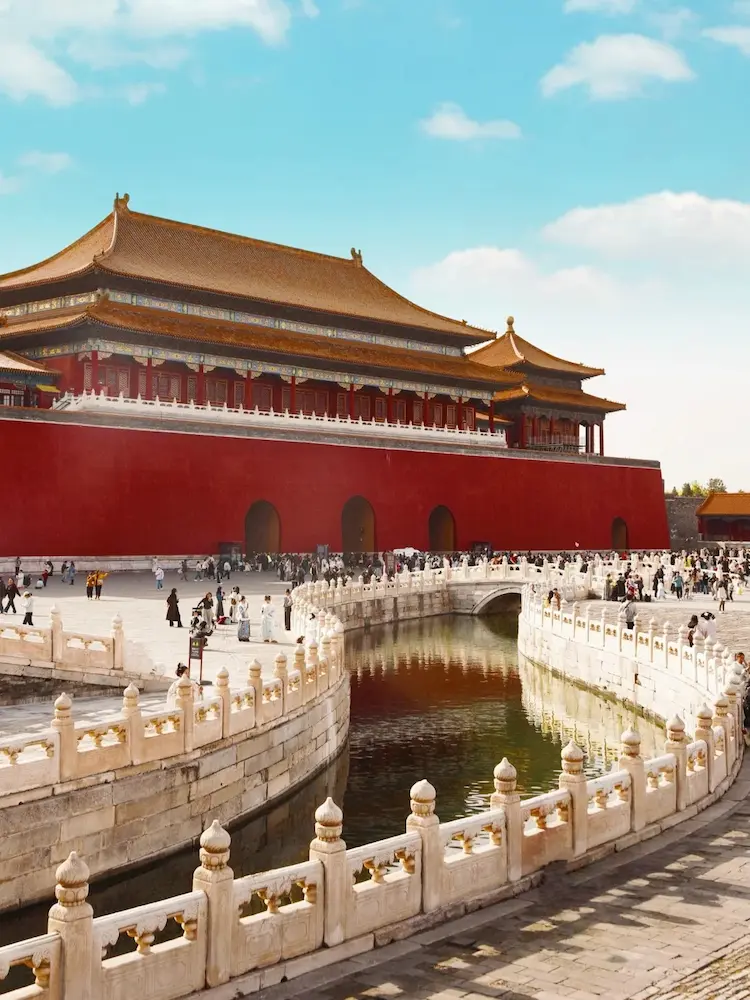
4. The Forbidden City—The Heart of the Central Axis
Construction of the Forbidden City began in 1406. It served as the imperial palace during the Ming and Qing dynasties and is one of the world’s largest and best-preserved ancient palace complexes, covering an area of 720,000 square meters.
Centered around the Three Great Halls, it comprises more than 70 palaces of various sizes and over 9,000 rooms.
The Forbidden City is the most important imperial architectural complex on Beijing’s Central Axis and serves as the core of the entire axis’s spatial and ritual order.
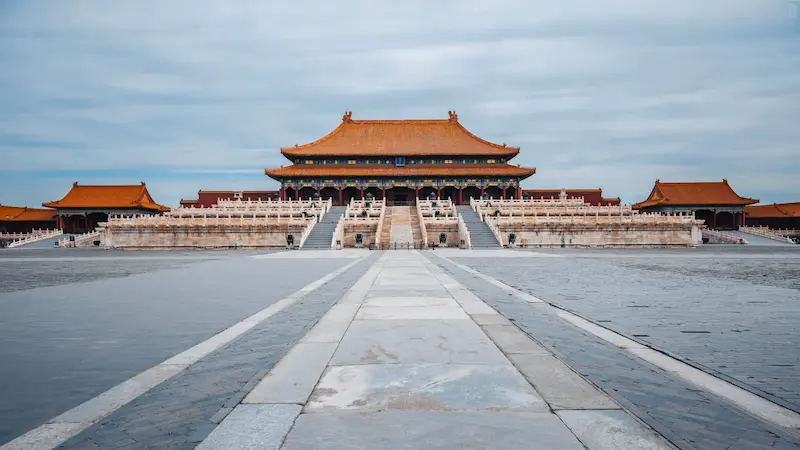
Cultural Insight: Although the Forbidden City is not located exactly at the “geometric center” of the Central Axis, it is the core of the entire axis’s spatial and ritual order. Buildings and spaces—including palaces, altars, temples, city gates, and roads—unfold in sequence around it.
Practical Information:
- Address: No. 4 Jingshan Qianjie, Dongcheng District
- Opening Hours: 8:30–17:00 during peak season; 8:30–16:30 during off-peak season (closed on Mondays)
- Admission: 60 yuan during peak season, 40 yuan during off-peak season
- Reservation Method: WeChat official account “The Palace Museum”; reservations must be made 7 days in advance
- Recommended Visit Duration: 3–4 hours
5. Duanmen—A Gate Often Overlooked by Tourists
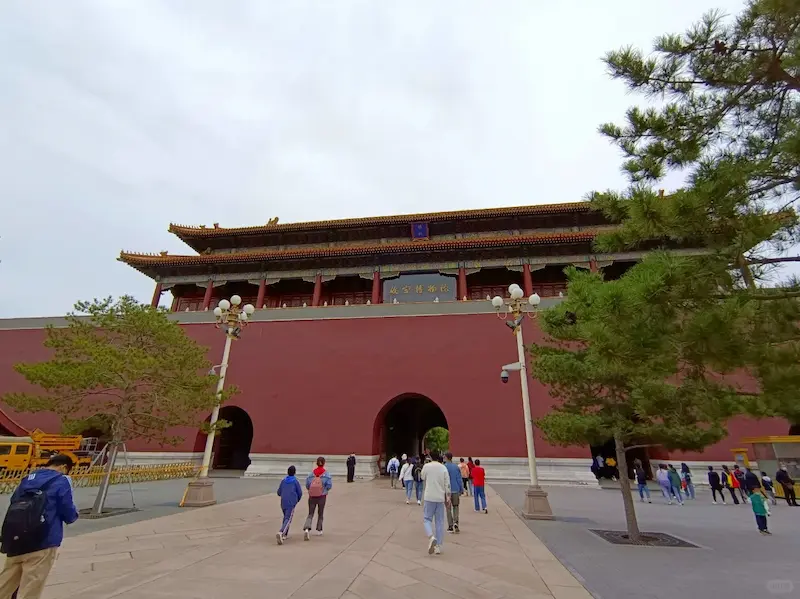
Duanmen is located on the south side of the Forbidden City, between Wumen and Tiananmen. It looks almost identical to Tiananmen, but its function was entirely different—during the Ming and Qing dynasties, it served as a storage place for the emperor’s ceremonial paraphernalia. Duanmen is easily overlooked by tourists, but as it stands between Wumen and Tiananmen, it is a key structure for understanding the spatial hierarchy of the Imperial City.
Practical Information:
- Address: Between Tiananmen Gate and Wumen Gate
- Admission: Free (exterior view only)
- Recommended visit duration: 15–20 minutes
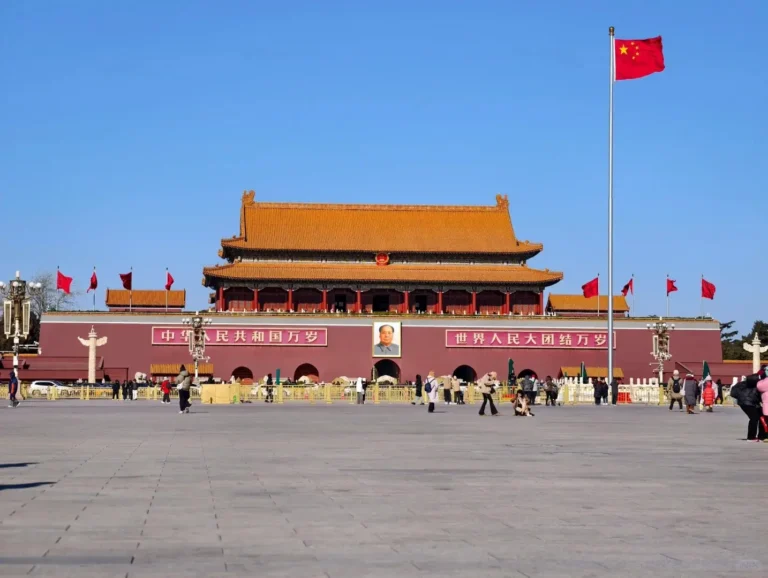
6. Tiananmen Gate—The Main Gate of the Imperial City
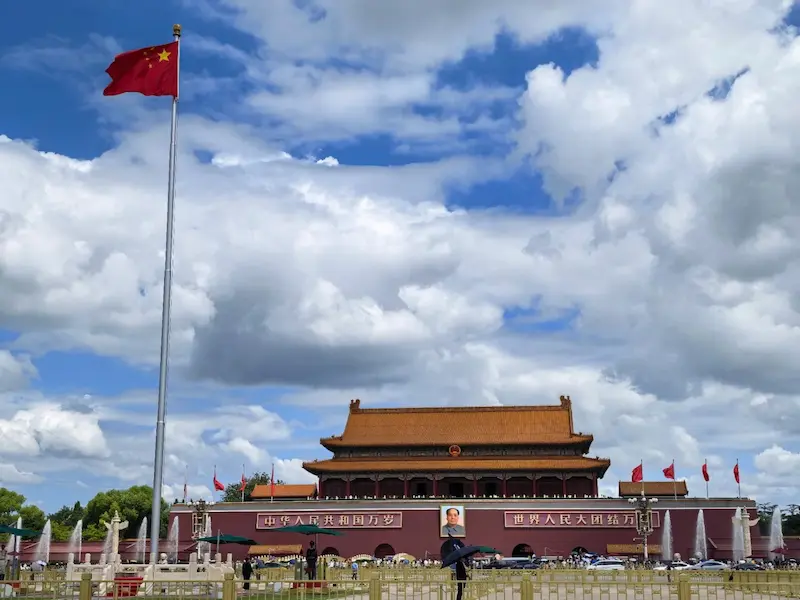
Tiananmen Gate served as the main gate of the Imperial City during the Ming and Qing dynasties. Originally named “Chengtianmen,” it was renamed to its current name during the Qing Dynasty. From the main gate of the Imperial City to a national symbol, it stands at the very center, bearing witness to the succession of dynasties. On October 1, 1949, Chairman Mao Zedong solemnly proclaimed the founding of the People’s Republic of China here.
Practical Information:
- Address: East Chang’an Avenue, Dongcheng District
- Admission: Free (exterior viewing only)
- Reservation: To enter Tiananmen Square, you must make a reservation 1–9 days in advance via the “Tiananmen Square Visit Reservation” mini-program.
7. Outer Jinshui Bridge—Seven Bridges, Seven Ranks
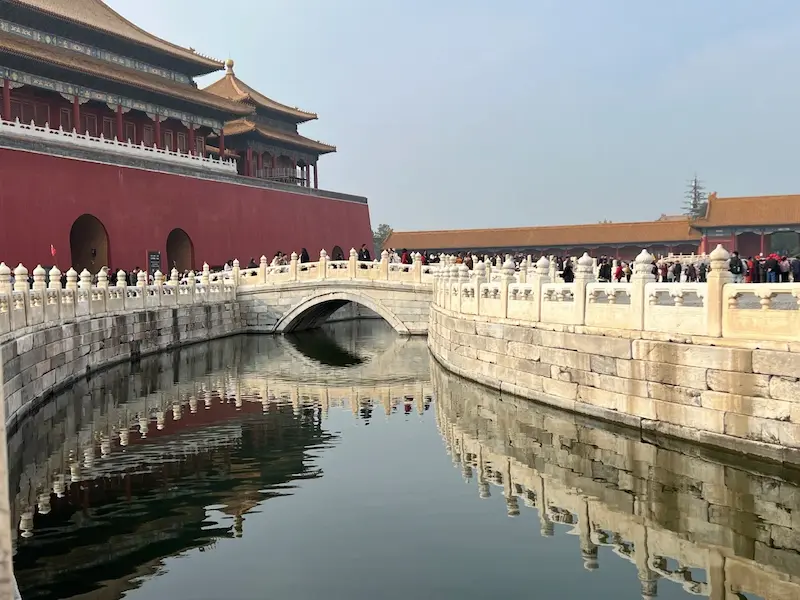
The Outer Jinshui Bridge is located in front of Tiananmen Square and spans the Outer Jinshui River. It consists of seven bridge structures arranged symmetrically along the central axis. The seven bridges have distinct ranks—only the emperor was permitted to cross the one in the very center.
Practical Information:
- Address: Directly in front of the Tiananmen Gate Tower
- Admission: Free
- Recommended Visit Time: 15–20 minutes
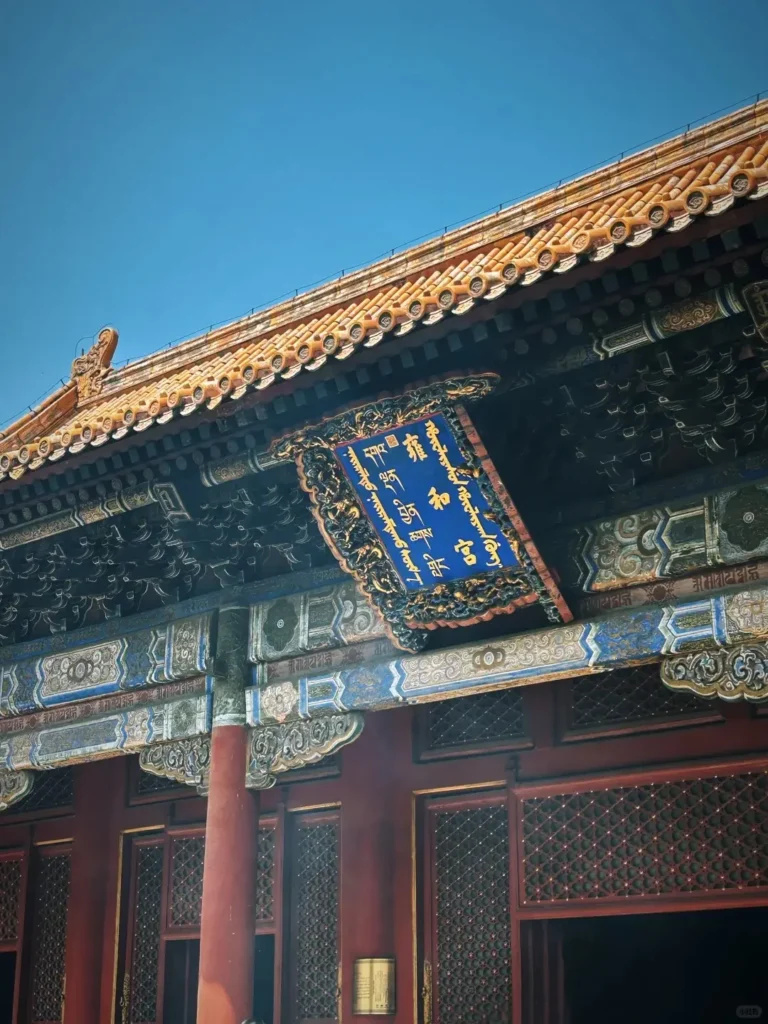
8. The Imperial Ancestral Temple (Palace of Working People’s Culture)—The Emperor’s “Family Temple”
The Imperial Ancestral Temple (Palace of Working People’s Culture) is located east of Tiananmen Square. Completed in the same year as the Forbidden City (1420), it served as the place where Ming and Qing emperors paid homage to their ancestors.
In accordance with the ancient planning principle of “ancestors on the left, the Earth and Grain Altars on the right,” the Imperial Ancestral Temple was constructed simultaneously with the Forbidden City and the Altar of Land and Grain. The Hall of Sacrifice spans eleven bays, exceeding the nine bays of the Hall of Supreme Harmony in the Forbidden City.
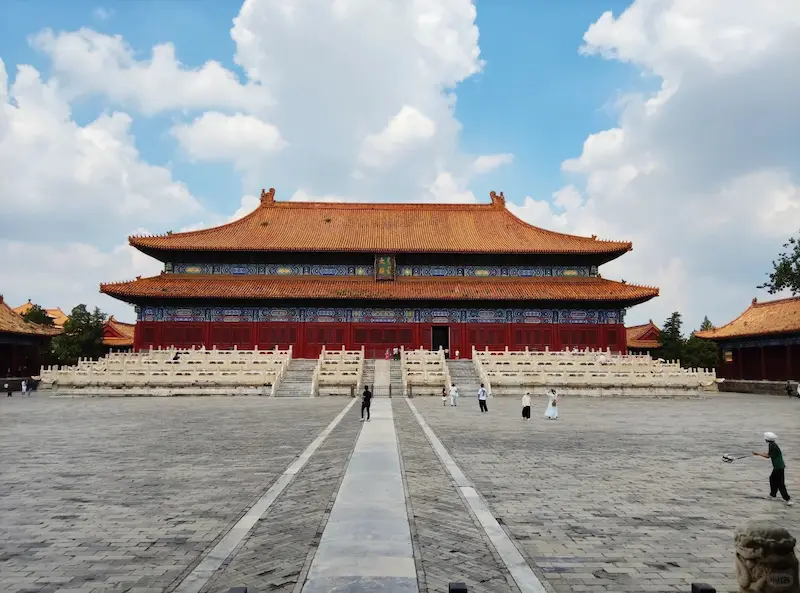
Cultural Insight: The Imperial Ancestral Temple is often referred to as “the foremost temple under heaven.” While the Hall of Supreme Harmony in the Forbidden City stands on a higher platform, symbolizing “the supremacy of imperial power,” the Hall of Sacrifice at the Imperial Ancestral Temple is wider, embodying “the greatness of the ancestors”—in traditional ritual systems, ancestors were accorded the highest status.
Practical Information:
- Address: East of Tiananmen Square, East Chang’an Avenue, Dongcheng District
- Hours: Park: 6:30–19:30 during peak season; Hall of Sacrifice: 9:00–16:30 (closed on Mondays)
- Admission: 2 yuan for park entry + 10–15 yuan for the Hall of Sacrifice
- Reservations: Not required
- Recommended visit duration: 1–1.5 hours
9. Altar of Land and Grain (Zhongshan Park)—The Realm on Five-Colored Soil
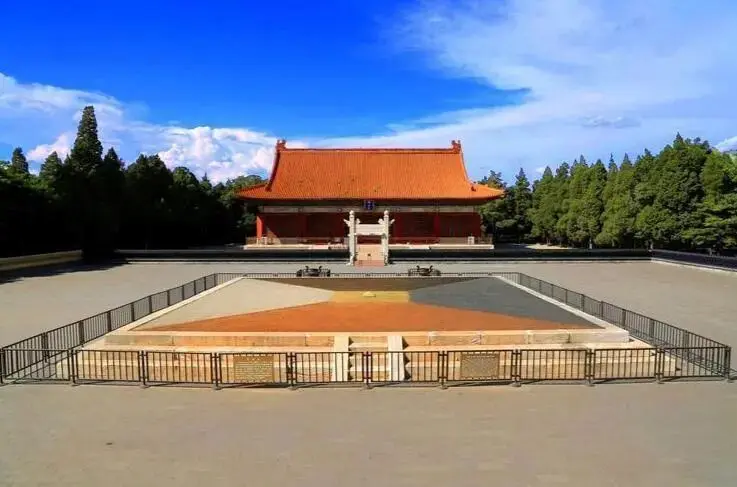
The Altar of Land and Grain (Zhongshan Park) is located west of Tiananmen Square, symmetrical to the Imperial Ancestral Temple to the east. It was where emperors of the Ming and Qing dynasties offered sacrifices to the gods of the earth and the five grains. The altar is covered with soil in five colors—blue, red, white, black, and yellow—representing the five cardinal directions of the realm.
Practical Information:
- Address: No. 4 Zhonghua Road, Dongcheng District (inside Zhongshan Park)
- Hours: 6:00–22:00 (summer)
- Admission: 3 yuan
- Reservations: Not required
- Recommended visit duration: 1–1.5 hours
10. Tiananmen Square and its Complex—The World’s Largest Urban Square
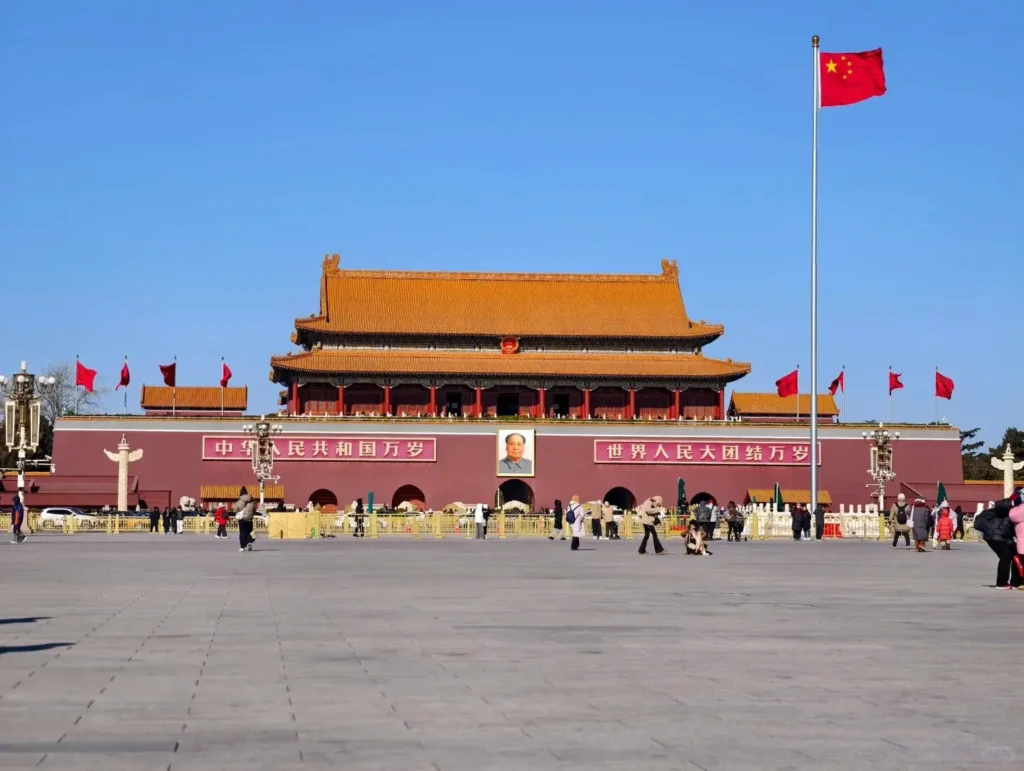
Tiananmen Square and its complex include Tiananmen Square itself, the Monument to the People’s Heroes, the Chairman Mao Memorial Hall, the National Museum, and the Great Hall of the People. Along the central axis of the square, from north to south, stand the national flagpole, the Monument to the People’s Heroes, and the Chairman Mao Memorial Hall.
It is the world’s largest urban square and serves as the central venue for state ceremonies in the People’s Republic of China.
Practical Information:
- Address: East Chang’an Avenue, Dongcheng District
- Admission: Free
- Reservation: Must be made 1–9 days in advance via the “Tiananmen Square Visit Reservation” mini-program
- Recommended duration: 1–2 hours
11. Zhengyang Gate—“The Foremost of the Nine Gates”
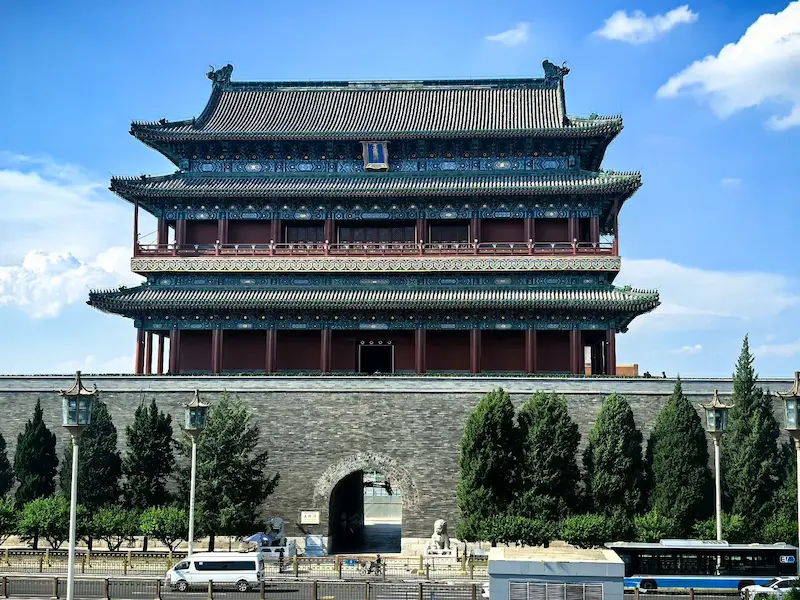
Zhengyang Gate was the southernmost gate of Beijing’s inner city during the Ming and Qing dynasties and stands 42 meters tall. It is the only city gate in Beijing where both the main gate tower and the arrow tower have been preserved in their original state.
On July 27, 2026, the Zhengyang Gate tower reopened to the public following systematic conservation and restoration work.
Practical Information:
- Address: South end of Tiananmen Square, Dongcheng District
- Hours: Tuesday–Sunday, 9:00–17:00 (last admission at 16:30); closed on Mondays
- Admission: 20 yuan for the City Gate Tower; free for the Arrow Tower (reservation required)
- How to Reserve: WeChat official account “Beijing Central Axis Heritage Conservation Center”; tickets are released daily at 5:00 PM; same-day tickets and on-site sales are not available
- Recommended Visit Duration: 1–1.5 hours
Southern Section of the Central Axis: Remnants of the Road→Yongding Gate (Recommended: Half a Day)
12. Road Remains of the Southern Section of the Central Axis—The Path Traveled by Emperors
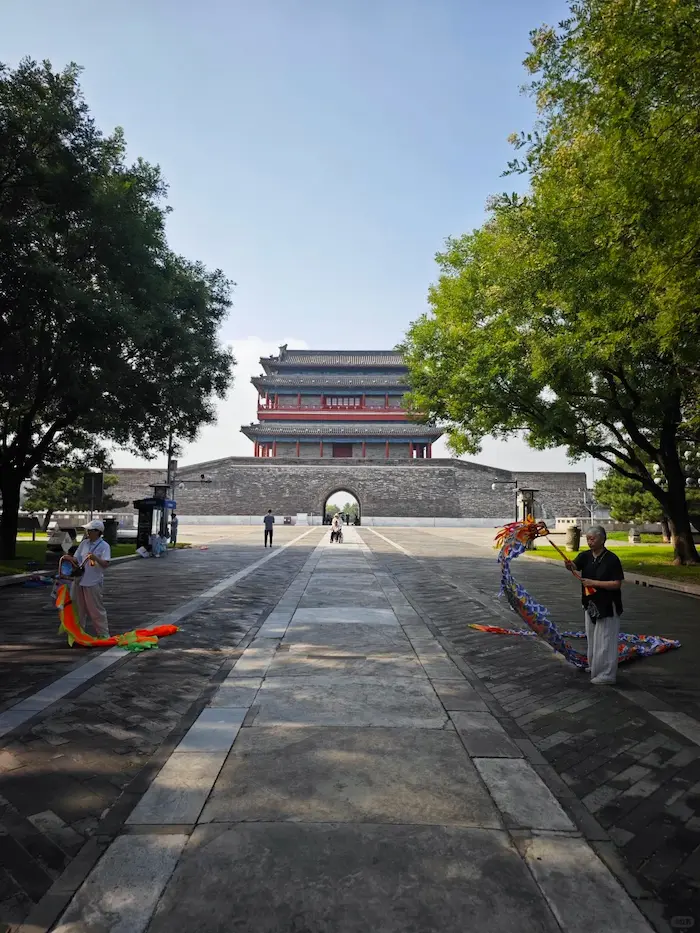
The road remains of the southern section form the central imperial processional route system between Zhengyangmen and Yongdingmen, serving as the mandatory route for state ceremonial activities during the Ming and Qing dynasties.
It comprises three sites: the stone-paved road remains north of Yongdingmen, the historical road remains along the central axis inside Yongdingmen, and the drainage ditch site on the southern central axis at Zhushikou.
Archaeological excavations in 2022 uncovered a road profile consisting of seven superimposed layers, spanning nearly 600 years—from a Ming-dynasty dirt road to a modern asphalt road.
Practical Information:
- Address: North of Yongdingmen, inside Yongdingmen Park
- Admission: Free
- Hours: The park is open all day
- Recommended duration: 30–45 minutes
13. The Temple of Heaven—Where Emperors Offered Sacrifices to Heaven
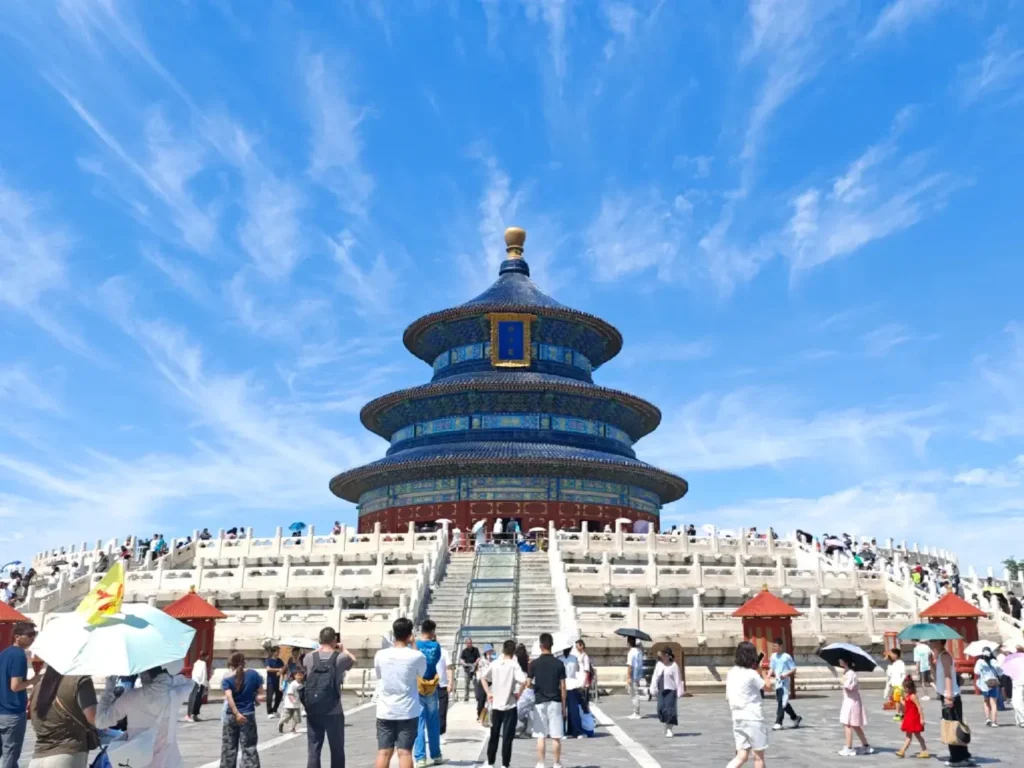
The Temple of Heaven was the site where emperors of the Ming and Qing dynasties offered sacrifices to Heaven and prayed for bountiful harvests and rain.
It is the largest surviving ancient ritual architectural complex in China. The Hall of Prayer for Good Harvests, the Echo Wall, and the Circular Mound Altar are must-see highlights.
With its red walls and blue tiles, every corner of the complex—from the overall layout to the finest details—is a masterpiece of ancient architecture.
Practical Information:
- Address: East side of Yongdingmen Street, Dongcheng District
- Hours: Park gates open 6:00–22:00 during peak season; core attractions open at 8:00
- Admission: Combined ticket 34 yuan (a combined ticket is required to access core attractions such as the Hall of Prayer for Good Harvests)
- Reservation: Book 1–7 days in advance via the WeChat official accounts “Tiantan Park Official Ticketing Platform” or “Changyou Park”
- Recommended visit duration: 2–3 hours
14. Xiannongtan (Beijing Museum of Ancient Architecture)—The Site Where Emperors Personally Plowed the Ritual Field
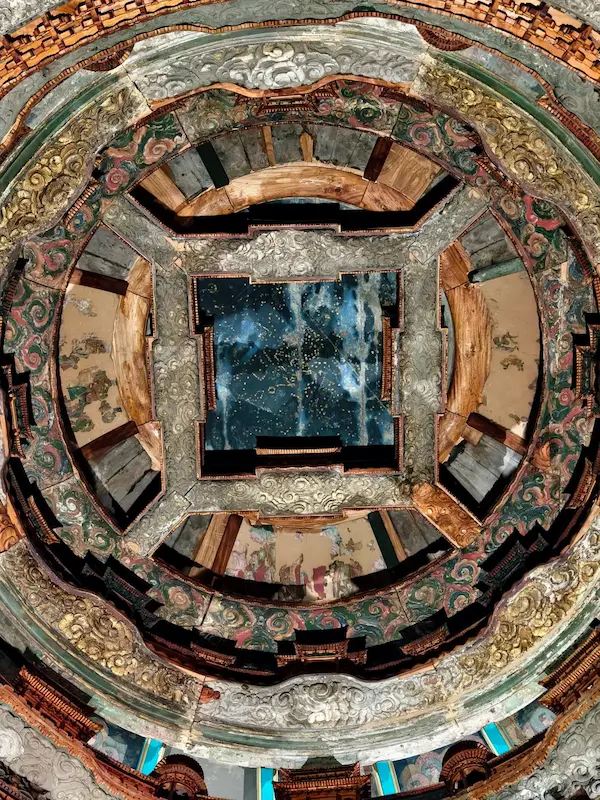
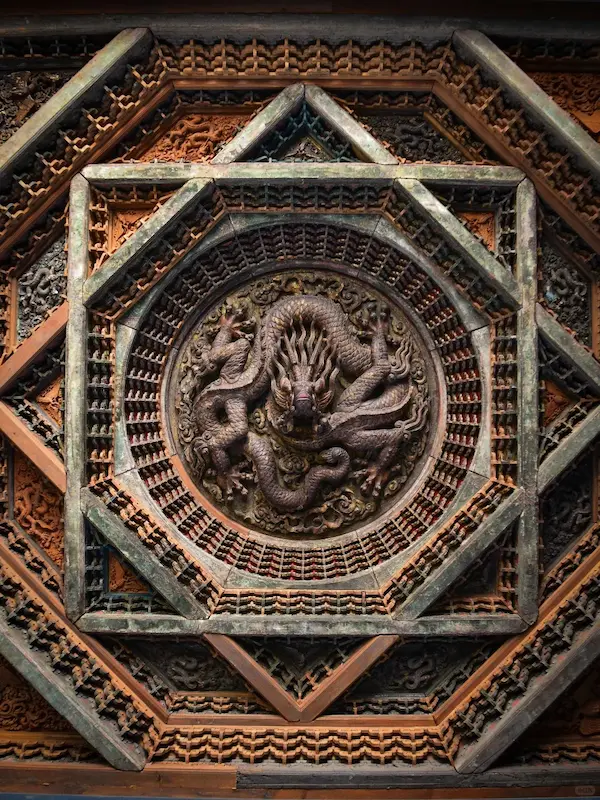
The Xiannongtan was the site where emperors of the Ming and Qing dynasties offered sacrifices to the God of Agriculture (Shennong) and personally plowed the ritual field. Today, it also serves as the Beijing Museum of Ancient Architecture, housing two of the museum’s most prized treasures:
- The Celestial Palace Caisson of Longfu Temple: Looking up from the center of the main hall, visitors can see a Tang Dynasty celestial map composed of 1,400 stars
- The Coiled Dragon Caisson of the Pilu Hall at Longfu Temple: Exquisitely carved from a single piece of precious golden thread nanmu wood
Practical Information:
- Address: No. 21 Dongjing Road, Xicheng District
- Hours: Tuesday–Sunday, 9:00–17:00 (last admission at 16:30); closed on Mondays
- Admission: 15 yuan
- Reservations: WeChat official account “Beijing Museum of Ancient Architecture”
- Recommended visit duration: 2–3 hours
15. Yongding Gate—The Southern Starting Point of the Central Axis
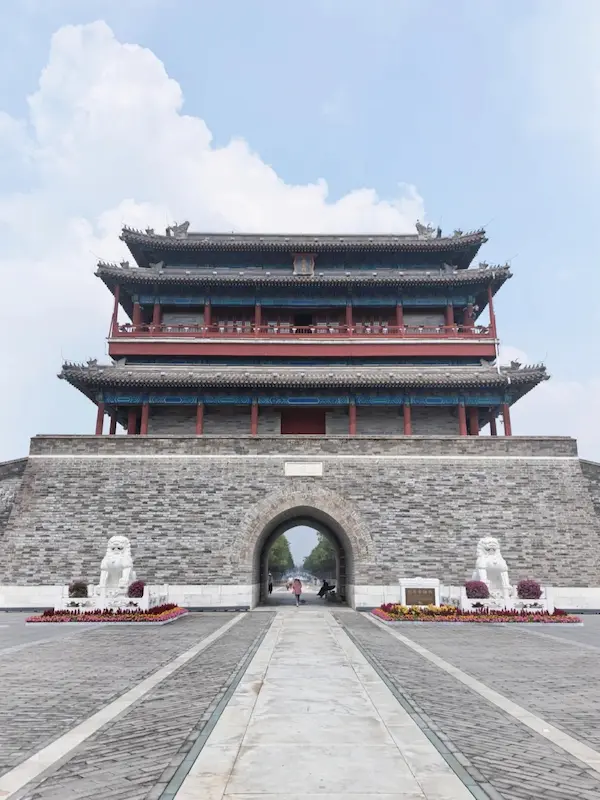
Yongding Gate was the main southern gate of Beijing’s outer city walls during the Ming and Qing dynasties. It was the largest in scale and the most exquisitely crafted. It was officially named during the Jiajing reign of the Ming Dynasty, with the name signifying “eternal stability.” It marks the southern starting point of Beijing’s Central Axis.
During the 2008 Beijing Olympics, 29 “giant fireworks footprints” set off from Yongding Gate and bloomed all the way north along the Central Axis.
Practical Information:
- Address: Yongdingmen Neidajie, Dongcheng District
- Admission: Free
- Hours: The park is open all day
- Recommended visit duration: 15–20 minutes
Recommended Itineraries
⏱Visitors Arriving in Beijing on Their First Day with Only 1 Day to Spend
I do not recommend attempting the entire Central Axis. I suggest the following:
Jingshan Park (1–1.5 hours, panoramic view of the Forbidden City) → The Forbidden City (3–4 hours, reservation required) → Tiananmen Square (1 hour) → Zhengyangmen Gate (1 hour)
Or adjust flexibly based on your reservation status.
⏱Visitors with 2 Days
Day 1 (Northern + Central Sections):
Bell and Drum Towers→Wanning Bridge→Jingshan Park→The Forbidden City→Imperial Ancestral Temple→Tiananmen Square
Day 2 (Central + Southern Sections):
Zhengyang Gate→Remnants of the Southern Section→Temple of Heaven→Xiannong Altar→Yongding Gate
⏱Visitors with a particular interest in history/urban planning (2–3 days for the complete Central Axis)
Day 1 (Southern Section): Rituals to Heaven and Earth and Everyday Life
Yongdingmen (15 minutes)→Xiannong Altar (1 hour)→Temple of Heaven (2–3 hours)→Remnants of the Southern Section of the Central Axis (walking along the route)→Qianmen Street (lunch)→Zhengyangmen Arrow Tower (30 minutes)
Day 2: Central and Northern Sections: Imperial Authority and the Hub of Time
Tiananmen Square (1 hour)→Imperial Ancestral Temple (1 hour)→Altar of Land and Grain (1 hour)→Duanmen Gate (15 minutes)→The Forbidden City (3–4 hours)→Jingshan Park (1 hour)→Wanning Bridge (10 minutes)→Bell and Drum Towers (1 hour)
Half-Day Cycling Tour
Start at Yongdingmen and ride along the Central Axis to the Bell and Drum Towers. The total distance is approximately 7.8 kilometers, and the ride takes about 40 minutes (excluding stops). You can get off your bike to take photos at each heritage site along the way.
Important Notes: Bicycles are not permitted within the Forbidden City; you must take a detour via Donghuamen or Xihuamen. Parking shared bikes in the Tiananmen Square area is prohibited.
Summary of Reservation Information for Various Attractions
| Attraction | Reservation Required | Reservation Platform | Advance Notice | Notes |
| Tiananmen Square | ✅Required | “Tiananmen Square Visit Reservation” mini-program | 1–9 days | Free |
| The Forbidden City | ✅Required | “The Palace Museum” WeChat official account | 7 days | 40- 60 yuan during peak season |
| Zhengyangmen City Gate Tower | ✅Required | “Beijing Central Axis Heritage Protection Center” WeChat Official Account | 7 days | 20 yuan; no same-day tickets |
| Zhengyangmen Arrow Tower | ✅Required | “Beijing Central Axis Heritage Protection Center” WeChat Official Account | 7 days | Free during trial operation |
| Temple of Heaven | ✅Recommended | “Temple of Heaven Park Official Ticket Platform” | 1–7 days | Combined ticket: 34 yuan |
| Xiannongtan | ✅Recommended | “Beijing Museum of Ancient Architecture ” WeChat Official Account | Recommended to book in advance | 15 yuan |
| Imperial Ancestral Temple | ❌Not required | Purchase tickets on-site | — | 2 yuan admission |
| Altar of Land and Grain | ❌Not required | Purchase tickets on-site | — | 3 yuan |
| Jingshan Park | ❌Not required | Purchase tickets on-site | — | 2 yuan |
| Bell and Drum Towers | ✅Recommended | “Beijing Bell and Drum Towers” WeChat Official Account | Recommended to book in advance | Combo ticket: 30 yuan |
⚠Important Reminder: Information regarding tickets, reservations, and opening hours is subject to change. We recommend checking the latest information from official sources before you go.
Practical Tips
1. Security Check at Tiananmen Square
Strict security checks are required to enter the Tiananmen Square area. During peak season, wait times can be as long as 30–40 minutes; we recommend arriving at least one hour in advance.
2. Ticket Release Times
- Zhengyangmen Gate Tower: Tickets released daily at 5:00 PM
- The Forbidden City: Tickets released every night at 8:00 PM
- Tiananmen Square: Available tickets for booking are updated daily at 12:00 PM
3. Monday Closure Reminder
The Forbidden City, Zhengyangmen Gate, Xiannongtan, and the Hall of Sacrifice at the Imperial Ancestral Temple are all closed on Mondays. Please avoid planning your itinerary for Mondays.
4. ID Requirements
You must present your original ID card or passport to visit all attractions. Foreign visitors may use their passports to purchase and validate tickets.
5. Most Time-Efficient Entrance Options
- Imperial Ancestral Temple: Enter through the East Gate to avoid security checks at Tiananmen Square
- Altar of Land and Grain (Zhongshan Park): Enter through the West Gate to avoid security checks at Tiananmen Square
FAQ
Beijing’s Central Axis—a 7.8-kilometer-long line—spans 800 years of the city’s history.
It is not a single building, but a “city” in its own right—from north to south, the chimes of the Bell and Drum Towers, the flowing waters beneath Wanning Bridge, the sunset over Jingshan Hill, the red walls and yellow tiles of the Forbidden City, the stelae at Tiananmen Square, the blue glazed tiles of the Temple of Heaven, the five-colored earth at Xiannongtan, and the gate tower of Yongdingmen—all are neatly arranged along an invisible line.
In 2024, it was designated a World Heritage Site. But long before that, it had stood at the heart of Beijing for more than 700 years.
When you visit Beijing, don’t limit yourself to the Forbidden City and Tiananmen Square. Spend two or three days walking along the Central Axis from north to south—you’ll discover that Beijing isn’t just a city, but a line.