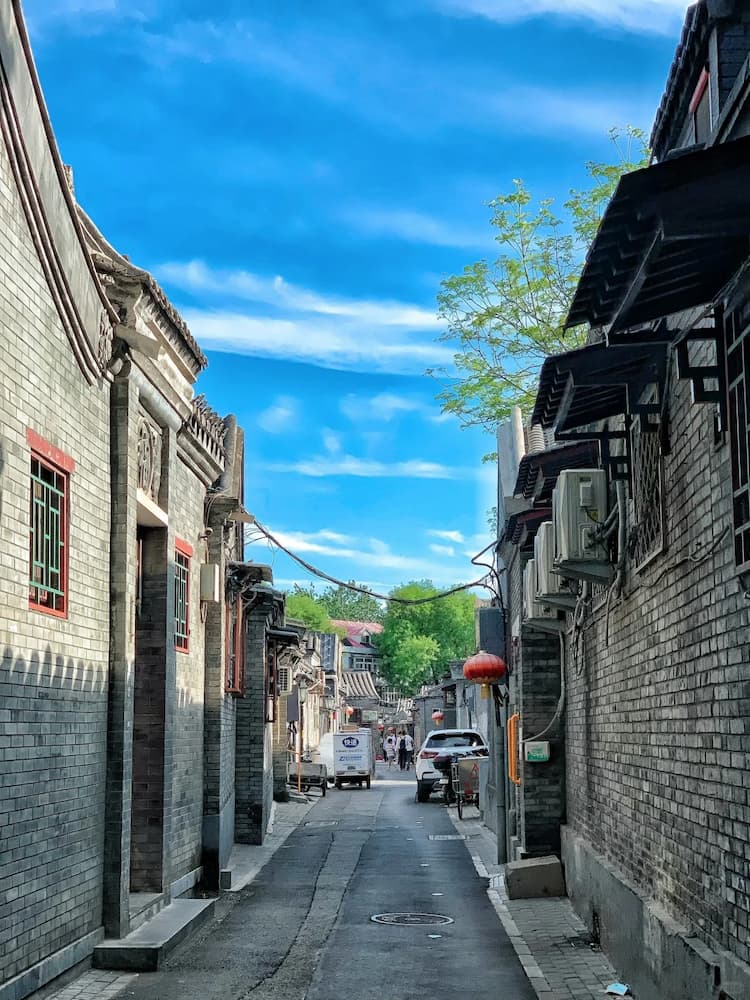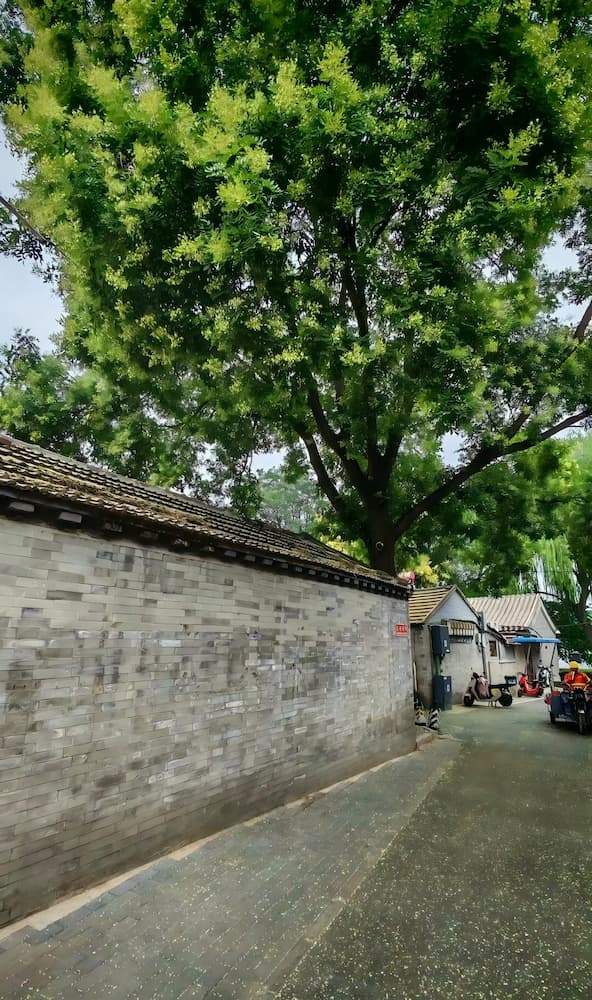
Dongjiaomin Alley Walking Guide: See 5 Centuries-Old Buildings in a 1.6-Kilometer Stroll—Free and Less Crowded (For Foreigners in 2026)
> Looking for a quiet, story-rich hutong in Beijing that’s free to explore and not crowded? Dongjiaomin Alley(Dongjiaomin Xiang) is twice as long as Nanluoguxiang and is home to a cluster of century-old Western-style buildings—a full loop takes just 2–3 hours.
This guide tells you how to get there by subway, the best times to visit, what to photograph, and how foreign tourists can navigate the reservation process. You can witness firsthand the true history of this area, from “humiliation” to “reclamation,” right on the streets.
Table of Contents
What Is Dongjiaomin Alley?
Dongjiaomin Alley(Dongjiaomin Xiang) is located right next to the southeast side of Tiananmen Square. Its western end connects to East Tiananmen Square Road, while its eastern end leads to Chongwenmen Inner Street, with a total length of approximately 1.6 kilometers (nearly 3 kilometers when including the adjacent Xijiaomin Alley). It is the longest hutong in Beijing.
This xiang is unique: you won’t find the traditional Beijing siheyuan courtyards or the sounds of street vendors here. Instead, you’ll see Gothic churches, red-brick castles, the old French post office, and century-old embassies—it’s as if you’ve stepped into a European street hidden in the heart of Beijing.
But more importantly, this is a place steeped in the heavy history of modern China: it was once the “Legation Quarter” forcibly ceded by the Qing government to foreign powers. Chinese people were barred from entering, turning it into a “state within a state” right in the heart of Beijing. It wasn’t until 1950 that the government of the People’s Republic of China officially reclaimed the area.
Today, you can stroll down this street for free, snapping photos of the Western-style architecture while learning about this history—a journey from humiliation to self-strengthening.
> Itinerary Tip: The western entrance to Dongjiaomin Alley is right next to Tiananmen Square. If you plan to visit the Forbidden City or Tiananmen Square in the morning, you can easily spend two hours strolling through this quiet xiang in the afternoon without feeling rushed.
The History of This Xiang
- Yuan Dynasty (approx. 700 years ago): This was a “grain street.” Glutinous rice from the south (known in the north as “jiangmi”) was transported here to be sold, hence the name “Jiangmi xiang.”
- Ming Dynasty: With the construction of Qipan Street, the xiang was divided into eastern and western sections; the eastern section was called “Xi Jiangmi Alley.”
- Late Qing Dynasty (around 1900): The name gradually evolved into “Dongjiaomin Alley .”
- After the 1860 Treaty of Beijing, Britain, France, the United States, Japan, and other nations forcibly established embassies here.
- After the 1901 Boxer Protocol, the area was designated as the “Legation Quarter.” Foreigners built 6-meter-high walls and fortifications and set up cannons. Chinese people were not allowed to live inside or pass through freely. It became a “state within a state” in Beijing—meaning that although it was on Chinese soil, it functioned like a foreign country, beyond the control of the Chinese government.
- 1949: Beiping (now Beijing) was peacefully liberated. Chairman Mao specifically ordered the People’s Liberation Army to march through Dongjiaomin Alley as they entered the city, declaring to the world that China had reclaimed its sovereignty.
- 1950: The People’s Republic of China formally reclaimed Dongjiaomin Alley, and all foreign barracks were closed.
So, with every step you take here today, you are walking on history.
Quick Comparison: Dongjiaomin Alley vs. Nanluoguxiang
| Category | Dongjiaomin Alley | Nanluoguxiang |
| Length | Approx. 1.6 km (more than twice the length of Nanluoguxiang) | Approx. 787 m |
| Number of Visitors | Very few, quiet | Very many, crowded |
| Main Attractions | Western-style architecture, former embassy sites, churches, and museums | Street food, creative shops, and old Beijing hutongs |
| Admission | All free (optional purchases inside some buildings) | Free |
| Best for | Strolling, taking photos, and learning about history | Strolling, taking photos, and learning about history |
If you don’t like crowds, Dongjiaomin Alley is the better choice.
Practical Information
Transportation (How to Get There)
- Recommended starting point: Begin at the eastern end of Dongjiaomin Alley (Chongwenmen Station), walk from east to west, and end at Qianmen for dinner.
- Subway:
- Take Line 2 or Line 5 to Chongwenmen Station. Exit via Exit A1 (northwest) and walk about 2 minutes to the eastern end of Dongjiaomin Alley.
- Alternatively, take Line 8 to Qianmen Station. Exit via Exit E2 and walk about 10 minutes to the western end of Dongjiaomin Alley (you can also walk in the opposite direction).
- Bike-sharing: Bike-sharing services (such as Meituan and Hello) are available throughout Beijing. You can ride to the west or east end of Dongjiaomin Alley, then lock your bike and walk the rest of the way. Scan the QR code with your phone; the cost is approximately 1.5 RMB (about $0.20 / €0.19) per ride.
Best Time to Visit
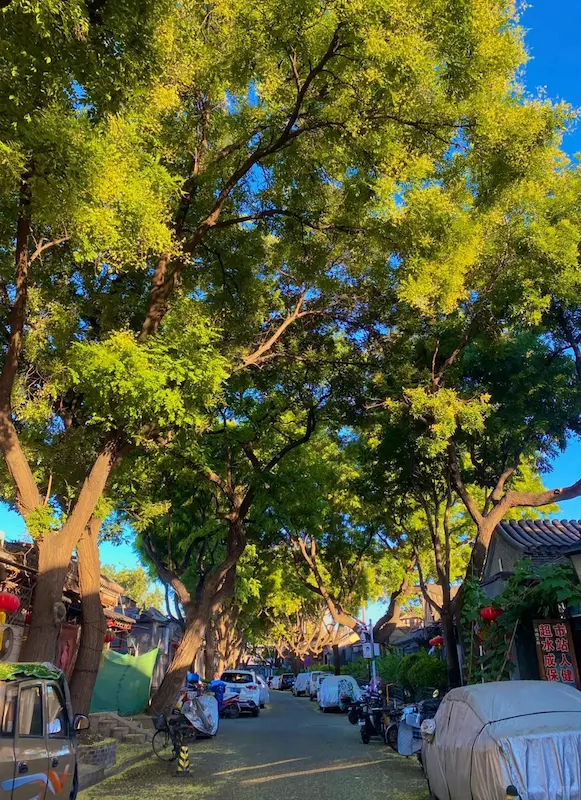
- Season: Spring (April–May) and fall (September–October) are the most pleasant, with green or yellow foliage that makes for great photos.
- Time of day: We recommend visiting between 9:30 and 11:00 AM or 2:00 and 4:00 PM. The light is soft and ideal for photography. There are fewer visitors in the morning.
- Best to Avoid: Mondays (museums along the route are closed on Mondays, though the street itself remains open). Weekends are slightly busier than weekdays, but the area is still much quieter than Nanluoguxiang.
Budget Guide (All amounts converted to USD and EUR; exchange rates: 1 USD ≈ 7.2 CNY, 1 EUR ≈ 7.8 CNY)
- Street tours: 0 RMB (free)
- Museums: China Court Museum, Beijing Police Museum – free (but reservations have certain requirements; please see the “Reservation Tips” below)
- Churches: St. Michael’s Catholic Church – free admission for Sunday Mass
- If you wish to visit the interior of the former Belgian Embassy (Zijin Hotel):
- Coffee: approx. 40–80 RMB ($5.5–11 / €5–10)
- Afternoon tea or a full meal: approx. 150–300 RMB ($21–42 / €19–38)
- Dining: After exploring, head to Qianmen Street for a meal; you can enjoy a great meal for 50–100 yuan ($7–14 / €6.5–13) per person.
- Water: We recommend bringing your own water, as there are very few shops selling it on the street. A bottle of water costs about 2–3 yuan ($0.3–0.4 / €0.25–0.4).
Important Booking Reminder (Essential Reading for International Visitors)
Both the China Court Museum and the Beijing Police Museum, recommended in this article, require reservations via their WeChat mini-programs or official accounts. However, many international visitors encounter a problem: the real-name verification systems for these mini-programs typically only support Chinese second-generation ID cards, not passports, and require linking to a Chinese mobile phone number.
So what should you do?
Don’t worry—here’s a handy tip:
- If you don’t have a Chinese phone number or ID card, simply take your original passport to the security booth at the museum entrance and politely ask the staff: “Hello, I’m a foreign visitor and can’t make a reservation on WeChat. May I register on-site with my passport?”
- In most cases, the friendly security staff will help you with manual registration and let you in. It’s best to avoid Mondays (when the museum is closed) and try to go before 10 a.m. or around 2 p.m., when the staff isn’t too busy.
What if you can’t register on-site either?
No problem! The best parts of Dongjiaomin Alley are actually right out on the street—the churches, the old post office, the embassy facades, and the red-brick historic buildings are all free to view and photograph. Even if you don’t go inside the museum, your visit will definitely be worth it.
Specific Information on Reservations
- China Court Museum: Free admission; closed on Mondays. We recommend booking via WeChat first; if that doesn’t work, bring your passport and inquire at the front desk.
- Beijing Police Museum: Free admission; book via the “Beijing Police” mini-program (as above; you can also try registering in person). Closed on Mondays.
- Restaurants/Cafés at the Zijing Hotel (former site of the Belgian Embassy): Reservations are required by phone or online. We recommend using the “Dianping” app to search for “Zijing Hotel” or “1910 Purple Medal French Restaurant.”
Walking Route (Take your time and snap photos along the way; approximately 2–3 hours)
- Route Direction: East to West (Chongwenmen Station → Qianmen Station)
- Total Distance: About 2–3 kilometers; allow 2–3 hours for walking and taking photos. If you plan to visit both museums, allow an extra hour.
① St. Michel Catholic Church
- Location: Midway down Dongjiaomin Alley, across from the former French Post Office
- Admission: The church is generally not open to the public. However, Mass (a Catholic religious service) is held every Sunday morning, during which you can go inside to listen to the organ. The exterior is viewable all day.
- Best photo spot: Stand across the intersection and look up. The Gothic twin-spired tower stands against a backdrop of Chinese scholar trees in Beijing’s old city. This “Paris meets Beijing” contrast will make your Instagram friends think you’ve traveled to Europe.
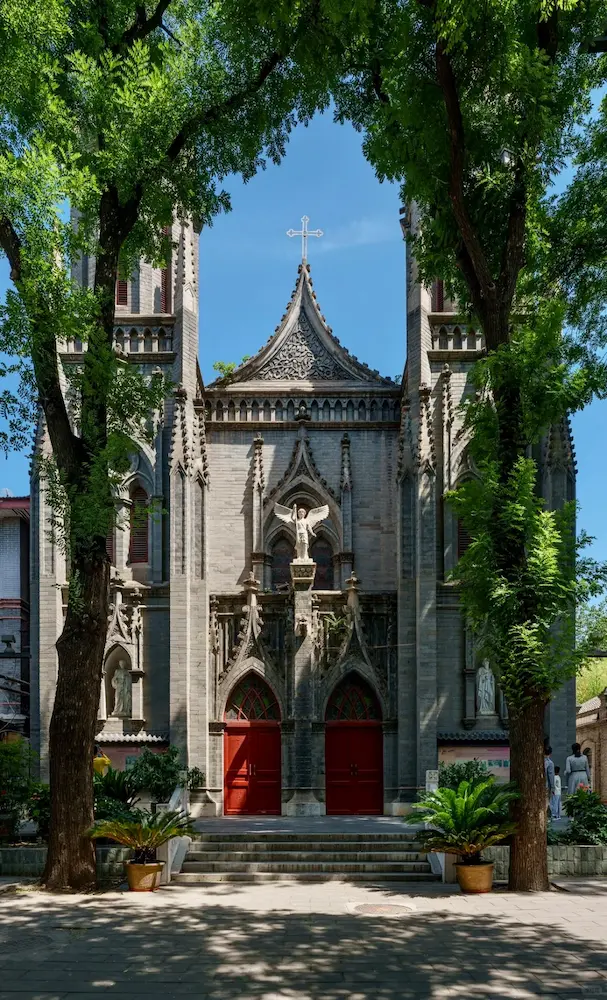
This is the smallest Catholic church in Beijing, but its craftsmanship is exquisite. It features Gothic architecture (spires, stained-glass windows) and is one of the few historic churches in downtown Beijing that has not been destroyed and rebuilt.
② Former Belgian Embassy (now the Zijing Hotel)
- Location: Opposite St. Michael’s Church, No. 14 Dongjiaomin Alley
- Access: Unauthorized entry is not permitted. The following options are available for visiting:
- Dining: “1910 Purple Medal French Restaurant” (inside the main building), serving brunch, afternoon tea, and full meals. A reservation grants free access to the main building. Afternoon tea costs approximately 150–200 RMB per person ($21–28 / €19–26).
- Coffee: “Almost Coffee 1910” (Building 3), where a cup of coffee costs about 40–60 yuan ($5.5–8.5 / €5–7.7).
- Immersive theater: “White Mirror Theater” performs plays such as The Phantom Detective inside the Zijing Hotel. Matinee performances are held Friday through Sunday. Mobile phones are not permitted inside.
- Occasional public events: Follow the “Zijin Guesthouse” WeChat official account for updates on occasional lawn concerts or garden parties.
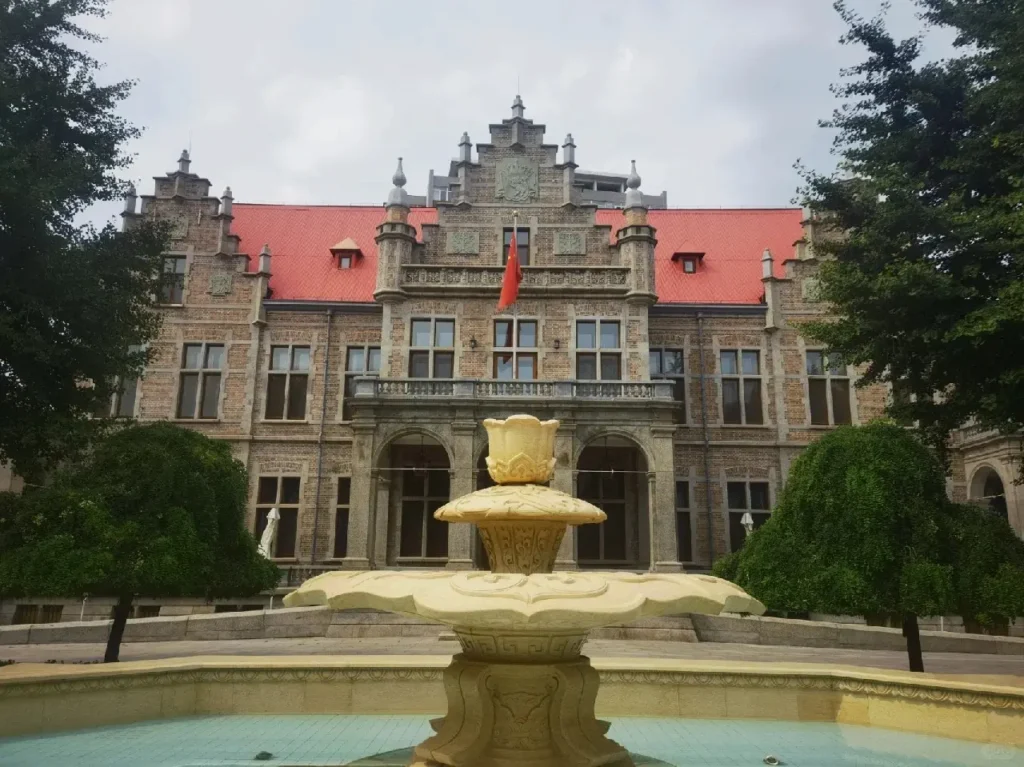
This red-brick building, constructed around 1900, resembles a British country villa. It once served as the Belgian Embassy in China and later became State Guesthouse No. 14 in the People’s Republic of China. The red walls are particularly beautiful at sunset.
③ Former French Post Office
- Location: About a 3-minute walk west of the China Court Museum
- Admission: Not open to the public; photography is only permitted from the outside
- Photo Spots: Gray brick walls, six large arched windows, and a colonnade of gray granite columns. Many people take wedding photos here. A casual snapshot makes it look like you’re in Europe.
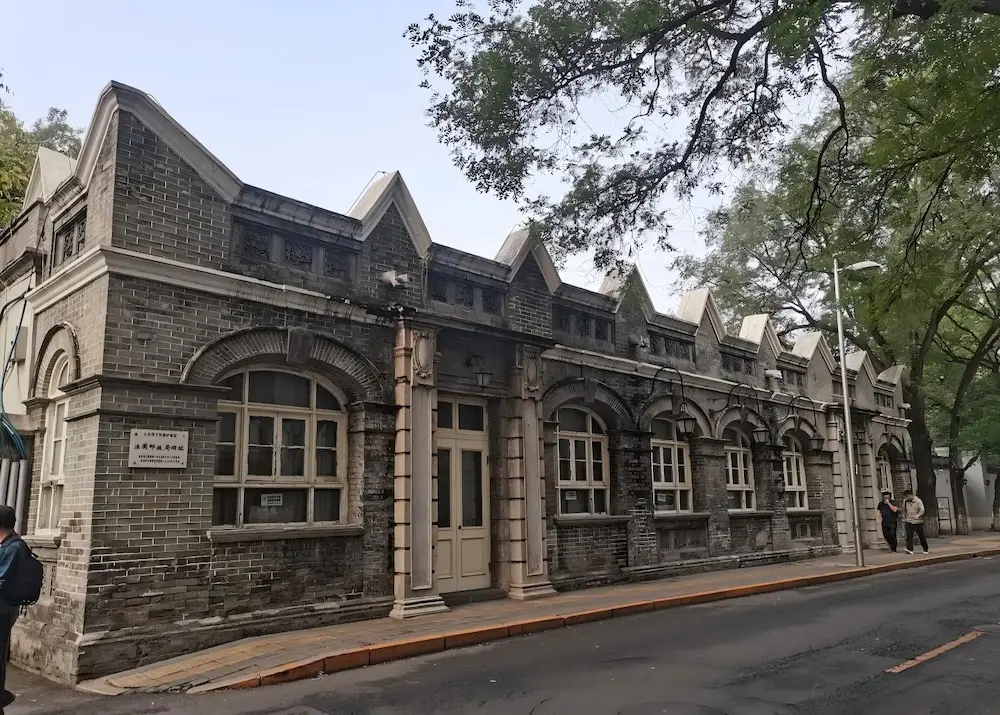
Built in 1910 (the second year of the Xuantong era of the Qing Dynasty), this building features a colonial architectural style that blends Chinese and Western elements. There is a café next door where you can take a break.
④ China Court Museum
- Location: Northeast corner of the intersection of Dongjiaomin Alley and Zhengyi Road
- Admission: Free, but reservations are required (see reservation instructions above). Closed on Mondays.
- Hours: 9:00 AM–5:00 PM (last admission at 4:00 PM)
- Photography: Take photos of the entire building and the street scene from diagonally across the street. The best lighting is between 9:30 AM and 11:00 AM or 2:00 PM and 4:00 PM.
- Stamp: There is a post office at the entrance on the first floor of the museum, where you can get a commemorative stamp for free.
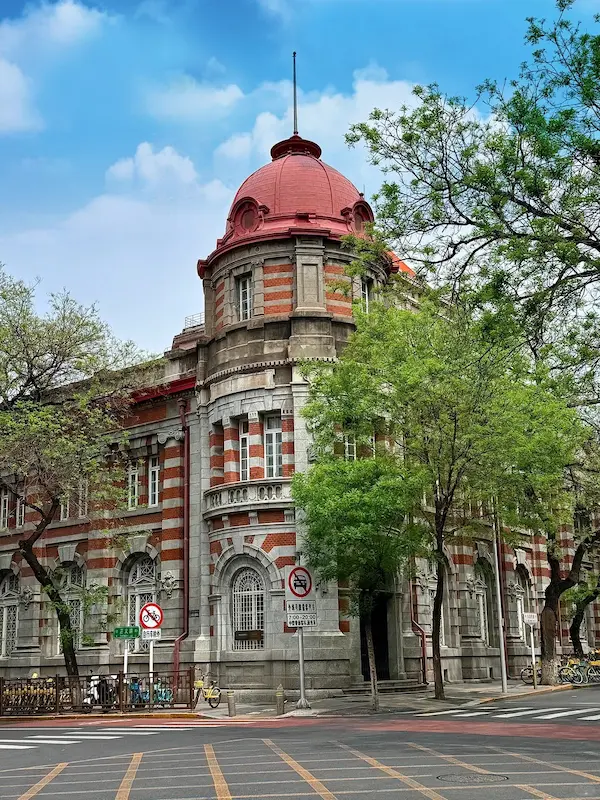
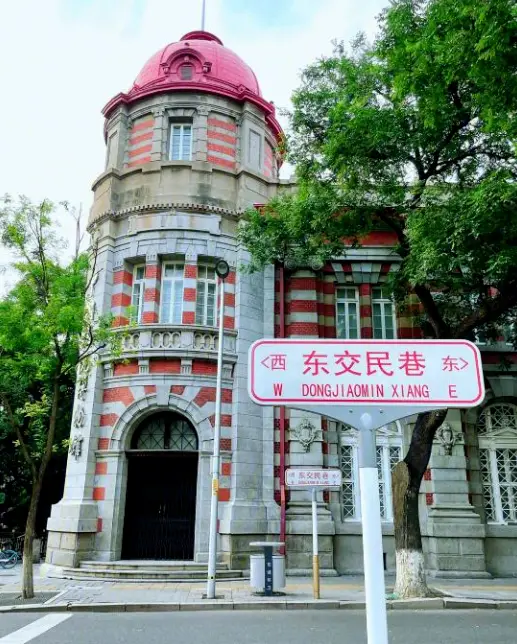
This is the most prominent landmark on Dongjiaomin Alley. It features a red-and-white castle-style design with a semicircular red dome. Built in 1910, it once served as the Beijing branch of the Bank of Yokohama.
⑤ Beijing Police Museum
- Location: 36 Dongjiaomin Alley
- Directions: Exit from Exit A at Chongwenmen Station, walk past two intersections, then turn right onto Zhengyi Road. Alternatively, walk 740 meters from Exit E2 at Qianmen Station on Metro Line 8.
- Reservations: As above; book via the mini-program or try registering in person with your passport. Closed on Mondays.
- Hours: 9:00 AM–4:00 PM
- Admission: Free
- Highlights: The museum has four floors. The fourth floor features calligraphy and photography by police officers; on the lower floors, you can see exhibits on the history of the Chinese police, vintage police cars, firearms, and more.
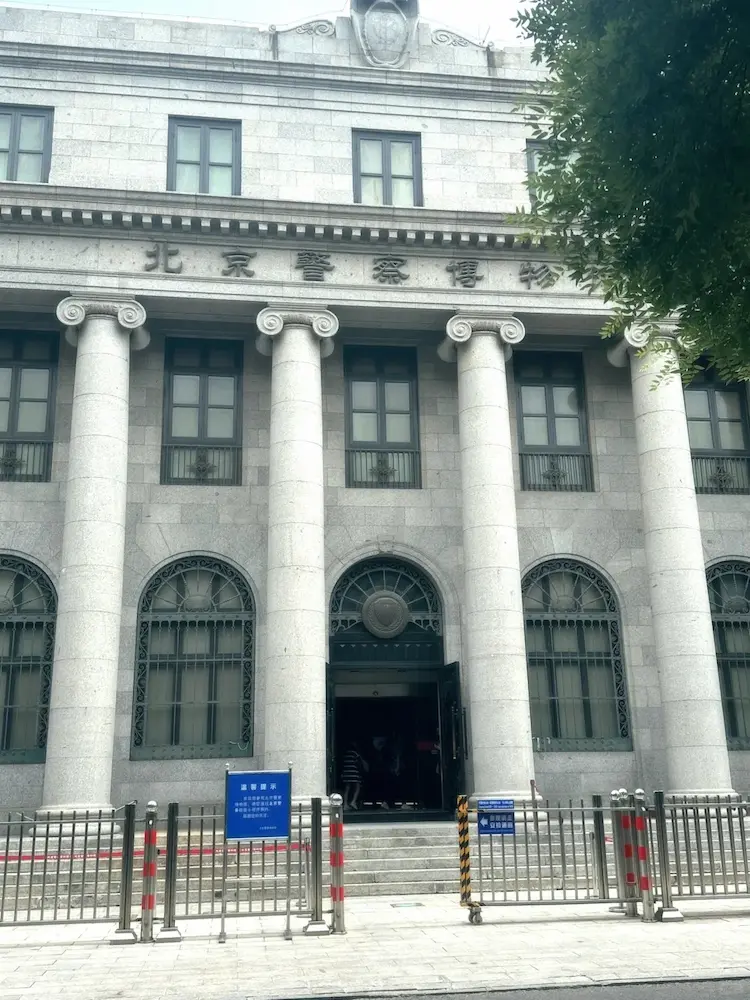
A Reminder About “Armed Police on Duty” Along the Road (Don’t Worry)
When you walk near the intersection of Dongjiaomin Alley and Zhengyi Road, you’ll see many important government buildings with Armed Police or security guards stationed at their entrances. Some foreign backpackers might feel a bit nervous at this sight and even hesitate to take out their phones to take photos.
Here’s some reassurance: these guards aren’t targeting you. This is a key administrative district, so strict security measures are normal. You can feel completely free to photograph those century-old buildings.
Just remember the universal golden rule: as long as you don’t point your camera directly at security checkpoints, guard posts, or the faces of the guards, you’ll be just fine. Feel free to snap photos of the churches, the old post office, and the red walls—no one will bother you.
If you accidentally capture something you shouldn’t, they’ll usually just wave you off and ask you to delete it; they won’t arrest you. So go ahead and explore with peace of mind.
Where to Eat After Your Walk?
There are almost no shops or restaurants (except for cafes) on Dongjiaomin Alley. Recommendations:
- Head to Qianmen Street: Exit at the west end of Dongjiaomin Alley and walk about 10 minutes to Qianmen Street and Dashilan. There you’ll find Quanjude Peking Duck, Bianyifang, various street snacks, and time-honored restaurants. You can enjoy a great meal for 50–100 RMB ($7–14 / €6.5–13) per person.
- Head to the Chongwenmen area: Next to Chongwenmen Subway Station, you’ll find Ziguangyuan (serving Beijing-style stir-fries and roast duck) and Meizhou Dongpo (Sichuan cuisine). These are even more affordable, at 40–80 RMB ($5.5–11 / €5–10) per person.
>Want to keep exploring? If you’ve finished exploring Dongjiaomin Alley and are still hungry for more, you can walk 10 minutes south to Qianmen and Dashilan to find trendier cafes or local snacks.
3 “Cultural Insights” to Make Your Trip More Meaningful
1. What is a “hutong”?
A hutong is an old xiangway in Beijing. In the past, the city of Beijing resembled a giant chessboard, and the narrow paths between the houses were called hutongs. Dongjiaomin Alley is the longest hutong in Beijing, but unlike other hutongs, it features Western-style architecture rather than traditional siheyuan courtyards, which in itself speaks to its unique history.
2. Why was Dongjiaomin Alley once a “state within a state”?
The 1901 Boxer Protocol was an unequal treaty. The treaty designated Dongjiaomin Alley as the “Legation Quarter,” guarded by foreign troops, where Chinese people were prohibited from living or passing through.
It was as if foreign powers had carved out their own territory in the heart of China’s capital. It wasn’t until 1950 that the People’s Republic of China fully reclaimed the area. The walls and traces of fortifications you see today stand as evidence of that era.
3. Why are there churches and embassy buildings here?
Because after 1860, countries such as Britain, France, the United States, and Russia forcibly established embassies here. Accompanying the embassies came banks, post offices, and churches.
These buildings were not constructed to help China, but to control it. Today, they are preserved as cultural heritage sites, serving as a reminder not to forget history.
Final Tips
- Bring water: There are almost no places to buy water on the street. This is especially important in the summer.
- Most buildings are off-limits: Except for museums and cafes/restaurants where you have a reservation, you can only take photos at the entrance of former embassy sites. Do not try to force your way in.
- Best time for photos: 10:00 AM – 3:00 PM. The red bricks and gray walls look their best in the sunlight.
- Shared bikes are more convenient: After exploring Dongjiaomin Alley, it’s just a 10-minute ride to Qianmen, the Temple of Heaven, or Tiananmen Square.
- Note for Mondays: Both museums are closed, but you can still stroll the streets. If you’re only interested in photographing the architecture, Mondays are actually less crowded.
>Want to learn more about Beijing’s transit cards, mobile payments, and ticket reservations before you go?
> We highly recommend reading this: [“The Complete Guide to Saving Money and Using Cards in Beijing 2026”] (includes how to use your phone to pay for the subway, where to exchange cash, and which attractions require advance ticket booking).
Dongjiaomin Alley is one of my favorite walking routes in Beijing. It lacks the noise of Nanluoguxiang and the hassle of crowds.
All you need to do is stroll, watch the tree shadows fall on the century-old walls, snap a few photos, and reflect on the story of this street—from “Jiangmi xiang” to “Embassy District” and beyond. This is what Beijing should truly be like.